When a museum unveils a wax figure of Dwayne “The Rock” Johnson, the expected public reaction is usually simple: admiration, selfies, maybe one person loudly asking whether they can smell what the wax is cooking. But when Paris’s famous Musée Grévin revealed its brand-new version of the actor, wrestler, entrepreneur, and global eyebrow-raising champion, the internet did not merely react. It activated.
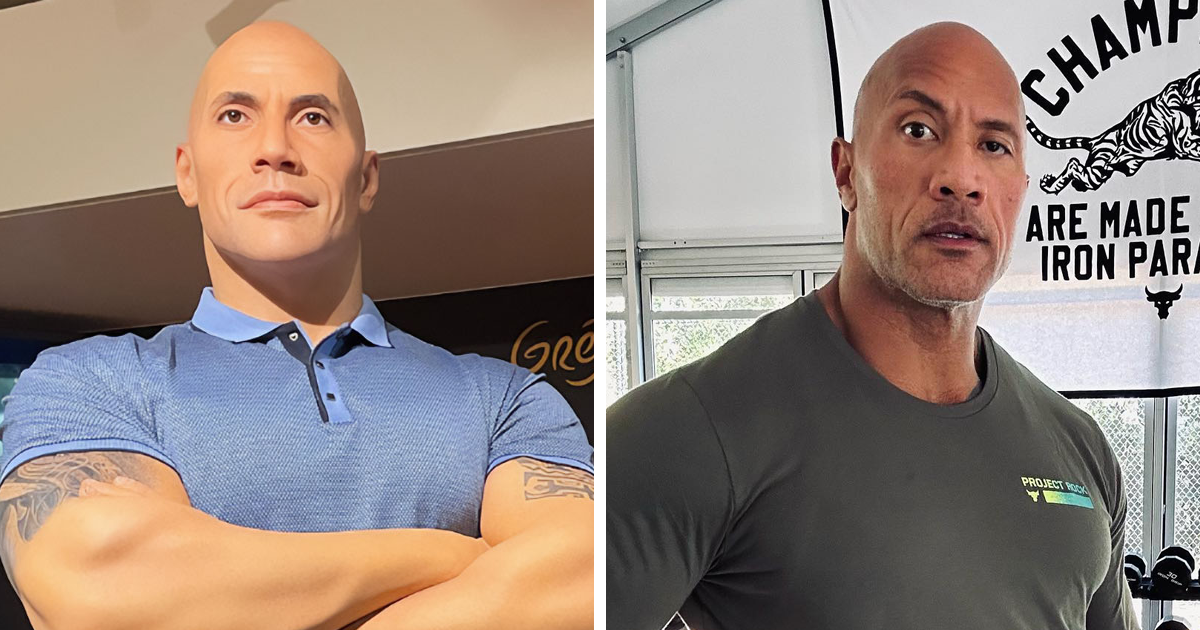
Within days, the Dwayne Johnson wax figure became a full-blown viral debate. Some people saw the statue as a harmless museum misfire, the kind of uncanny celebrity replica that has fueled online jokes for years. Others felt the figure’s unusually pale skin tone raised a more serious issue: inaccurate representation of a star who is proudly Black and Samoan. And, because the internet has never met a wax statue it could not roast like a Thanksgiving turkey, the jokes arrived fast.
At the center of the controversy was a simple question: how did one of the most recognizable people on Earth end up looking like a distant cousin of himself who sells beachfront timeshares?
A Paris Wax Figure Meets the Court of Public Opinion
Musée Grévin, a historic wax museum in Paris, unveiled the life-size figure of Dwayne Johnson in October 2023. The museum had good reason to celebrate the addition. Johnson is not exactly a niche celebrity. He has been a professional wrestling icon, a Hollywood action star, a voice actor, a business mogul, and a man so associated with gym culture that dumbbells probably stand straighter when he enters a room.
The museum’s official description emphasized Johnson’s career as “The Rock,” his WWE achievements, his major roles in films such as Fast & Furious, Jumanji, and Baywatch, and his work as Maui in Disney’s Moana. It also noted the technical challenge of creating his figure. According to the museum, the sculptor and artists relied on photos and videos because Johnson was not physically present for the process. They searched for a body model with similar measurements, spent 10 days painting his Samoan tattoos, and even redid the eyes multiple times to get the expression right.
That sounds like serious effort. Unfortunately, effort and outcome do not always arrive at the party in the same car.
When photos of the figure spread online, many viewers focused on one detail: the skin tone. The wax figure appeared far lighter than Johnson’s real complexion. It also had a smooth, slightly stiff facial expression that made some fans feel it missed the star’s warmth, physical presence, and familiar charisma. In other words, the statue had muscles, tattoos, and a bald head, but the internet felt it had misplaced the actual Rock somewhere between the lighting booth and the gift shop.
Why People Were Upset About The Rock’s Wax Statue
The backlash was not only about whether the statue looked “good” or “bad.” Celebrity wax figures are famously risky. Even the best ones can feel a little eerie because they sit in that strange valley between realistic and “please do not blink while I am standing next to you.” But Johnson’s figure hit a more sensitive nerve because the main complaint was not merely resemblance. It was representation.
Dwayne Johnson’s identity is part of his public story. His mother is Samoan, and his late father, Rocky Johnson, was Black Canadian. Johnson has frequently spoken about family, heritage, discipline, and pride, and those themes are part of the brand people recognize. When the wax figure appeared with a noticeably lighter complexion, many critics saw it as more than an artistic mistake. They viewed it as a failure to reflect who he is.
The “Whitewashing” Debate
Some online commenters described the figure as “whitewashed,” arguing that a museum representing a person of mixed Black and Samoan heritage should pay especially close attention to skin tone. For those critics, the problem was not a minor cosmetic issue. It was a cultural one. In a world where people of color have often been misrepresented, erased, or visually altered in media and art, a pale version of The Rock felt like a familiar mistake in a glossy new package.
Others pushed back, saying the museum likely made an honest technical error rather than an intentional cultural statement. Wax figures are created under studio conditions, painted by hand, and later displayed under different lighting. Skin tones can shift dramatically depending on reference photos, camera exposure, shadows, and museum lights. Anyone who has ever ordered a “warm beige” paint sample and ended up with a wall that looks like oatmeal in a rainstorm can understand the danger.
Still, the split did not erase the central point: the finished figure looked wrong to a lot of people, and in the age of social media, “a lot of people” is basically a weather system.
Dwayne Johnson’s Response Was Classic Rock
One reason the story became so viral was Johnson’s own reaction. Instead of issuing a stiff celebrity statement, he responded with humor. After comedian James Andre Jefferson Jr. posted a video roasting the figure, Johnson shared it and said he had laughed at the jokes. Then he added that his team would contact the museum to work on updates, beginning with his skin color.
That response worked because it did two things at once. It acknowledged the criticism without sounding furious, and it made the issue impossible for the museum to ignore. Johnson did not need to launch a dramatic campaign. He simply pointed, smiled, and said, in effect, “Yes, let’s fix that.” Coming from a man whose eyebrow has its own emotional range, that was enough.
He also joked that the next time he visited Paris, he would stop by and have a drink with himself. That line gave the whole situation a softer landing. The criticism was real, but the tone stayed playful enough that the museum had room to respond without turning the controversy into a celebrity feud.
Musée Grévin Admitted the Figure Needed Work
The museum did not dig in defensively. Yves Delhommeau, the managing director of Musée Grévin, addressed the backlash and explained that the team realized the figure looked too pale once it was placed under the museum lights. He described painting wax skin tones as complicated and compared the process to careful, layered artwork. He also noted that photos of Johnson can look different depending on lighting, which made the task more difficult.
That explanation did not satisfy everyone, but it did give useful context. Wax sculpture is not just a matter of making a clay face, pouring wax, and calling it a day. Artists have to capture body shape, facial structure, expression, eye color, texture, posture, tattoos, and skin tone. For someone like Johnson, whose body, face, tattoos, and cultural identity are all instantly recognizable, the margin for error is tiny.
The museum then moved quickly. Reports showed artists adjusting the figure’s complexion, and the updated version was reinstalled with darker skin. A museum spokesperson later acknowledged that the figure had been whiter than it should have been, while also saying the museum saw the situation as an honest mistake rather than intentional whitewashing.
Why Celebrity Wax Figures Go Viral So Easily
There is a reason celebrity wax figure controversies spread so fast. Wax statues combine fame, art, realism, and just enough weirdness to make everyone stop scrolling. A good wax figure makes visitors say, “Wow, that looks just like them.” A bad one makes them say, “Why does Beyoncé look like she just remembered she left the stove on?”
Celebrity faces are familiar to millions of people. Fans know the angle of a jawline, the shape of a smile, the natural expression in the eyes, and even the “energy” of a person. That makes wax art unusually vulnerable to criticism. A painter can create an abstract portrait and call it interpretation. A wax museum does not have that luxury. The whole promise is resemblance.
The Rock’s case was especially combustible because his brand is so visually specific. He is known for his bald head, massive build, Polynesian tattoo, warm brown complexion, and confident presence. If one of those elements is off, the entire likeness can slide from “Hollywood superstar” to “gym teacher who owns three motivational mugs.”
The Internet Loves a Comparison
Once the first jokes appeared, comparisons took over. People compared the figure to Mr. Clean, a royal family member, a video game character with the wrong skin-tone setting, and various “off-brand” versions of The Rock. These jokes were funny because they were visual, immediate, and easy to understand. You did not need a long explanation. You saw the photo and understood the roast before your coffee had cooled.
But the humor also carried a point. Memes can be silly, but they can also be a fast public feedback system. In this case, the memes amplified a real complaint. The museum may have noticed the issue internally, but the internet made sure nobody could pretend it was subtle.
Artistic Mistake or Representation Problem?
The debate around the Dwayne Johnson wax figure matters because both sides contain some truth. On the artistic side, the museum was working from reference images rather than direct measurements with Johnson present. Photos can distort complexion, especially when studio lighting, filters, flash photography, or red-carpet glare are involved. Wax itself also reflects light differently than human skin, which can exaggerate undertones and flatten depth.
On the representation side, accuracy is not optional when a museum presents a public figure. Skin tone is not a decorative extra, like choosing a tie or polishing a shoe. It is part of likeness, identity, and cultural visibility. If a wax figure of a mixed Black and Samoan celebrity appears dramatically lighter than he is, viewers are right to ask how that happened and why nobody caught it sooner.
The strongest lesson is not that museums should fear criticism. It is that they should build better review processes before a figure goes public. That could mean consulting more diverse reference images, checking figures under display lighting earlier, involving cultural advisors when heritage is central to a likeness, or inviting feedback from the celebrity’s team before unveiling the final product.
What the Wax Figure Backlash Says About Modern Fame
Celebrity culture has changed. A museum used to control the unveiling: pick a date, invite photographers, publish the images, and let the public wander through the exhibit. Now the public gets a vote instantly, and sometimes that vote arrives in the form of 40,000 jokes before lunch.
The Rock’s wax figure became news because it sat at the intersection of celebrity, social media, race, humor, and accountability. It was not a scandal in the traditional sense. Nobody was canceled. Nobody needed a dramatic apology tour with soft piano music in the background. But the incident showed how quickly audiences expect institutions to respond when representation feels off.
It also showed the value of a celebrity who can handle a mistake with humor while still asking for correction. Johnson’s response kept the story from becoming bitter. He laughed, named the problem, and moved the solution forward. That is a difficult balance, and it is probably one reason his public image has remained so durable.
Experiences Related to the Dwayne Johnson Wax Figure Debate
Anyone who has ever visited a wax museum knows the experience is already a little surreal. You walk into a room, see a famous person standing perfectly still, and your brain spends three full seconds asking whether security is about to tackle you for getting too close. The best figures create a fun illusion. The worst ones create a group chat.
The Dwayne Johnson wax figure controversy reminded many people of their own awkward museum moments. There is always that one statue that looks almost right from a distance but becomes deeply questionable up close. From 20 feet away, it is a movie star. From three feet away, it is a substitute teacher wearing the movie star’s Halloween costume. Visitors still take pictures, of course, because a bizarre wax figure is sometimes more memorable than a perfect one.
For fans, the emotional reaction can be surprisingly strong. People feel connected to celebrities they admire, especially someone like Johnson, whose career has crossed wrestling, film, fitness, family storytelling, and pop culture. When a figure misses the mark, fans do not just see a bad sculpture. They feel like the person they recognize has been translated poorly. It is like seeing your favorite song performed by a karaoke machine that has lost confidence halfway through the chorus.
The controversy also reflects a broader experience many people have with photos, lighting, and representation. Most of us have seen a picture of ourselves and thought, “That is not my face. That is a potato with my haircut.” Cameras can wash people out, exaggerate shadows, flatten features, or change undertones. But when an institution creates a permanent public display, the standard is higher than a bad driver’s license photo. A museum has time, tools, and professional artists. Viewers expect care.
There is also something oddly human about the way the internet responded. People joked because the figure was funny. They criticized because the issue mattered. They debated because modern audiences are more aware of how race, culture, and identity appear in public spaces. And they watched the correction because everyone loves a redemption arc, even when the main character is made of wax and cannot blink.
In the end, the experience became bigger than one statue. It became a reminder that likeness is not only about copying a face. It is about capturing presence. For Dwayne Johnson, that presence includes strength, humor, warmth, heritage, and a skin tone that should not require a viral roast to be recognized. The internet may have been split on intent, but it seemed fairly united on one thing: if you are going to make The Rock, do not accidentally make The Pebble.
Conclusion: A Viral Wax Figure With a Real Lesson
The Dwayne “The Rock” Johnson wax figure controversy was funny, awkward, and surprisingly meaningful all at once. It gave the internet a fresh round of memes, gave Musée Grévin a public lesson in precision, and gave Johnson another chance to prove he can handle criticism with charm.
The museum’s quick correction helped prevent the story from becoming a long-running disaster. Still, the backlash showed that audiences care deeply about accurate representation, especially when a public figure’s racial and cultural identity is part of what makes them recognizable. A wax figure is supposed to freeze a celebrity in lifelike form. In this case, the first version froze the conversation around a bigger issue: who gets represented accurately, and who gets “fixed” only after the internet speaks up?
For fans, the final takeaway is simple. Wax figures are difficult, the internet is undefeated, and if you are recreating one of the most famous men alive, you had better get the melanin right the first time.