Garden edging is one of those small upgrades that can make a yard look as if it suddenly hired a stylist, got eight hours of sleep, and learned how to pose for real estate photos. It defines flower beds, keeps mulch where it belongs, helps separate lawn from planting areas, and gives your landscape that crisp, finished look that says, “Yes, I absolutely know what I’m doing,” even if you were Googling “how deep should edging go?” fifteen minutes ago.
The best garden edging ideas are not just pretty. They are practical. A smart border can reduce trimming, slow down grass invasion, guide the eye through your yard, and make even a small garden feel intentional. Whether your style is cottage-core chaos, modern minimalist, rustic farmhouse, or “I found free bricks and now I’m emotionally attached,” there is a garden border idea that can work beautifully.
Below are 14 stunning garden edging ideas worth trying, plus practical tips, design notes, and a few hard-earned lessons from real garden lifebecause edging should look good, last longer than one season, and not require a second mortgage or a degree in stone masonry.
Why Garden Edging Makes Such a Big Difference
Think of garden edging as the frame around a painting. Without it, your flowers, shrubs, mulch, and lawn may still be lovely, but the whole scene can blur together. With it, everything feels sharper. Edging creates visual boundaries between lawn, flower beds, walkways, vegetable gardens, patios, and tree rings. It also helps hold soil and mulch in place, especially after rain or enthusiastic leaf blowing.
Good edging can also make yard maintenance easier. A defined border gives your mower a clear line to follow and reduces the amount of hand trimming needed around beds. It can help prevent turfgrass from sneaking into garden soil like an uninvited guest who “just stopped by” and somehow stayed all summer.
14 Stunning Garden Edging Ideas to Try
1. Classic Brick Garden Edging
Brick edging is a timeless choice for flower beds, walkways, and front yard gardens. It works with cottage gardens, colonial-style homes, traditional landscapes, and even modern yards when laid in clean, simple lines. You can install bricks flat for a low mowing strip, stand them upright for a more decorative border, or angle them diagonally for a charming sawtooth effect.
For a durable installation, dig a shallow trench, add a compacted gravel or sand base, and set the bricks snugly together. This helps prevent shifting and reduces gaps where grass can creep through. Reclaimed bricks are especially attractive if you like a weathered, lived-in look. New bricks, meanwhile, create a crisp and polished finish.
2. Natural Stone Borders
Natural stone edging brings instant texture and character to a garden. Flagstone, fieldstone, limestone, slate, and river rock can all create beautiful borders. Stone works particularly well in informal gardens where slight variation in size, color, and shape adds charm rather than looking like a mistake.
Use larger stones for a rugged border around perennial beds or smaller stones for a softer edge along pathways. For stability, nestle stones partially into the soil rather than simply placing them on top. This keeps the border from wandering away after heavy rain, frost movement, or one overly ambitious dog zoomie.
3. Sleek Metal Landscape Edging
Metal edging is a favorite for modern gardens because it creates clean, thin lines without visually overpowering the plants. Steel, aluminum, and corten steel can all be used to separate lawn from beds or to shape curves around planting areas. Corten steel develops a warm rust-colored patina that looks especially striking against gravel, ornamental grasses, and dark mulch.
This type of edging is ideal if you want a professional-looking border that almost disappears into the landscape. It is also flexible enough for curves but strong enough to hold a crisp line. Metal edging usually requires a narrow trench and stakes to keep it secure.
4. No-Dig Plastic or Resin Edging
No-dig edging is the practical hero of weekend landscaping. It is usually made of plastic or resin and is installed with spikes rather than deep trenching. That makes it a useful option for renters, beginners, budget-conscious gardeners, or anyone who wants a neat edge without turning the project into an archaeological dig.
Plastic edging is often one of the most affordable options, and many products can bend around curves. For best results, choose a heavier-duty version rather than the flimsy kind that pops up after one season. Properly anchored edging should sit tight against the lawn line and remain low enough to avoid becoming a tripping hazard.
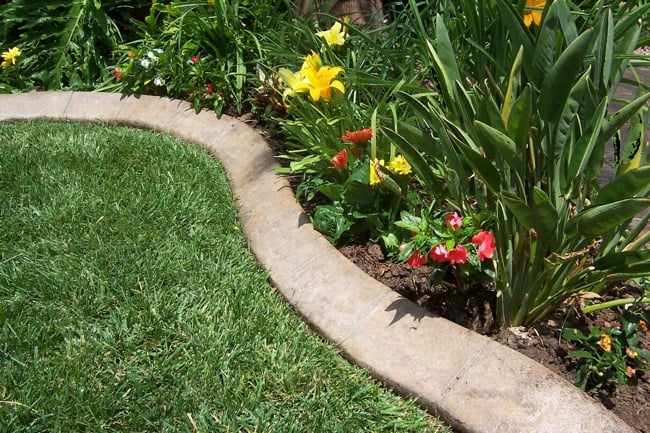
5. Concrete Curb Edging
Concrete edging can look classic, modern, or rustic depending on the shape and finish. Precast concrete blocks are widely available and relatively easy to install. Poured concrete curbing offers a more permanent, custom look and can be shaped into smooth curves or clean geometric lines.
Concrete is especially useful along driveways, walkways, and large beds where durability matters. Some concrete edging mimics stone or brick, giving you a decorative finish with strong structure. The downside is that permanent concrete borders are less flexible if you like changing your garden layout every spring, which some of us call “creative evolution” and others call “yard indecision.”
6. Timber and Landscape Wood Edging
Wood edging brings warmth and a natural look to garden beds. Landscape timbers, cedar boards, log rolls, and pressure-treated lumber can all create attractive borders. Timber edging is especially effective for vegetable gardens, rustic paths, and raised bed transitions.
Because wood sits close to soil and moisture, choose rot-resistant materials or treated wood rated for ground contact. Cedar and redwood are naturally resistant but often cost more. Landscape timbers can be secured with rebar or stakes to keep them from shifting. Wood borders may need more maintenance over time, but their relaxed charm is hard to beat.
7. Gravel Strip Edging
A gravel strip is one of the most underrated garden edging ideas. It creates a clean transition between lawn and planting beds, improves drainage, and pairs beautifully with modern, Mediterranean, desert, or cottage gardens. Pea gravel, crushed granite, decomposed granite, and decorative stone can all work well.
To install gravel edging, excavate a shallow strip, add landscape fabric if needed, and fill with gravel. A hidden metal or plastic edge can help keep the gravel contained. This style is particularly useful around patios, pathways, and drought-tolerant planting beds.
8. Paver Edging for a Finished Walkway Look
Pavers are a smart choice when you want edging that feels substantial. They can define flower beds, line sidewalks, frame patios, or create mowing strips around lawn areas. Because pavers come in many shapes, colors, and textures, they can match almost any home style.
For a formal look, choose rectangular pavers in a straight line. For a softer design, follow curves around a bed. Paver edging works best when installed over a stable base of compacted gravel and sand. That base helps prevent settling, which is important unless your dream landscape includes a border that slowly performs interpretive dance.
9. Living Edging with Low-Growing Plants
Not all garden borders need to be hardscape. Living edging uses plants to create a soft, colorful boundary. Low-growing herbs, compact perennials, ornamental grasses, dwarf shrubs, and groundcovers can all outline a bed while adding texture and seasonal interest.
Good plant choices depend on sun, soil, climate, and maintenance level. Options such as lavender, rosemary, dianthus, lady’s mantle, hardy geraniums, mondo grass, liriope, boxwood, and creeping thyme can make beautiful edging plants in the right conditions. Living borders need trimming and occasional dividing, but they reward you with movement, fragrance, flowers, and pollinator appeal.
10. Wattle or Willow Edging
Wattle edging is made by weaving flexible branches, often willow, around short stakes. The result looks charming, handmade, and wonderfully old-world. It is a natural fit for cottage gardens, herb gardens, raised vegetable beds, and pollinator patches.
This edging idea is decorative rather than ultra-permanent, but that is part of its charm. Willow edging weathers over time and may eventually need repair or replacement. If you enjoy garden projects that look like they came from a storybook, wattle edging is worth trying.
11. Recycled Bottle or Salvaged Material Edging
For gardeners who love personality, recycled edging can be both eco-friendly and eye-catching. Glass bottles, salvaged bricks, broken concrete pieces, old tiles, terracotta pipe sections, or leftover stone can be repurposed into creative borders.
The key is consistency. A random pile of objects may look messy, but repeated shapes or colors can look intentional and artistic. For example, upside-down wine bottles can create a quirky border, while salvaged tile pieces can add color to a small herb garden. Use caution with sharp edges and make sure materials are firmly set into the ground.
12. Raised Bed Edging
Raised beds are edging and planting space rolled into one. They define the garden, improve soil control, and make planting easier on the back and knees. Raised beds can be made from wood, metal, stone, concrete blocks, or composite materials.
This idea works especially well for vegetable gardens, small spaces, and yards with poor soil. A neat row of raised beds can turn a plain backyard into a productive, organized garden zone. Add gravel paths between beds, and suddenly your tomatoes look like they have their own upscale neighborhood.
13. Low Hedge Edging
Low hedges create a formal, polished border around beds and pathways. Boxwood is the classic choice, but other compact shrubs can work depending on your climate and style. A clipped hedge gives structure year-round and pairs beautifully with roses, perennials, herbs, and symmetrical front-yard designs.
This edging idea requires patience and maintenance. Hedges need pruning to stay tidy, and plants must be spaced correctly so they grow into a continuous line. The payoff is a sophisticated garden border that looks elegant in every season.
14. Mulch Trench Edging
Sometimes the simplest garden edging is also the most effective. A clean trench edge, sometimes called a natural or spade-cut edge, creates a sharp separation between lawn and garden bed without adding any hard material. The bed is cut with a spade or edging tool, then finished with mulch.
This is one of the most budget-friendly options because it mainly requires labor. It works beautifully in traditional lawns, informal gardens, and large beds where hard edging would be expensive. The catch is maintenance: trench edges need refreshing as grass grows and soil shifts. Still, for a clean, elegant look on a budget, this method deserves applause and maybe a cold lemonade afterward.
How to Choose the Best Garden Edging for Your Yard
Start with your garden style. A modern home may look best with steel, concrete, gravel, or simple pavers. A cottage garden may shine with brick, stone, willow, or living plant borders. A rustic yard can handle timber, fieldstone, or reclaimed materials. The edging should feel connected to your home, not like it wandered in from a completely different zip code.
Next, think about maintenance. Metal, concrete, and stone tend to be durable and low maintenance. Wood looks warm but may eventually rot. Living edging is beautiful but needs trimming. Plastic edging is affordable and easy to install, but quality matters. If your yard has tight curves, choose a flexible material such as metal, resin, composite bender board, or a spade-cut edge.
Budget is another major factor. Mulch trench edging and recycled materials can be very affordable. Brick, pavers, and no-dig edging are often moderate options. Custom concrete, natural stone, and professional installations cost more but can deliver long-lasting curb appeal.
Installation Tips for Cleaner, Longer-Lasting Edges
Before installing garden edging, mark the layout with a hose, rope, spray paint, or string. Step back and look at the shape from different angles. Curves should feel smooth, not wobbly. Straight lines should actually be straight, unless you enjoy explaining to neighbors that the border is “abstract.”
Prepare the base properly. Many edging materials perform better when placed over compacted gravel and sand. This helps with drainage, stability, and frost movement. For brick, pavers, stone, and timber, a solid base can make the difference between a border that lasts and one that slowly sinks into garden folklore.
Keep mowing in mind. If edging sits too high next to lawn, trimming becomes more difficult. A low mowing strip made from brick or pavers can reduce weed-whacker work. For metal or plastic edging, make sure the top edge is visible enough to define the bed but not so high that it becomes a hazard.
Common Garden Edging Mistakes to Avoid
One common mistake is choosing edging based only on looks. A border may be beautiful, but if it cannot handle your soil, slope, weather, or lawn type, it may disappoint you. Another mistake is skipping the trench or base. Materials placed directly on uneven soil often shift, tilt, or sink.
Spacing is also important. Gaps between bricks, stones, or pavers can invite weeds and grass. With living edging, overcrowding plants can lead to poor airflow and extra maintenance. With wood, ignoring drainage can speed up decay. And with any edging project, failing to plan the shape first can lead to a border that looks like it was designed by a squirrel holding a crayon.
Extra Experience: What Garden Edging Teaches You After a Few Seasons
After you have lived with garden edging for a while, you learn that the best border is not always the fanciest one. It is the one that fits your habits. If you enjoy tinkering in the yard every weekend, a living edge or hand-cut trench may feel satisfying. If you prefer a garden that behaves while you are busy with life, choose stone, metal, pavers, or concrete. Your future selfthe one holding a cup of coffee instead of a shovelwill thank you.
One real-world lesson is that curves need confidence. A hesitant curve looks accidental, while a generous sweeping curve looks designed. When shaping a bed, use a garden hose to test the line before digging. Leave it in place for a day if needed. Look at it from the porch, driveway, street, and kitchen window. Garden design is partly about how a space feels when you move through it, not just how it looks from one photo angle.
Another experience worth mentioning: mulch behaves better when edging is installed correctly. Without a defined border, mulch loves to migrate into the lawn, driveway, and every mysterious place mulch can possibly go. A slightly raised edge or a clean trench helps keep it contained. This is especially helpful after heavy rain or when birds decide your flower bed is the hottest new buffet in town.
Edging also changes how people notice your garden. Visitors may not say, “Wow, what excellent separation between turfgrass and ornamental beds.” That would be oddly specific, although gardeners would appreciate it. Instead, they say, “Your yard looks so neat,” or “Your garden looks professionally done.” The edging quietly does the work of making every plant look more intentional.
It is also smart to match edging to your energy level. A low hedge is gorgeous, but it needs clipping. Recycled bottle edging is fun, but it needs careful installation. Stone looks natural, but heavy pieces require patience and possibly a friend who can be bribed with pizza. No-dig edging is fast, but it should be anchored well. Every material has a personality. Choose the one you actually want to live with.
Finally, edging has a sneaky motivational effect. Once the borders are clean, you may suddenly want to refresh mulch, divide perennials, plant annuals, pressure-wash the path, and reorganize the shed. This is how one “small weekend project” becomes a full personality. But in the best way. A defined garden edge can make the entire yard feel calmer, cleaner, and more loved.
Conclusion: A Better Border Can Transform the Whole Garden
Garden edging may be a small detail, but it has a big visual impact. It turns loose planting areas into designed spaces, keeps beds cleaner, helps control grass and mulch, and adds curb appeal without requiring a complete landscape renovation. From classic brick and natural stone to sleek metal, living plants, gravel strips, and budget-friendly trench edging, there is an option for every style, skill level, and budget.
The best garden edging idea is the one that makes your yard easier to maintain and more enjoyable to look at. Start with one bed, one path, or one tree ring. Once you see the difference, you may find yourself edging everything in sight. Mailbox? Edged. Herb garden? Edged. That awkward corner by the fence? Absolutely edged. Garden envy does not happen by accidentbut with the right border, it can happen surprisingly fast.