History classes tend to behave like overbooked tour buses. They stop at ancient Rome, medieval England, revolutionary France, imperial China, and perhaps the pyramids if everyone promises not to wander off. Meanwhile, dozens of smaller countries are left standing beside the road with stories involving warrior armies, mountain fortresses, globe-spanning sea empires, ancient wine, catastrophic wars, and monarchs who practically ordered their citizens to become more democratic.
The countries below may not dominate the average history textbook, but their pasts are anything but ordinary. Some survived by remaining tiny. Others were created by refugees, sailors, rebels, or leaders with remarkable diplomatic instincts. Several endured colonization and warfare on a scale that permanently reshaped their societies.
Here are ten overlooked countries with astonishing histories that prove the world has never suffered from a shortage of plot twists.
1. San Marino: The Tiny Republic That Refused to Disappear
San Marino is a mountainous microstate surrounded entirely by Italy. According to tradition, it was founded in 301 by Marinus, a Christian stonemason who escaped Roman religious persecution and established a community on Monte Titano.
Plenty of medieval communities claimed independence. Most were eventually conquered, absorbed, renamed, or turned into a picturesque neighborhood with expensive coffee. San Marino, however, kept going.
Its constitutional statutes date to 1600, and the country still elects two heads of state, known as the Captains Regent, every six months. That arrangement makes political power unusually temporary. Before one captain can become too comfortable, it is practically time to return the ceremonial hat.
Napoleon respected San Marino’s independence and reportedly offered it additional territory. Its leaders declined, apparently deciding that accepting land from an ambitious French emperor might come with a few hidden subscription fees. During the movement to unify Italy, San Marino also sheltered revolutionaries, including Giuseppe Garibaldi. The new Italian state later recognized the microstate’s sovereignty.
San Marino survived not by becoming powerful, but by being diplomatically useful, geographically defensible, and too politically careful to provide its neighbors with a convincing reason to conquer it.
2. Bhutan: The Monarchy That Introduced Democracy From the Top
Bhutan’s modern identity began taking shape during the 17th century, when the Buddhist leader Zhabdrung Ngawang Namgyal unified previously divided regions and established a network of fortified monasteries called dzongs. These structures were religious centers, administrative headquarters, and defensive fortresses rolled into one extremely impressive building.
Following periods of internal rivalry, Ugyen Wangchuck became Bhutan’s first hereditary king in 1907. The Wangchuck monarchy gradually centralized the country and introduced administrative reforms while attempting to preserve Bhutanese cultural traditions.
The truly unusual chapter arrived a century later. In many countries, citizens have fought monarchs to obtain representative government. In Bhutan, the monarchy itself pushed the country toward democracy.
King Jigme Singye Wangchuck initiated political reforms, announced his abdication, and helped prepare the way for a constitutional monarchy. Parliamentary elections were held in 2008, when Bhutan formally transitioned from absolute monarchy to constitutional democracy.
The process was not as simple or universally harmonious as the cheerful version sometimes presented to tourists. Bhutan’s history also includes serious disputes over citizenship and the displacement of many Nepali-speaking Lhotshampa people. Nevertheless, a king deliberately reducing royal authority remains one of the stranger political transitions in modern history.
3. Benin: Home of Dahomey’s Formidable Women Warriors
Before the modern Republic of Benin existed, much of its southern territory belonged to the Kingdom of Dahomey. Centered on the royal city of Abomey, Dahomey became one of West Africa’s most powerful states between the 17th and 19th centuries.
Its most famous military institution was the Agojie, an elite corps composed entirely of women. European writers called them the “Dahomey Amazons,” although that nickname says more about European mythology than it does about the warriors themselves.
The Agojie underwent demanding training, lived within the royal compound, and participated in major military campaigns. At their height, they numbered in the thousands and formed a significant part of Dahomey’s armed forces. They were not ceremonial guards placed near the palace to look intimidating. They fought.
Dahomey’s history, however, cannot be transformed into a simple empowerment story. The kingdom grew wealthy partly through warfare, captive-taking, and participation in the Atlantic slave trade. Its rulers later expanded palm oil production while continuing to resist European interference.
France conquered Dahomey during the 1890s after fierce resistance. The territory eventually became independent in 1960 and adopted the name Benin in 1975. The modern country inherited a past containing royal splendor, military innovation, colonial violence, and uncomfortable moral contradictionsthe ingredients of almost every real history, only turned up several notches.
4. Suriname: The Colony Connected to New York’s Origin Story
Suriname is a small South American country whose official language is Dutch. That fact alone tends to make geography quizzes suddenly feel personal.
During the 17th century, England and the Dutch Republic fought over colonial possessions. The Treaty of Breda in 1667 helped confirm Dutch control of Suriname while England retained New Netherland, including the settlement that became New York.
This is sometimes summarized as the Dutch “trading New York for Suriname.” The actual negotiations were more complicated, but the result still produced one of history’s great alternate-timeline questions. Somewhere in a parallel universe, perhaps Manhattan has canals, and Suriname contains a suspicious number of British pubs.
Suriname’s plantation economy relied heavily on enslaved African labor. Many captives escaped into the forested interior, where they established autonomous Maroon societies. These communities used knowledge of the landscape and guerrilla tactics to resist colonial forces.
The Dutch eventually signed treaties recognizing the autonomy of several Maroon groups, including agreements with the Ndyuka in 1760 and the Saramaka in 1762. Their descendants preserved political institutions, languages, religious practices, and artistic traditions rooted partly in West and Central Africa.
Following the abolition of slavery, workers arrived from India, Java, China, and other regions. Suriname gained independence in 1975, inheriting one of the most culturally diverse populations in the Americas.
5. Madagascar: An African Island With Southeast Asian Roots
Madagascar sits off Africa’s southeastern coast, so one might reasonably assume that its earliest permanent settlers came from the nearby mainland. History, apparently, enjoys watching reasonable assumptions walk directly into walls.
Archaeological, linguistic, and genetic evidence indicates that Austronesian-speaking seafarers from Island Southeast Asia reached Madagascar roughly 1,500 to 2,000 years ago. They crossed an enormous section of the Indian Ocean in vessels that left few physical traces but created a lasting human legacy.
The Malagasy language belongs to the Austronesian language family and is closely related to languages spoken in parts of Borneo. Later migration and contact brought substantial African ancestry and cultural influence, producing a society connected to both sides of the Indian Ocean.
Madagascar eventually developed regional kingdoms, including the Merina Kingdom in the central highlands. During the 19th century, Merina rulers expanded their influence over much of the island, negotiated with European powers, modernized portions of the military, and attempted to control foreign religious and political activity.
France invaded and formally colonized Madagascar in 1896. Resistance continued in different forms, including a major uprising in 1947 that was brutally suppressed. Madagascar achieved independence in 1960.
Its history is a reminder that oceans were not merely barriers. Long before airlines offered questionable sandwiches and baggage fees, sailors were carrying people, crops, languages, and ideas across astonishing distances.
6. Oman: The Arabian Country That Ruled an African Maritime Empire
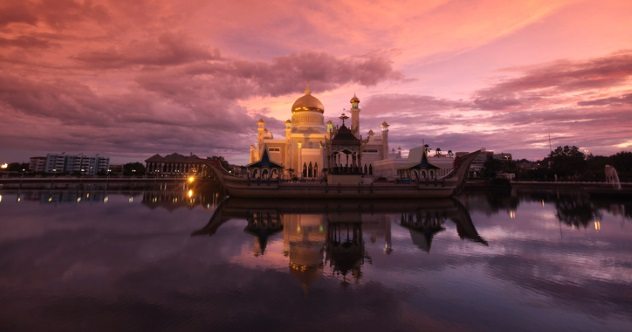
Modern Oman is usually associated with deserts, mountains, frankincense, and the strategic Strait of Hormuz. Less widely remembered is the fact that Oman once controlled a maritime empire extending deep into East Africa.
Portuguese forces occupied important ports around the Arabian Sea and western Indian Ocean during the 16th century. Omani forces expelled the Portuguese from Muscat in 1650 and continued challenging Portuguese influence along the East African coast.
By the late 17th century, Oman had gained control of Zanzibar and several coastal settlements. Under Sultan Said bin Sultan in the 19th century, Zanzibar became so important that the ruler transferred his principal court there.
Oman’s empire connected Arabia, Persia, India, and East Africa through trade networks carrying ivory, spices, textiles, cloves, and enslaved people. Zanzibar’s clove plantations generated enormous wealth, but they depended heavily on slave labor. The commercial success of the empire therefore came with a profound human cost.
After Said bin Sultan died in 1856, succession disputes helped divide his dominions into separate sultanates centered on Muscat and Zanzibar. What had functioned as a transoceanic empire was split between Asia and Africa.
Oman’s story complicates the familiar picture of empire as an exclusively European activity. European empires were extraordinarily destructive and extensive, but they were not the only states building power through ships, ports, trade, and coercion.
7. Lesotho: A Mountain Kingdom Built by Refugees
Lesotho is completely surrounded by South Africa and is often called the “Kingdom in the Sky” because of its high elevation. Its survival as an independent country owes much to one leader, one mountain fortress, and a remarkable amount of diplomatic skill.
During the early 19th century, warfare and displacement transformed southern Africa. Moshoeshoe I gathered scattered and vulnerable communities, offering protection and gradually creating the Basotho nation.
His followers established themselves at Thaba Bosiu, a flat-topped mountain that served as a natural fortress and political center. Moshoeshoe combined military resistance with negotiation, alliance-building, and strategic generosity. Rather than simply destroying defeated opponents, he frequently absorbed people into his expanding community.
As Boer settlers moved into surrounding territory, the Basotho fought repeated wars and lost valuable western lands. Facing possible destruction, Moshoeshoe appealed to Queen Victoria for protection. Basutoland became a British protectorate in 1868.
Colonial rule was hardly an act of charity, but British protection prevented the remaining Basotho territory from being completely absorbed by its neighbors. Basutoland gained independence as the Kingdom of Lesotho in 1966.
The resulting country looks geographically improbable: a sovereign mountain kingdom enclosed within another state. Yet Lesotho exists because displaced communities built a new political identity and defended it through a combination of fortification, diplomacy, and adaptability.
8. Georgia: Ancient Wine, the Golden Fleece, and Endless Invasions
The country of Georgia occupies a strategically dangerous location in the Caucasus, positioned between Europe, Asia, the Black Sea, and a long list of empires that considered the region conveniently conquerable.
Western Georgia was once associated with the ancient kingdom of Colchis, the destination of Jason and the Argonauts in the Greek legend of the Golden Fleece. Some historians have suggested that the myth may reflect ancient methods of collecting gold particles with sheepskins, although the connection remains debated.
Georgia’s claim to wine history rests on firmer ground. Archaeologists have identified traces of grape wine in pottery dating to approximately 6000 to 5800 B.C., making the region one of the earliest known centers of winemaking. Georgians were fermenting grapes thousands of years before anyone invented wine reviews containing the phrase “a confident mineral finish.”
During the medieval period, rulers such as David IV and Queen Tamar presided over a Georgian golden age marked by military success, scholarship, architecture, and trade. That prosperity attracted attention, which in history is often another way of saying “invaders arrived shortly afterward.”
Mongol armies, Persian dynasties, Ottoman forces, and Russian imperial expansion repeatedly reshaped Georgia. The Russian Empire annexed the eastern Georgian kingdom in 1801. Georgia briefly became independent in 1918 before Soviet forces took control in 1921. It restored its independence in 1991.
Georgia’s culture survived centuries of conquest through its language, Orthodox Christian traditions, food, music, literature, and stubborn devotion to hospitality.
9. Paraguay: The Country Nearly Destroyed by One War
Paraguay followed an unusual path after gaining independence from Spain. Under José Gaspar Rodríguez de Francia, who ruled from 1814 to 1840, the country became highly centralized and largely isolated from foreign influence.
The most catastrophic chapter began under Francisco Solano López. In the 1860s, regional disputes escalated into the War of the Triple Alliance, pitting Paraguay against Brazil, Argentina, and Uruguay.
Paraguay lacked the population and resources of its combined enemies, yet the conflict continued for years. Soldiers, civilians, children, and entire communities were drawn into a struggle involving combat, hunger, and disease.
By the war’s conclusion in 1870, Paraguay’s economy had collapsed, territory had been lost, and its population had fallen to less than half its prewar level according to modern historical research. Some older accounts claimed even more extreme demographic losses, particularly among adult men, although exact figures remain disputed.
The surviving populationespecially womenfaced the task of rebuilding farms, households, markets, and communities. Paraguay later fought Bolivia in the Chaco War from 1932 to 1935 over a harsh, sparsely populated region believed to contain oil. Despite Bolivia’s larger population and better-equipped military, Paraguay secured most of the disputed territory.
Few countries have endured two major interstate wars under such punishing conditions. Paraguay’s survival is one of South America’s most remarkable and tragic national stories.
10. Timor-Leste: Independence Won Twice
Timor-Leste occupies the eastern portion of the island of Timor. Portugal controlled the territory for centuries, leaving behind Catholic institutions, Portuguese linguistic influence, and an economy poorly prepared for sudden independence.
After Portugal began withdrawing from its colonies, Timorese political movements competed over the territory’s future. Timor-Leste declared independence on November 28, 1975. Indonesia invaded nine days later.
Indonesia annexed the territory, although the United Nations did not recognize the annexation. Armed resistance, underground political networks, and international advocacy continued throughout an occupation marked by warfare, forced displacement, hunger, and widespread human rights abuses.
In 1999, voters participated in a United Nations-sponsored referendum. An overwhelming majority chose independence. Pro-integration militias responded with extensive violence and destruction, forcing many residents from their homes. An international peacekeeping force entered the territory, followed by a period of United Nations administration.
Timor-Leste formally became independent on May 20, 2002. In practical terms, its people had declared independence in 1975, endured nearly a quarter-century of occupation, voted for independence in 1999, and then rebuilt a state from damaged institutions and infrastructure.
That makes Timor-Leste one of the youngest countries in the world, but its modern history contains more political struggle than nations many times its age.
Why These Forgotten Country Histories Matter
These stories reveal a problem with the way global history is often taught. Large empires receive entire chapters, while smaller countries appear only when someone invades them. That approach treats power as the only measurement of historical importance.
San Marino demonstrates how diplomacy can preserve a tiny state. Bhutan shows that political reform does not always move from the street to the palace. Benin complicates modern ideas about gender and military power. Suriname preserves the legacies of communities that escaped enslavement and forced colonial authorities to negotiate.
Madagascar proves that ancient migration routes were far more ambitious than many maps suggest. Oman reveals a forgotten Arabian empire in Africa. Lesotho shows how refugees can create a nation. Georgia connects mythology, archaeology, and cultural survival. Paraguay demonstrates the terrifying consequences of total war, while Timor-Leste illustrates the persistence required to recover stolen independence.
In other words, the historical map is much strangerand much more interestingonce attention moves beyond the usual suspects.
Experiencing the World’s Overlooked Histories
Begin by Looking at the Map Differently
The experience of exploring lesser-known history often begins with a map. Find San Marino inside Italy, Lesotho inside South Africa, or Timor-Leste beside the much larger Indonesian archipelago, and immediate questions appear. Why was this territory not absorbed? How did its borders survive? Who decided that a country should exist here?
Maps stop looking like permanent arrangements and begin resembling snapshots taken in the middle of a very long argument. Borders that seem natural today may represent wars, diplomatic bargains, colonial decisions, mountain defenses, or the survival of communities that refused to disappear.
Let Landscapes Explain Political Survival
Physical geography becomes more meaningful when connected to history. San Marino’s position on Monte Titano helped make it defensible. Thaba Bosiu gave Moshoeshoe and his followers a secure center from which to build Lesotho. Bhutan’s fortified dzongs reveal how religious and political authority operated across difficult Himalayan terrain.
A traveler seeing these places should not treat the scenery as a decorative backdrop. The mountain, river, forest, or coastline may be the main reason a nation exists. Geography is often history’s silent business partner, quietly taking half the credit.
Listen to Languages as Historical Evidence
Language provides another extraordinary experience. Hearing Malagasy spoken on an African island reveals an ancient connection to Southeast Asia. Dutch street signs in Suriname point toward a colonial history distinct from that of its Spanish- and Portuguese-speaking neighbors. Portuguese words in Timor-Leste reflect centuries of colonial rule, while local languages preserve much older identities.
Languages carry evidence that armies and governments cannot completely erase. Loanwords reveal trade. Place names preserve vanished kingdoms. Religious vocabulary records migration. Even accents can function as small archives stored in everyday conversation.
Approach Heroic Stories With Curiosity and Caution
Overlooked histories are exciting, but they should not be reduced to trivia. The Agojie were remarkable soldiers, yet they served a kingdom involved in slave-raiding and the Atlantic slave trade. Oman’s maritime achievements were connected to commerce and cultural exchange, but also to slavery. Paraguay’s endurance is inspiring, although the war that produced that endurance killed enormous numbers of people.
The best historical experience allows admiration and discomfort to exist together. A country does not need a flawless past to have a meaningful one. In fact, flawless national histories are usually advertisements wearing old-fashioned costumes.
Visit Museums, Fortresses, Markets, and Memorials
Grand monuments provide only one entrance into a country’s past. Fortresses and royal palaces explain rulers, but markets, neighborhoods, cemeteries, religious buildings, oral traditions, and family museums often reveal how ordinary people lived through political change.
In Georgia, winemaking practices can connect visitors to ancient agriculture more effectively than a list of kings. In Suriname, Maroon art and music reveal traditions developed beyond colonial control. In Lesotho, Basotho blankets carry social, political, and cultural meanings that cannot be understood merely as colorful clothing.
Memorial sites in Timor-Leste or Paraguay demand a slower approach. These are not stages for dramatic photographs. They represent families whose losses remain within living memory or national identity.
Allow Small Countries to Make History Feel Bigger
Studying these ten countries changes the scale of world history. It becomes clear that a nation’s size does not determine the size of its story. A 24-square-mile republic can survive Napoleon. A Himalayan king can initiate democracy. Sailors can connect Borneo and Madagascar. A mountain refuge can become a sovereign kingdom.
The experience is both humbling and addictive. Once one forgotten history is uncovered, familiar maps begin to look suspiciously incomplete. Every small country, remote island, unusual border, and unexpected language starts suggesting that another remarkable story is waiting underneath.
Conclusion: History’s Best Stories Are Often Hiding
The histories of San Marino, Bhutan, Benin, Suriname, Madagascar, Oman, Lesotho, Georgia, Paraguay, and Timor-Leste rarely receive the attention given to larger powers. Yet each country offers a dramatic lesson in survival, migration, warfare, diplomacy, cultural exchange, or political reinvention.
Some endured by building fortresses. Others crossed oceans, resisted occupation, negotiated autonomy, or rebuilt after catastrophic loss. Their stories remind us that history was never created only in famous capitals. It unfolded in mountain strongholds, forest settlements, island ports, royal compounds, village vineyards, and communities struggling to remain free.
The next time someone claims history is boring, introduce them to an Arabian empire headquartered in Zanzibar, an African kingdom defended by women soldiers, or a monarch who persuaded his subjects to hold elections. History is not boring. The textbook simply skipped the good parts.
SEO Metadata