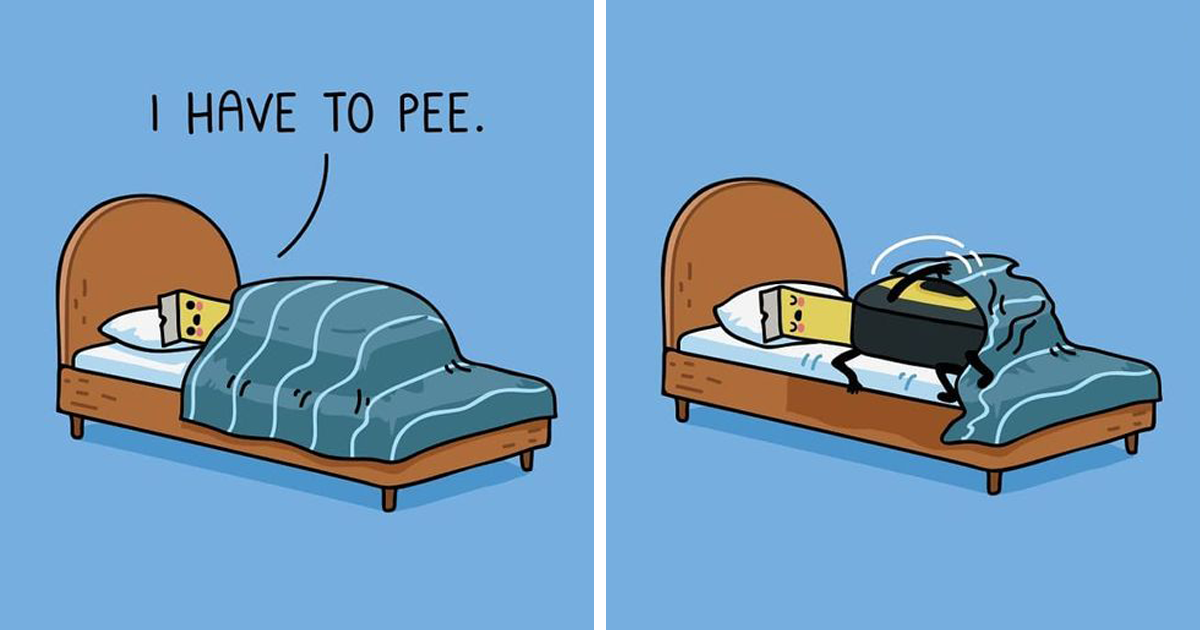
Ordinary life is full of overlooked drama. A phone battery fights for survival. A lonely sock searches for its missing partner. A cactus desperately wants a hug but has, unfortunately, chosen the least huggable body design imaginable.
<anets, plants, and household objects personalities of their own. Instead of relying on complicated plots, these adorable comics transform familiar experiences into short visual stories with clever twists.
Many strips use little or no dialogue. A character’s expression, an unexpected final panel, or a tiny background detail carries the joke. The result feels less like reading a traditional comic and more like receiving a miniature visual hug from a shark wearing a tie.
Why Adorable Comics About Everyday Life Work So Well
Relatable comics begin with something the reader already understands: procrastination, friendship, insecurity, exhaustion, awkward conversations, or the irresistible urge to open the refrigerator five minutes after checking it.
The artist then introduces an imaginative change. A cloud becomes embarrassed about crying. A slice of bread worries that it is not good enough. A shark, traditionally presented as a terrifying predator, turns out to be the most emotionally supportive creature in the ocean.
This combination of familiarity and surprise creates an immediate connection. Readers recognize the emotion before the joke arrives. The final panel changes the meaning of the scene, but it rarely does so cruelly. The humor remains gentle, expressive, and suitable for a wide audience.
30 Cute Comic Moments With Unexpected Everyday Twists
1. The Shark Who Attacks With Kindness
A shark enters the scene, and every storytelling instinct tells us to expect teeth. Instead, the creature offers encouragement, companionship, or an enthusiastic hug. The reversal works because the comic replaces a familiar threat with aggressive wholesomeness. This shark is still dangerous, but only to your determination to remain grumpy.
2. A Tie That Becomes a Best Friend
In the Wawawiwa universe, even an accessory can have feelings. A tie is no longer something worn to an uncomfortable meeting; it can become a loyal companion. The idea gently reminds readers that friendship is not defined by appearance, species, or whether one participant normally hangs from a collar.
3. The Moon Behaving Like a Younger Sibling
The moon may look majestic from Earth, but adorable comics can reinterpret it as an energetic little brother demanding attention. Suddenly, eclipses, gravity, and nighttime become ingredients in a family comedy. Cosmic events feel surprisingly similar to sharing a bedroom with someone who will not stop asking questions.
4. A Cloud That Is Not “Just Raining”
A raining cloud can represent sadness without making the moment unbearably heavy. Other characters may offer shelter, patience, or simple companionship. The comic’s charm comes from treating difficult emotions as natural weather: uncomfortable, temporary, and never something a person must face alone.
5. Coffee Working the Morning Shift
People often describe coffee as if it performs emergency medical services before 9 a.m. A comic can make that metaphor literal, showing a tiny cup dragging an exhausted human into consciousness. The joke is funny because many readers have already outsourced their morning personalities to caffeine.
6. Toast Delivering a Pep Talk
Bread is rarely considered a source of emotional wisdom. Give it a cheerful face, however, and breakfast becomes a motivational seminar. A piece of toast encouraging someone to keep going is absurd, sweet, and considerably more welcome than an inspirational speech delivered before the first cup of coffee.
7. An Avocado With Self-Esteem Problems
An avocado may worry about being too hard, too soft, or ready for exactly seven minutes on a random Tuesday. Turning that frustrating ripening schedule into a personality creates a joke about insecurity and timing. Sometimes you are not failing; you are simply not ripe yet.
8. The Cactus That Wants Affection
A cactus longing for a hug is a perfect visual contradiction. Its emotional need is universal, while its physical design creates an obvious complication. The comic becomes a playful reminder that some people care deeply even when they appear guarded, prickly, or equipped with thousands of tiny defensive needles.
9. A Sloth Facing a Productivity Crisis
Productivity advice sounds very different when delivered to a sloth. The animal’s slow pace can turn an ordinary to-do list into an epic quest. Yet the joke often contains a kinder message: progress does not have to be fast to count.
10. A Dog Treating Your Return Like a National Holiday
Leave home for eight minutes, and a dog may greet you as though you survived a dangerous expedition across several continents. Comics exaggerate this reaction while preserving its emotional truth. Dogs do not merely welcome people home; they produce a full reunion special with tail-powered special effects.
11. A Cat Providing Highly Conditional Support
Cat affection often operates according to mysterious regulations. A comic may show a cat offering comfort while sitting directly on the object its owner needs. It is love, certainly, but love with inconvenient placement and no customer-support department.
12. A Bee Discovering That Small Work Matters
A tiny bee can feel insignificant beside a vast garden. The unexpected twist is that the garden depends on countless small visits. The comic turns a cute insect into a symbol of meaningful effort, proving that important contributions do not always arrive wearing capes.
13. Flowers Blooming at Different Times
Several flowers may compare their progress until one realizes that each variety has its own season. The scene offers a gentle response to social comparison. Life is not a synchronized gardening competition, despite what carefully edited social media feeds may suggest.
14. A Pencil Afraid of Making Mistakes
A nervous pencil may hesitate above a blank page, worried that the first line will be wrong. The eraser beside it changes the meaning of the situation. Mistakes are not proof that creativity has failed; they are part of the equipment.
15. The Eraser That Slowly Disappears for Others
An eraser becomes smaller every time it helps correct a mistake. Giving it a face transforms a common school supply into a surprisingly emotional character. The joke can also carry a warning about giving too much of yourself without rest or appreciation.
16. A Phone Battery Representing Social Energy
A battery icon dropping from 70 percent to 3 percent during one conversation is an excellent metaphor for introversion. The visual communicates exhaustion instantly. No long explanation is needed; the blinking red symbol has already filed the official report.
17. The Alarm Clock That Thinks It Is Helping
From the alarm clock’s perspective, it performs an essential public service. From the sleeper’s perspective, it commits a daily act of betrayal. Personifying the clock lets the comic explore both sides of one of humanity’s oldest morning conflicts.
18. Two Socks Separated by the Laundry
A missing sock is a household annoyance, but comics can reframe it as a tragic romance. One sock waits in a drawer while the other explores the mysterious dimension behind the washing machine. Somewhere, an appliance is running an unauthorized matchmaking program.
19. Pizza Understanding the Meaning of Sharing
Sharing pizza sounds generous until the final slice appears. A cute comic can turn that slice into a witness observing the collapse of civilization. Friendship is strong, but melted cheese has tested alliances more effectively than many international disputes.
20. The Refrigerator Watching Midnight Decisions
The refrigerator sees everything: healthy meal preparation, abandoned vegetables, and the 1 a.m. search for “something small.” Giving it judgmental eyes turns a private habit into a two-character scene. The refrigerator says nothing because it has evidence.
21. An Umbrella Proud of Its Purpose
Rain may ruin a person’s plans, but it gives an umbrella its moment to shine. The change in perspective transforms bad weather into someone else’s big opportunity. Unfortunately, this heroic moment often ends with the umbrella being forgotten in a coffee shop.
22. A Book Opening a Literal New World
Comics frequently visualize familiar expressions. When a book “takes someone somewhere,” the pages may open into an ocean, forest, or distant planet. The metaphor becomes physical, reminding readers why a quiet object filled with paper can be more adventurous than an airport.
23. A Mirror Learning to Be Kinder
A mirror usually reflects appearance without comment. In a wholesome comic, it may choose to reflect courage, effort, or personality instead. The unexpected interpretation challenges the harsh internal commentary many people bring to their reflections.
24. The Heart and Brain Holding Another Meeting
The heart wants excitement. The brain wants a spreadsheet, three references, and a backup plan. Turning this internal conflict into a conversation makes emotional indecision funny and understandable. Neither character is completely wrong, which is extremely inconvenient.
25. A Shadow That Never Leaves
A shadow can look ominous in one story and deeply loyal in another. It follows through bright days, long walks, and awkward dance attempts. By changing the emotional framing, the comic converts something dark into a quiet symbol of companionship.
26. The Sun and Cloud Working Together
The sun may resent being blocked, while the cloud feels blamed for everything. A final panel can reveal that both are needed to produce a rainbow. The message is simple without becoming sugary: apparent opposites can create something neither could produce alone.
27. A Fish That Is Literally Out of Water
The expression “fish out of water” usually describes social discomfort. Drawing the phrase literally creates immediate comedy, especially when the fish attempts to behave normally. It also captures the exhausting experience of pretending to understand a situation while internally screaming in bubbles.
28. A Mountain Celebrating One Tiny Step
A distant goal can appear impossible when viewed all at once. A comic may show a mountain cheering for a climber who has barely left the ground. The unexpected supporter changes the scene from intimidating to encouraging: even the obstacle can respect your effort.
29. A Small Star Worried It Is Not Bright Enough
One star may compare itself with brighter neighbors, unaware that someone on Earth has chosen it as a favorite. This gentle twist shows how value depends on perspective. You may feel ordinary in your own sky while becoming meaningful in someone else’s.
30. An Ordinary Day Secretly Becoming an Adventure
The final and perhaps most important idea is that nothing must explode for a story to matter. A walk, snack, rainy afternoon, or conversation with a pet can become memorable when viewed with curiosity. These comics do not escape everyday life; they reveal how strange and lovable it already is.
How Cute Art and Unexpected Humor Strengthen Each Other
The visual softness of adorable comics is not merely decoration. Rounded characters, expressive eyes, uncluttered backgrounds, and bright colors establish emotional safety. Readers expect warmth, so the artist can introduce sadness, insecurity, or loneliness without making the strip feel punishing.
The surprise usually comes from incongruity. A threatening animal behaves tenderly. A silent object reveals an emotional life. A familiar phrase becomes literal. The setup is immediately understandable, while the final image invites the reader to reinterpret what came before.
Minimal dialogue also gives these comics international appeal. Facial expressions, gestures, visual metaphors, and panel transitions can communicate ideas across language barriers. Readers fill in the unshown moments between panels, becoming active participants in the joke.
A Reader’s Experience: Spending Time With Wholesome Everyday Comics
Reading a collection of adorable comics is a very different experience from watching a long comedy special or following a complicated graphic novel. There is no need to memorize a dozen family histories, learn the political structure of a fictional kingdom, or remember which masked villain was secretly cloned by another masked villain.
You can enter the comic’s world within seconds. A worried strawberry, smiling shark, or exhausted phone battery presents a recognizable emotion almost immediately. The first reaction is often laughter, but the second may be a quieter moment of recognition.
That happened to me while thinking about the flower comics that compare different blooming times. The message sounds simple: people progress at different speeds. Yet seeing the concept represented by small, expressive plants makes it feel less like advice and more like an observation. Nobody lectures the late flower. It simply receives the time and sunlight it needs.
The same effect appears in comics about emotional energy. Describing yourself as socially drained can require an awkward conversation. Showing a phone battery falling into the red zone communicates the experience instantly. The image is funny enough to share with a friend, but accurate enough to start a real discussion.
These comics can also change the way ordinary objects look after the reading session ends. The next time an alarm clock rings, you may briefly imagine that it believes it is a hardworking employee. A lonely sock becomes less like missing laundry and more like a brave explorer. A bent umbrella is no longer broken; it is an exhausted superhero returning from battle.
Sharing the comics adds another layer to the experience. One reader may focus on the joke, while another sees a message about friendship, anxiety, burnout, or self-acceptance. Wordless or nearly wordless strips leave space for interpretation, allowing the same image to mean different things on different days.
There is also something refreshing about humor that does not require a victim. Much online comedy depends on humiliation, outrage, or escalating conflict. Wholesome comics can be clever without becoming cynical. Their punchlines surprise the reader while protecting the characters’ dignity.
That does not mean the world they portray is perfect. Characters still feel lonely, make mistakes, lose motivation, compare themselves with others, and struggle to get out of bed. The difference is that these problems are approached with curiosity rather than contempt.
After reading several strips in a row, the experience can resemble taking a mental walk through a kinder version of reality. Problems remain recognizable, but they are surrounded by supportive sharks, philosophical vegetables, loyal shadows, and emotionally intelligent weather systems.
Of course, a comic cannot complete your deadlines or recover the sock swallowed by the laundry universe. It can, however, interrupt a stressful day long enough to create a smile. Sometimes that tiny interruption is exactly what a person needs.
Conclusion
The appeal of 30 Adorable Comics That Have Unexpected Takes On Everyday Situations comes from more than cute drawings. These comics observe daily life carefully, identify emotions readers already know, and then reveal an imaginative perspective hiding beneath the routine.
Animals become thoughtful friends. Household objects develop complicated inner lives. Planets behave like siblings, and ordinary frustrations turn into visual jokes. Through gentle humor and concise storytelling, the comics remind us that everyday life is not boring. We may simply be looking at it from the wrong panel.
SEO Information
Note: This article contains original editorial commentary inspired by the themes of wholesome visual storytelling. It does not reproduce the original comic artwork, which remains the property of its respective creator and rights holders.