Note: This article is for general informational purposes and is based on widely accepted U.S. pediatric, public-health, vaccine-safety, and medical-ethics guidance. Parents should always discuss personal medical questions with a licensed pediatrician.
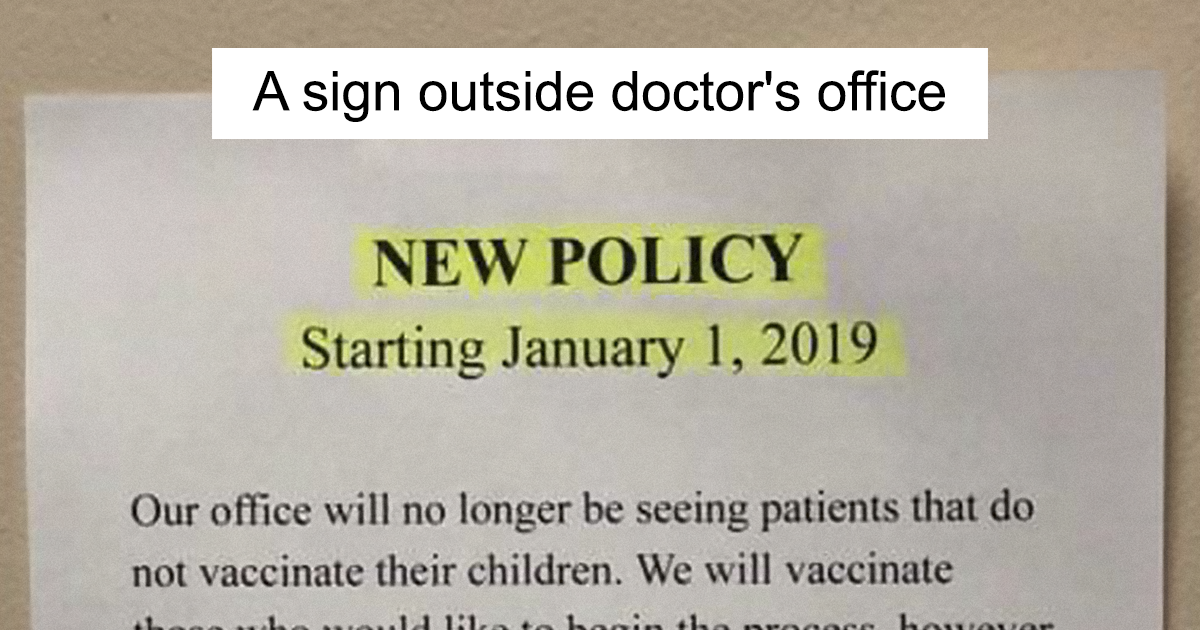
A sign in a doctor’s office is usually about parking, paperwork, or the tragic discovery that your insurance card is hiding in the wrong wallet. But one pediatric notice made a much bigger point: the practice would no longer accept families who refused to vaccinate their children, except for those ready to begin catching up on immunizations.
The message was blunt, but the issue behind it is anything but simple. Pediatricians are not just treating one child at a time. They are managing waiting rooms filled with newborns, children receiving chemotherapy, kids with immune disorders, pregnant caregivers, grandparents, and other people who may be especially vulnerable to infections. In that setting, vaccine refusal is not a private decision sealed neatly inside one family’s kitchen. It can walk into the waiting room wearing sneakers, holding a juice box, and coughing near a two-month-old baby.
That is why the doctor’s notice became such a heated topic. To some parents, it felt harsh. To many physicians, it sounded like a boundary drawn after years of patient education, scientific evidence, and outbreaks of diseases that should have stayed in history books. The debate raises an important question: can a pediatrician refuse to accept patients whose parents choose not to vaccinate them?
The answer is not a simple “yes” or “no.” It sits at the intersection of science, ethics, public health, legal responsibility, and the very human frustration of trying to explain measles to someone who believes a Facebook post outranks medical school.
Why a Pediatrician Might Refuse Unvaccinated Patients
Most pediatricians do not wake up hoping to dismiss families from their practice. Doctors generally want to care for children, answer questions, and build long-term trust with parents. But vaccine refusal can put that relationship under pressure because the pediatrician’s job is not only to treat illness after it happens. It is also to prevent harm before it arrives.
Vaccines are one of the major reasons many American parents today do not regularly see children with polio, diphtheria, rubella, or severe measles complications. The fact that these diseases feel rare is not proof that vaccines are unnecessary. It is proof that vaccination programs have worked so well that many people have forgotten what the diseases looked like.
A pediatric clinic is a shared space. When a child is intentionally left unvaccinated, that child may be more likely to catch and spread certain vaccine-preventable diseases if exposed. That matters because some children cannot receive specific vaccines yet. Newborns are too young for several routine shots. Some children with cancer or immune-suppressing conditions may not respond well to vaccines or may be unable to receive live vaccines. These children depend on the people around them being immunized. In plain English: the community becomes part of their immune system’s backup team.
That is the heart of the doctor’s notice. It is not simply about disagreement. It is about risk management. A pediatrician may conclude that allowing intentionally unvaccinated children into the same practice creates avoidable danger for other patients. The policy may sound like a door closing, but for vulnerable families, it can feel like someone finally remembered to lock the screen door before the mosquitoes moved in.
Vaccines Protect More Than One Child
The phrase “my child, my choice” often appears in vaccine debates, but infectious disease does not respect personal branding. Measles, for example, is famously contagious. A person can spread it before knowing they are sick, and the virus can linger in the air or on surfaces for a period after an infected person leaves. That means a waiting room exposure can create problems before anyone has time to put up a polite sign that says, “Please do not breathe near the infants.”
High vaccination rates help reduce the spread of disease. This is sometimes called community immunity or herd immunity. The concept is simple: when enough people are protected, germs have fewer chances to travel. It is like taking away the stepping-stones a virus uses to cross a river. When vaccination rates drop, those stones start appearing again.
For parents of healthy vaccinated children, the risk from an unvaccinated child may be lower, but it is not zero. No vaccine is perfect for every person, and some children may not develop full protection after vaccination. For infants, children with medical vulnerabilities, and families with medically fragile relatives at home, the stakes are much higher.
The Ethical Tension: Caring for One Family vs. Protecting All Families
Medical ethics asks doctors to balance several duties. They should respect patient autonomy, provide compassionate care, avoid harm, and promote the well-being of patients. Vaccine refusal puts those duties into conflict.
On one side, doctors know that keeping vaccine-hesitant families in the practice may give them more opportunities to educate parents over time. Many pediatricians have changed minds through calm conversations, careful listening, and repeated explanations. A parent who says “not today” at one visit may say “okay, let’s start” at a later visit after trust builds.
On the other side, a pediatrician also has a responsibility to the babies in the waiting room, the child with leukemia, the pregnant mother, and the broader community. If a practice repeatedly counsels a family and the family still refuses recommended immunizations without a medical reason, the doctor may decide the relationship is no longer workable.
This is why many professional discussions describe dismissal as a last resort, not a first move. A thoughtful pediatric office policy usually includes counseling, documentation, clear communication, and an opportunity to begin a catch-up schedule. The most responsible version of such a notice does not say, “We hate questions.” It says, “We welcome questions, but we cannot support ongoing refusal of standard preventive care that protects children and the community.”
What the Notice Actually Communicates
The doctor’s notice became widely discussed because it was direct. It informed families that the practice would no longer continue care for patients who did not vaccinate their children, while still allowing families to begin the vaccination process. That distinction matters.
The message was not aimed at children with legitimate medical exemptions. A child who cannot receive a vaccine because of a severe allergy, immune condition, or another medically valid reason is not the same as a child whose parents reject vaccines because of misinformation. Medical exemptions exist for real reasons, and those children are often the very people community vaccination helps protect.
The notice also did not appear to reject parents who had questions. Good pediatricians expect questions. They have heard them all: “Are vaccines safe?” “Can my baby’s immune system handle multiple shots?” “What about side effects?” “Is the schedule too much?” “Will my child cry?” The answer to the last one is usually yes, briefly, because babies object strongly to both needles and being denied car keys.
The issue is not asking. The issue is refusing after repeated evidence-based counseling while still expecting a medical practice to absorb the risks created by that refusal.
Common Parent Concerns About Childhood Vaccines
Vaccine hesitancy is not always rooted in extreme beliefs. Many parents are scared, overwhelmed, or trying to make the best decision with too much information and not enough context. The internet can turn a five-minute question into a six-hour anxiety spiral, complete with dramatic videos, cherry-picked statistics, and someone named “WellnessMamaTruthWarrior_77” yelling in all caps.
“Are vaccines safe?”
Vaccines used in the United States go through testing before approval and are monitored after they are in use. Safety systems such as VAERS and the Vaccine Safety Datalink help health authorities detect possible rare adverse events and study patterns. Like any medical product, vaccines can have side effects. Most are mild, such as soreness, fever, fussiness, or tiredness. Serious allergic reactions can happen, but they are rare, and clinics are trained to respond.
“Can too many vaccines overwhelm a child’s immune system?”
Children’s immune systems handle countless germs every day from food, air, toys, pets, playgrounds, and the mysterious sticky object they found under the couch. Modern vaccines use only a tiny fraction of the immune-system challenge children naturally encounter. The schedule is designed to protect children when they are vulnerable and when their immune systems are ready to respond.
“What about autism?”
The claim that vaccines cause autism has been repeatedly studied and rejected by large bodies of scientific evidence. The original paper that fueled much of the fear was discredited and retracted. Unfortunately, misinformation can travel faster than corrections, especially when fear is driving the car and social media is holding the map upside down.
“Is natural immunity better?”
Getting infected may create immunity in some cases, but it can come at a dangerous price. Measles can lead to pneumonia, brain inflammation, hospitalization, and, in rare cases, death. Mumps can cause complications, including swelling of the brain or reproductive organs. Rubella can be especially dangerous during pregnancy. Chickenpox may seem mild to some adults who remember oatmeal baths and itchy misery, but it can cause severe complications. Vaccines aim to provide protection without forcing children to gamble against the full disease.
Why Pediatric Waiting Rooms Are Different
A pediatric waiting room is not a random public space. It is where sick children and vulnerable children gather. Some are there for routine checkups. Some are coughing. Some have fevers. Some are too young to explain symptoms. Some are medically fragile. That makes infection control a serious concern.
Parents may assume a doctor’s office is one of the safest places to bring a baby. In many ways, it is. But no clinic can make risk disappear completely. Pediatric offices use cleaning protocols, scheduling systems, separate entrances when possible, masks during outbreaks, and triage questions to reduce exposure. Vaccine policies are another layer of protection.
Think of it like a school peanut policy. Not every child has a peanut allergy, but schools may still create rules because one child’s lunch can become another child’s emergency. In a pediatric clinic, one family’s vaccine refusal can become another family’s exposure risk.
Is It Legal for Doctors to Dismiss Families Over Vaccine Refusal?
Rules can vary by state, insurance contract, emergency-care requirements, and individual circumstances, so families and physicians should seek local legal guidance when needed. In general, private medical practices often have some ability to set patient policies, but they must avoid discrimination, patient abandonment, and unsafe termination of care.
A responsible dismissal process usually includes written notice, emergency coverage for a limited transition period, medical-record transfer options, and time for the family to find another provider. A practice should not abandon a child in the middle of urgent treatment. The policy should also make room for valid medical exemptions.
Ethically, the most defensible approach is not “one disagreement and you’re gone.” It is repeated counseling, respectful communication, documentation, and a clear explanation that ongoing refusal conflicts with the practice’s standard of care and duty to protect other patients.
The Public-Health Reality Behind the Controversy
Vaccine refusal does not happen in a vacuum. The United States has seen periodic measles outbreaks, often linked to undervaccinated communities. When vaccination rates fall, diseases that were once controlled can reappear. This is not ancient history. It is modern public health doing an exhausting round of whack-a-mole.
Measles is the classic warning sign because it spreads so easily. But measles is not the only concern. Pertussis, also called whooping cough, can be especially dangerous for infants. Influenza can cause serious complications in children and older adults. HPV vaccination helps prevent several cancers later in life. Hepatitis vaccines protect against liver disease. Rotavirus vaccination helps prevent severe dehydration in young children.
The routine immunization schedule is not a random pile of shots assembled by someone with a dartboard. It is built around disease risk, immune response, age, exposure patterns, and safety data. Parents may see a list of vaccines and feel overwhelmed. Pediatricians see a prevention plan.
Why Some Doctors Keep Vaccine-Refusing Families Anyway
Not every pediatrician agrees with dismissal policies. Some doctors believe refusing to see unvaccinated children may push families toward providers who do not challenge misinformation. They worry that dismissal may make vaccine-hesitant parents feel judged, isolated, or more committed to refusal. In that view, keeping the family in the practice preserves a chance to educate and eventually vaccinate.
This argument deserves respect. Trust is powerful. Many parents who delay vaccines are not unreachable; they are uncertain. A patient, patient pediatricianyes, the wording is awkward, but accuratecan make a difference.
Still, the counterargument is also strong. A pediatric practice is not only an educational setting. It is a clinical environment with vulnerable people. If a family repeatedly refuses vaccination and the office has many infants or immunocompromised patients, the practice may reasonably decide that continued care creates too much risk.
In other words, both sides of the medical debate are trying to protect children. They simply disagree about which strategy protects the most children best.
What Parents Should Do If They Have Vaccine Questions
Parents who feel unsure about vaccines should talk directly with a pediatrician rather than relying on viral posts, celebrity interviews, or a neighbor who once “read a study” but cannot remember where, when, or whether it was actually a study.
Good questions are welcome. Parents can ask about side effects, timing, ingredients, disease risks, catch-up schedules, and what to do if a child has allergies or a medical condition. They can ask which vaccines are due at each visit and why. They can request Vaccine Information Statements and review official guidance. A good pediatrician will not be offended by thoughtful questions.
But parents should also be prepared for a firm recommendation. Pediatricians recommend vaccines because the evidence supports them, not because they enjoy making toddlers suspicious of everyone in scrubs. The goal is to prevent disease, protect the child, and reduce risk for others.
What If a Child Is Behind on Vaccines?
Being behind is not the same as refusing forever. Families fall behind for many reasons: moving, insurance gaps, missed appointments, illness, confusion, or pandemic disruptions. The good news is that catch-up schedules exist. In many cases, a vaccine series does not need to be restarted from the beginning, even if a long time has passed. A pediatrician can create a plan based on the child’s age, vaccine history, health status, and school requirements.
This matters because a strict office policy may still welcome families who are ready to catch up. The doctor’s notice that inspired the debate included that important opening: patients who wanted to begin the process could do so. That is not rejection. That is an invitation with a deadline and a clipboard.
The Bigger Lesson From the Doctor’s Notice
The viral notice was not just about one office. It reflected a larger frustration in American medicine: doctors are spending more time correcting misinformation that should never have outrun the truth in the first place. Pediatricians are trained to diagnose ear infections, track growth, manage asthma, screen development, comfort anxious parents, and occasionally remove small objects from noses. They did not sign up to debate conspiracy theories between back-to-back well-child visits.
Yet many do it anyway, because parents matter and trust matters. The best pediatric conversations about vaccines are not lectures. They are honest, clear, and respectful. But respect does not require a doctor to pretend that all choices carry equal risk. Evidence-based medicine sometimes has to say, kindly but firmly, “No, that is not safe.”
The notice also reminds parents that choosing a pediatric practice is about shared values. Some families want a practice with strict vaccine policies because they have a newborn or medically fragile child. Other families want a doctor who will continue seeing vaccine-hesitant patients while trying to persuade them over time. Both models exist, but transparency is essential. A sign on the wall may feel dramatic, but at least nobody has to decode the policy after sitting down with a feverish toddler and a packet of expired crackers.
Experiences Related to This Topic: What Families and Clinics Often Go Through
In real pediatric offices, vaccine conversations rarely look like internet arguments. They are usually quieter, more personal, and more emotional. A new parent may arrive with a two-month-old baby, dark circles under their eyes, and a phone full of screenshots from relatives. They are not trying to be difficult. They are trying to make a decision while sleep-deprived, scared, and surrounded by confident voices saying opposite things.
A pediatrician might begin by asking what worries them most. Sometimes the answer is pain. Sometimes it is fever. Sometimes it is a fear of “too many too soon.” Sometimes a grandparent shared an alarming story. Sometimes the parent saw a video claiming vaccines contain dangerous ingredients, without explaining dose, context, or how toxicology actually works. The doctor’s job in that moment is part medical expert, part translator, and part emotional air-traffic controller.
Many parents soften when the conversation becomes specific. Instead of saying “vaccines are safe,” a pediatrician may explain what side effects are common, what reactions are rare, what symptoms should prompt a call, and why the disease itself is more dangerous than the vaccine. Parents often appreciate practical guidance: give comfort, expect brief fussiness, watch for fever, and call if something seems unusual. The unknown is scary; a plan makes it smaller.
Clinics also experience the other side. A family with an infant too young for MMR may ask whether the practice allows unvaccinated children in the waiting room. A parent whose child is receiving chemotherapy may worry about exposure during a routine visit. These families are not being dramatic. Their children may not have the same margin of safety as everyone else. For them, a vaccine policy is not political. It is personal.
Staff members feel the tension too. Front-desk workers may be the first to hear angry reactions to a vaccine policy. Nurses may spend extra time explaining catch-up schedules. Doctors may feel torn between compassion for hesitant parents and responsibility to other patients. A clear written policy can reduce confusion because everyone knows the expectations before the conflict lands at the check-in desk like a flaming paper bag.
Some families who initially resist vaccination eventually change their minds. They may begin with one vaccine, then continue after seeing that their child handled it well. Others decide after a local outbreak makes the risk feel real. Some change because a pediatrician listened instead of mocked them. That is why many doctors avoid dismissing families too quickly.
But there are also families who repeatedly refuse, reject every credible source, and accuse the doctor of bad motives. At that point, the relationship can break down. A pediatrician cannot provide effective care if the family rejects a core part of preventive medicine. The issue is not whether parents are allowed to ask questions. They are. The issue is whether a medical practice must continue a relationship when trust has collapsed and other patients may be placed at risk.
The most helpful experience for everyone is a respectful, early conversation. Parents should ask the practice about vaccine policies before joining. Practices should explain policies clearly, including how they handle medical exemptions and delayed schedules. Pediatricians should avoid shaming language, and parents should avoid treating medical training as a suspicious hobby. When both sides communicate honestly, families can choose the practice that fits their needs, and doctors can protect the patients already under their care.
Conclusion: A Sign With a Bigger Message
The doctor’s notice about not accepting patients whose parents refuse childhood vaccines may sound severe at first glance, but it reflects a serious medical reality. Vaccination is not only about one child avoiding one disease. It is about protecting newborns, medically vulnerable children, pregnant people, grandparents, classmates, and entire communities from infections that can spread quickly when prevention breaks down.
Pediatricians who adopt strict vaccine policies are not necessarily trying to punish families. Many are drawing a boundary around evidence-based care and patient safety. Other doctors may choose to keep vaccine-refusing families in hopes of changing minds over time. Both approaches reveal how difficult the issue has become.
For parents, the takeaway is simple: bring questions, not conspiracy theories carved in stone. Talk to a pediatrician. Ask about risks, benefits, timing, side effects, and catch-up options. Vaccines are not just a box to check for school forms; they are one of the most powerful tools modern medicine has for keeping children healthy. And in a pediatric waiting room, that protection can matter to every child sitting nearby.