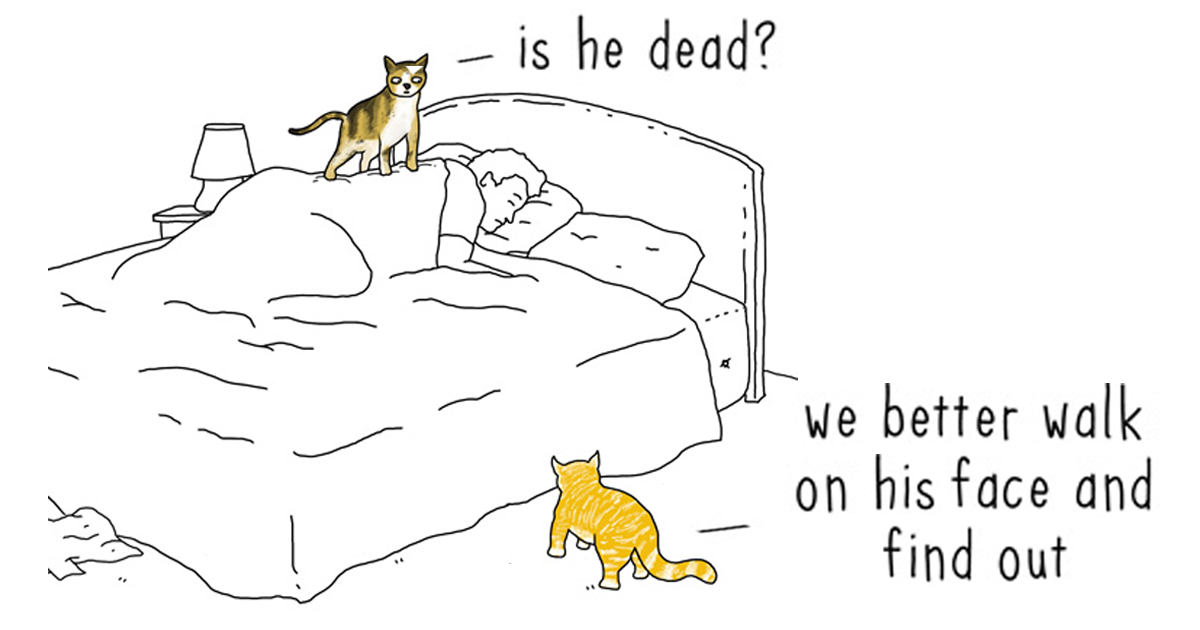
Imagine waking up one morning and discovering that animals could finally talk. Your dog would not simply bark at the mail carrier; he would deliver a dramatic neighborhood security briefing. Your cat would not stare at you from the hallway at 2:13 a.m.; she would calmly explain that the vibes in the kitchen are “off.” A raccoon near the trash can would probably ask whether you are really done with those fries. Honestly, society might not survive the first week.
The funny thing is, animals already communicate constantly. They just do it with tails, ears, scent, posture, calls, whistles, rumbles, chirps, dances, colors, and one very judgmental side-eye. Humans are the ones standing there saying, “What does it mean?” while a dog is clearly performing a full-body PowerPoint presentation titled, I Need That Sandwich Immediately.
This collection-style article, “If Animals Could Talk (30 Pics),” celebrates the imaginary captions we would put on animal photos while respecting the real science behind animal communication. From cats who weaponize silence to dolphins with signature whistles, the animal kingdom is basically one giant group chat. We are just not fluent yet.
Why the Idea of Talking Animals Never Gets Old
Talking animals are funny because they expose what we already suspect: animals have opinions. Maybe not human opinions about rent, taxes, or why the printer never works, but definitely opinions about food, territory, comfort, safety, affection, and that suspicious vacuum cleaner. When we see a photo of a grumpy owl, a guilty dog, or a goat standing somewhere it absolutely should not be standing, our brains instantly add dialogue.
That is why animal memes, pet captions, and funny wildlife photos are so popular online. They turn a silent moment into a tiny comedy scene. A lizard on a window becomes a landlord. A squirrel holding a nut becomes a financial planner. A cat sitting in a box becomes a CEO who has just approved a hostile takeover of the laundry room.
How Animals Really Communicate
Animals may not speak standard American English, but many species communicate with impressive precision. Dogs use posture, tail movement, facial tension, eye contact, vocal sounds, and scent. A wagging tail does not always mean pure happiness; speed, stiffness, height, and the rest of the body matter too. A relaxed dog and a tense dog can both wag, which is unfair to humans who prefer subtitles.
Cats communicate through meows, purrs, hisses, body posture, whiskers, tail position, scent marking, and behavior. A cat with flattened ears, dilated pupils, and a tucked body is not being mysterious. She is sending a message that roughly translates to, “Please cancel whatever you were about to do.”
Birds use calls and songs for warnings, courtship, territory, contact, and group coordination. Honey bees use the famous waggle dance to share information about food sources. Dolphins use clicks, whistles, and body movements, and bottlenose dolphins are known for individually distinctive signature whistles. Elephants communicate with low-frequency rumbles, some of which are below the range of human hearing. Prairie dogs produce alarm calls that can warn others about predators. In short, animals are talking all the time. We are just the confused tourists in their country.
If Animals Could Talk: 30 Pics We Can Practically Hear
Below are 30 imaginary animal-photo captions inspired by real animal behavior. Think of them as the translations we wish existed whenever a pet or wild creature gives the camera a look that says, “I have notes.”
1. The Dog Who Heard the Treat Bag
Caption: “I do not want to alarm you, but I believe the cheese drawer has opened.”
2. The Cat in the Cardboard Box
Caption: “This is not a box. This is a luxury studio apartment with excellent scratchability.”
3. The Raccoon in the Trash Can
Caption: “Before you judge me, define ownership.”
4. The Parrot Listening to Family Drama
Caption: “I will be repeating all of this at the worst possible time.”
5. The Squirrel Holding One Peanut
Caption: “My retirement plan is aggressive but crunchy.”
6. The Horse Making Direct Eye Contact
Caption: “I know you brought the carrot. Let us skip the ceremony.”
7. The Goat on the Roof
Caption: “You call it reckless. I call it vertical confidence.”
8. The Owl Looking Offended
Caption: “I heard your opinion. I have decided against it.”
9. The Dolphin Jumping Beside a Boat
Caption: “Welcome to the ocean. Please keep your hands, snacks, and weird vibes inside the vessel.”
10. The Elephant Standing Calmly
Caption: “I remember everything, including your weak apology.”
11. The Bee Returning to the Hive
Caption: “Everyone gather around. I have coordinates and gossip.”
12. The Penguin Waddling With Purpose
Caption: “I may be late, but I am formally dressed.”
13. The Dog Covered in Mud
Caption: “Good news: I found the puddle. Better news: I became one with it.”
14. The Cat Sitting on a Laptop
Caption: “Your productivity was becoming a problem.”
15. The Prairie Dog Standing Upright
Caption: “Attention colony: suspicious tall mammal approaching with camera confidence.”
16. The Cow Looking Over a Fence
Caption: “I heard you say barbecue. Please clarify.”
17. The Fox Sneaking Through Snow
Caption: “I am not sneaky. I am seasonally discreet.”
18. The Lizard on a Warm Rock
Caption: “My schedule is full: sun, blink, judge, repeat.”
19. The Kangaroo Looking Ready to Fight
Caption: “I woke up athletic and emotionally available for conflict.”
20. The Duck Leading Ducklings
Caption: “Single file, children. The humans are taking pictures again.”
21. The Bear at a Campsite
Caption: “I noticed you left snacks in a fabric house. Bold strategy.”
22. The Rabbit Frozen in Place
Caption: “I am not scared. I am buffering.”
23. The Chimpanzee With a Thoughtful Face
Caption: “I have studied humans and, frankly, I have concerns.”
24. The Seal Lounging on a Rock
Caption: “This is not laziness. This is marine wellness.”
25. The Dog Tilting Its Head
Caption: “I recognize three words: walk, snack, and suspiciously bath-adjacent.”
26. The Cat Knocking Something Off a Table
Caption: “Gravity asked for a demonstration.”
27. The Peacock Showing Off
Caption: “Yes, this is my casual outfit.”
28. The Frog Sitting in the Rain
Caption: “Finally, weather with taste.”
29. The Alpaca Staring Into the Camera
Caption: “I know what you said about my haircut.”
30. The Hamster With Full Cheeks
Caption: “No, I am not hoarding. I am emotionally preparing.”
What These Funny Captions Reveal About Us
When we imagine what animals would say, we are often translating body language into human humor. A guilty-looking dog becomes a tiny criminal defense attorney. A suspicious cat becomes a landlord inspecting your deposit. A squirrel becomes an overworked banker. The joke works because the animal’s expression already suggests a story.
Still, it is worth remembering that animals do not exist simply to become memes. Their behaviors usually serve a purpose. A dog’s whining may signal stress, excitement, pain, or a request. A cat’s tail flick may show irritation or intense focus. A bird’s call may warn others, attract a mate, or maintain contact. A bee’s dance can guide nestmates to resources. The fun begins when we respect the real behavior first and then add the punchline.
Why Pets Seem Like They Understand Every Word
Many pet owners are convinced their animals understand full conversations. Sometimes pets do learn many words, routines, tones, and patterns. A dog may know the difference between “walk” and “vet” based on repetition, context, and human body language. A cat may ignore her name not because she does not recognize it, but because she has reviewed the invitation and declined.
Animals are excellent observers. They notice when we pick up keys, open certain cabinets, change shoes, move toward the leash, or use a particular tone. To them, humans are noisy weather systems with snack potential. They may not parse every sentence, but they often understand more than we realize through context.
Experience Section: What It Feels Like to Live With Animals Who Basically Talk Already
Anyone who has lived with animals knows that silence does not mean absence of communication. A dog can communicate an entire emotional novel by placing one paw on your knee and staring at your sandwich. A cat can end a debate by slowly turning her back on you. A bird can make it very clear that your conference call needed more screaming. These experiences make the idea of “If Animals Could Talk” feel less like fantasy and more like a translation problem.
One of the funniest things about pets is how quickly they train humans. You think you are teaching the dog to sit, but the dog is teaching you that sitting produces cheese. You think you are establishing boundaries with the cat, but the cat is establishing that the bed, desk, laundry basket, and emotional atmosphere belong to her. If animals could talk, they might not ask for much more than they already demand through behavior. They would simply be more direct. “Open the door.” “Close the door.” “Open it again.” “No, I will not enter. I just wanted options.”
Wild animals create a different kind of imagined conversation. A squirrel pausing in the middle of a sidewalk looks like it is deciding whether humans deserve the park. A pigeon strutting past a cafe table seems to be saying, “I am the health inspector for crumbs.” A goose needs no translation; its entire personality already arrives in capital letters. These moments are funny because animals appear so committed to their choices. They do not seem embarrassed. A goat on a fence, a raccoon in a bin, or a duck crossing a road with twelve fuzzy interns behind her all carry the confidence of creatures who have never once worried about email etiquette.
Living around animals also teaches patience. Their messages are not always convenient. A dog may ask for play when you are tired. A cat may request attention by sitting directly on the book you are reading. A horse may refuse to move because something invisible has offended him. These moments can be annoying, but they are also reminders that communication is not only about words. It is about paying attention. The more carefully we observe animals, the more personality we notice.
The best experience is when communication becomes a shared routine. A dog brings the leash. A cat waits by the food bowl with theatrical restraint. A bird greets the morning with a familiar sound. Even without speech, these signals become part of daily life. If animals could talk, the world would be louder, funnier, and probably more honest. Until then, we have ears, eyes, patience, and captions.
Conclusion
“If Animals Could Talk (30 Pics)” works because animals already seem to be saying something. Their expressions, movements, and habits invite us to imagine secret monologues. While the captions are playful, the truth behind them is even more fascinating: animals communicate in complex, species-specific ways that help them survive, bond, warn, hunt, play, and navigate the world.
Maybe animals do not need human language after all. Maybe a cat’s stare, a dog’s tail, a dolphin’s whistle, an elephant’s rumble, and a bee’s dance are already perfectly clear to the audience that matters. We are simply late to the conversation, holding a camera, laughing at a raccoon, and trying our best to translate.
Note: This article was created as original, web-publishable content based on established animal-behavior research and general science reporting. It is written in a humorous editorial style and does not include source-link clutter inside the article body.