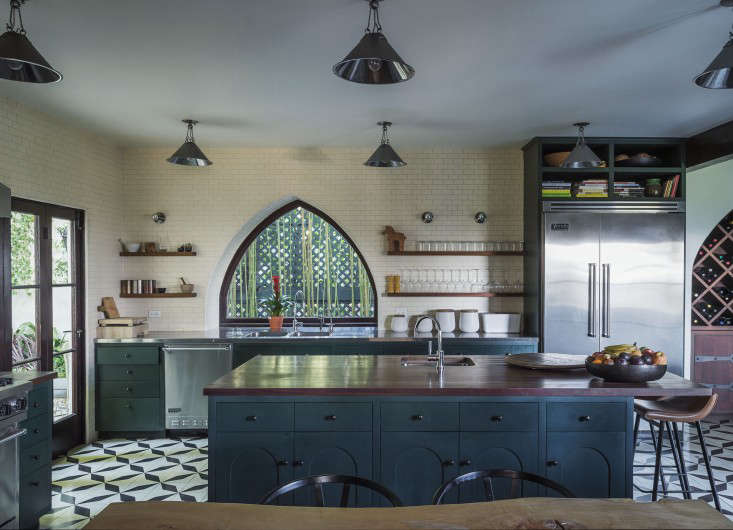
If your dream kitchen lives somewhere between “old-world villa,” “serious cook’s workshop,” and “I definitely have opinions about olive oil,” Commune has your number. The Los Angeles design studio’s exotic tiled kitchen is one of those spaces that manages a rare trick: it feels dramatic without being fussy, richly layered without looking over-decorated, and stylish without screaming for attention like a reality-show contestant on espresso.
At the heart of the look is a powerful design tension. This kitchen is moody, textural, and packed with visual personality, yet it still works like a real kitchen for real people who boil water, chop herbs, wash dishes, and occasionally burn toast while pretending they meant to make it “rustic.” That balance is what makes the room so memorable. It is not just pretty. It is persuasive.
In the original Commune project, the designers transformed multiple smaller service spaces into one large kitchen and dining area, then layered in handmade-looking tile, deep custom cabinetry, walnut, stainless steel, arched details, and industrial-grade function. The result feels rooted in history but not trapped by it. There are nods to Spanish Colonial architecture, a splash of travel-inspired romance, and just enough restraint to keep the whole room from tipping into costume territory.
Why This Kitchen Works So Well
The first secret is that tile is not treated like an accessory. It is the architecture. Instead of being confined to a timid backsplash that stops exactly where caution begins, the tile takes command of the room. That decision instantly gives the space a sense of permanence. It tells your eyes, “Relax, I belong here.”
That is a big reason the kitchen feels exotic in the best sense of the word. The surfaces have the soul of something collected, traveled, and lived with. The tile introduces pattern, depth, reflection, and rhythm, but because the palette stays controlled, it does not become visual karaoke. It sings, sure. It just knows the lyrics.
The second secret is contrast. Commune offsets all that cool, glossy, durable tile with warm walnut and richly painted cabinetry. This keeps the room from feeling hard or clinical. A fully tiled kitchen can go one of two ways: elegant and enveloping, or suspiciously similar to a very fashionable public restroom. The wood elements prevent the second outcome. Open walnut shelves, a dark butcher-block island, and reclaimed pantry doors add warmth, tactility, and the kind of age that new kitchens often try and fail to fake.
The third secret is shape. Arched windows and arch-cut cabinet details quietly echo the home’s Spanish Colonial bones. This matters more than people think. One of the fastest ways to make a renovation feel disconnected is to ignore the architecture around it. Commune does the opposite. The kitchen borrows cues from the house so the room feels inevitable, as though it was waiting decades for somebody to get the memo.
The Design DNA of Commune’s Exotic Tiled Kitchen
Tile That Carries the Mood
Tile is doing heavy lifting here, both visually and practically. In today’s kitchens, designers increasingly use bolder tile choices to define mood rather than simply protect drywall, and this kitchen is a perfect example of that shift. Instead of playing backup singer, the tile is the lead. It sets the tone before the wood, lighting, or hardware even get a chance to clear their throats.
What makes the approach especially smart is the sense of material authenticity. The room does not rely on one flashy slab or a trendy pattern destined to age like a celebrity apology video. It leans into texture, variation, and craft. The tile reads as soulful, not slick. That gives the kitchen a timeless quality even though it feels distinctive and editorial.
Cabinetry With Depth, Not Just Color
Dark cabinetry can be intimidating in kitchen design. Done poorly, it makes a room feel gloomy. Done well, it adds gravity, intimacy, and polish. In this case, the cabinets are deeply saturated and custom-feeling, which gives the kitchen its moody backbone. They are not there to disappear. They are there to anchor.
Inset doors and drawers also help. That kind of detailing subtly references older cabinetry and reinforces the kitchen’s sense of age. It is a reminder that luxurious design is often less about adding more and more things, and more about getting the bones right. Fancy hardware is nice. Proportion is nicer.
Walnut as the Great Softener
Walnut shows up in all the right places: the island, the shelving, the pantry treatment. This is no accident. Walnut has that rare superpower of looking sophisticated and relaxed at the same time. It warms up the tile, offsets the industrial appliances, and keeps the room emotionally accessible. Without it, the kitchen might still be beautiful, but it would lose some of its pulse.
This is also one of the easiest lessons to steal. Even if you are not renovating an entire room, adding a warm wood note against tile or painted cabinetry can make a kitchen feel more layered and expensive. Open shelves, a butcher-block insert, wood stools, or a vintage table can all do the job.
Industrial Touches That Earn Their Keep
One of the most satisfying choices in this kitchen is the stainless steel prep and sink zone. Stainless has long been beloved in professional kitchens because it is hard-wearing, easy to clean, and unapologetically practical. In a residential space, it can sometimes read cold. Here, it reads sharp. That is because Commune uses it as a counterpoint, not a takeover.
Paired with warm wood, tile, and arched forms, the stainless steel feels more like a chef’s tool than a style gimmick. The same goes for the substantial range, wall-mounted pot filler, and other workhorse elements. They bring utility and visual weight, but they never bully the room. The kitchen feels ready for actual cooking, which is refreshingly radical in an age of kitchens designed mainly for posing with lemons.
How to Steal the Look Without Copying It Word for Word
1. Start With a Tile Story
If you want the Commune effect, begin with tile. Choose a tile that has movement, nuance, or handmade character. It does not need to be loud. In fact, subtle variation often works harder than flashy pattern. Think creamy whites, earthy neutrals, smoky greens, dusty blues, or sun-faded tones that look like they have seen a little life.
Go farther than a basic backsplash if your budget allows. Cover more wall area. Wrap a corner. Treat tile as a room-making element, not just a splash guard. The bigger move often looks more intentional than the smaller compromise.
2. Pair It With One Serious Wood Tone
Choose one grounding wood tone and repeat it with discipline. Walnut is ideal because it brings warmth without tipping rustic, but oak, teak, or stained ash can also work. The goal is contrast with coherence. Too many wood tones and your kitchen starts looking like it lost a custody battle.
3. Respect the Architecture
The reason this Commune kitchen feels so integrated is that it listens to the house. If your home has arches, plaster walls, traditional moldings, or vintage windows, work with those cues. Repeat shapes. Reference proportions. Let the new work feel informed by the old. Even a modern kitchen benefits from a little architectural humility.
4. Mix Utility With Beauty
This look thrives on the marriage of romance and rigor. Use one or two hardworking materials, such as stainless steel, soapstone, or unlacquered brass, then soften them with wood, painted cabinetry, textiles, or dining furniture that feels collected. You want the room to look like someone fabulous cooks there, not like a showroom rep is following you with a brochure.
5. Add a Few Soulful Details
Commune’s kitchen does not rely on clutter, but it does embrace character. A live-edge table, black Wishbone-style dining chairs, a leather stool, mirrored pantry inserts, or artisanal storage pieces can all push a kitchen from nice to unforgettable. The key is choosing pieces with personality, not just price tags.
Color, Texture, and Lighting: The Real Mood Makers
What many people miss when they admire a kitchen like this is that the magic is not coming from color alone. It is coming from the conversation between surfaces. Glossy tile catches light. Dark cabinetry absorbs it. Walnut diffuses it. Metal reflects it. Glass bounces it around. That interplay creates a room that changes throughout the day, which is why it feels alive.
Lighting matters just as much. A kitchen inspired by this look should avoid overly blue, sterile lighting at all costs. Nothing destroys an exotic, layered mood faster than illumination that makes everything look like a dentist’s office at 8:03 a.m. Favor warm light, shaded fixtures, and task lighting that feels integrated rather than glaring. A pendant with character can do as much emotional work as an entire tile budget line item.
Texture also deserves more respect than it usually gets. Smooth counters, brushed metal, painted millwork, old wood grain, and slightly varied tile all keep the eye moving. A room with this much material intelligence feels complete even before you decorate it.
Who This Style Is Best For
This kind of kitchen is ideal for people who want personality without chaos. It suits homeowners who love old houses, layered interiors, travel references, handmade materials, and a little drama with their morning coffee. It is also perfect for anyone tired of kitchens that feel so safe they could be replaced by a password field.
That said, this look is not for minimalists who want every surface blank and every line invisible. Commune’s approach celebrates mood, detail, and material presence. It asks you to appreciate nuance. If your dream kitchen is all-white, ultra-glossy, and determined to look like it has never encountered a tomato, this may not be your lane.
The Big Takeaway
The genius of Commune’s exotic tiled kitchen is not that it uses expensive things. It is that it uses contrast intelligently. Old-world references meet practical function. Tile meets timber. Industrial notes meet handcrafted warmth. The room feels specific, and that is what makes it luxurious. Generic spaces can be expensive. Specific spaces are memorable.
So if you want to steal this look, do not just copy the tile or paint your cabinets a moody shade and call it a spiritual transformation. Steal the logic. Build a kitchen that respects architecture, mixes hard and soft materials, uses tile with confidence, and leaves room for life. That is the real Commune lesson. Not perfection. Presence.
The Experience of Living With a Commune-Inspired Tiled Kitchen
Spend a little time in a kitchen inspired by this look, and you realize the appeal goes way beyond aesthetics. The first thing you notice is the mood. Even before coffee is brewed, the room feels settled. Morning light hits the tile and turns the walls into something gently reflective, while the wood tones keep the space from feeling cold. It is a kitchen that wakes up slowly and beautifully, which is more than most people can say before their first cup.
By midday, the room starts to reveal why this style works so well for everyday life. Open shelving makes the things you actually use feel close at hand instead of hidden like state secrets. A serious prep area invites you to cook more ambitiously. Stainless work surfaces and durable finishes take the panic out of mess. You stop treating the kitchen like a museum installation and start treating it like the busiest room in the house, which, frankly, it probably is.
There is also something deeply satisfying about the tactile rhythm of a space like this. Your hand moves from cool tile to warm wood, from sturdy hardware to smooth counter, from ceramic mugs to a leather stool that already looks better with age. Good kitchens are visual, but great kitchens are physical. They make everyday actions feel a little more intentional. Chopping parsley feels less like a chore. Setting down bread and olives feels a touch cinematic. Even washing dishes becomes slightly less offensive, which may be the highest compliment any design can earn.
Then there is the social side. A Commune-inspired kitchen does not merely accommodate gathering; it encourages it. The mix of dining furniture, layered materials, and open sightlines makes people want to linger. Someone pours wine. Someone else leans on the counter pretending to help. A child draws at the table. A friend asks where the tile is from. Another asks if you secretly became cooler while they were parking. The room holds all of that beautifully.
What is especially lovely is that the style does not depend on spotless perfection to look good. In many sleek contemporary kitchens, a single crumb feels like a moral failing. In a room like this, life looks appropriate. A cutting board left out, fruit in a bowl, a cookbook opened to a stained page, a teacup on the shelf, these things add to the atmosphere instead of ruining it. The kitchen feels inhabited, not staged.
At night, the mood shifts again. Under warmer light, the tile deepens, the cabinetry becomes richer, and the room takes on that intimate glow people are always trying to manufacture with expensive candles and vague lifestyle advice. Dinner feels slower. Conversations stretch. The kitchen becomes less of a workstation and more of a backdrop for living. That is the real experience this look offers: not just beauty, but atmosphere with stamina.
And maybe that is why Commune’s exotic tiled kitchen stays lodged in people’s minds. It is not just a collection of enviable materials. It suggests a way of living that feels grounded, sensual, and human. It says a kitchen can be hardworking without being harsh, elegant without being stiff, and expressive without losing function. In other words, it gives you a room worth stealing ideas from, then quietly reminds you to make it your own.