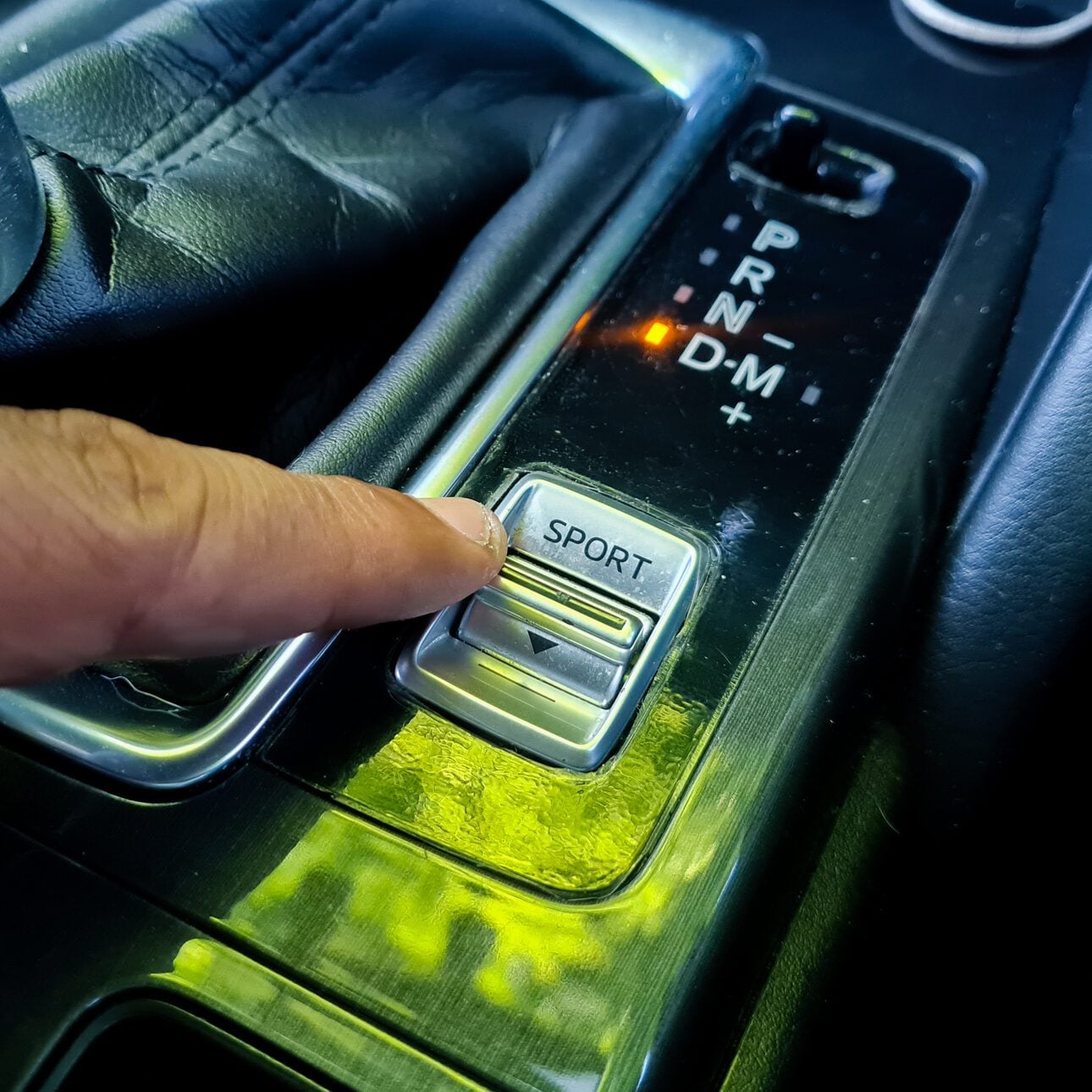
If your car has a button labeled Sport, chances are you have pressed it at least once out of pure curiosity. Maybe the dashboard turned red. Maybe the transmission got a little dramatic. Maybe the car suddenly behaved like it had just finished an espresso and was ready to debate someone online.
But what does Sport Mode actually do?
The short answer is this: in most vehicles, Sport Mode changes how your car responds, not necessarily how much raw power it has. It usually sharpens throttle response, changes transmission shift timing, increases steering weight, and in some vehicles adjusts suspension, exhaust sound, all-wheel-drive behavior, regenerative braking, or the level of intervention from traction and stability systems. In plain English, it makes the car feel more alert, more eager, and sometimes a little less interested in sipping fuel politely.
That said, Sport Mode is not magic. It does not turn a grocery-getter into a race car, and it definitely does not make traffic disappear. What it can do is make a vehicle feel more responsive and more engaging when the situation calls for it.
Let’s break down what Sport Mode really does, what it usually does not do, and when it actually makes sense to use it.
What Sport Mode Usually Changes
1. It Sharpens Throttle Response
The biggest and most common change is throttle mapping. That sounds technical, but the idea is simple: your car changes how quickly it responds when you press the accelerator.
In Normal mode, the throttle is usually calibrated to feel smooth and predictable. In Sport Mode, the same pedal movement often asks for more engine or motor response sooner. So instead of “Sure, I’ll get moving in a moment,” the car says, “We ride at dawn.”
This does not always mean the engine is suddenly making more horsepower. More often, it means the car gives you a bigger slice of available performance earlier in the pedal travel. That is why Sport Mode can feel quicker even when the engine’s peak output stays the same.
2. It Changes Automatic Transmission Behavior
In many gas-powered vehicles, Sport Mode tells the automatic transmission to hold lower gears longer and downshift more readily. That keeps the engine in a higher rev range, where it is usually closer to its power band.
The result is faster response when you merge, pass, or climb hills. Instead of lazily shifting up as soon as possible for fuel economy, the transmission hangs onto gears longer so the vehicle feels more immediate. In some cars, downshifts also happen earlier and more aggressively when you lift off the throttle or brake before a turn.
This is one reason Sport Mode feels more lively than Normal mode. The car is essentially preparing itself for action instead of assuming you are just commuting to buy paper towels.
3. It Can Make Steering Feel Heavier
Another common change is steering weight. In Sport Mode, many vehicles increase steering effort, which makes the wheel feel heavier and more resistant to quick, casual inputs.
Now, heavier steering does not automatically mean better steering. Sometimes it genuinely improves confidence and road feel. Other times it just feels like your steering wheel started going to the gym. But either way, the goal is to make the car feel more planted and more deliberate during spirited driving.
4. It May Firm Up the Suspension
If a vehicle has adaptive dampers or an adjustable suspension, Sport Mode may stiffen things up. That can reduce body roll in corners, improve composure during quick transitions, and make the vehicle feel tighter overall.
The tradeoff is comfort. A road that felt nicely cushioned in Comfort or Normal mode may suddenly feel like the pavement is personally offended by your existence. On smooth roads, the firmer setup can be fun. On rough streets, less so.
5. It May Change Exhaust Sound or Cabin Sound
Some performance cars and sporty trims open exhaust valves in Sport Mode or amplify engine sound through the cabin. That means you may hear more growl, more bark on downshifts, and more drama overall.
In some cars, the extra sound is mechanical and authentic. In others, some of it is digitally enhanced. Welcome to modern motoring, where your car may be part athlete, part theater kid.
6. It Can Loosen the Safety Nets a Bit
On certain vehicles, Sport Mode adjusts the thresholds for traction control and electronic stability control. Usually that means the systems allow a little more wheel slip or a little more yaw before stepping in.
This does not mean the car suddenly wants you to drive like a stunt double. It simply means the systems may be less intrusive so enthusiastic drivers can enjoy a more natural, performance-oriented feel. In many cars, the full safety systems are still very much on duty. Sport Mode is not the same as turning everything off.
7. In Hybrids and EVs, It Often Changes Power Delivery Differently
Sport Mode works a bit differently in hybrids and electric vehicles. Because electric motors deliver torque almost instantly, switching to Sport Mode often makes the vehicle feel much more eager right away.
In hybrids, Sport Mode may keep the gas engine engaged more often, adjust simulated shift behavior, or prioritize responsiveness over efficiency. In EVs, it may sharpen accelerator mapping, alter brake blending or regenerative braking behavior, and in some cases unlock more aggressive power delivery. On certain performance EVs, Sport-style settings can genuinely increase available output or improve sustained performance. So yes, there are exceptions to the “it doesn’t add power” rule.
What Sport Mode Usually Does Not Do
It Usually Does Not Add Massive Horsepower
This is the biggest myth. In most everyday vehicles, Sport Mode does not suddenly add a heroic number of extra horses under the hood. It typically changes response, not the engine’s fundamental hardware.
That is why the car can feel much faster even when peak horsepower barely changes or does not change at all. It is a perception boost, a calibration trick, and often a very effective one.
There are exceptions. Some EVs and performance-oriented models do unlock additional output or more aggressive power management in certain modes. But on the average sedan, crossover, or SUV, Sport Mode is more about behavior than brute force.
It Does Not Improve Every Part of Driving
Sport Mode can make a car more fun on a winding road, but that does not mean it is better in every scenario. In stop-and-go traffic, a more sensitive throttle can feel jumpy. On slick roads, a sharper response may make it harder to be smooth. On long highway cruises, the higher revs may add noise without adding much joy.
Sport Mode is a tool, not a default life philosophy.
When Sport Mode Actually Helps
Merging and Passing
This is one of the best real-world uses for Sport Mode. If you are merging onto a fast highway or passing a slower vehicle on a two-lane road, the sharper throttle and quicker downshifts can make the car feel more prepared.
Curvy Roads
On twisty back roads, Sport Mode often makes the vehicle easier to place and more satisfying to drive. Heavier steering, better body control, and more immediate throttle response can all help the car feel more connected.
Hilly Terrain
Sport Mode can also help on hills or mountain roads, where you do not want the transmission constantly hunting for gears. Holding lower gears longer can make climbs and descents feel more controlled.
Drivers Who Want More Engagement
Some people simply prefer how their vehicle feels in Sport Mode. If the tuning suits your taste and road conditions, there is nothing wrong with using it regularly. Just know you are usually trading at least some comfort or efficiency for that extra engagement.
When You Probably Should Skip It
In Snow, Ice, or Heavy Rain
Sport Mode is usually not the best choice when traction is limited. A sharper throttle and reduced intervention from stability systems can make smooth control harder on slippery surfaces. Many vehicles offer Snow, Wet, Slippery, or similar modes specifically for these conditions, and those are generally the smarter pick.
In Heavy City Traffic
If you are crawling through traffic at the pace of a disappointed turtle, Sport Mode may just make the car feel more abrupt. That is not more fun. That is cardio for your right foot.
On Long Fuel-Economy-Focused Trips
Because Sport Mode often holds gears longer and encourages more aggressive response, it can reduce fuel efficiency. If your goal is maximum mileage, Normal or Eco mode is usually the better companion.
Does Sport Mode Hurt Fuel Economy?
Usually, yes, at least to some degree. Sport Mode often keeps the engine revving higher, downshifts more often, and makes it easier to accelerate harder. All of that tends to use more fuel in gas-powered vehicles.
In hybrids and EVs, Sport Mode can also reduce efficiency or range because it prioritizes responsiveness over conservation. It is not always dramatic, but if you use Sport Mode all the time, do not be shocked when your fuel gauge or estimated range starts acting like it has trust issues.
Is Sport Mode Bad for Your Car?
Used normally, no. Sport Mode is built into the vehicle by the manufacturer. It is a designed operating mode, not a hack, cheat code, or suspicious internet experiment.
That said, how you drive matters more than the button itself. Frequent hard acceleration, aggressive cornering, and constant high-speed use will increase wear on tires, brakes, and powertrain components faster than gentle driving. That is true whether or not the car is in Sport Mode.
So the honest answer is this: Sport Mode itself is not harmful, but it often encourages the kind of driving that is less gentle on parts and less kind to fuel bills.
Sport Mode in Different Types of Vehicles
Economy Cars
In smaller or less powerful vehicles, Sport Mode can make the car feel noticeably more awake. Sometimes that is a pleasant surprise. Other times it mainly makes the engine noisier while the actual acceleration gain is modest. The effect depends heavily on the vehicle’s underlying powertrain.
Crossovers and SUVs
In SUVs, Sport Mode often focuses on reducing the floaty feeling by changing steering, transmission, and suspension tuning. It can make a tall vehicle feel tidier, though it will not rewrite the laws of physics. A three-row family hauler may feel sportier, but it is still carrying kids, snacks, and enough cup holders to qualify as real estate.
Luxury Cars
Luxury models often have more dramatic mode changes because they can alter multiple systems at once, including suspension, steering, throttle, transmission, engine sound, and even seat bolstering or gauge-cluster displays. In these vehicles, Sport Mode may genuinely create a second personality.
Performance Cars
On dedicated performance cars, Sport Mode is often just the appetizer. There may also be Sport Plus, Track, Race, or custom performance settings. In these vehicles, mode changes can affect lap consistency, launch behavior, damper stiffness, exhaust valves, differential tuning, and stability-control thresholds. That is where the button stops being a gimmick and starts being part of the performance toolkit.
The Real Bottom Line
So, what does Sport Mode really do?
It usually makes your car feel quicker, sharper, and more responsive by changing software-controlled systems like throttle response, transmission logic, steering effort, and sometimes suspension, sound, or traction settings. In most vehicles, it does not magically add a pile of horsepower. Instead, it changes the vehicle’s attitude and responsiveness so more of the available performance feels closer to your right foot.
That makes Sport Mode genuinely useful, especially for merging, passing, curvy roads, and drivers who enjoy a more connected feel. But it is not the best mode for every situation. It can cost comfort, fuel economy, and smoothness, and in bad weather it is often the wrong tool for the job.
In other words, Sport Mode is not a scam, but it is not sorcery either. It is simply your car’s way of saying, “Would you like the spicier version?”
Real-World Experiences With Sport Mode
The most interesting thing about Sport Mode is that people do not usually talk about it in engineering terms. They talk about how the car feels. And in real-world driving, that feeling is often the whole story.
For many drivers, the first noticeable experience is during a highway merge. In Normal mode, the vehicle may hesitate for a beat, downshift politely, and then build speed in a measured way. Tap Sport Mode, and the same car often reacts faster, holds the lower gear, and feels more confident getting up to speed. Owners and reviewers regularly describe this as the moment the car feels “awake.” Nothing magical happened under the hood; the vehicle just became more eager to use what it already had.
Another common experience shows up on back roads. A driver in a midsize sedan, crossover, or sporty hatchback often notices that the steering feels heavier and the vehicle reacts more immediately to inputs. On a good road, this can make the car feel more composed and more connected. Reviewers frequently say the difference is not always night and day, but it is enough to make a routine drive more entertaining. Suddenly, the commute has a soundtrack and a personality.
Not every experience is glowing, though. Some drivers switch into Sport Mode and mostly notice extra engine noise, higher revs, and a throttle that feels a little too jumpy in traffic. This is especially common in vehicles that are tuned primarily for comfort. In those cases, Sport Mode can feel like a costume change rather than a full transformation. The car talks a bigger game, but the payoff is modest.
Hybrid and EV drivers often report a different kind of change. Because electric torque arrives so quickly, Sport Mode can make the car feel dramatically punchier, even at city speeds. That instant response can be genuinely fun, but it also tends to make the car less relaxing if you are trying to drive smoothly. Some drivers love the added zip; others try it once, grin, and switch back before the estimated range starts giving them side-eye.
Then there are performance-car owners, who tend to treat Sport Mode as the starting point rather than the destination. In those cars, the mode can make real, meaningful changes to exhaust sound, chassis control, and power delivery. Drivers often describe the vehicle as having multiple personalities: calm one minute, genuinely aggressive the next. That is where Sport Mode feels least like marketing and most like engineering.
The broad pattern is clear. Most people who enjoy Sport Mode use it selectively: on entrance ramps, while passing, on scenic roads, or when they simply want the car to feel more alive. Most people who dislike it complain about the same things: worse fuel economy, unnecessary harshness, and an overexcited throttle in daily traffic.
That might be the most honest verdict of all. Sport Mode is best when the road, weather, and mood all line up. Use it in the right moment, and it can make an ordinary drive feel unexpectedly fun. Use it at the wrong moment, and it is just your car being a little extra.