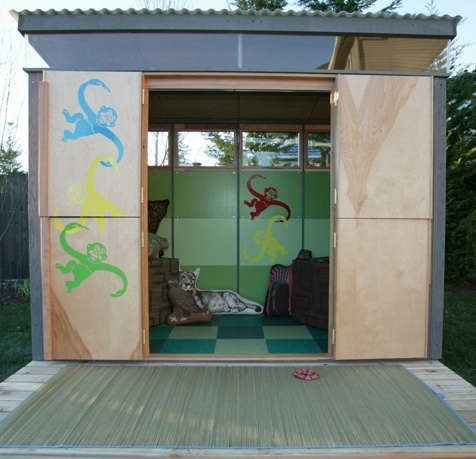
A modern play shed is what happens when a traditional backyard playhouse grows up, discovers clean architecture, and politely refuses to be molded from neon plastic. It gives children a place for imaginative play while adding a small, attractive structure to the landscapeone that can eventually become an art studio, reading room, homework nook, garden retreat, or storage shed.
The best designs are not simply miniature houses. They balance style, durability, safety, ventilation, storage, and adaptability. In other words, they must satisfy children who want a secret headquarters and adults who do not want the backyard to resemble an abandoned carnival.
What Is a Modern Play Shed?
A modern play shed is a compact outdoor structure designed primarily for children but built with the materials, proportions, and visual discipline of contemporary architecture. Unlike a decorative cottage playhouse, it may feature a single-slope roof, broad windows, simple siding, geometric openings, restrained colors, and built-in furniture.
The word “shed” is important. A well-designed kids play shed usually has a real floor, weather-resistant walls, a proper roof, and enough structural integrity to remain useful after the toy kitchen has been retired. It feels more permanent than a pop-up tent but less complicated than a full backyard accessory dwelling.
Modern playhouse design often borrows ideas from Scandinavian cabins, tiny homes, and garden studios. Natural wood softens the clean lines, while large windows connect the interior to the yard. The result can look sophisticated without becoming so precious that everyone panics when a five-year-old introduces the wall to a purple crayon.
Design synthesis:
Why Build a Backyard Play Shed?
It creates room for imaginative play
A defined child-sized space can become almost anything: a bakery, veterinary clinic, spaceship, school, library, fort, theater, or highly disorganized international airport. The structure establishes the setting, but children provide the story.
Open-ended interiors generally last longer than heavily themed designs. A pirate ship is exciting until its captain develops an intense interest in dinosaurs. A simple modern play shed can change identity every afternoon with movable furniture, fabric, cardboard, chalk, and a heroic amount of imagination.
It encourages outdoor time
A backyard playhouse gives children a destination outside. They are not merely being told to “go play outdoors,” which can sound suspiciously like an eviction notice. They have a recognizable place to visit, organize, decorate, and share.
Locating the play shed near family activity can make it more successful. Children gain independence while adults retain a visual connection from a patio, kitchen window, or garden path. The ideal placement creates separation without making the structure feel isolated.
It can evolve with the family
A permanent playhouse should have a second life built into its plan. As children grow, the interior might become a study area, teen retreat, music practice space, potting shed, hobby room, or compact backyard office. Neutral finishes, a reasonably tall ceiling, accessible doors, and removable child-sized features make conversion easier.
Outdoor play and adaptable design:
Choose the Right Location
Before choosing siding colors or miniature chairs, study the yard. A modern play shed needs a site that is level, visible, well drained, and clear of hazards.
Prioritize drainage and stable ground
A low corner that remains soggy after rain is not a charming location; it is a future mushroom preserve. Select ground that naturally drains away from the structure. Depending on soil conditions and shed size, the base may use compacted gravel, concrete blocks, ground-contact framing, piers, or a slab.
The floor should remain separated from damp soil. A raised, ventilated base helps protect wood framing and makes it easier to keep the interior dry. Roof runoff should also be directed away through overhangs, gutters, grading, or a gravel perimeter.
Provide shade without inviting falling branches
Some shade is valuable, particularly in hot climates, but avoid placing the shed beneath damaged limbs or crowded against dense vegetation. Check the area above for branches and utility lines. Leave enough room around the building for inspection, painting, cleaning, and airflow.
Maintain a useful sightline
Position windows or an open porch toward the house’s main outdoor living area. A clear sightline lets children feel independent while allowing adults to observe without hovering in the doorway like security guards at a very small nightclub.
Site, drainage, spacing, and moisture principles:
Check Permits and Local Rules First
Playhouses and small detached sheds may be exempt from building permits in some jurisdictions, but exemption thresholds vary. Local rules may still regulate setbacks, maximum height, lot coverage, foundations, electrical work, homeowner association approval, and distance from property lines.
Contact the local building department before purchasing materials. Describe the project as a detached playhouse or accessory structure and provide its planned dimensions, height, foundation, and utilities. Permit-free does not mean rule-free, and discovering a setback problem after construction is an expensive way to become acquainted with a tape measure.
Permanent wiring should be planned and installed according to local electrical requirements. Extension cords should never become a substitute for permanent construction simply because they can be hidden behind a shrub.
Code and permit guidance:
Design Features That Make a Play Shed Feel Modern
A simple geometric form
The easiest route to a contemporary look is a clean silhouette. A rectangular footprint topped by a shed roof requires fewer decorative parts than a miniature Victorian cottage. It is also easier to frame, roof, flash, and maintain.
A single-slope roof can create extra ceiling height along one wall, making space for clerestory windows or a loft-like shelf. Keep roof geometry practical for local rainfall, wind, and snow conditions rather than choosing an angle solely because it looked dramatic in a photograph.
Large but child-safe windows
Windows brighten a small structure, improve visibility, and help air move through the interior. Place openings on more than one wall for cross-ventilation. Operable windows should have secure hardware and stops that children cannot easily defeat.
Where breakage is a concern, consider safety glazing or impact-resistant clear panels appropriate for outdoor construction. Avoid sharp exposed edges, fragile decorative glass, and openings that could create entrapment hazards.
A restrained material palette
Modern does not have to mean cold. Combine two or three materials rather than twelve competing ideas. Vertical wood siding, painted fiber-cement or engineered panels, dark trim, and a metal or shingle roof can create a crisp exterior.
Popular palettes include charcoal with natural cedar, warm white with black trim, muted green with pale plywood, or weathered gray with one playful accent. Let the children choose a door color, mural panel, flag, or sign so the space feels like theirs rather than an architectural model they are forbidden to touch.
Indoor-outdoor connections
A small porch, deck, serving window, built-in bench, or wide doorway expands the usable play area. A pass-through counter can become a café, puppet theater, laboratory, ticket booth, or emergency distribution center for imaginary cookies.
Modern aesthetics, light, ventilation, and customization:
Materials for a Durable Outdoor Playhouse
Foundation and floor framing
Use materials approved for the expected moisture exposure. Ground-contact pressure-treated lumber is commonly used where framing sits close to soil, while naturally decay-resistant species may be appropriate for exposed trim or siding. Follow manufacturer instructions for fasteners, sealing cut ends, and safe handling.
Exterior-rated plywood makes a practical subfloor when properly supported and protected. Leave recommended expansion gaps between structural wood panels because plywood and oriented strand board can expand as moisture conditions change.
Wall framing and sheathing
Standard wood framing is familiar, adaptable, and easy to insulate later if the shed receives a second life. Exterior sheathing, a weather-resistant barrier, correctly flashed openings, and durable siding create a more reliable shell than attaching decorative boards directly to exposed framing.
A play shed is small, but water remains impressively determined. Flash window heads, protect horizontal surfaces, include a drip edge, and avoid trim details that trap rain.
Roofing
Asphalt shingles are accessible to many DIY builders, while metal panels can reinforce the modern appearance and shed water efficiently. Corrugated roofing may also work when installed with the correct slope, closures, fasteners, underlayment, and edge details.
Paints and finishes
Use coatings intended for exterior surfaces and compatible with the selected material. Smooth rough lumber, remove splinters, and maintain painted areas before they begin peeling or chipping. Be especially cautious when reusing salvaged doors, windows, furniture, or old painted boards, since deteriorating legacy coatings can present lead hazards.
Wood movement, exterior materials, and coating safety:
Safety Must Shape the Design
A play shed is not ordinary storage with stuffed animals added. Every surface should be evaluated at a child’s height and from a child’s point of view.
Round or soften exposed corners, countersink fasteners, cover bolt ends, and eliminate sharp metal edges. Doors should not trap fingers or accidentally lock children inside. Use ventilation openings that cannot be easily blocked, and avoid long cords, loose ropes, or window-covering loops.
Furniture should be stable and appropriately scaled. Secure tall shelving so it cannot tip, and use toy boxes with lightweight lids, ventilation, or lid-support hardware. Store paint, fuel, pesticides, garden chemicals, power tools, and sharp equipment somewhere else. A play shed should never perform double duty as a chemical cabinet.
Extra precautions for elevated features
If the structure includes a loft, climbing wall, slide, ladder, bridge, or raised platform, the project begins to resemble playground equipment and requires additional fall protection. Guardrails, safe access, appropriate spacing, clear fall zones, and impact-absorbing surfacing become essential.
As conservative guidance, the U.S. Consumer Product Safety Commission recommends checking play equipment for protruding hardware, sharp edges, tripping hazards, dangerous openings, and unprotected elevated surfaces. Its playground checklist identifies entrapment concerns in openings between 3.5 and 9 inches and recommends protective surfacing around active play equipment. Apply the guidance appropriate to the features you install and follow the manufacturer’s instructions for any purchased slide, climbing hold, swing, or accessory.
Child and playground safety guidance:
Plan the Interior Around Flexible Play
Keep the center open
In a compact backyard playhouse, empty floor area is valuable. Place benches, shelves, counters, and storage around the perimeter. Children can then rearrange the central space for building, drawing, reading, dancing, or holding emergency meetings about whose turn it is to be the dragon.
Use modular furniture
A low table can function as a workbench, restaurant counter, craft station, or stage. Stackable stools and floor cushions are easier to move than a fixed furniture set. Removable panels can hold chalkboard paint, magnetic accessories, paper rolls, or pegboard storage.
Build in sensible storage
Use labeled bins, wall hooks, shallow shelves, and a weather-resistant exterior box. Keep frequently used items where children can reach them without climbing. Store paper, books, textiles, and electronics indoors unless the structure is fully weather-protected.
Add light without overcomplicating the project
Daylight should do most of the work. Solar-powered exterior fixtures or portable rechargeable lights may provide simple illumination, provided products are used as directed and cords remain out of play paths. A play shed does not need a chandelier, despite what its five-year-old property developer may insist.
DIY Build, Kit, or Custom Contractor?
Building from scratch
A scratch-built modern play shed offers the greatest control over proportions, windows, finishes, and future conversion. It is best suited to someone comfortable with layout, framing, roofing, flashing, and safe tool use. Detailed plans are far more reliable than improvising each wall after lunch.
Using a prefabricated kit
A kit can reduce cutting and design decisions. Precut parts and established hardware packages simplify assembly, but the site and foundation still need careful preparation. Read dimensions closely; product photographs can make a playhouse appear large enough for a small orchestra when the actual interior barely accommodates two tambourines.
Hiring a professional
A contractor is worth considering when the design includes complicated foundations, large glazed openings, electrical service, elevated play equipment, unusual roofing, or strict local requirements. Provide drawings and discuss child-safety details explicitly rather than assuming a builder will treat a small shed as playground equipment.
Construction approaches and kit considerations:
Maintenance for a Modern Play Shed
Inspect the structure at the beginning of each major play season and after severe weather. Tighten loose fasteners, test railings, examine door hardware, and look for splinters, rot, insects, roof damage, peeling finishes, and water stains.
Clear leaves from the roof and keep mulch, soil, and dense plants from piling against siding. Check that drainage paths remain open. Wash surfaces with mild products compatible with the finish, and let the building dry thoroughly before closing it for long periods.
Children grow, so review the layout as their reach and abilities change. A shelf that was safely inaccessible to a toddler may become a climbing invitation one year later. Remove broken toys promptly, replace deteriorated accessories, and reassess fall protection around any elevated elements.
Lessons Families Often Learn After Building One
The most useful modern play shed experiences tend to begin after the final screw is installed. During the first week, adults often expect children to admire the architecture, carefully use the play kitchen, and appreciate the handcrafted storage system. Children may instead spend forty-five minutes opening and closing the door. This is normal. A door their own size represents privacy, control, and apparently the finest entertainment technology available.
Families also discover that children prefer adaptable objects to highly specific décor. A movable crate can be a chair, delivery truck, treasure chest, cash register, or robot battery. A fixed imitation stove remains a stove. Starting with fewer furnishings gives children space to determine what the building should become. Additional features can be introduced after observing how they actually play.
The first hot afternoon usually teaches a memorable lesson about orientation and ventilation. A beautiful dark exterior, large west-facing window, and sealed door can turn a tiny playhouse into a fashionable toaster. Shade, cross-ventilation, reflective roofing, openable windows, and an airy porch often matter more than decorative upgrades. Families in warm regions may establish a rule that the shed remains open during use and closes only after everyone leaves.
Rain provides the next inspection. Water may appear beneath a poorly flashed window, along an unprotected door threshold, or where roof runoff splashes onto siding. These small failures are easier to correct early. Adding a drip cap, improving grading, sealing exposed end grain, or extending a gravel border can prevent minor moisture from becoming rotten framing.
Storage habits also change quickly. Toys migrate into the play shed at a speed normally associated with seasonal bird populations. Without limits, the open play area becomes a crowded warehouse. A practical system is to provide a small number of labeled bins and rotate activities. One container might hold art supplies, another pretend-food items, and another building materials. When the bins are full, something must return to the house before something new arrives.
Social play reveals the value of multiple activity zones. One child may want to operate a café while another wants to sit quietly with a book. A serving window, porch bench, small counter, and open floor allow several types of play without requiring a larger structure. Two exits are rarely necessary in a tiny ground-level shed, but generous openings and clear circulation can reduce arguments at the doorway.
Parents often become users too. The porch becomes a coffee spot, the counter supports gardening tasks, and the interior offers shade during backyard gatherings. This shared use is a good sign. The most successful modern play shed does not create a fenced-off children’s zone; it contributes to the entire outdoor space while still giving children ownership.
After several years, the structure’s adaptable design becomes its greatest advantage. Remove the tiny kitchen, raise the desk, repaint one wall, and the playhouse becomes a homework room or art studio. Later, it might store garden tools or become a quiet reading retreat. Designing for this evolution may require slightly more thought at the beginning, but it keeps the shed useful long after imaginary restaurant service has permanently closed.
Conclusion
A modern play shed can be playful without looking temporary and stylish without becoming impractical. Begin with a dry, visible location and verify local requirements. Build a strong weather-resistant shell, provide generous daylight and ventilation, eliminate child-level hazards, and keep the interior flexible.
The goal is not to reproduce a full-size house in miniature. It is to create a durable framework for imaginationone that supports messy art, dramatic negotiations, quiet reading, and hundreds of games adults will never completely understand. When thoughtfully designed, the shed becomes more than backyard decoration. It becomes a small piece of architecture that grows with the family.