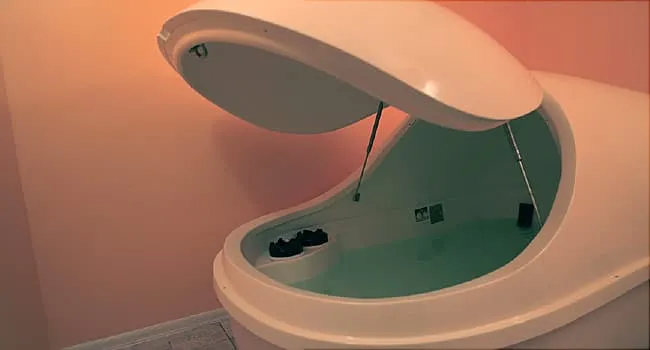
Imagine turning your brain’s notification settings to Do Not Disturbnot by deleting your apps or moving to a cabin, but by floating in warm, silent water so buoyant your body basically forgets gravity exists. That’s the promise of sensory deprivation tanks (also called float tanks, float pods, isolation tanks, or float therapy).
People try floating for stress relief, better sleep, sore muscles, anxiety management, or just to experience an hour where no one can ask them to “circle back.” But what’s actually going on in there? What does science say? And how do you choose a place that’s safe and clean? Let’s break it downno hype, no weird guru vibes, and yes, we’ll talk about the salt.
What Is a Sensory Deprivation Tank (and Why Is It Called That)?
A sensory deprivation tank is a contained float “room” or pod filled with shallow water that’s heavily saturated with magnesium sulfate (Epsom salt). The salt makes the water dense enough that you float easily on your back. The air and water are typically set close to skin temperature, and the space is designed to reduce outside stimulation (light, sound, and sometimes even visual clutter).
Quick translation of the jargon
- Float therapy: The popular name you’ll see at spas and wellness centers.
- Floatation-REST: The research term. REST stands for “restricted environmental stimulation therapy.”
- Isolation tank: The classic name (dramatic, yes, but you’re not being launched into space).
The “sensory deprivation” label can sound intense, like something out of a sci-fi movie. In reality, most commercial float centers offer control: you can keep a light on, play gentle music, or crack the door if full darkness feels like your brain might start writing a screenplay.
How Float Therapy Works: The Physics and the Brain Stuff
Buoyancy: the “zero-gravity” feeling
Epsom salt dramatically increases the density of the water, which reduces pressure on joints and muscles and makes floating effortless. The body often relaxes quickly because you’re not constantly holding yourself up against gravity.
Neutral temperature: when your body stops “noticing” itself
When air and water are close to skin temperature, your nervous system gets fewer “contrast” signalsno chills, no heat, less sensation from air moving over skin. That can make the body feel like it fades into the background (in a good way).
Not really “nothing”more like “less noise”
Some researchers argue that float environments don’t just remove sensation; they can shift attention inwardtoward breathing, heartbeat, and body awareness (called interoception). That inward focus may help explain why many people describe floating as meditation-adjacent, even if they’ve never successfully meditated without mentally reorganizing their entire closet.
What the Research Actually Says (No Miracle Claims Allowed)
Float therapy has been studied for decades, but the evidence is still developing. Some studies suggest short-term benefits for stress and anxiety, while other outcomes (like chronic pain) show mixed results. Translation: promising in some areas, not a guaranteed fix, and definitely not a replacement for medical care.
Stress and anxiety: the most consistent “maybe yes”
Multiple studies report that floatation-REST can produce a strong relaxation response and short-term reductions in anxiety and stress symptoms, at least for some participants. There’s also research exploring feasibility and safety across multiple sessions, suggesting it may be well-tolerated for many people when appropriately screened and monitored.
Sleep: intriguing, but not settled
Better sleep is one of the most common reasons people book a float. Some research points to possible improvements for certain sleep complaints, but findings can be mixed depending on the population and how sleep is measured. If your sleep issues are severe, persistent, or linked to breathing problems (like sleep apnea), treat floating as a relaxation toolnot your main plan.
Pain: mixed results and lots of nuance
People often report muscle relief after floatingespecially if tightness is linked to stress or overuse. But when it comes to chronic pain, rigorous trials don’t always show strong differences versus control conditions. A major takeaway from evidence reviews is that results vary, and more high-quality studies are needed before anyone should treat floating like a medical-grade pain intervention.
Mood, focus, creativity: hard to measure, easy to feel
Floating is one of those experiences where subjective effects can be powerful even when measuring them scientifically is complicated. Many people describe improved mood, mental clarity, or “quiet focus” afterward. These outcomes matterbut they’re also influenced by expectations, environment, and how stressed you were going in.
Benefits People Report (and the Most Realistic Way to Think About Them)
The safest framing is this: a float tank is a controlled environment that can help your body downshift from “fight-or-flight” into “rest-and-digest.” From there, a lot of good things can happenespecially if stress is the root of what you’re dealing with.
- Deep relaxation that feels faster than “trying to relax” (the classic impossible task).
- Reduced muscle tension and a sense of physical reset.
- Short-term stress relief and calmer mood.
- Sleep supportparticularly when stress or overstimulation is the problem.
- Meditation-like headspace without needing to sit still on a cushion debating your life choices.
Risks, Side Effects, and Who Should Skip the Tank
Common (usually mild) side effects
- Salt stings on small cuts, razor nicks, or freshly shaved skin.
- Dryness (skin and hair can feel extra thirsty after all that salt).
- Lightheadedness afterward if you stand up too fast or haven’t hydrated.
- Ear irritation if water gets in your ears (earplugs help).
When to avoid floatingor ask your clinician first
Float therapy isn’t for everyone. It’s commonly advised to avoid floating if you have an active contagious illness, significant open wounds or skin infections, uncontrolled seizure disorders, or severe claustrophobia. People prone to panic attacks, or those with certain psychiatric conditions, may want to be cautious as wellbecause being alone with your thoughts can be relaxing… or it can feel like your brain found the “loudspeaker” button.
If you’re pregnant, managing chronic health conditions, or taking medications that affect balance or consciousness, it’s smart to check with a healthcare professional first. A reputable float center should also ask screening questions rather than acting like everyone is automatically a perfect candidate.
“Can I fall asleep and drown?”
The water is shallow and extremely buoyant, so many people feel quite safe. Still, any water-based activity comes with basic risk. If you’re concerned, choose a facility that provides clear safety instructions, easy exit, and staff support.
Cleanliness: The Part No One Wants to Talk About (But Everyone Should)
Let’s be honest: you’re sharing water with other humans, and humans are basically ecosystems with opinions. High-salt solutions can slow some microbial growth, but salt does not automatically mean “sterile.” That’s why strong sanitation, filtration, and disinfection protocols matter.
What good facilities do
- Require showering before entering the tank.
- Filter and disinfect the solution between users using methods appropriate for float systems (often UV and/or ozone).
- Clean surfaces regularly to reduce slime and biofilm buildup.
- Maintain logs and follow local health department rules (float tanks are often regulated similarly to pools/spas).
A real benchmark: public health code language exists for float tanks
In the U.S., the CDC’s Model Aquatic Health Code includes specific operational guidance for floatation tanks, including treatment system operation time and turnover expectations between users (especially when using ozone or UV), plus cleaning and contamination response procedures. You don’t need to memorize the codebut you should feel empowered to ask a float center how they keep the water clean.
What a Session Looks Like (Step-by-Step)
Before you get in
- Eat lightly 60–90 minutes beforehand (avoid going in starving or uncomfortably full).
- Skip stimulants if you’re sensitivecaffeine and floating can be a weird combo.
- Remove makeup (mascara + salty water = raccoon-core).
- Use earplugs if offered.
- Protect small cuts with a tiny dab of petroleum jelly if allowed by the facility.
During the float
Most sessions run about 60 minutes, though some centers offer 90. You’ll usually float in silence and darkness, but many places let you choose soft lighting or music. The first 5–10 minutes can be the “settling” phaseyour body relaxes, but your brain might still be scrolling through every awkward conversation you’ve ever had.
After that, many people experience a quieter, slower mental state. Some drift toward sleep; others feel alert but calm. If you feel anxious, you can open the door or sit upno prize is awarded for enduring discomfort.
After the float
You’ll shower again to rinse off salt. Plan a few minutes afterward to re-enter reality gentlydriving immediately into heavy traffic can feel like being launched from a library into a rock concert.
Choosing a Float Center: A Quick Checklist
Not all float centers operate the same way. When in doubt, ask questions. A good facility won’t get defensivethey’ll get specific.
- How do you disinfect the solution between users? (Look for clear, confident answers.)
- Do you filter between sessions? If yes, for how long?
- Do you require showering? (This should be a “yes, always.”)
- How often is the tank drained and deep-cleaned?
- What’s your policy for illness, wounds, or skin infections?
- What safety features are included? (Easy exit, help button, staff monitoring.)
If you’re considering a home tank
Home units can be convenient, but safety and electrical standards matter a lot around water. If you ever see a product safety recall related to float equipment, take it seriously and follow official guidance immediately.
Float Tanks vs. Meditation vs. a Massage
Think of floating as a different lane of relaxation:
- Meditation trains attention; floating reduces stimulation so attention has less to fight.
- Massage uses external touch to calm the nervous system; floating removes touch and pressure instead.
- A bath is cozy, but floating is engineered for buoyancy, silence, and minimal sensation.
If you struggle with traditional meditation because your brain behaves like a browser with 47 tabs open, floating can feel like someone finally found the “close all” button. Not permanentlybut long enough to remember what quiet feels like.
Frequently Asked Questions
Will I hallucinate?
Most people don’t. Some experience vivid imagery, dreamlike drifting, or altered sense of timeespecially in darkness and silence. If you’re prone to panic, start with the lights on or the door cracked, and keep sessions shorter until you know how you respond.
Do I have to float in total darkness?
Usually not. Many centers offer options: soft lighting, music at the beginning or end, or the ability to control settings yourself.
How often should someone float?
There’s no universal schedule. Some people treat it like a monthly reset; others do weekly sessions during stressful periods. If you’re using it to support anxiety, sleep, or pain management, consistency may matterbut it should complement (not replace) evidence-based care.
Experiences: What Floating Often Feels Like (A Realistic 500-Word Look)
If you’ve never floated before, here’s the most honest preview: the first few minutes can be oddly loudnot outside, but inside your head. Many first-timers report a “mental inbox” moment where thoughts line up like: Did I send that email? Why did I say that in 2019? Am I floating correctly? (Yes. If you’re not sinking, you’re nailing it.)
Then the body usually starts negotiating with gravity and winning. Shoulders unclench. Jaw relaxes. Breathing becomes slower without you forcing it. People often describe the water as feeling like a supportive mattress that doesn’t push back. That physical comfort can make it easier for the nervous system to downshiftlike your body finally believes it’s safe to stop sprinting through the day.
Some floats feel like a deep meditation. Others feel like a nap hovering at the edge of sleep. One common experience is a strange shift in time: five minutes can feel like thirty, or the whole session can pass like a blink. That’s not necessarily mysticalit’s what can happen when your brain isn’t tracking the usual cues (light, sound, devices, other people moving around).
It’s also normal to have a small wave of discomfort if you’re not used to quiet. Claustrophobia doesn’t always show up as fearit can show up as restlessness. Some people feel the urge to “do something,” because stillness can feel unproductive at first. If that happens, many find it helps to treat the float like a practice, not a performance: gently return attention to breathing, or try a simple body scan (forehead, shoulders, chest, hips, legs) without judging whether you’re doing it “right.”
People with athletic routines often describe floating as a recovery day for the nervous system. Not necessarily because it “heals” an injury, but because it reduces loadless pressure, less stimulation, less effort. Afterward, they may feel looser, calmer, and more aware of tension patterns they didn’t notice before (like the way shoulders creep upward during stress).
People who float for anxiety frequently describe two phases: first, the mind tries to generate stories; later, the stories lose momentum. Some report leaving with a calmer baseline for the rest of the daylike the volume knob got turned down a notch. Others say the biggest benefit is simply having an hour without social demands. No conversations to manage. No facial expressions to “keep on.” Just quiet.
And yessometimes the experience is… boring. That’s not failure. For many stressed-out people, boredom is the doorway to rest. If your first float feels underwhelming, it may simply mean your system is learning how to settle. Like any relaxation skill, floating can become more rewarding once your brain realizes the tank is not a place to solve lifeit’s a place to stop trying for a while.
Conclusion: The Smart Way to Use a Sensory Deprivation Tank
Sensory deprivation tanks are best understood as a structured relaxation toola calm, low-stimulation environment that can help many people unwind, reset, and feel better in the short term. The science is promising in areas like stress and anxiety relief, mixed in areas like sleep, and inconsistent for chronic pain outcomes. Most importantly: the quality of the facility matters. Ask about sanitation. Know your own comfort limits. And if you’re managing a medical or mental health condition, treat floating as a complement to real carenot a substitute.
If your life feels like it’s running 37 apps at once, floating won’t uninstall them. But for an hour, it can stop the pop-upsand that alone can be surprisingly powerful.