If you think steak belongs only on a grill, the oven would like a word. Actually, several words. Delicious, juicy, crusty words. Learning how to cook steak in the oven is one of the smartest kitchen moves you can make, especially when the weather is rude, the grill is asleep, or you simply want steakhouse-style results without stepping outside in house slippers.
The secret is not magic. It is method. Oven-cooked steak works beautifully because dry heat helps build flavor, and with the right approach, you can control doneness more easily than most people expect. Whether you use a cast-iron skillet and finish the steak in the oven, slide it under the broiler, or go with the low-and-slow reverse-sear method, you can turn a good cut of beef into a dinner that makes everyone at the table suddenly very quiet.
This guide breaks it all down in plain American English: what cut to buy, what tools matter, how long to cook it, what mistakes to avoid, and how to get that beautifully browned crust without turning your steak into an expensive leather bookmark. Let’s make dinner dramatic in the best possible way.
Why the Oven Is Great for Steak
The oven shines because it delivers steady, surrounding heat. That makes it especially helpful for thicker steaks, which need enough time to warm through without scorching on the outside. The stovetop can give you a gorgeous sear, but the oven helps finish the center gently and evenly.
For thinner steaks, the broiler acts like an upside-down grill, blasting the meat with high heat from above. For thicker steaks, a skillet-to-oven or reverse-sear approach gives you more control. In other words, the oven is not the backup plan. It is the plan.
Best Steaks to Cook in the Oven
Choose steaks that are at least 1 to 1 1/2 inches thick
Thicker steaks are easier to cook well in the oven because they give you a little more room for error. If a steak is too thin, it can overcook before a good crust develops. Great options include ribeye, New York strip, filet mignon, sirloin, and porterhouse.
Look for marbling
Those little white streaks of fat inside the meat are not random decoration. Marbling helps keep steak juicy and flavorful. Ribeye is the king of rich, beefy satisfaction, while strip steak offers a firmer bite and deep flavor. Filet mignon is buttery and tender, though a little less bold in the flavor department.
Skip mystery meat for this project
If you are learning how to cook steak in the oven, start with a quality cut from a butcher counter or well-stocked grocery store. This is not the moment for a steak so thin it looks like it lost an argument with a photocopier.
What You Need
- 2 steaks, 1 to 1 1/2 inches thick
- Kosher salt
- Freshly ground black pepper
- Neutral high-heat oil, such as avocado or canola
- Optional: butter, garlic, thyme, or rosemary
- Cast-iron skillet or oven-safe pan
- Sheet pan and wire rack for broiling or reverse searing
- Instant-read meat thermometer
- Tongs
The meat thermometer is the non-negotiable hero here. You can guess your steak’s doneness by feel if you want, but that is like guessing exam answers based on vibes. A thermometer is faster, smarter, and far less heartbreaking.
Before You Cook: The Prep That Matters
1. Pat the steak dry
Moisture is the enemy of browning. Use paper towels and dry the surface really well. A dry steak sears better, browns faster, and looks like it knows what it is doing.
2. Season generously
Steak likes confidence. Use kosher salt and black pepper on both sides. If you want extra flavor, add garlic powder or a simple steak seasoning blend, but keep it light enough that the beef still tastes like beef.
3. Let it lose the refrigerator chill
Set the steak out for about 20 to 30 minutes before cooking. This is not a law of nature, but it can help the steak cook more evenly, especially if it is thick.
4. Preheat everything
A hot oven and a hot pan matter. If your skillet is not ready, the steak will steam instead of sear. We are aiming for crust, not sadness.
Method 1: How to Cook Steak in the Oven with a Skillet
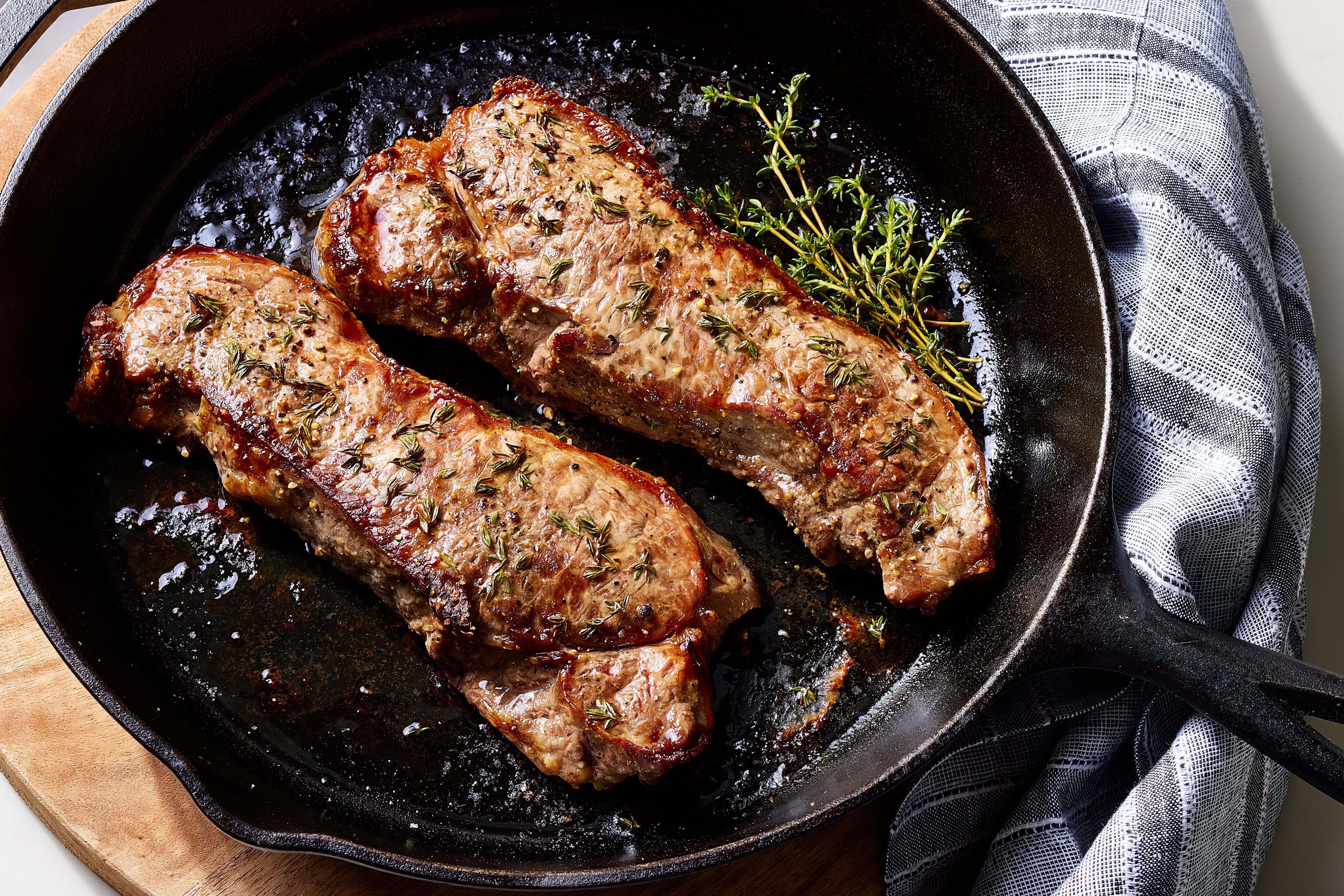
This is the classic stovetop-to-oven method and one of the best ways to cook a thick steak indoors. You get a flavorful crust from the pan, then finish the center in the oven.
- Preheat the oven to 400°F to 450°F. A hotter oven works well once you already have color on the outside.
- Heat an oven-safe skillet. Place a cast-iron skillet over medium-high to high heat until very hot.
- Add a little oil. Swirl just enough to lightly coat the pan.
- Sear the steak. Add the steak and cook 2 to 3 minutes on the first side without moving it. Flip and cook another 2 minutes.
- Optional flavor boost. Add a tablespoon of butter, a smashed garlic clove, and herbs if you like. Tilt the pan and spoon the butter over the steak for 30 seconds.
- Transfer to the oven. Move the skillet straight into the oven and cook until the steak reaches your preferred doneness.
- Rest the steak. Transfer it to a plate or cutting board and rest 5 to 10 minutes before slicing.
Approximate oven time after searing
For a 1-inch steak, it may need only a few minutes in the oven. For a 1 1/2-inch steak, expect a little longer. Time varies based on thickness, cut, pan heat, and your oven’s mood swings, so go by temperature more than the clock.
- Rare: pull around 120°F to 125°F
- Medium-rare: pull around 125°F to 130°F
- Medium: pull around 135°F to 140°F
- Medium-well: pull around 145°F to 150°F
- Well-done: pull around 155°F and up
Remember that the temperature usually rises a bit while the steak rests. Also remember that food-safety guidance for whole-cut beef steak is 145°F with a 3-minute rest. If you prefer a redder center, use a thermometer and make an informed choice.
Method 2: How to Broil Steak in the Oven
Broiling is your best friend when you want fast, high-heat cooking without a skillet finish. It works especially well for steaks around 1 inch thick.
- Move the oven rack. Position it about 3 to 5 inches from the broiler element, depending on your oven and steak thickness.
- Preheat the broiler. Give it several minutes so it is truly hot.
- Place steak on a broiler pan or wire rack set over a sheet pan. This helps air circulate and keeps the bottom from getting soggy.
- Broil the steak. Cook for about 4 to 6 minutes per side for thinner steaks, or a little longer for thicker ones.
- Flip once halfway through. Tongs, not a fork. We are cooking steak, not performing surgery.
- Check temperature and rest. Pull the steak when it is close to your target and let it rest before serving.
Broiling is excellent for weeknights because it is quick and simple. The main challenge is that broilers vary wildly. Some are volcanic. Some are merely enthusiastic. The thermometer saves the day again.
Method 3: Reverse-Sear Steak in the Oven
If you are cooking a thick, expensive, or special-occasion steak, reverse searing is a fantastic choice. Instead of searing first, you cook the steak gently in a low oven and finish with a quick hard sear in a hot skillet. This helps the center cook more evenly and gives you beautiful edge-to-edge color.
- Preheat the oven to 225°F to 275°F.
- Place the steak on a wire rack over a sheet pan. Season well.
- Cook low and slow. Roast until the steak is about 10 to 20 degrees below your final target temperature.
- Heat a skillet until screaming hot. Add a little oil.
- Sear quickly. Sear 45 to 90 seconds per side until a deep crust forms.
- Rest briefly and serve.
This method is slower, but it rewards patience with a steak that looks suspiciously restaurant-level. Reverse sear is especially useful for ribeye, strip, and thick filet mignon.
How to Tell When Steak Is Done
An instant-read thermometer is the most reliable tool. Insert it into the thickest part of the steak from the side if possible, avoiding bone and large pockets of fat.
You can also use visual clues. Rare steak is bright red in the center. Medium-rare is warm red with more structure. Medium is pink through the center. But lighting, cut, and wishful thinking can all fool you. The thermometer does not have an ego. Trust it.
Why Resting Steak Matters
Resting is not optional fluff. When steak cooks, the juices move toward the center. Resting gives the meat time to relax and redistribute those juices more evenly. Slice too soon and your cutting board gets dinner before you do.
For most steaks, 5 to 10 minutes is enough. Bigger cuts can rest a little longer. Tent loosely with foil if needed, but do not wrap it tightly or you risk softening your hard-earned crust.
Common Mistakes to Avoid
Using a cold pan
A lukewarm skillet leads to gray meat and poor browning. Heat the pan properly before the steak goes in.
Skipping the drying step
Wet steak = weak crust. Pat it dry like you mean it.
Using the wrong cut thickness
Very thin steaks are hard to cook in the oven without overshooting your desired doneness.
Overcrowding the pan
If you cook too many steaks at once, they steam instead of sear. Give them personal space.
Cutting immediately
You waited all this time. Give the steak five more minutes. You are stronger than your impatience.
Guessing doneness
That “I can just tell” energy works until it does not. Use the thermometer.
Best Side Dishes for Oven-Cooked Steak
Steak loves company. Some classic pairings include roasted potatoes, mashed potatoes, creamed spinach, asparagus, green beans, mushrooms, Caesar salad, or a wedge salad. If you want a steakhouse-at-home vibe, add a compound butter with garlic, parsley, or blue cheese and let it melt over the top.
For sauces, keep it simple: chimichurri, peppercorn sauce, red wine reduction, or even a quick pan sauce made from shallots, butter, and stock. Just remember the steak is the headliner. The sauce should be the backup singer, not the drummer doing a 20-minute solo.
What the Best Oven Steak Looks Like
The ideal oven-cooked steak has a dark brown crust, a juicy interior, and a doneness level that matches what you actually wanted. It should smell deeply savory, slice cleanly, and make you feel just a little smug. Not unbearable smug. Just enough to text someone a photo with no context.
It should also taste like beef first. Fancy herbs and butter are great, but the real goal is to highlight the steak’s natural richness. Good seasoning, smart heat, and careful timing do most of the heavy lifting.
Experience: What Home Cooks Learn After Making Steak in the Oven Again and Again
One of the funniest things about learning how to cook steak in the oven is how quickly it humbles people. The first time, many home cooks expect a dramatic chef moment. What they usually get is a kitchen full of confidence, a steak that looks great on one side, and a sudden panic when the center is either cooler than expected or more done than planned. That is normal. Steak has a way of teaching patience faster than a motivational poster ever could.
After a few rounds, a pattern starts to appear. People realize that oven steak is not about flashy tricks. It is about tiny habits that quietly improve everything. Drying the meat better. Salting more evenly. Waiting for the skillet to get properly hot. Pulling the steak a little earlier and trusting the rest time instead of hovering over it like a worried lifeguard. These are not glamorous lessons, but they are the ones that turn “pretty good” into “why is this better than most restaurants?”
Another common experience is discovering that different cuts behave like different personalities at a dinner party. Ribeye is rich, forgiving, and almost annoyingly charming. Filet is delicate and elegant but wants careful handling. Strip steak is balanced, reliable, and usually a great choice when you want something hearty without getting too fancy. Once home cooks start noticing those differences, buying steak gets easier and cooking it gets more intuitive.
Many people also learn that the oven can be surprisingly calming. Grilling can feel performative. Pan-searing alone can feel like a sprint. But using the oven, especially with the reverse-sear method, turns steak into a more controlled process. You can set the steak in the oven, make a salad, roast potatoes, or just breathe for a second. That lower stress level often leads to better results because you are not rushing every step.
Then there is the thermometer lesson. Almost everyone resists it at first. Some people think it feels too technical. Others insist they can judge steak by touch. Then one beautifully expensive steak gets overcooked, and suddenly the thermometer becomes a beloved family member. It is not dramatic. It is just right. And right tastes very good.
Perhaps the best experience of all is the moment oven steak becomes part of real life instead of just a “special occasion” meal. Once people realize they can cook a fantastic steak on a random Tuesday without a grill, things change. It becomes less about perfection and more about confidence. A good steak, a hot pan, a steady oven, and a little patience can create a dinner that feels special without feeling complicated. That is when the method truly clicks. Not when it is flawless, but when it feels repeatable, reliable, and completely yours.
Conclusion
If you have been wondering how to cook steak in the oven without ruining a perfectly good piece of beef, the answer is simple: choose a thick steak, season it well, use high heat wisely, and check the temperature instead of relying on hope. A skillet-to-oven method is fantastic for thick cuts, broiling is great for quick cooking, and reverse searing is a dream for anyone who wants even doneness and steakhouse-worthy crust.
Once you learn the rhythm, oven steak stops feeling intimidating and starts feeling practical. And delicious. Very, very delicious. So the next time a steak craving hits and the grill is not an option, let the oven take over. It has been ready for this moment the whole time.