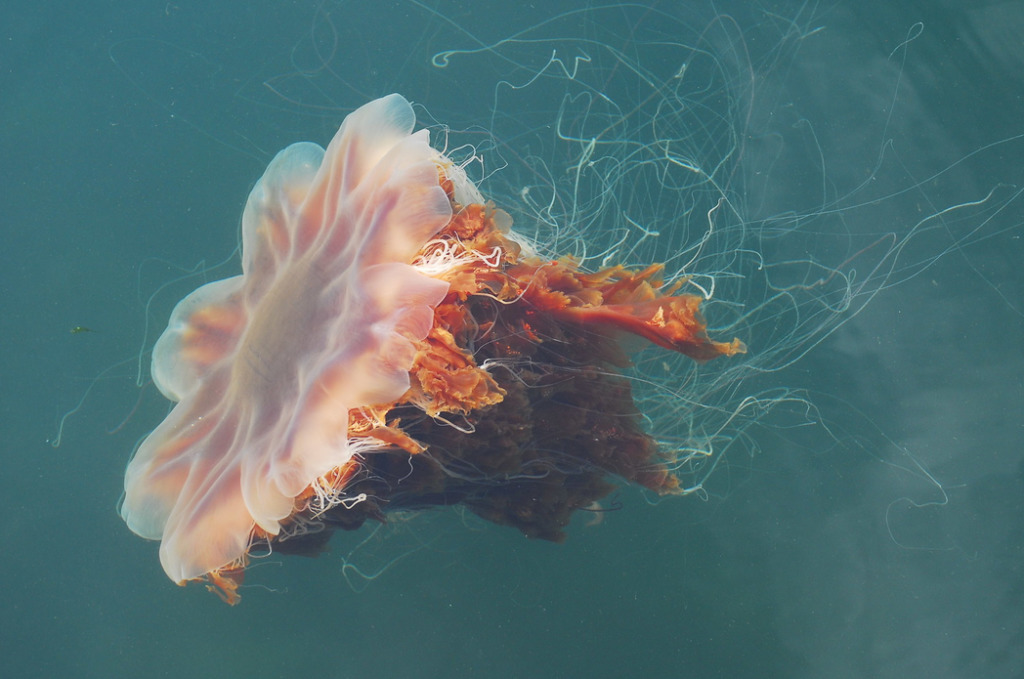
If the ocean had a royal family, the lion’s mane jellyfish would be the dramatic monarch floating into the throne room with a 100-foot cape and absolutely no concern for personal space. Known scientifically as Cyanea capillata, this cold-water giant is widely recognized as the world’s biggest jellyfish, and in rare cases, its tentacles can stretch longer than a blue whale. That is not a typo. This creature is basically a living curtain made of jelly, venom, and ancient ocean mystery.
The lion’s mane jellyfish is not a monster in the Hollywood sense. It does not chase boats, roar at swimmers, or plot revenge against beach umbrellas. In fact, like most jellyfish, it mostly drifts with currents, pulsing gently through chilly seas while letting its tentacles do the grocery shopping. Still, its size, sting, and ghostly beauty make it one of the most unforgettable animals in the marine world.
In this guide, we will meet the lion’s mane jellyfish up closewithout actually getting close, which is the smartest way to meet anything with hundreds of stinging tentacles. We will explore how big it gets, where it lives, what it eats, how it survives without a brain, and why beachgoers should admire it from a safe distance.
What Is the Lion’s Mane Jellyfish?
The lion’s mane jellyfish is a large species of sea jelly found mainly in cold northern waters. Its common name comes from its thick, trailing tentacles, which resemble the shaggy mane of a lion. Depending on age and location, its bell can range from pale orange and golden brown to deep red, burgundy, or dark crimson. Young individuals often look lighter and softer in color, while older, larger specimens can appear almost regal, like a floating sunset with a bad attitude.
This species belongs to a group of true jellyfish, meaning it has the familiar umbrella-shaped bell and dangling tentacles most people picture when they hear the word “jellyfish.” But the lion’s mane jellyfish takes that basic design and turns the volume all the way up. Its bell can be divided into lobes, and its tentacles hang in long clusters that form a dense, drifting trap for prey.
Despite its impressive size, the lion’s mane jellyfish has no bones, no heart, and no brain. That sounds like a terrible résumé until you remember it has survived in the ocean for a very long time using a body plan that is simple, efficient, and weirdly elegant. It relies on a nerve net and sensory structures to respond to light, movement, and orientation in the water.
How Big Is the World’s Biggest Jellyfish?
The biggest reason people search for lion’s mane jellyfish facts is simple: size. This animal can be enormous. Many lion’s mane jellyfish are far smaller than the record-breaking giants, with bells commonly measuring a few feet across. However, rare northern specimens can grow much larger, with bells reaching around 6 to 8 feet in diameter and tentacles stretching more than 100 feet.
The most famous size record comes from a specimen reported off the coast of Massachusetts in the 1800s. It had a bell over 7 feet across and tentacles estimated at about 120 feet long. That makes the lion’s mane jellyfish one of the longest animals ever recorded, at least when measured from the top of the bell to the ends of its tentacles.
To put that into normal human terms, imagine standing at one end of a basketball court and looking at a jellyfish whose tentacles could reach most of the way across it. Now imagine those tentacles are covered in microscopic stinging cells. Congratulations, you have just discovered why marine biologists are both fascinated and extremely respectful.
Where Does the Lion’s Mane Jellyfish Live?
The lion’s mane jellyfish prefers cold water. It is most commonly associated with the Arctic Ocean, the North Atlantic, and the North Pacific. In North America, it may appear along parts of New England, eastern Canada, Alaska, and the Pacific Northwest. It is also known from northern European waters, including areas around the British Isles and Scandinavia.
Unlike tropical jellyfish that thrive in warm vacation waters, the lion’s mane jellyfish is more of a cold-sea specialist. It often lives in open water but can be pushed closer to shore by tides, winds, storms, or seasonal currents. This is why beachgoers sometimes encounter them washed up on sand or floating near swimming areas.
Larger individuals are more common in colder northern regions. Smaller specimens may be seen farther south, especially during certain seasons. If one appears on a beach, the safest rule is simple: look, marvel, take a photo from a safe distance, and do not touch it. Detached tentacles can still sting, and a dead jellyfish on the beach is not automatically harmless.
Why Does It Have So Many Tentacles?
The tentacles of the lion’s mane jellyfish are not decoration. They are fishing gear, defense system, and warning sign all in one. Each tentacle contains specialized stinging cells called cnidocytes. Inside those cells are tiny structures called nematocysts, which can fire like microscopic harpoons when triggered by contact.
For small prey, this is terrible news. The lion’s mane jellyfish uses its tentacles to capture zooplankton, tiny crustaceans, small fish, and even other jellyfish. Once prey is trapped and stunned, the jellyfish moves it toward its mouth, located underneath the bell. Like many jellies, it uses the same opening for eating and expelling waste. Nature can be beautiful, but sometimes it is also very budget-conscious.
The long tentacles also create a floating shelter for some small fish. Young fish may swim near the jellyfish, gaining protection from predators that would rather not swim through a venomous curtain. This makes the lion’s mane jellyfish both predator and accidental bodyguarda strange but common kind of ocean teamwork.
Does the Lion’s Mane Jellyfish Sting?
Yes, the lion’s mane jellyfish stings, and the sting can be painful. Most stings are not considered life-threatening for healthy adults, but they can cause burning pain, redness, itching, swelling, and irritation. More serious reactions may occur in sensitive individuals, people with allergies, children, or anyone who has contact with many tentacles.
The sting is one reason this jellyfish deserves caution. Its tentacles may be extremely long, thin, and hard to see in the water. A swimmer could avoid the visible bell and still brush against trailing tentacles. Even broken tentacle pieces may remain capable of stinging for a period of time.
What to Do If You See One
If you spot a lion’s mane jellyfish while swimming, calmly move away. Do not splash at it, grab it, or try to push it aside. If one washes ashore, do not poke it with bare hands or let children or pets investigate it. A stranded jellyfish may look like a harmless pile of wet noodles, but those noodles can fight back.
Basic Sting Response
If someone is stung, leave the water to avoid further contact. Visible tentacles should be removed carefully with tweezers or a protected hand, not bare fingers. Many medical sources recommend hot water immersion for pain relief when appropriate, and medical help should be sought for severe pain, breathing trouble, dizziness, widespread swelling, or signs of an allergic reaction. Beach lifeguards and local health authorities may also have region-specific guidance, which is important because sting treatment can vary by jellyfish species.
How Does a Jellyfish Live Without a Brain?
The lion’s mane jellyfish proves that a brain is not the only way to survive. Instead of a centralized brain, it has a loose nerve network that helps coordinate pulsing, feeding, and responses to the environment. It does not think in the way mammals do, but it can react to touch, gravity, and chemical signals.
Its bell pulses rhythmically, pushing water and helping it move. However, lion’s mane jellyfish are not powerful swimmers. They are mostly drifters, traveling with currents and tides. Think of them less as underwater athletes and more as slow-motion parachutes with stinging strings attached.
This drifting lifestyle works because the jellyfish does not need to chase prey aggressively. Its tentacles spread through the water like a giant net. Small animals bump into the tentacles, the stinging cells fire, and dinner is served. It is not fast, but it is effective.
The Lion’s Mane Jellyfish Life Cycle
The life of a lion’s mane jellyfish includes several stages. It begins with fertilized eggs that develop into tiny larvae. These larvae eventually settle onto a surface and become polyps. The polyp stage is small and easy to overlook, but it is essential to the jellyfish life cycle.
Polyps can reproduce asexually, producing young jellyfish known as ephyrae. These small, immature jellies grow into the familiar medusa stagethe floating bell-shaped form most people recognize. The medusa stage is when the lion’s mane jellyfish becomes the dramatic ocean giant that earns all the attention.
Many individuals live for about a year, although timing can vary with environmental conditions. Seasonal blooms may appear when food, water temperature, currents, and reproduction line up. To beachgoers, a bloom may seem sudden, but it is usually the visible result of a life cycle that has been unfolding quietly beneath the surface.
What Eats the Lion’s Mane Jellyfish?
For such a large and stingy animal, the lion’s mane jellyfish is not untouchable. Sea turtles, some seabirds, ocean sunfish, and certain fish may feed on jellyfish. Leatherback sea turtles are especially famous jelly-eaters, though their diets include many soft-bodied marine animals.
Predators that eat jellyfish often have adaptations that help them deal with slippery bodies and stinging tentacles. In the ocean, almost everything is food for something else. Even the world’s biggest jellyfish is still part of the menu.
Are Lion’s Mane Jellyfish Dangerous to the Ocean?
Lion’s mane jellyfish are not villains. They are natural members of marine ecosystems. They consume plankton and small animals, provide shelter for some young fish, and become food for larger predators. Their presence can tell scientists something about local food webs, currents, and seasonal ocean conditions.
However, large jellyfish blooms can create problems. When jellyfish become very abundant, they may compete with fish for plankton or feed on fish eggs and larvae. In some areas, jellyfish blooms can interfere with fishing, aquaculture, tourism, and coastal recreation. The issue is not that jellyfish are “bad,” but that changing ocean conditions can sometimes give them an advantage.
Why the Lion’s Mane Jellyfish Matters
The lion’s mane jellyfish is more than a record-holder. It is a reminder that the ocean still contains animals that feel almost mythical. It also challenges our idea of what makes an animal successful. This creature has no brain, no face, no skeleton, and no dramatic chase scene. Yet it thrives in cold seas using a design that is ancient, efficient, and perfectly suited to drifting life.
Studying jellyfish helps researchers understand marine food webs, climate-related shifts, and coastal ecosystem changes. Because jellyfish respond to temperature, prey availability, currents, and other environmental factors, their numbers and distribution can offer clues about what is happening in the water around them.
For everyday ocean lovers, the lion’s mane jellyfish offers a simpler lesson: respect wild animals, even the squishy ones. It is possible to be amazed by something without touching it. In fact, with this jellyfish, that is the ideal relationship.
Experience Notes: What It Feels Like to Encounter the World’s Biggest Jellyfish
Imagine walking along a cold northern beach in the early morning. The air smells like salt and wet stone. Gulls are yelling because gulls wake up every day choosing chaos. Then you see something reddish-orange near the tide line. At first, it looks like a strange pile of seaweed or a melted beach toy. But as you step closer, the shape becomes clearer: a broad, soft bell and long strands trailing across the sand. You have found a lion’s mane jellyfish.
The first feeling is usually surprise. Photographs make this jellyfish look dramatic, but real-life encounters can feel even stranger because the animal seems both delicate and powerful. Its body is mostly water, yet it carries a sting strong enough to make swimmers back away quickly. It looks fragile enough to tear apart in a wave, yet its ancestors have survived through ages of ocean change.
If you see one in the water, the experience is even more memorable. A lion’s mane jellyfish does not swim like a fish. It pulses. The bell opens and contracts slowly, almost like breathing, while the tentacles drift behind it in a tangled cloud. Sunlight can make the tentacles glow gold, copper, or red. In clear water, the animal may look like a floating firework that decided to become a sea creature.
The smartest reaction is calm curiosity. You do not need to panic, but you also should not treat it like a pool noodle with personality. Give it space. Tell others nearby, especially children, not to touch it. If you are swimming at a lifeguarded beach, alert a lifeguard so they can decide whether warnings are needed. The goal is not to fear the jellyfish; the goal is to avoid learning about its sting through direct personal research.
For photographers and nature lovers, the lion’s mane jellyfish is a dream subject. Its colors are rich, its shape is unusual, and its size gives every image a sense of scale. But the best photos come from patience and distance. A zoom lens, waterproof camera, or shoreline perspective is far better than reaching toward tentacles. The ocean rewards respect, and this jellyfish is a very persuasive teacher.
There is also something humbling about meeting an animal that lives so differently from us. Humans rush, plan, schedule, overthink, and check email. The lion’s mane jellyfish drifts through cold water with no brain and still manages to feed, grow, reproduce, and occasionally become longer than a bus. It is not trying to impress anyone, which somehow makes it more impressive.
That is the magic of the lion’s mane jellyfish. It is beautiful but not cuddly, simple but not primitive, dangerous but not evil. It is one of the ocean’s great reminders that nature does not need to follow human rules to be extraordinary. Sometimes the most unforgettable creature on Earth is a giant drifting jelly with a lion’s name and a very clear “do not touch” policy.
Conclusion
The lion’s mane jellyfish is the world’s biggest jellyfish and one of the most spectacular animals in cold northern seas. With a bell that can grow several feet wide and tentacles that may stretch more than 100 feet in rare giants, it is both beautiful and intimidating. Its sting deserves respect, but its role in the ocean deserves appreciation.
This jellyfish is not a monster. It is a drifting predator, a shelter for small fish, a meal for specialized predators, and a living clue to the health and movement of marine ecosystems. Whether you encounter one in an aquarium, a documentary, or from a safe distance on a beach, the lion’s mane jellyfish is proof that the ocean still knows how to surprise us.