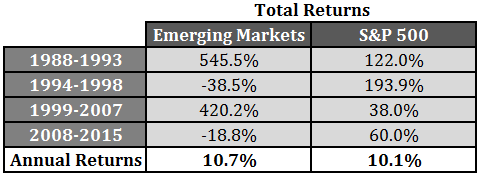
Emerging markets were supposed to have a cleaner runway this year. Inflation had eased in many places, rate-cut hopes were alive, and investors were once again flirting with the idea that growth outside the United States might finally steal the spotlight. Then the mood changed. Fast.
Now the emerging markets rout continues, and it is being driven by a familiar gang of financial troublemakers: rising oil prices, sticky inflation, nervous central banks, a stronger dollar, and investors suddenly remembering that “risk appetite” is not a permanent personality trait. In other words, the party playlist has switched from upbeat dance tracks to the sound of portfolio managers clearing their throats.
This latest EM selloff is not a simple, one-size-fits-all collapse. Some countries are feeling the pain through weaker currencies. Others are being squeezed by higher energy import costs. Some are being punished because global investors want more cash and fewer surprises. And a few commodity exporters may actually find themselves wearing a small smile in an otherwise miserable room.
The big takeaway is this: emerging markets are still full of long-term growth potential, but in the short run, capital can get cranky. When global stress rises, investors do not always ask who has the best demographics or the smartest industrial strategy. They ask who is exposed, who needs dollars, who imports energy, and who can survive a higher-for-longer rate backdrop without tripping over their own balance sheet.
This is why the current downturn matters. It is not just a market mood swing. It is a stress test for the entire emerging-market story.
Why Emerging Markets Are Back in the Hot Seat
The current EM rout is happening because several negative forces are colliding at once. Any one of them would be annoying. Together, they are the financial equivalent of stepping on a Lego while reading your electricity bill.
Oil Has Moved From Background Noise to Center Stage
For many emerging economies, expensive oil is not just a headline. It is a tax on everything. Higher crude prices raise import bills, worsen trade balances, pressure government subsidies, and spill into transportation, food, and manufacturing costs. Countries that depend heavily on imported energy get hit quickly because the pain travels straight from commodity markets into inflation data and currency markets.
That matters because many emerging markets had only recently begun to enjoy a little breathing room on inflation. A fresh energy shock threatens to undo that progress. Central banks that wanted to sound relaxed and forward-looking now have to keep one eye on prices and the other on the exchange rate. Nobody enjoys that kind of multitasking.
The Fed May Not Be Riding to the Rescue
Emerging markets tend to perform best when global liquidity is friendly, U.S. yields are cooperative, and the Federal Reserve looks likely to ease. When those conditions disappear, EM assets usually discover gravity very quickly.
That is part of the problem now. Markets that were previously betting on rate relief have had to rethink the timing. If energy-driven inflation stays hot, the Fed can remain cautious, and that means higher real yields, tighter global financial conditions, and less appetite for riskier markets. Emerging-market debt feels that pressure first, especially in countries where investors are already uneasy about fiscal deficits, refinancing needs, or political credibility.
The Dollar Still Has Wrecking-Ball Energy
A strong dollar has a habit of turning a manageable problem into a full-scale migraine for emerging markets. When the greenback firms up, imported inflation gets worse, debt servicing becomes more expensive for borrowers with dollar exposure, and foreign investors become more selective. Even when local fundamentals are not disastrous, the currency channel alone can make life harder.
This is one reason EM routs can look more dramatic than they really are. A stock market drop is unpleasant. A stock market drop combined with a falling currency is the kind of double hit that makes foreign investors reconsider their life choices.
Not All Emerging Markets Are Falling the Same Way
One of the biggest mistakes in any emerging markets selloff is treating the whole asset class like a single organism. It is not. “Emerging markets” is a convenient label, but the countries inside it have very different growth models, energy needs, policy frameworks, political risks, and external vulnerabilities.
Energy Importers Feel the Heat First
Markets that rely heavily on imported oil and gas are especially exposed when crude prices jump. Higher fuel costs can weaken the current account, strain public finances, and make inflation more stubborn. That is a rough combination for countries trying to support growth while defending the currency.
In practical terms, investors often become more cautious toward oil-importing Asian markets and lower-income economies with thinner policy buffers. The pressure can show up in weaker bond prices, softer currencies, and sharper equity declines in sectors tied to consumption, transportation, and rate-sensitive domestic demand.
Commodity Exporters May Get a Partial Shield
Not every corner of emerging markets suffers equally in an energy shock. Commodity exporters can sometimes offset broader risk aversion with stronger terms of trade, better fiscal revenues, or improved export earnings. That does not make them immune, but it can make them less fragile.
Brazil is a useful example of why investors need nuance. A country with commodity exposure can still face its own fiscal and political questions, yet higher resource prices may provide a cushion that oil importers simply do not have. In a broad EM selloff, that relative advantage matters.
China Still Casts a Long Shadow
No discussion of emerging markets works without mentioning China, the giant whose every sneeze can still move an index. Even when the immediate catalyst for volatility comes from oil, geopolitics, or U.S. rates, China remains central because of its weight in EM benchmarks, its demand for commodities, and its influence on regional trade flows.
If China’s growth impulse looks uneven, confidence across emerging markets can soften further. Investors do not need a dramatic collapse to get nervous. Sometimes all it takes is a softer growth signal, a wobbly property backdrop, or uncertainty over stimulus effectiveness for broader EM sentiment to lose altitude.
What the Selloff Looks Like Across Assets
Emerging-Market Currencies
Currency weakness is often the first and clearest sign that stress is spreading. It tells you investors want safety, import bills are rising, or both. Once currencies start sliding, the policy trade-offs get uglier. Central banks may need to sound tougher than they want to, which can slow domestic growth. If they do too little, inflation can become a second-round problem.
Emerging-Market Bonds
Local-currency debt suffers when inflation fears return and rate-cut expectations get pushed back. Hard-currency debt can also wobble if Treasury yields rise and risk premiums widen at the same time. That is the nasty little trick of a global risk-off episode: you can get hit by the benchmark and by the spread.
Countries with solid reserves, better policy credibility, and more predictable fiscal math usually hold up better. Countries with refinancing pressure or shaky politics tend to get judged by the market with all the warmth of a tax audit.
Emerging-Market Stocks
Equities absorb the macro stress through earnings fears, multiple compression, and currency losses. Consumer sectors can weaken when inflation bites into purchasing power. Banks can get hit if growth expectations deteriorate. Highly leveraged companies look less charming when funding conditions tighten. Meanwhile, exporters may see mixed effects depending on the balance between weaker currencies and weaker demand.
The result is a market that becomes extremely selective. Broad bullish narratives stop working. Investors start picking at balance sheets, external accounts, subsidy exposure, input costs, and political noise. In a rout, storytelling gives way to spreadsheets.
Is This a Full-Blown Emerging-Market Crisis?
Not necessarily. That is an important distinction.
Many emerging markets are more resilient than they were during older crises. Several have more flexible exchange rates, deeper local bond markets, stronger banking systems, and better reserve management. Policymakers in many countries have also become more experienced at handling capital-flow volatility. Nobody is thrilled, but at least more people know where the fire extinguishers are.
Still, resilience does not mean immunity. A prolonged oil shock, a stubbornly hawkish Fed, and continued dollar strength could create a more dangerous feedback loop. Higher import costs feed inflation. Inflation delays easing. Higher rates slow growth. Slower growth hurts fiscal revenues. Weak currencies erode confidence. Then foreign investors pull more money, and the cycle gets meaner.
That is how a rout turns from uncomfortable into contagious.
What Investors Usually Get Wrong During an EM Rout
The first mistake is assuming every decline is the beginning of a disaster. Sometimes an EM selloff is a repricing event, not a systemic collapse. Risk goes up, valuations adjust, and markets eventually differentiate between weak and strong countries.
The second mistake is assuming the opposite: that every dip is an easy buying opportunity just because valuations look cheaper. Cheap assets can get cheaper when the macro backdrop is still worsening. A falling knife may be a metaphor, but your portfolio still notices.
The third mistake is ignoring quality. In volatile periods, stronger external balances, credible central banks, manageable debt structures, and policy consistency become more valuable than exciting growth narratives. Investors who chase beta without checking the plumbing often end up learning about current-account deficits the hard way.
Where the Smarter Money May Look Next
If the emerging markets rout continues, the more durable opportunities are likely to appear in countries with three things: policy credibility, external resilience, and a growth story that does not depend entirely on perfect global conditions.
That means investors may favor markets with reasonable inflation control, less severe energy vulnerability, healthier foreign-exchange reserves, and companies that can protect margins even in a cost shock. It also means active selection matters more than broad EM exposure.
In other words, the question is no longer, “Should investors own emerging markets?” The better question is, “Which emerging markets can handle a nasty global macro backdrop without becoming a cautionary tale?”
That is a harder question, but it is also the only useful one right now.
Experience on the Ground: What a Prolonged Emerging-Market Rout Actually Feels Like
A continuing emerging-market selloff is not experienced as a neat chart in a research note. It feels messy, personal, and cumulative. The first people to notice it are often not headline writers or TV analysts. It is the importer whose costs are suddenly higher, the company treasurer watching the local currency slide before lunch, the consumer realizing groceries and transport feel strangely more expensive, and the policymaker trying to explain why yesterday’s optimism has been replaced by today’s caution.
For investors on the ground, an EM rout feels like confidence evaporating in slow motion. At first, nothing looks broken. Then the currency weakens a little more than expected. Bond yields jump. Local stocks gap lower. Analysts who sounded relaxed a month ago start using words like “repricing,” “volatility regime,” and “external pressure,” which is financial-language shorthand for “this is getting annoying.” Traders shorten their time horizon. Long-term stories suddenly become very short-term conversations.
For businesses, especially those that rely on imported fuel, raw materials, or dollar-linked financing, the experience is even more direct. Budget assumptions stop working. Hedging decisions that looked boring become heroic. Profit margins get squeezed from both sides: input costs rise while customers become more price-sensitive. Executives delay expansion plans, trim forecasts, and spend more time discussing cash flow than growth strategy. Nobody loves a capital-expenditure plan when the exchange rate looks like it has had three espressos and no supervision.
Households feel the rout in quieter ways. It shows up in transportation costs, utility bills, food prices, and borrowing costs. Even when wages do not collapse, the perception of stability starts to weaken. People become more cautious. They postpone purchases. They save more if they can. That behavior is rational on an individual level, but across an economy it can cool demand further, which deepens the sense that momentum is fading.
Central banks and finance ministries experience the rout as a sequence of unattractive choices. Raise rates too aggressively and you squeeze growth. Ease too early and you risk feeding inflation or inviting more currency weakness. Defend the currency too visibly and markets may start wondering how long the defense can last. Say too little and investors assume the worst. Say too much and you sound nervous. It is a communications challenge wrapped inside a macroeconomic one.
Even for experienced global investors, prolonged EM weakness can be emotionally deceptive. It creates a tug-of-war between valuation discipline and macro fear. One side says assets are getting cheaper and long-term growth is intact. The other side says timing matters, liquidity matters, and catching the bottom is a hobby best left to people with stronger nerves. That tension is why EM routs can last longer than expected. Fundamentals and sentiment do not heal on the same schedule.
Yet there is another side to the experience. Emerging markets are also where resilience often becomes visible first. Companies adapt. Consumers adjust. Policymakers learn. Stronger countries differentiate themselves. Investors who stay selective, patient, and realistic often discover that the worst headlines arrive right when the most interesting opportunities begin to form. That does not make the rout pleasant. It simply means the story is rarely over when the panic is loudest.
Conclusion
The emerging markets rout continues because global conditions have turned less forgiving and more complicated at the same time. Higher oil prices, slower hopes for rate cuts, dollar pressure, and renewed investor caution have combined into a powerful risk-off wave. But this is not a clean collapse across the entire developing world. It is a selective stress test.
That distinction matters. Some countries will struggle with imported inflation, weaker currencies, and tighter financing conditions. Others may prove more durable thanks to stronger policy credibility, healthier external balances, or commodity-linked support. For investors, the easy version of the EM story is gone for now. The smarter version remains: stay selective, respect macro risk, and remember that emerging markets do not move as one giant block just because the label makes it convenient.
In short, the rout is real, but so is the long-term opportunity. The challenge is surviving the first without losing sight of the second.