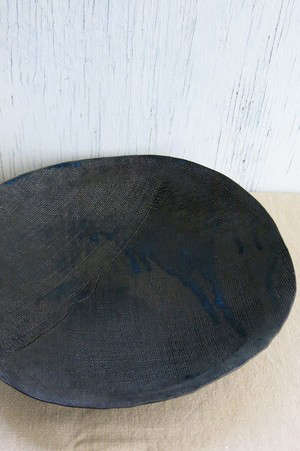
Marité Acosta’s Bowl is the kind of handmade ceramic piece that quietly walks into a room, says nothing, and somehow becomes the most interesting guest at dinner. It is not loud. It does not sparkle like a chandelier or shout “look at me” like a novelty mug shaped like a raccoon. Instead, it relies on texture, proportion, restraint, and that mysterious handmade quality that makes people pick it up, turn it over, and say, “Wait, who made this?”
At its core, Marité Acosta’s Bowl is a handbuilt textured ceramic bowl made from white stoneware with underglaze and glaze. The piece was listed as measuring approximately 10.25 inches wide by 1.5 inches high, with a $200 price at the time of publication. That low, broad profile matters. This is not a cereal bowl for Monday morning survival oatmeal. It is closer to a tabletop landscape: shallow, tactile, painterly, and designed to hold food, fruit, flowers, objects, or absolutely nothing at all while still looking completely intentional.
To understand why this bowl feels special, you have to understand Marité Acosta herself. Acosta is known as a potter, chef, stylist, and Cuban-American artist whose creative path has moved through fashion, textiles, food, and ceramics. After decades in New York City, she later based her full-time clay practice in Bend, Oregon, where the quieter rhythms of the high desert seem to fit her understated aesthetic. Her work has appeared in design, food, and lifestyle circles, including respected publications and styling projects where vessels are not background props but part of the visual language.
What Makes Marité Acosta’s Bowl Different?
Many bowls are built to disappear. They serve soup, accept the dishwasher’s judgment, and retire to the cabinet without drama. Marité Acosta’s Bowl does something else. It reminds us that tableware can be useful and expressive at the same time. It occupies the sweet spot between functional pottery and sculptural object, which is exactly where handmade ceramics have found renewed love among collectors, home cooks, stylists, and people who believe a salad deserves better than a plastic tub with a cracked lid.
A Handbuilt Form With Human Evidence
The word “handbuilt” is important. In ceramics, handbuilding often means the potter forms the piece without relying entirely on the wheel. Slabs, coils, pinching, pressing, and shaping by hand allow for subtle irregularities. Those irregularities are not flaws; they are the fingerprints of process. In Acosta’s work, texture often becomes part of the identity of the piece. The surface invites the eye first, then the hand. It says, politely but firmly, “Yes, touching is part of the experience.”
The bowl’s broad, shallow shape gives it a calm, almost architectural presence. Because it is only about 1.5 inches high, it does not behave like a deep serving vessel. Instead, it frames whatever sits inside it. Citrus, figs, olives, sea salt, roasted vegetables, handmade pasta, or a dramatic pile of tiny tomatoes can all become part of the composition. Even empty, the bowl has enough texture and movement to hold visual interest. That is when you know a ceramic piece is doing more than simply containing things.
White Stoneware, Underglaze, and Glaze
Marité Acosta’s Bowl is described as white stoneware with underglaze and glaze. Stoneware is a durable ceramic body often valued for strength, warmth, and everyday usability. White stoneware gives the artist a clean foundation, while underglaze allows color or tonal marks to sit within the surface design before the final glaze transforms the piece in firing. The result can feel layered, not printed. It has depth rather than decoration pasted on top like a sticker someone immediately regrets.
Underglaze and glaze are also part of why handmade ceramics can feel alive. Heat, clay chemistry, application thickness, kiln atmosphere, and timing all influence the final surface. A potter may plan carefully, but the kiln always gets a vote. Acosta has spoken in interviews about liking the unexpected details that happen in clay, and that philosophy shows up in bowls like this one. The piece does not chase machine perfection. It makes room for material behavior, which is a more interesting dinner companion anyway.
The Chef’s Eye Behind the Clay
One reason Marité Acosta pottery feels so connected to the table is that Acosta is also a chef and food stylist. That matters enormously. A potter who understands food does not design bowls only as shapes; she thinks about what happens when food lands in them. How does a sauce pool? How does color contrast with the surface? Does a handful of herbs look casual or lost? Can a piece support both a quiet breakfast and a styled editorial spread?
Acosta’s background in fashion and textiles also appears in her ceramics. Textural impressions, fabric-like surfaces, quiet neutrals, and painterly marks suggest a maker who thinks in layers. Fashion teaches proportion. Food styling teaches composition. Cooking teaches utility. Ceramics demands patience. Put all of that into one practice, and you get tableware that feels thoughtful without becoming precious.
That is the charm of Marité Acosta’s Bowl. It looks like it belongs in a carefully photographed home, but it does not feel sterile. It has that relaxed, “I just happen to be beautiful” confidence. Very rude of it, honestly.
Why Handmade Ceramic Bowls Are Having a Moment
Handmade ceramic bowls have become popular again because people are tired of objects that feel anonymous. In a world where nearly everything can be ordered overnight, sameness has become easy. Handmade pottery pushes back. It asks us to slow down and notice the curve of a rim, the drag of a brushstroke, the freckle of iron in clay, or the way a glaze softens at the edge.
Restaurants and home entertainers have also helped bring creative dishware into focus. Plates and bowls now act like small stages. Chefs use them to tell stories, set moods, and shape the visual experience before anyone takes a bite. At home, the same idea applies. A handmade ceramic bowl can make a simple meal feel considered. Leftover roasted squash becomes “seasonal vegetable composition.” Crackers become “rustic snack installation.” Congratulations, you are now a curator of lunch.
Marité Acosta’s Bowl fits this movement beautifully because it balances art and use. Its textured surface and shallow profile make it visually distinctive, while its ceramic material keeps it connected to the rituals of eating, serving, and gathering. It is not merely decor, and it is not merely dinnerware. It is a useful object with a point of view.
How to Style Marité Acosta’s Bowl
The best way to style Marité Acosta’s Bowl is to let it breathe. Because the piece already has texture and surface interest, it does not need a circus of accessories around it. Think natural materials, quiet colors, and a little negative space. Give the bowl room and it will do the work.
On the Dining Table
Place the bowl at the center of a table with linen napkins, simple flatware, and low glassware. Fill it with seasonal fruit, roasted vegetables, olives, or bread. Because the bowl is shallow, avoid anything too liquid unless you are certain of its intended use and glaze behavior. It is better suited to foods that can be arranged rather than poured. Think figs and almonds, citrus slices, charred carrots, cherry tomatoes, or a composed salad with structure.
In the Kitchen
In a kitchen, Marité Acosta’s Bowl can hold lemons, garlic, shallots, or eggs. It makes everyday ingredients look like they are waiting for a cookbook photographer to arrive. This is especially effective if your kitchen leans toward natural wood, stone countertops, open shelving, or neutral palettes. The bowl adds texture without clutter.
As an Object on a Shelf
Not every bowl has to be working all the time. Sometimes a beautiful object deserves a vacation. On a shelf, console, or sideboard, the bowl can stand alone or sit with a stack of books, a small vase, or a branch in a glass cylinder. Its low silhouette makes it easy to layer without blocking sightlines. It contributes atmosphere rather than demanding applause.
How to Care for a Handmade Ceramic Bowl
Because handmade ceramics vary by clay, glaze, and firing, care should always begin with the maker’s guidance when available. In general, pieces like Marité Acosta’s Bowl deserve gentle treatment. Handwashing is often the safest choice, especially for collectible ceramics, matte surfaces, textured finishes, or pieces with delicate profiles. Avoid sudden temperature shocks. Do not take a cold bowl and introduce it to extreme heat unless the maker specifically says that is safe. Clay may be tough, but it does not enjoy being surprised any more than we do.
Matte glazes can sometimes show marks or staining more readily than glossy surfaces. That does not necessarily make them unsafe, but it does mean you should be mindful with deeply colored foods, oils, turmeric, beets, coffee, or red wine. If a bowl is used for serving, clean it soon after use with a soft sponge and mild soap. Abrasive pads are not your friend. They are tiny scratchy chaos agents.
If the piece is used decoratively, dust it gently and avoid stacking heavy objects on top. Handmade pottery may be strong, but rims and thin areas can chip if treated like mass-produced restaurant ware. Think of it this way: you do not need to be nervous around it, but you should not test its emotional resilience by dropping a cast-iron pan nearby.
Is Marité Acosta’s Bowl Worth It?
Value in handmade ceramics is not measured only by size. A handmade ceramic bowl carries the cost of clay, glaze materials, kiln firings, studio time, skill, breakage risk, design development, and the artist’s eye. It also carries something harder to price: the fact that no two handmade pieces are exactly identical. When a bowl is handbuilt, textured, glazed, fired, inspected, and released into the world, it arrives with a history before it ever reaches your table.
For someone who wants a stack of inexpensive bowls for daily cereal, Marité Acosta’s Bowl may not be the practical choice. For someone who collects contemporary ceramics, loves slow design, styles food, entertains often, or wants one meaningful object that changes the mood of a room, it makes much more sense. It is a bowl for people who notice surfaces, who appreciate restraint, and who believe that utility and beauty do not have to sit at separate lunch tables.
Specific Examples of How the Bowl Can Be Used
For a weekend brunch, Marité Acosta’s Bowl could hold sliced oranges, grapefruit, and mint, turning citrus into a sunrise with better table manners. For a holiday meal, it could present roasted squash with walnuts and herbs, a nod to Acosta’s own connection to food and seasonal cooking. For a cheese board, it could hold olives, flaky salt, nuts, or dried fruit. For a living room table, it could hold nothing at all, which is sometimes the most luxurious use of a beautiful object.
It would also work beautifully in a floral setting. Low bowls are excellent companions for restrained arrangements, especially when paired with ikebana-inspired stems, dried grasses, or sculptural branches. Acosta’s work has been seen in contexts where flowers, vessels, and visual storytelling meet, and this bowl belongs naturally in that conversation. It does not compete with organic material. It speaks the same language: texture, asymmetry, restraint, and quiet drama.
Experience Section: Living With Marité Acosta’s Bowl
Owning or using a piece like Marité Acosta’s Bowl is less about acquiring an object and more about changing the way you notice small rituals. The first experience is visual. You place it on a table and immediately understand that the table has become more intentional. Not fancy, necessarily. Just more awake. A regular wooden table suddenly looks like it has read design magazines but is trying not to brag.
The second experience is tactile. Handmade ceramics invite touch in a way factory-perfect objects rarely do. A smooth commercial bowl often says, “I am finished.” A textured ceramic bowl says, “Come closer.” The rim, the surface, the subtle unevenness, the glaze variationsthese details make the object feel present. You do not simply use it; you register it. That matters in an age when many household objects are designed to be ignored.
Using the bowl for food creates another layer of appreciation. Place roasted carrots in it and the earthy orange color feels warmer against the ceramic surface. Add figs and walnuts and the whole thing looks casually abundant, as if a very tasteful farmer stopped by. Use it for bread and the texture of crust against stoneware feels honest and grounded. Even a simple green salad can look better when it has room to spread out rather than being crammed into a deep bowl like leafy laundry.
There is also an emotional experience in knowing that a person made it. The bowl was not born from an assembly line that produced ten thousand identical siblings before lunch. It came from hands, tools, judgment, waiting, firing, and acceptance of uncertainty. That knowledge changes how you treat it. You set it down more carefully. You wash it with more attention. You might even stop someone from tossing keys into it with the urgency of a museum guard protecting a Renaissance painting.
For hosts, Marité Acosta’s Bowl can become a conversation starter without feeling showy. Guests may ask about the texture or maker. You can explain that Acosta is a chef, stylist, and potter whose work bridges food, textiles, and clay. That backstory gives the piece depth. It is not just “a nice bowl.” It is part of a creative practice shaped by cooking, design, material experimentation, and a willingness to let clay behave like clay.
For quiet daily life, the bowl can become a small anchor. It may sit on a counter with lemons during the week, hold almonds during a casual gathering, or rest empty beside a vase when the house is clean enough to pretend this is always how you live. Over time, the bowl gathers association. It becomes linked to dinners, seasons, recipes, flowers, and the particular pleasure of owning fewer but better things.
The best experience related to Marité Acosta’s Bowl may be this: it encourages a slower relationship with the table. It reminds you that serving food is not only about efficiency. A bowl can frame a meal, soften a room, support a mood, and make even ordinary ingredients feel cared for. In that sense, it is not merely a ceramic object. It is an invitation to pay attention. And honestly, any bowl that can make us pay attention before we check our phones deserves a little applause.
Conclusion
Marité Acosta’s Bowl stands out because it combines the honesty of handbuilt stoneware with the eye of a chef, stylist, and artist. Its shallow form, textured surface, white stoneware body, and layered finish make it useful, sculptural, and emotionally warm. It belongs to the growing appreciation for handmade ceramic bowls that are not only practical but personal. Whether used for fruit, vegetables, flowers, or quiet display, it brings intention to the table without trying too hard.
In a marketplace crowded with identical objects, this bowl offers something better: evidence of touch, material patience, and creative restraint. It is not perfect in the machine-made sense. That is precisely the point. Marité Acosta’s Bowl is beautiful because it feels human, and the table could use more of that.
Note: This article was created for web publication and synthesized from publicly available product information, artist profiles, maker interviews, design coverage, and ceramic craft references. Source links are intentionally omitted for a clean publishing format.