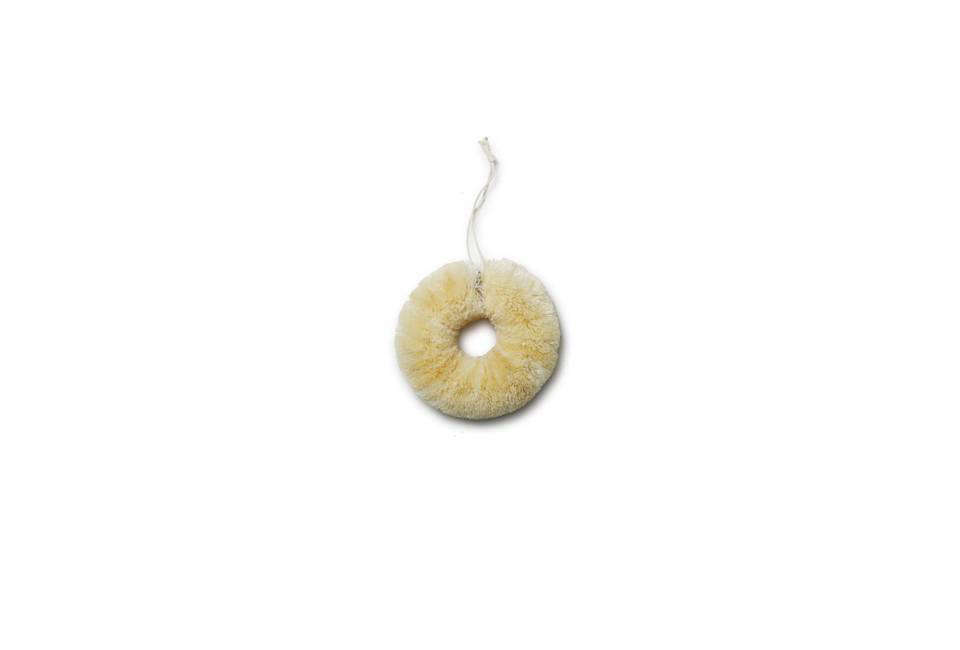
The Takada Kozo Shouten Doughnut Shaped Brush is one of those quietly brilliant household tools that makes you wonder why modern kitchens became so obsessed with neon sponges and plastic scrubbers in the first place. It is simple. It is useful. It looks charming enough to leave beside the sink without making your countertop feel like a cleaning aisle exploded. Most importantly, it comes from a long Japanese brush-making tradition where everyday objects are not treated as disposable afterthoughts, but as hardworking companions.
At first glance, the brush looks exactly like its name suggests: a small doughnut-shaped scrub brush. No handle. No flashy gadgetry. No app required, thankfully. Its circular shape gives it a comfortable grip, while the fiber surface creates plenty of contact for scrubbing dishes, vegetables, pots, pans, and small kitchen tools. The original product listing describes it as approximately 11 centimeters in diameter, 4.5 centimeters thick, and 45 grams in weight, made from sisal and stainless steel in Wakayama Prefecture, Japan.
But this brush is more than a cute ring of bristles. It belongs to the broader world of tawashi, traditional Japanese scrub brushes known for their durability, compact shape, and natural fibers. Takada Kozo Shouten, also written as Takada Kozo Shoten, has been associated with handmade household brushes since 1948. The company is especially known for reviving and preserving Japanese palm-fiber brush techniques in Wakayama, a region with deep roots in brush and broom making.
What Is the Takada Kozo Shouten Doughnut Shaped Brush?
The Takada Kozo Shouten Doughnut Shaped Brush is a compact Japanese kitchen scrub brush designed in a ring-like form. Unlike a typical long-handled dish brush, it sits directly in the palm. That makes it easy to rotate, press gently, and work around curves, edges, and textured surfaces. The shape also gives it personality. It is the rare cleaning tool that can be described as both practical and adorable without anyone needing to call customer service.
The brush is made from sisal fiber and stainless steel. Sisal is a strong plant-based fiber commonly used in ropes, mats, brushes, and other durable household goods. Its texture is firmer than cotton or soft plant fiber, yet flexible enough to work as a scrubbing material. The stainless steel component helps hold the brush form together while resisting moisture-related corrosion better than ordinary wire.
Basic Product Details
- Product name: Takada Kozo Shouten Doughnut Shaped Brush
- Approximate size: 11.0 cm diameter, 4.5 cm thickness
- Approximate weight: 45 g
- Material: Sisal fiber and stainless steel
- Producer: Takada Kozo Shouten
- Origin: Wakayama Prefecture, Japan
- Typical use: Scrubbing dishes, cookware, vegetables, sinks, and small kitchen items
Because it is handmade or craft-produced, small variations in shape, density, and texture should be expected. That is not a defect. It is part of the charm. A handmade brush does not roll off an assembly line with the emotional range of a barcode. It may have slight differences, and those differences often make it easier to appreciate as a tool made by human hands.
The Story Behind Takada Kozo Shouten
Takada Kozo Shouten was established in 1948 in Wakayama, Japan. The company is connected to the heritage of Japanese tawashi, a type of scrub brush traditionally made from natural fibers. Wakayama, especially the Kishu area, has long been associated with the use of windmill palm, known as shuro, for brooms and brushes. Although the doughnut-shaped brush uses sisal according to its product listing, it still sits within the same philosophy: natural materials, handwork, durability, and everyday usefulness.
Traditional tawashi brushes were created to scrub pots, pans, vegetables, and household surfaces. They became popular because they were tough enough to remove dirt but, depending on the fiber and construction, could be gentle enough for delicate surfaces. Takada’s broader brush line includes kitchen brushes and body brushes made from carefully selected natural fibers. The company’s reputation is built on small-batch craft, material knowledge, and a belief that even humble household items deserve care in their design.
That is what makes the Takada Kozo Shouten Doughnut Shaped Brush interesting. It is not trying to be a luxury object in the loud, shiny sense. It is more like the kitchen equivalent of a well-made wooden spoon: modest, useful, and oddly satisfying once you actually use it.
Why the Doughnut Shape Works So Well
The doughnut shape is not just decorative. It solves several practical problems. A round brush fits naturally into the hand, especially when cleaning objects that require short, controlled movements. Instead of gripping a thin handle and applying pressure from one direction, you can press the brush with your palm and fingers, letting the circular form move with your hand.
Better Grip and Control
A ring-shaped brush gives you grip from multiple angles. You can hold it at the edge for detailed work or press it flat for broader scrubbing. This is especially helpful when washing curved cookware, textured cutting boards, colanders, root vegetables, and ceramic dishes with raised edges. The shape invites a relaxed grip, which can feel more natural than clamping down on a plastic handle.
More Scrubbing Surface
Because the brush is round and thick, much of its exterior can be used as a scrubbing surface. You are not limited to one flat pad or one narrow bristle head. Rotate it slightly, and a fresh section is ready to work. That helps distribute wear more evenly, which can extend the useful life of the brush when it is rinsed and dried properly.
Easy to Store
The compact doughnut form also makes storage simple. It can sit in a small dish, hang from a hook if your setup allows, or rest near the sink without taking up much room. Unlike long-handled scrubbers that flop around in a utensil jar like they have had a dramatic day, this brush stays compact and calm.
What Can You Use It For?
The Takada Kozo Shouten Doughnut Shaped Brush is best understood as a multipurpose kitchen scrubber. It is not meant to replace every cleaning tool in the house, but it can handle many daily tasks with ease.
Cleaning Dishes and Cookware
The brush can help remove food residue from plates, bowls, pans, and utensils. It is especially useful for items that benefit from a firmer scrub than a soft sponge can provide. For example, it can help clean stainless steel pans, ceramic bowls, and sturdy plates after everyday meals. For delicate nonstick coatings, glassware, lacquerware, or highly polished surfaces, test gently first. Natural does not automatically mean harmless on every surface; even Mother Nature occasionally has sharp elbows.
Scrubbing Root Vegetables
One of the classic uses for tawashi-style brushes is washing vegetables. Potatoes, carrots, burdock root, radishes, and other root vegetables often carry stubborn soil. A natural fiber brush can lift dirt without requiring you to peel away the skin. That is helpful when you want to keep texture, flavor, and nutrients. Use light pressure, rinse the vegetable under running water, and let the brush do the work instead of attacking dinner like it owes you money.
Cleaning Sinks and Small Tools
The doughnut-shaped brush also works well for sink corners, drain areas, small strainers, and textured kitchen tools. Its compact size makes it easier to maneuver than a large brush. It can get into curves and odd shapes, which is useful in real kitchens where messes rarely present themselves in polite geometric squares.
Sisal Fiber: Tough, Natural, and Practical
Sisal is a plant-based fiber derived from the agave plant. It is known for strength, stiffness, and durability, which is why it has long been used in rope, twine, matting, and brushes. In a scrub brush, those qualities translate into a firm cleaning texture. Sisal is not silky-soft, and that is the point. It is designed to grip dirt, scrape away residue, and keep going through repeated use.
Compared with synthetic sponge materials, sisal offers a more natural feel and a lower-plastic approach to cleaning. It will not behave like foam. It does not soak up soap in the same squishy way. Instead, it works through friction, fiber texture, and hand pressure. For many users, that makes the washing process feel more direct and controlled.
The stainless steel structure adds strength and helps maintain the ring shape. Since kitchen tools live in wet environments, corrosion resistance matters. Still, any natural fiber brush needs proper care. Leaving it in a puddle is a bad idea. Even a beautifully made Japanese brush cannot overcome the laws of moisture, mold, and human forgetfulness.
How to Use the Takada Kozo Shouten Doughnut Shaped Brush
Using the brush is simple, but a few habits will help you get better results.
Step 1: Wet the Brush First
Before scrubbing, run the brush under water. This softens the fibers slightly and helps reduce unnecessary abrasion. A dry natural fiber brush can feel sharper and more aggressive than expected, especially on delicate surfaces.
Step 2: Use Gentle Pressure
Let the texture of the fiber do the cleaning. You do not need to press with heroic force. In fact, pressing too hard can wear the brush faster and may scratch sensitive surfaces. Think “firm handshake,” not “opening a pickle jar during a personal crisis.”
Step 3: Scrub in Small Circles
The circular shape naturally encourages circular movement. Use small circles on pans, dishes, and vegetables. For grooves, ridges, or tight spaces, angle the brush and use the edge.
Step 4: Rinse Thoroughly
After use, rinse the brush under running water to remove food particles, soil, and soap. Shake off excess water.
Step 5: Air-Dry Completely
Drying is the secret to long life. Place the brush somewhere with airflow. Do not leave it sitting in a wet sink, closed container, or soap dish full of water. Natural fibers need to breathe. Give them air, and they will reward you by not turning into a tiny science experiment.
Care and Maintenance Tips
The Takada Kozo Shouten Doughnut Shaped Brush is low-maintenance, but not no-maintenance. Treat it well, and it should stay useful longer.
- Rinse after every use.
- Remove trapped food pieces immediately.
- Shake out excess water before storing.
- Dry in an upright or well-ventilated position.
- Avoid soaking it for long periods.
- Do not store it in a sealed container while damp.
- Avoid using excessive force, which can bend fibers and weaken the brush.
- Check delicate cookware before using any firm scrubber.
Some natural fiber shedding may happen at the beginning of use. This is common with many plant-fiber brushes. Rinse the brush a few times before its first serious kitchen mission, and do not panic if a few loose fibers appear. It is not falling apart; it is settling in.
Who Should Buy This Brush?
The Takada Kozo Shouten Doughnut Shaped Brush is ideal for people who appreciate well-made kitchen tools, traditional Japanese household goods, and natural cleaning materials. It is also a strong choice for anyone trying to reduce dependence on disposable plastic sponges. If you enjoy objects that feel good in the hand and make ordinary chores slightly more pleasant, this brush fits beautifully into that lifestyle.
It may not be the best choice for someone who wants a soft sponge for delicate glassware or nonstick pans. It also requires better drying habits than a throwaway plastic scrubber. But for sturdy dishes, root vegetables, sinks, and everyday kitchen cleanup, it offers a satisfying balance of firmness and control.
Pros and Cons
Pros
- Compact and comfortable doughnut shape
- Made from natural sisal fiber
- Strong enough for daily kitchen scrubbing
- Attractive enough to leave visible near the sink
- Produced by a respected Japanese brush maker
- Useful for dishes, vegetables, cookware, and sinks
- Less plastic-heavy than many disposable scrubbers
Cons
- May be too firm for delicate surfaces
- Needs proper drying after use
- Can shed some natural fiber at first
- Availability may vary outside Japan
- No long handle, which some users may prefer
How It Compares With Ordinary Sponges
Ordinary kitchen sponges are cheap, soft, and familiar. They are also famous for trapping moisture, food particles, and odors. A natural fiber brush offers a different cleaning experience. It does not absorb water in the same way a sponge does, and it dries more openly when stored correctly. It also gives more scrubbing power without needing a rough synthetic pad.
That said, a sponge still has a place. It is better for wiping counters, washing delicate cups, and spreading soap across smooth surfaces. The Takada Kozo Shouten Doughnut Shaped Brush is better for scrubbing, lifting dirt, cleaning vegetable skins, and tackling stuck-on bits. The smartest kitchen setup may use both: a soft cloth or sponge for wiping and the doughnut brush for jobs that require texture.
Design Appeal: Why Small Tools Matter
One of the reasons people are drawn to Japanese household tools is that they often combine function with restraint. The Takada Kozo Shouten Doughnut Shaped Brush does not shout for attention. It simply does its job while looking warm, tactile, and thoughtfully made.
That matters more than it may seem. When a tool is pleasant to use, you are more likely to use it properly. A brush that feels good in the hand can make cleaning vegetables feel less like a chore. A scrubber that dries neatly beside the sink can make the whole kitchen feel more intentional. Tiny upgrade? Yes. But kitchens are built from tiny upgrades. Nobody wakes up one morning with a perfect kitchen. They slowly gather better knives, better bowls, better habits, and sometimes a doughnut-shaped brush that makes scrubbing potatoes weirdly satisfying.
500-Word Experience Section: Living With the Takada Kozo Shouten Doughnut Shaped Brush
Using the Takada Kozo Shouten Doughnut Shaped Brush feels different from grabbing a regular sponge. The first thing you notice is the grip. Because the brush has no handle, your hand sits close to the surface you are cleaning. That gives you more feedback. You can feel when food residue breaks loose, when vegetable dirt lifts away, and when a pan needs one more pass. It turns cleaning into a more tactile process, which sounds fancy until you realize it simply means you stop scrubbing blindly like a raccoon washing a cracker.
In daily kitchen use, the brush shines with root vegetables. Potatoes clean quickly, especially around the little eyes and uneven skin. Carrots keep more of their outer layer instead of being peeled down to orange pencils. If you cook with burdock root, radishes, or small garden vegetables, the brush gives enough friction to remove soil without making the produce look abused. This is one of the most satisfying uses because the result is immediate: dirty vegetable goes in, clean vegetable comes out, and nobody had to sacrifice half the skin to the peeler gods.
For dishes, the brush works best on sturdy surfaces. Ceramic plates, stainless steel pans, mixing bowls, and strainers are good candidates. It is especially helpful with little bits of rice, oatmeal, dried sauce, and food stuck near edges. The circular body lets you rotate the brush as one section gets wet or loaded with debris. That makes it feel more efficient than a flat scrub pad, which tends to wear in one sad, tired corner.
The brush also encourages better sink habits. Because it is attractive, you may feel guilty leaving it in a puddle. This is good guilt. Productive guilt. The kind that says, “Please rinse me and let me dry like the respectable artisan object I am.” After using it, a quick rinse and a shake are usually enough. Set it somewhere airy, and it dries more cleanly than a dense sponge left sulking in a wet sink tray.
There is a small learning curve. If you are used to soft sponges, the sisal texture can feel assertive. Start with gentle pressure. Do not use it on expensive nonstick cookware until you have tested a hidden area or confirmed the surface can handle firm natural fibers. Also, expect a few loose fibers early on. That is normal with natural brushes and usually settles after rinsing and initial use.
The biggest everyday pleasure is how ordinary it becomes. After a week or two, it stops feeling like a special imported object and becomes “the brush.” That is the highest compliment for a household tool. It earns a place by the sink not because it is decorative, but because it is useful. The design is clever, the material is honest, and the experience is pleasantly old-school. It will not turn dishwashing into a vacation, but it may make the task feel a little calmer, cleaner, and more intentional. For a humble scrub brush shaped like a doughnut, that is a pretty good résumé.
Conclusion
The Takada Kozo Shouten Doughnut Shaped Brush is a small but memorable example of Japanese everyday design. Its sisal fiber construction, stainless steel support, compact ring shape, and Wakayama origin make it more than just another kitchen scrubber. It is practical, attractive, and rooted in a tradition that values durable tools made with care. For anyone interested in natural cleaning products, Japanese kitchenware, or thoughtfully designed household goods, this brush is worth knowing.
It is not magic, and it will not wash the dishes by itself. Sadly, no brush has yet agreed to that contract. But it can make scrubbing vegetables, cleaning pans, and maintaining a tidy sink feel more satisfying. That is the quiet beauty of a good tool: it does not demand attention, but it improves the rhythm of daily life.
Note: This publication-ready HTML draft intentionally excludes source links and automated citation markers inside the article body for clean web publishing.