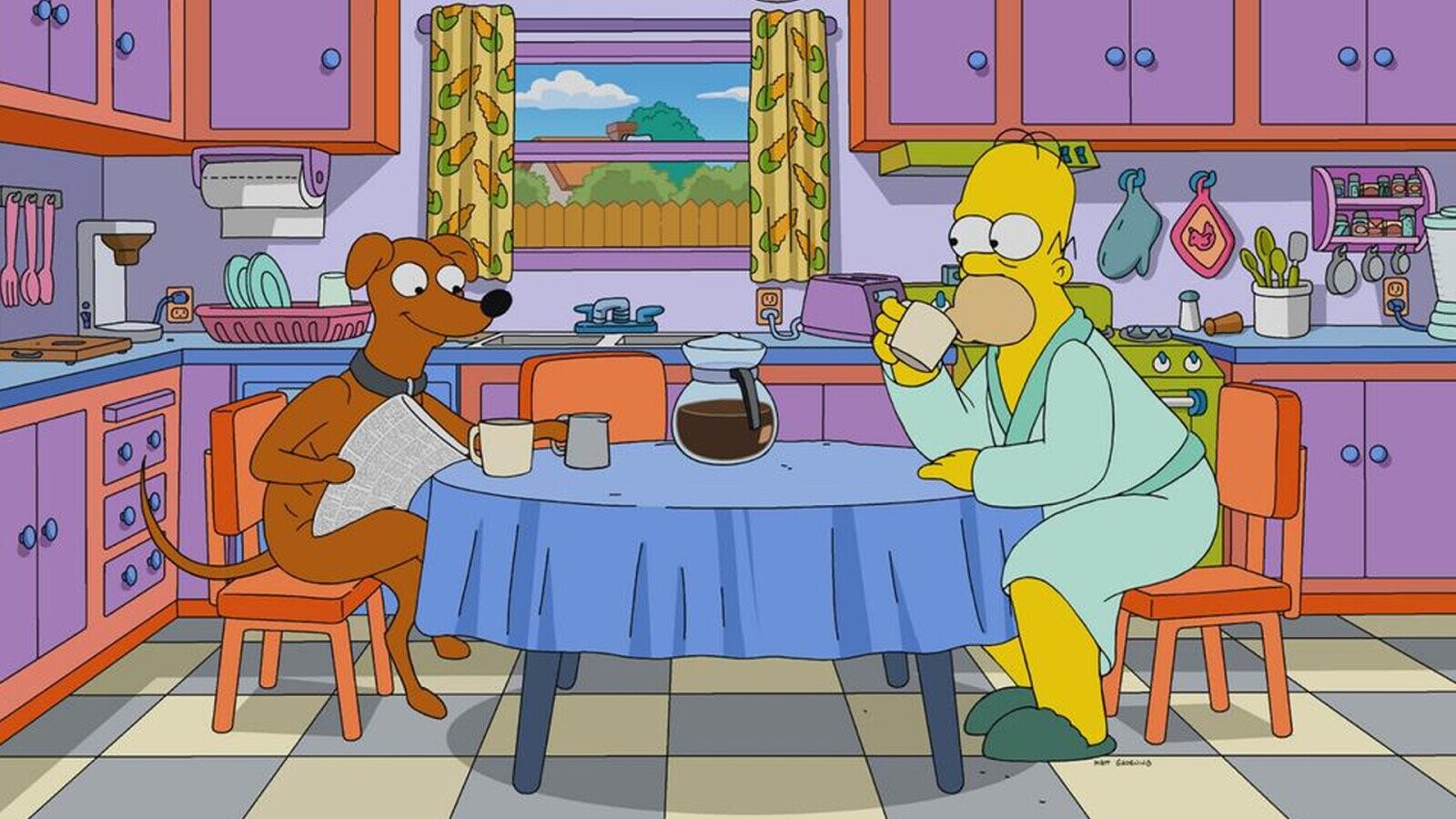
For years, asking whether The Simpsons is “good again” felt like walking into Moe’s Tavern and loudly announcing you prefer non-alcoholic beer. Somebody was going to throw something. The show’s golden age is sacred television territory: “Marge vs. the Monorail,” “Cape Feare,” “Last Exit to Springfield,” “You Only Move Twice”episodes so densely funny they seem to have been written by joke-powered supercomputers wearing flannel.
But something interesting has happened in the modern era. Viewers who once abandoned Springfield around Season 12, Season 15, or “whenever the jokes started feeling laminated” have been peeking back in. Critics have noticed stronger episodes. Fan forums have warmed to certain recent seasons. And under the current creative rhythm, especially with Matt Selman’s influence, The Simpsons has become stranger, more experimental, and surprisingly willing to interrogate its own immortality.
So, is The Simpsons good again? The honest answer is: sometimes, yes. Not always. Not like 1993 in a bottle. But good enough that the question is no longer a jokeit is a real conversation worth having.
The Roundtable: Four Types of Simpsons Superfan
To frame the debate, imagine four longtime fans gathered around a table shaped like a giant pink donut. Each has a different relationship with the show, and each represents a real slice of the fandom.
The Golden Age Purist
This fan believes the best Simpsons run is roughly Seasons 3 through 8, with some flexibility depending on how loudly you argue. To them, the old episodes had everything: social satire, emotional grounding, absurd jokes, and throwaway lines that somehow became permanent residents in the national brain. They are not wrong. The early and mid-1990s seasons remain one of the strongest comedy runs in American TV history.
For the purist, modern Simpsons has a brutal assignment: compete not with normal television, but with its own museum exhibit. A decent new episode is not compared to an average sitcom episode. It is compared to “Homer at the Bat.” That is not a fair fight. It is like asking a neighborhood softball team to defeat a squad of radioactive ringers.
The Lapsed Viewer
The lapsed viewer loved the show, drifted away, and now mainly knows modern The Simpsons through memes, viral clips, and people saying “Marge sounds different.” This fan is cautious. They remember when celebrity cameos felt organic and fear new episodes may exist only because the franchise is too valuable to unplug.
But this viewer is also the easiest to surprise. When they stumble onto a recent episode with a strong emotional center or a clever structure, the reaction is not “best episode ever.” It is more like, “Wait, that was… actually good?” That tiny pause is where the modern revival conversation lives.
The Always-On Defender
This fan never left Springfield. They watched the weak seasons, the weird seasons, the “why is this plot about an app?” seasons, and the episodes where the show looked exhausted but still occasionally landed a joke sharp enough to draw blood. To them, The Simpsons never fully died. It became inconsistent.
The defender’s argument is useful: when a show has aired hundreds of episodes, quality is not a straight line. It is a weather pattern. There are droughts, storms, and the occasional perfect sunny afternoon where Homer and Marge remind you why you cared in the first place.
The New Renaissance Believer
This fan argues that the modern era has found a fresh identity. Instead of trying to imitate the golden age, the show now plays with format, continuity, genre parody, and self-awareness. It knows it is old. It knows fans know it is old. Rather than pretending otherwise, recent episodes often turn that burden into comedy.
This is the strongest case for “good again.” Modern The Simpsons works best when it stops chasing the past and starts using its absurd longevity as creative fuel.
Why Fans Thought The Simpsons Fell Off
The backlash against later Simpsons seasons did not come from nowhere. The show’s decline became a pop-culture cliché because viewers noticed real changes. Stories became looser. Characters sometimes turned into simplified versions of themselves. Homer could shift from lovable doofus to destructive man-child. Celebrity guests occasionally felt like billboards with dialogue. Satire sometimes chased trends instead of slicing through them.
There was also the problem of comparison. The golden age of The Simpsons was not merely funny; it was architectural. Episodes built jokes on top of jokes, then somehow ended with emotional clarity. “Lisa’s Substitute” could break your heart. “Homer’s Enemy” could dismantle the American workplace. “Marge vs. the Monorail” could turn civic corruption into a musical fever dream. Later seasons often had funny moments, but fewer episodes felt inevitable from beginning to end.
Another issue was cultural position. In the 1990s, The Simpsons felt dangerous. Parents complained. Politicians noticed. The show mocked institutions before mocking institutions became an industry. Decades later, the world had absorbed its language. Every animated adult comedy carried some Simpsons DNA. The original rebel had become the grandfather at Thanksgiving, still funny, but now asking why the Wi-Fi password has punctuation.
What Changed in the Modern Era?
The recent “good again” argument has several ingredients. First, the show has embraced more ambitious storytelling. Episodes like “A Serious Flanders” showed that The Simpsons could parody prestige television without merely pointing at it. The two-part story borrowed the mood of Fargo, pushed Ned Flanders into darker territory, and treated style as more than decoration.
Second, the show has become more comfortable breaking its own structure. “Lisa the Boy Scout” played like a hacked episode full of abandoned plotlines and meta jokes. “Treehouse of Horror XXXIII” earned praise for sharper parody work, including segments inspired by The Babadook, anime, and Westworld. “Bart’s Birthday,” the Season 36 premiere, staged a fake series finale hosted by an animated Conan O’Brien, complete with finale clichés and jokes about artificial intelligence writing the perfect ending.
Third, recent seasons have rediscovered emotion. “Pixelated and Afraid,” from Season 33, is a strong example. Instead of building everything around a guest star or a topical gimmick, it follows Homer and Marge surviving in the wilderness. The episode works because it remembers something simple: Homer and Marge can still be moving when the show treats their marriage with sincerity.
That may be the biggest difference. The best modern episodes do not ask, “How do we recreate 1994?” They ask, “What can this show do now that no other show can?” After more than 35 seasons, The Simpsons has a giant toy box: decades of continuity, thousands of side characters, audience memory, and the freedom to parody its own legend.
The Best Evidence That The Simpsons Is Good Again
1. The Show Is Taking Bigger Swings
Modern The Simpsons is at its best when it takes a real swing. “A Serious Flanders” is not just a normal episode with a darker coat of paint. It is structured as a prestige-crime parody, with chapter breaks, stylized violence, and an unusually cinematic tone. Whether every fan loves it or not, it feels alive. That matters.
The same is true of “Bart’s Birthday.” A fake finale could have been a cheap stunt, but the episode uses the premise to explore the impossibility of ending a show designed never to change. Bart resists growing up because The Simpsons itself resists growing up. That is not just meta for meta’s sake; it is the show diagnosing its own condition while slipping on a banana peel.
2. The Writers Understand the Legacy Problem
A long-running series has a strange problem: it becomes haunted by its best self. The modern writers seem aware of this. Instead of pretending fans have no memory, recent episodes often invite that memory into the joke. The result is not always elegant, but it can be refreshing. The show now has permission to say, “Yes, we know you have watched the monorail episode 47 times. Please enjoy this new weird thing anyway.”
3. Character-Driven Episodes Still Work
When the show slows down and focuses on family dynamics, it can still hit. Homer and Marge remain the emotional engine. Lisa still works when the writers let her be sincere without making her a tiny lecture podium. Bart still works when his chaos hides anxiety, not just random misbehavior. The Simpsons family is durable because the basic relationships remain clear: love, irritation, guilt, loyalty, and the occasional strangling gag that has aged about as smoothly as unrefrigerated pudding.
4. The Fan Conversation Has Shifted
For a long time, the default online opinion was simple: old good, new bad. That view still exists, and sometimes it has a point. But the conversation is more complicated now. On fan forums and in critic essays, viewers are separating “not as good as the golden age” from “not good at all.” That distinction is important. A modern episode does not need to be “Cape Feare” to justify its existence. It only needs to be funny, sharp, and emotionally present on its own terms.
The Case Against the Comeback
Now for the cold water, served in a Krusty Burger collectible cup. The Simpsons is not consistently great again. Some episodes still feel thin. Some jokes arrive late and leave early. Some topical references have the shelf life of a banana in the Springfield Elementary radiator. The voice cast, legendary as it is, has naturally changed with age, and some fans find those changes distracting.
There is also the franchise question. The Simpsons is no longer just a TV show. It is a streaming library, a merchandise universe, a Disney asset, a nostalgia machine, and a cultural landmark that may continue because continuing is easier than stopping. That reality can make even strong episodes feel trapped inside a larger corporate snow globe.
And yes, the golden age still towers over everything. The best classic episodes combined joke density, social observation, and emotional storytelling at a level almost no comedy has matched. Saying “modern The Simpsons is good again” does not mean it has returned to that level. It means the show has become interesting again after years when even loyal viewers sometimes watched out of habit.
So, Is The Simpsons Good Again?
The roundtable verdict: yes, but with an asterisk the size of Lard Lad.
The Simpsons is not back to its golden age. That version belonged to a particular staff, a particular television landscape, and a particular cultural moment. Trying to recreate it exactly would be like trying to microwave a childhood memory. You might get warmth, but you will also get a weird smell.
What the show has done is more interesting. It has found pockets of renewed energy by becoming experimental, self-aware, and occasionally heartfelt. The best recent episodes use the show’s age as a feature, not a flaw. They understand that Springfield is no longer just a setting; it is a shared cultural memory. The writers can bend that memory, mock it, and sometimes make it feel new again.
For lapsed fans, the right approach is not to restart from the newest episode and expect a miracle. Sample the modern highlights. Watch “A Serious Flanders.” Try “Pixelated and Afraid.” Check out “Treehouse of Horror XXXIII.” Watch “Bart’s Birthday” if you enjoy meta comedy about finales, fandom, and TV immortality. You may not become a weekly viewer again, but you might find yourself laughing in that surprised way that says, “D’oh, I missed this.”
Superfan Experience: Returning to Springfield After Years Away
Coming back to modern The Simpsons as a longtime fan feels a little like visiting your childhood mall. Some stores are gone. The food court smells familiar but suspicious. The fountain where you once tossed pennies is now a phone-charging station. Still, if you walk slowly enough, you can find the old magic hiding between the new signs.
The first experience many returning fans have is discomfort. The pacing feels different. The voices sound older. The animation is cleaner, sometimes too clean for viewers who miss the warmer roughness of the classic years. You may catch yourself waiting for the old rhythm: setup, misdirection, absurd punchline, emotional left hook. Sometimes it arrives. Sometimes it does not. That inconsistency can be frustrating, especially when your memory has edited the classic seasons into one flawless super-season where every joke landed and no episode was merely okay.
But then a modern episode surprises you. A joke lands with real snap. A background gag rewards careful watching. Homer says something foolish but oddly human. Lisa gets a story that is not just “smart girl explains issue.” Marge becomes more than the family alarm system. Suddenly, you are not watching out of obligation. You are watching because the episode found a pulse.
The most enjoyable way to experience modern The Simpsons is to stop demanding time travel. Do not sit down expecting the exact feeling of watching “Bart Sells His Soul” or “Homer’s Barbershop Quartet” for the first time. That experience belonged to another version of you. Instead, watch for what the show can do now: reflect on aging, parody streaming-era television, joke about its own endlessness, and occasionally use decades of audience familiarity to create emotional shortcuts no new sitcom could access.
There is also a strange comfort in the show’s persistence. In a media world where series vanish after one season, platforms delete their own content, and fandoms are constantly grieving cancellations, The Simpsons remains. Springfield is still there. The family still lives at 742 Evergreen Terrace. Mr. Burns is still ancient. Ralph is still Ralph. The town has become less like a weekly sitcom location and more like an emotional utility: flip the switch, and the yellow people are home.
That does not mean every new episode deserves applause. Being old is not the same as being good. But longevity gives The Simpsons a unique emotional texture. When a modern episode works, it does not only make you laugh; it reconnects you to every version of yourself that ever laughed at this show. The kid who quoted Bart, the teenager who discovered satire through Lisa, the adult who suddenly understood Marge, and the tired person on the couch who just wants one smart joke before bedthey are all watching together.
So the experience of modern The Simpsons is not pure nostalgia. It is negotiation. You forgive some creaks. You reject some weak episodes. You celebrate the bold ones. And every so often, Springfield reminds you that it can still open the door, hand you a donut, and say something funny enough to make the whole trip worthwhile.
Conclusion
The Simpsons is good again in the way a legendary band can release a late-career album that does not replace the classics but proves the musicians are still listening, experimenting, and occasionally catching fire. The modern show is uneven, but it is not creatively dead. Its strongest recent episodes are playful, self-aware, emotionally grounded, and more willing to break format than many fans expected.
The golden age remains untouchable. But the current era deserves a fairer label than “zombie Simpsons.” It is more like “restless Simpsons”: imperfect, older, sometimes awkward, but still capable of reminding viewers why Springfield became television’s most durable animated town in the first place.