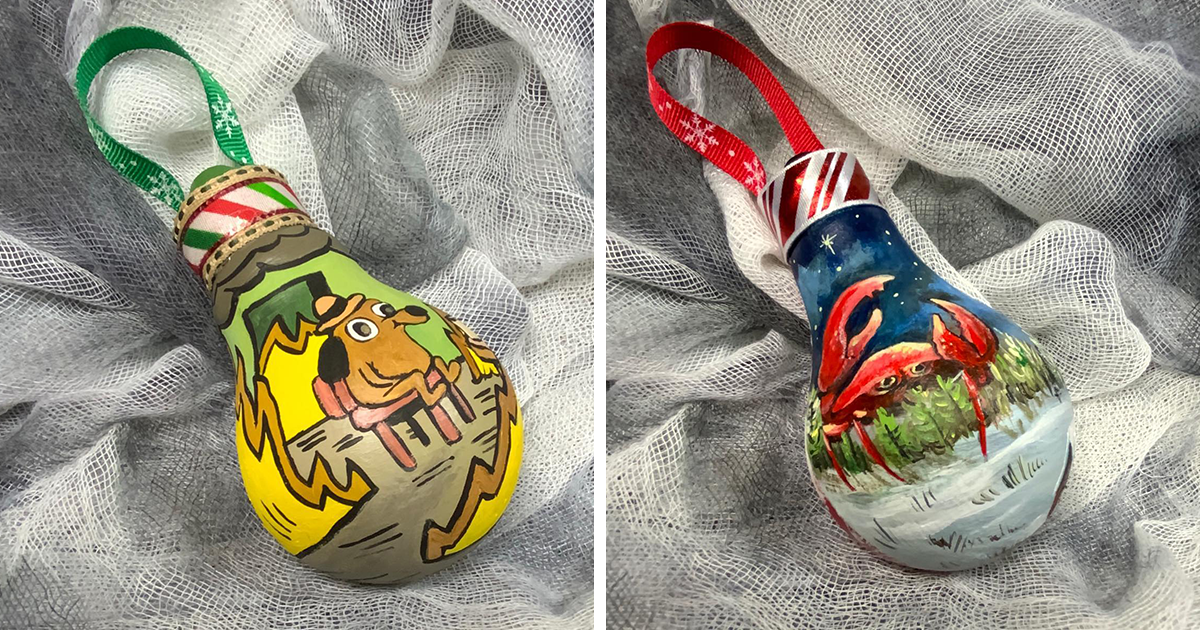
Every Christmas tree has a few stars. Some sparkle. Some sentimentalize. Some are so oddly charming that guests lean in, squint, and say, “Wait… is that a lightbulb?” And honestly, that is the dream. In a season overflowing with glossy store-bought decorations, painted burnt-out lightbulbs bring something the big-box aisle cannot manufacture: personality. They are whimsical, slightly vintage, wonderfully imperfect, and just quirky enough to become the ornament everyone remembers.
The idea is simple but brilliant. Instead of tossing an old incandescent bulb into the “goodbye, old friend” category, you turn it into a miniature canvas. Its rounded shape already looks like a snowman body, a penguin belly, a Santa torso, a tiny owl, or even a cozy winter cottage. Add paint, ribbon, glitter, twine, and a little patience, and a dead bulb becomes the sort of Christmas ornament that makes your tree feel collected rather than merely decorated.
That is part of the magic behind the visual appeal of a gallery called I Paint On Burnt Out Lightbulbs To Repurpose Them As Christmas Tree Ornaments (60 Pics). It combines three things people love: Christmas nostalgia, clever upcycling, and tiny hand-painted art. That trio is basically holiday catnip. One scroll turns into ten. Ten turns into, “I suddenly need acrylic paint and a snack.”
Why Burnt-Out Lightbulbs Make Surprisingly Perfect Christmas Ornaments
Lightbulbs have the kind of shape artists dream about. They are small enough to finish in one sitting, curved enough to feel sculptural, and familiar enough to trigger instant recognition. Unlike a flat ornament blank, an old bulb forces you to work in the round, which gives each piece a handmade, storybook quality. A snowman painted on a bulb looks softer and more dimensional than one painted on a wooden disc. A penguin feels plumper. A Santa suddenly has a very respectable belly.
There is also a vintage charm to the material itself. Incandescent bulbs feel old-school in the best way. They belong to a world of tinsel, hand-knit stockings, paper chains, cocoa in mugs too hot to hold, and Christmas trees decorated one memory at a time. Turning them into ornaments feels less like crafting and more like rescuing a little piece of holiday history.
And then there is the sustainability angle. Repurposing materials that would otherwise be discarded has obvious appeal, especially during a season that can become a parade of packaging, single-use décor, and impulse purchases. A painted bulb ornament asks a gentler question: what if the prettiest thing on the tree was something you already had?
The Safety Part You Really Should Not Skip
Not Every “Dead Bulb” Belongs in a Craft Box
Before the paint brushes come out, one rule matters more than all the others: choose the right type of bulb. Traditional burnt-out incandescent bulbs are the usual candidates for this craft. They have the classic glass shape that artists love, and they do not carry the same concerns as compact fluorescent bulbs. CFLs and other mercury-containing bulbs are a different story entirely and should not be casually repurposed as holiday crafts. If you are dealing with those, proper recycling and disposal matter much more than your ornament aesthetic.
LED bulbs are also less ideal for this kind of project. They last far longer, use much less energy, and are generally the smarter choice for lighting your home, but they are not the charming little glass canvases that old incandescents are. Their materials and construction usually make them a better fit for use as lighting products, not painted keepsakes.
Prep Work Is Not Glamorous, but It Saves the Day
If you are working with an old incandescent bulb, make sure it is fully cool, clean, and intact. No cracks. No chips. No “it should probably be fine” energy. Wipe away dust and residue so the paint has a clean surface to grip. On glass, prep work is the difference between “handmade heirloom” and “holiday disappointment with fingerprints.”
If the metal cap feels loose or the bulb seems structurally compromised, retire it from ornament duty. A Christmas craft should not turn into an emergency cleanup operation under the tree while someone is shouting, “Nobody move, there’s glitter and glass everywhere!”
Display Them Like the Tiny Artworks They Are
Once the ornament is finished, let paint and sealers dry completely before hanging. Use lightweight ribbon, twine, or ornament hooks attached securely around the bulb’s metal base. Place handmade bulb ornaments where they will not bang against hard branches, heavy decorations, or rambunctious pets with no respect for artisanal labor.
And yes, basic tree safety still applies. Check your lights, avoid overloading outlets, and turn tree lights off before bed or when leaving the house. Your ornament can be magical without auditioning for a fire-safety poster.
How To Turn a Burnt-Out Bulb Into a Christmas Ornament
What You Need
You do not need a professional studio. You need a small pile of manageable supplies and the confidence of someone who has watched exactly three holiday craft videos and now considers that “research.” A simple setup usually includes:
- Burnt-out incandescent lightbulbs that are clean and intact
- Acrylic or glass-friendly craft paint
- Fine-tip paintbrushes
- Primer or base coat, if desired
- Clear sealer or varnish for durability
- Ribbon, twine, lace, or mini embellishments
- Hot glue or strong craft adhesive
- A soft cloth and a protected work surface
Step 1: Clean the Bulb
Start by gently wiping the surface to remove dust, oils, or residue. This is boring, yes. It is also the reason your paint job will not slide around like it is late for another appointment.
Step 2: Choose a Character or Theme
The bulb shape will tell you what it wants to be. A round bulb practically begs to become a snowman, Santa, penguin, reindeer, owl, angel, or gnome. Elongated bulbs work beautifully for candles, icicles, woodland scenes, or slim little toy soldiers. The best designs follow the natural silhouette instead of fighting it.
Step 3: Paint in Thin Layers
Use thin coats rather than thick blobs. Thick paint may look efficient in the moment, but on curved glass it can become lumpy, slow to dry, and weirdly dramatic. Build color gradually. A base coat gives brighter shades more punch, while smaller brushes help with faces, scarves, buttons, snowflakes, and other details that make the ornament feel alive.
Step 4: Add Texture and Personality
This is where the fun starts. A tiny plaid scarf made from ribbon. A strip of lace that becomes an angel collar. Faux snow dots. Gold accents. Mini holly leaves. Twine for rustic farmhouse charm. Glitter, used responsibly and without summoning a permanent household curse, can also work beautifully on hats, wings, or snowy trim.
Step 5: Seal and Hang
When the paint is fully dry, add a protective sealer if you want the ornament to last for many seasons. Then attach a hanging loop around the bulb’s base or with a carefully placed adhesive element. Let everything cure completely before it goes on the tree.
Why These Ornaments Are So Addictive To Look At
The “60 pics” appeal is not random. These ornaments are irresistible because they live at the intersection of tiny art and holiday emotion. People enjoy seeing ordinary objects transformed into something unexpectedly beautiful. A dead bulb is supposed to be the end of a story. When it becomes a hand-painted Santa with rosy cheeks and a velvet ribbon, it turns into a second act. Humans are suckers for a comeback.
They are also highly varied. One artist may lean rustic, painting woodland animals, cabin scenes, and muted snowy landscapes. Another might go full festive chaos with candy-cane stripes, glitter beards, and snowmen who clearly have strong opinions. Even the same design changes depending on color palette, brush style, and tiny details. That makes each ornament feel individual, which is exactly what keeps a photo gallery engaging.
And because the scale is small, every detail feels precious. A hand-painted mitten. A tiny carrot nose. A miniature wreath. A microscopic star. These are not just ornaments; they are pocket-size holiday personalities.
Specific Design Ideas That Work Especially Well
Snowmen
This is the classic for a reason. The bulb shape does half the work for you. Add a white body, black dots, orange nose, scarf, and top hat, and suddenly you have a cheerful little character who looks thrilled to be alive despite technically being deceased electrical equipment.
Santa and Gnomes
Both designs play nicely with the bulb silhouette. The lower half becomes the beard or body, while the top leads naturally into a hat. Red paint, soft white trim, and a little blush on the cheeks go a long way.
Penguins and Owls
The rounded belly of a bulb is perfect for birds. Penguins look especially charming with black-and-white contrast and bright scarves, while owls benefit from layered feather details and oversized eyes that make them look permanently delighted by Christmas.
Mini Winter Scenes
If you like detail work, paint tiny cottages, pine trees, stars, or moonlit snow landscapes around the bulb. Because the surface wraps around, the ornament becomes a 360-degree winter world instead of a one-sided decoration.
Vintage-Inspired Designs
Muted reds, soft greens, cream tones, gold edging, and old-fashioned lettering can make a bulb ornament feel like something discovered in your grandmother’s attic, only in a chic way and not in a “this box smells like mystery” way.
Common Mistakes That Can Ruin the Look
The first mistake is picking the wrong bulb. If it is cracked, unstable, or mercury-containing, it should not be your canvas. The second is rushing the paint. Dry time matters. Another common error is overdecorating. There is a thin line between whimsical and “the ornament appears to be wearing seven unrelated accessories.” Sometimes a clean design with one strong focal point looks far better than a bulb trying to be a snowman, a gift package, and a disco ball at the same time.
Another easy mistake is forgetting scale. What looks charming on a sketch can become cluttered on curved glass. Simpler lines, bigger shapes, and thoughtful contrast usually work best. Finally, do not underestimate finishing. A well-attached hanger and a neat ribbon can make a handmade ornament look polished instead of homemade in the “school project from a stressful Wednesday” sense.
Why These Ornaments Work So Well on the Web
From a content perspective, this topic is catnip for readers because it blends holiday décor, DIY craft ideas, upcycling, and visual storytelling. It appeals to budget-conscious decorators, handmade-gift lovers, cottagecore enthusiasts, nostalgic Christmas fans, and anyone who has ever looked at a broken household item and thought, “I bet Pinterest would have feelings about this.”
It also performs well because the concept is instantly understandable. You do not need a long setup. Burnt-out lightbulbs become painted Christmas ornaments. Done. The hook is visual, the premise is clever, and the emotional payoff is built in. People love festive transformations, especially when they feel accessible enough to try themselves.
My Experience Painting Burnt-Out Lightbulbs Into Christmas Ornaments
The first time I painted a burnt-out lightbulb, I expected a cute little experiment. I did not expect a full-blown holiday obsession. I definitely did not expect to become the sort of person who looks at dead incandescent bulbs and thinks, “You, my friend, are one tiny scarf away from greatness.” But that is exactly what happened.
What surprised me most was how calming the process felt. Christmas can be loud in the best way: shopping lists, music, wrapping paper, family group chats with too many opinions about dinner. Painting a small ornament on a bulb created the opposite mood. It slowed everything down. I had to hold the bulb carefully, think about the curve of the glass, and add details one tiny brushstroke at a time. It turned into a quiet ritual, the kind that makes an evening feel cozy even if the rest of the week has been chaos.
I also learned that these ornaments have a sneaky emotional power. A store-bought ornament can be beautiful, but a painted bulb tells a story. I remember the first snowman I painted because the scarf came out crooked and I almost started over. I am glad I did not. That crooked scarf became the thing everyone noticed first. Then there was the penguin with the slightly lopsided beak, the Santa whose beard accidentally looked fabulous, and the winter cottage scene that took forever but ended up looking like a tiny globe of nostalgia. The imperfections made them better, not worse.
Another unexpected joy was the reaction from other people. Handmade ornaments invite conversation in a way mass-produced décor rarely does. Guests pick them up gently, turn them around, and ask how they were made. Kids point to their favorites immediately. Family members start requesting custom ones. Someone always says, “You should sell these,” which is flattering, though it also ignores the fact that I once spent twenty minutes painting one microscopic mitten. Art takes time, Sharon.
I found that the best designs came from working with the bulb instead of against it. If I tried to force a complicated idea onto the shape, the ornament looked busy. But when I let the bulb guide the design, everything clicked. The roundness suggested snowmen and penguins. The metal top became a hat brim, a halo base, or the top of a chimney scene. Even the limitations felt creative rather than annoying. It was like solving a cheerful little puzzle with paint.
There is also something satisfying about the upcycling itself. Holiday decorating can become very consumption-heavy, very fast. Making ornaments from burnt-out bulbs changed that energy for me. It felt resourceful, sentimental, and a little rebellious in the nicest possible way. Instead of buying another generic decoration, I made something with a history. It had already lived one life as a household object. Now it got to come back as something festive and funny and oddly touching.
By the time I had painted a handful of them, I understood why people become devoted to this craft. It is affordable, personal, relaxing, and endlessly customizable. You can match your tree’s color palette, make ornaments for friends, create keepsakes for each year, or simply spend a winter afternoon painting tiny faces on glass and feeling unreasonably proud of a snowman the size of an egg. Frankly, that sounds like an excellent use of the holiday season.
If there is one thing this craft taught me, it is that charm does not have to be expensive, perfect, or brand-new. Sometimes the most memorable ornament on the tree starts as something burned out, overlooked, and headed for the discard pile. Then a little paint shows up, adds a scarf, and suddenly it is the main character.
Conclusion
Painting burnt-out lightbulbs into Christmas tree ornaments is more than a crafty holiday trend. It is a clever blend of upcycling, storytelling, and festive design. With the right bulb, a little patience, and a playful idea, you can transform a household leftover into a keepsake that feels personal, nostalgic, and genuinely one of a kind. Whether you paint snowmen, Santas, penguins, owls, or tiny winter scenes, the result is the same: your tree gets more character, your decorations feel more meaningful, and your holiday style gets a wonderfully handmade heartbeat.
In other words, this is the kind of Christmas craft that earns its spot on the tree year after year. Not because it is perfect, but because it has a story. And during the holidays, that is the ornament magic people remember.