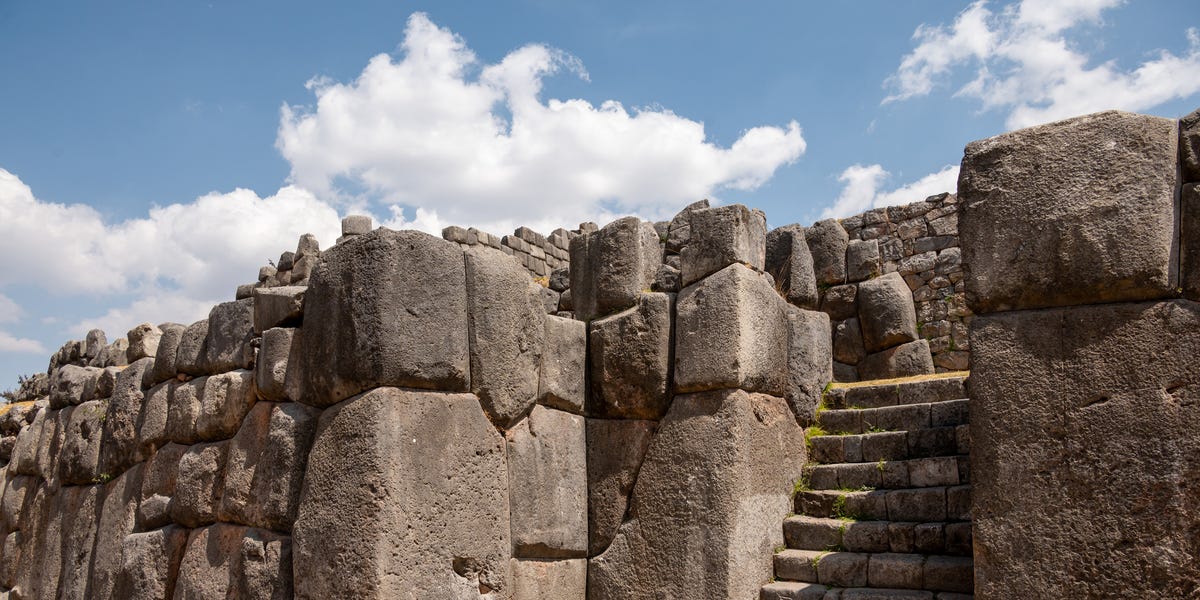
Every so often, archaeology gives us a headline that sounds like it escaped from an adventure movie: a lost temple, buried in sand, found by a team of researchers, and important enough to make historians reach for fresh notebooks. This time, the setting is coastal Peru, where archaeologists uncovered the remains of an ancient ceremonial temple and theater that may be around 4,000 to 5,000 years old. That is not “old” in the way your phone feels old after two software updates. That is old enough to predate the Inca, the Moche, the Nazca, and even many of the best-known religious traditions of the ancient Andes.
The discovery matters because it helps answer a major historical puzzle: how did complex religious life, public ritual, and social authority begin taking shape in early Andean societies? The lost temple, found near Zaña in northwestern Peru, offers a rare look at a time before written records, before grand empires, and before the famous stonework that later made Machu Picchu a global icon. In other words, the temple is not just a beautiful ruin. It is a time machine with mud walls, ritual art, and a very serious sand problem.
Led by archaeologist Luis Muro Ynoñán and the Cultural Landscapes Archaeological Project of Úcupe-Zaña Valley, the excavation revealed architectural features that suggest the site functioned as a ceremonial center. Researchers found walls, a central staircase, a possible stage or theater area, painted plaster, high-relief imagery, and human remains placed between walls. Together, these clues point to a community that was not merely surviving on the desert coast. It was organizing belief, performance, memory, and power into a shared sacred space.
What Did Archaeologists Actually Find?
The lost temple was discovered at La Otra Banda, Cerro Las Ánimas, near the city of Chiclayo in Peru’s Lambayeque region. At first glance, the landscape may not scream “major historical breakthrough.” Much of the structure had been hidden under sand and sediment, and the site came to professional attention partly because local authorities had noticed signs of looting. That detail is important. Many archaeological discoveries begin not with a golden idol sparkling dramatically in sunlight, but with a damaged place that needs protection before the past is sold off piece by piece.
Once excavation began, the team found mud and clay walls only a short distance below the modern surface. These walls appear to belong to a large religious structure, possibly built into the side of a hill. The architecture included what may have been a central staircase leading upward to a platform or stage. That layout suggests the site was designed for public ceremonies, where some people performed rituals while others watched. Ancient theater, it turns out, did not require velvet curtains, overpriced snacks, or someone coughing during the quiet part.
The temple also preserved damaged but meaningful plasterwork. Researchers identified imagery that included a mythological bird-like figure, feline elements, and reptilian claws. In ancient Andean art, animals were rarely just decorative. Birds, cats, serpents, and hybrid creatures often carried symbolic weight, linking humans to sky, earth, water, fertility, danger, authority, and the spirit world. The discovery of these designs on a ceremonial building gives scholars valuable evidence for early religious imagination in the region.
Why the Temple Solves a Historical Puzzle
The big puzzle is not simply whether ancient Peruvians built temples. They absolutely did. The deeper question is when and how complex religious systems emerged in the Andes, and how those systems helped shape organized communities. Before this discovery, archaeologists already knew that the Central Andes were home to some of the oldest complex societies in the Americas. The Sacred City of Caral-Supe, for example, is about 5,000 years old and contains monumental platform mounds and sunken circular courts. Later, Chavín de Huántar became one of the most influential ceremonial centers in the ancient Andes.
The Zaña temple helps fill the space between broad historical milestones. It suggests that early coastal communities were building formal religious architecture and staging ritual performances much earlier than many casual readers might imagine. This is crucial because religion in ancient societies was not tucked away in a private corner of life. It often connected food production, leadership, trade, seasonal cycles, burial practices, and political authority. A temple could be a sacred place, a meeting hall, a performance venue, and a power center all at once. Basically, it was the ancient version of a city hall, church, theater, and community center rolled into one very dusty package.
The discovery also challenges the habit of viewing Andean history backward from the Inca Empire. The Inca are famous for good reason, but they were late arrivals in a much longer story. By the time the Inca expanded across the Andes, people in Peru had already spent thousands of years experimenting with cities, irrigation, monumental buildings, ritual landscapes, textiles, ceramics, and long-distance exchange. The Zaña temple reminds us that the roots of Andean civilization run deep, and they were already branching in surprising directions long before imperial armies and royal roads entered the picture.
The Human Remains Add a Serious Layer
Among the most striking finds were skeletal remains discovered between the walls of the temple. Reports describe the remains of three adults, with one individual possibly associated with offerings and wrapped in cloth or linen-like material. Nearby finds may indicate ritual activity, though archaeologists are careful about interpretation. The past rarely arrives with a label reading, “Hello, I am definitely a sacrifice.” Context matters: placement, associated objects, architecture, burial position, dating, and comparison with other sites all help researchers understand what happened.
Even without jumping to dramatic conclusions, the remains tell us that this was not an ordinary building. The placement of bodies within or near ceremonial architecture suggests a relationship between death, memory, and sacred space. Ancient communities may have used burials or offerings to consecrate buildings, mark important events, honor powerful individuals, or communicate with ancestors and supernatural forces. In many early societies, the boundary between the living and the dead was not treated like a locked door. It was more like a doorway that ritual could open.
Human remains also remind us that archaeology is not treasure hunting. These were real people, not props in a mystery novel. Responsible excavation requires documentation, conservation, ethical care, and respect for descendant communities and national heritage laws. The excitement of discovery should never erase the human dignity of the individuals whose bones help tell the story.
A Temple, a Theater, and the Birth of Public Ritual
One of the most fascinating parts of the discovery is the possible theater-like space. If the central staircase and raised platform were used for ritual performances, the site may show how early leaders and ritual specialists communicated ideas to a gathered public. Imagine ceremonies involving music, movement, offerings, costumes, painted walls, firelight, incense, food, or seasonal gatherings. We cannot reconstruct the whole scene, but the architecture strongly suggests that people were meant to assemble, look, listen, and participate.
That matters because public ritual can create social unity. When a community gathers in the same place, watches the same performance, and recognizes the same symbols, it builds a shared identity. Over time, those shared experiences can support leadership. The person who controls the calendar, the sacred knowledge, the ritual objects, or the platform at the top of the stairs may gain influence. Religion and politics were often braided together in early complex societies, not separated into tidy modern categories.
This is where the lost temple becomes more than an archaeological site. It becomes evidence for one of humanity’s oldest social tricks: gathering people around a powerful story. Today, we still do this through national ceremonies, graduations, concerts, sports events, and public memorials. Ancient Peruvians did it with plastered walls, symbolic animals, sacred architecture, and performances that probably carried meanings we are only beginning to understand.
The Mystery of the Unknown Builders
One of the most intriguing details is that archaeologists do not yet know exactly what the temple builders called themselves. There is no neat written inscription saying, “Built by the Extremely Organized Temple People of Zaña, please leave five stars.” Instead, researchers must infer identity from architecture, materials, imagery, burial customs, and dating. That uncertainty is not a weakness. It is the normal condition of studying ancient societies without written records.
The temple appears to predate the Chavín culture, one of the best-known religious traditions of pre-Columbian Peru. It also predates the Moche culture, which flourished much later on the northern coast and is famous for its expressive ceramics, monumental huacas, and complex iconography. A later temple found near the same area may be connected to the Moche period, suggesting that this landscape remained important across many centuries. Sacred places often have long afterlives. People may return to the same hills, valleys, springs, or ruins because the landscape itself gathers meaning.
The unknown identity of the builders makes the find especially valuable. It expands the map of early Andean religion beyond the cultures most people recognize. Instead of a simple timeline where one famous civilization replaces another, the discovery points to a crowded, creative world of local communities developing their own sacred spaces and symbolic systems.
How Archaeologists Date and Interpret a Site Like This
Dating an ancient temple is not guesswork with a fancy hat. Archaeologists use multiple methods to build a reliable timeline. Organic materials, such as charcoal, textiles, plant remains, or bone collagen, may be tested through radiocarbon dating. Architectural style can be compared with other known sites. Pigments and plaster can be studied chemically. Stratigraphythe order of layers in the groundhelps determine what came earlier and what came later.
At the Zaña site, researchers have discussed the importance of studying the pigments in the murals and the construction techniques used in the walls. The temple’s rammed-earth or mud-wall architecture offers clues about engineering knowledge and local materials. Its imagery offers clues about belief. Its burials offer clues about ritual. None of these pieces alone solves the puzzle, but together they create a more convincing picture.
Modern archaeology is increasingly interdisciplinary. A single excavation may involve archaeologists, conservators, geologists, chemists, bioarchaeologists, drone specialists, local historians, and digital mapping experts. The romance of archaeology may still involve brushes and trowels, but the reality also includes spreadsheets, lab samples, permits, GPS points, and the occasional equipment battery dying at exactly the worst moment.
Why Peru Keeps Rewriting the History Books
Peru is one of the world’s most archaeologically rich countries because its environments preserve many different kinds of evidence. The dry coastal desert can protect textiles, murals, wood, plant fibers, and architecture that would decay quickly in wetter climates. The Andes, meanwhile, contain highland ceremonial centers, agricultural terraces, roads, tombs, and settlements shaped by altitude and climate. Between coast, highlands, and jungle, ancient communities developed diverse ways of living and organizing society.
The Zaña temple joins a long list of discoveries that continue to reshape the story of the ancient Americas. Caral-Supe showed that monumental architecture and urban planning appeared in Peru thousands of years ago. Chavín de Huántar revealed how a ceremonial center could influence a wide region through art, pilgrimage, and religious symbolism. Moche sites showed how later coastal societies expressed power through pyramids, ceramics, metalwork, and elaborate ritual scenes. The newly uncovered temple adds another chapter by pushing attention toward early religious architecture in a lesser-known coastal landscape.
For readers who mostly associate ancient Peru with Machu Picchu, this discovery is a friendly nudge from history: the Andes were busy long before the postcard view. Machu Picchu is magnificent, but it is not the opening chapter. It is closer to a later, dramatic plot twist.
What This Discovery Means for Archaeology Today
The lost temple highlights three important trends in modern archaeology. First, local protection matters. The site came under closer study after concerns about looting, showing why cultural heritage laws and community awareness are essential. Without quick action, fragile evidence can disappear forever.
Second, archaeology is not only about finding objects; it is about reconstructing relationships. The temple connects architecture, performance, belief, death, landscape, and authority. A carved bird figure is interesting. A carved bird figure on a ritual wall inside a temple near human remains is a whole conversation.
Third, discoveries like this remind us that history is provisional. Textbooks simplify the past because they have to fit on pages. Archaeological evidence keeps complicating the story, which is exactly why it is exciting. Every new site can adjust dates, challenge assumptions, or reveal societies that were previously invisible.
Experience Notes: What a Lost Temple Teaches Us Beyond the Headlines
Standing at an archaeological site, even in imagination, changes how you read a headline. “Lost temple found” sounds quick and cinematic, but the real experience is slower and more humbling. A wall appears inch by inch. A patch of plaster has to be cleaned without destroying it. A shape that first looks like random damage becomes a claw, a wing, or the curve of a mythological face. The past does not shout. It waits for patient people to notice its grammar.
One of the most powerful lessons from the Zaña temple is that ancient people were not simpler versions of us. They had fears, ambitions, jokes, rituals, leaders, artists, builders, and arguments about who was supposed to bring what to the ceremony. Their world was different, but it was not primitive in the lazy sense of the word. Building a ceremonial center required planning, labor organization, technical knowledge, symbolic agreement, and social coordination. Anyone who has tried to organize a family dinner can appreciate the difficulty. Now imagine organizing a temple project without email, bulldozers, or a group chat named “Ritual Logistics.”
The discovery also teaches us to respect landscapes that look empty. A sand dune may seem blank, but beneath it may be a staircase that once carried priests, musicians, mourners, or community leaders. A hill may look ordinary, but it may have shaped local memory for centuries. Archaeology trains us to look twice. That habit is useful far beyond ancient history. In everyday life, many important truths are hidden under familiar surfaces: old neighborhoods, family traditions, local stories, even objects sitting quietly in a drawer.
There is also an emotional side to discoveries like this. The temple’s human remains remind us that history is not only architecture and dates. It is made of bodies, grief, devotion, and decisions. Someone placed those individuals there. Someone believed the act mattered. Someone may have returned to that place year after year, carrying food, flowers, music, or memory. We may never know their names, but archaeology gives them back a kind of presence.
For students, travelers, and curious readers, the best takeaway is simple: do not reduce archaeology to treasure. The real treasure is context. A gold object without context is shiny. A humble wall with context can transform what scholars know about the origin of religion, theater, and authority in an entire region. That is why archaeologists get excited about soil layers, postholes, pigments, and broken fragments. They are not being dramatic. Well, sometimes they are, but in this case they have earned it.
The lost temple in Peru is a reminder that the ancient world is not finished speaking. It still has rooms under the sand, symbols under plaster, and puzzles waiting for careful hands. Every discovery adds another sentence to the human story, and occasionally, as in Zaña, that sentence changes the paragraph around it.
Conclusion: A Lost Temple With a Very Big Message
The discovery of the lost temple near Zaña is more than an exciting archaeological headline. It is evidence that early Andean communities were creating complex religious spaces, public ritual settings, and symbolic art thousands of years ago. Its walls, staircase, possible theater, mythological imagery, and burials point to a society deeply invested in ceremony and meaning. The find helps solve a major historical puzzle by showing how religion may have helped shape social organization and political authority in ancient Peru long before the better-known civilizations of the region rose to prominence.
As researchers continue to study the site, more details will likely emerge about its date, builders, rituals, and cultural connections. For now, the temple gives us a rare and valuable glimpse into the early origins of sacred architecture in the Andes. It also gives the rest of us a reason to look at a pile of sand with a little more respect. After all, history has a habit of hiding its best chapters under the quietest surfaces.