Before Volodymyr Zelenskyy became the face of Ukrainian resistance, he was already famous for playing the most unlikely political fantasy imaginable: an ordinary schoolteacher who accidentally becomes president after an anti-corruption rant goes viral. It sounded like a punchline, the kind of plot that belongs between commercial breaks, not in a national election. Then Ukraine did something history books rarely prepare us for: it turned the sitcom into a ballot.
The story of how Ukraine’s wacky sitcom president became its real one is not simply a quirky celebrity tale. It is a case study in public frustration, digital-age campaigning, political branding, anti-corruption anger, and the strange power of a character who felt more honest than actual politicians. Zelenskyy’s rise from comedian to president was funny, yes, but not unserious. Beneath the jokes was a country tired of corruption, war, stalled reforms, and leaders who seemed to arrive with grand promises and leave with complicated excuses.
In 2019, Ukrainian voters did not just elect a TV star. They elected a symbol: the outsider, the everyman, the guy who seemed to say what everyone muttered at the kitchen table. The result was one of the most unusual political transformations in modern democratic history. Hollywood loves a reboot. Ukraine made one with real consequences.
From Kryvyi Rih to Kvartal 95: The Making of a Political Entertainer
Volodymyr Zelenskyy was born in 1978 in Kryvyi Rih, an industrial city in central Ukraine. He studied law and graduated from Kyiv National Economic University, but the courtroom never really got him. Comedy did. Like many great political stories, this one begins with a young man who trained for one profession and then wisely ignored it.
Zelenskyy became active in performance while still a student. His comedy group, Kvartal 95, grew from a student troupe into one of Ukraine’s most successful entertainment brands. The name came from the neighborhood where he grew up, and the company built its reputation on sketches, satire, television shows, and films. It was not just slapstick. Kvartal 95 specialized in political humor, the kind that let audiences laugh at powerful people without needing a political science degree or a blood pressure monitor.
This background mattered. Zelenskyy learned timing, crowd reading, improvisation, camera presence, and the emotional rhythm of public attention. These are not traditional qualifications for running a state, but they are powerful tools in an era when politics is performed on screens. His future opponents had party machines; he had punchlines, production teams, and an instinct for what ordinary Ukrainians were tired of hearing.
The Sitcom That Accidentally Became a Campaign Blueprint
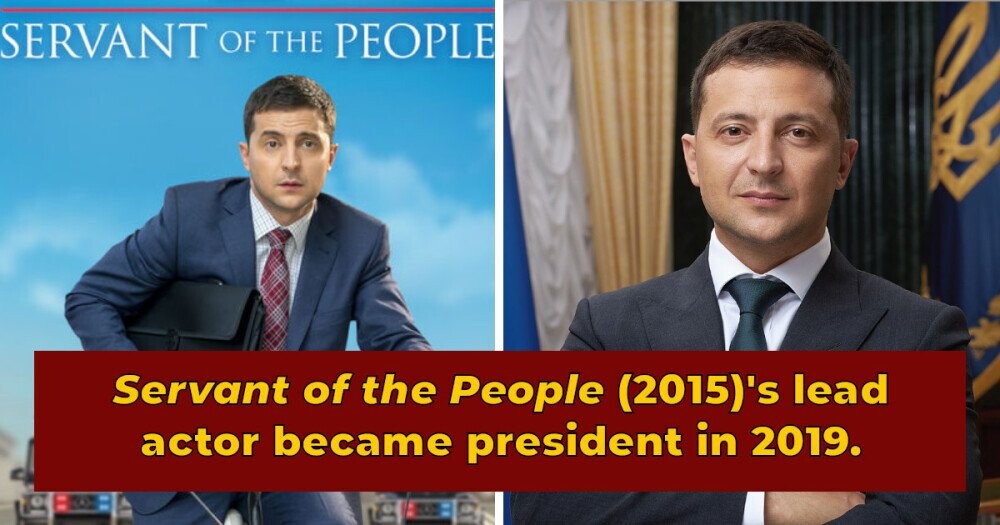
In 2015, Zelenskyy starred in Servant of the People, a Ukrainian political satire that became the key to understanding his later campaign. He played Vasyl Holoborodko, a humble high school history teacher whose furious rant against government corruption is secretly filmed by a student and uploaded online. The video goes viral. The teacher becomes a national sensation. Then, in the show's deliciously absurd twist, he is elected president of Ukraine.
The premise was almost too perfect. Holoborodko was not polished. He was not backed by the old political class. He did not speak like someone who had been professionally trained to avoid answering questions. He was angry, funny, awkward, sincere, and allergic to corruption. In other words, he was written as the fantasy candidate for citizens who felt trapped between cynicism and hope.
The sitcom worked because it exaggerated reality just enough to make reality look guilty. Ukraine had endured political upheaval, the 2014 Revolution of Dignity, Russia's annexation of Crimea, war in the Donbas, economic pressure, and endless frustration with corruption. For many viewers, Servant of the People was not escapism. It was wish fulfillment wearing a comedy mustache.
Why the Character Felt More Real Than the Politicians
Successful political satire does not simply mock leaders. It reveals what voters want leaders to be. Holoborodko was a regular person who did not owe favors to oligarchs, party bosses, or bureaucratic dinosaurs. He stumbled into politics because he cared, not because he had spent twenty years practicing a campaign smile in front of a mirror.
That image attached itself to Zelenskyy. Viewers knew he was acting, but television creates familiarity. People had invited him into their homes for years. They knew his voice, his facial expressions, his comic rhythm. In politics, familiarity can become trust, and trust can become votes. It helped that Zelenskyy was not playing a superhero. He was playing a frustrated citizen who accidentally became powerful enough to clean the mess.
The show also gave Zelenskyy something every campaign dreams about: a simple story. Old politics was corrupt. Ordinary people deserved better. A decent outsider could shake the system. That message was easy to remember, easy to share, and emotionally satisfying. It fit a social media age where a political idea has to survive the thumb-scroll test.
The Party Named After the Show
In 2018, a political party called Servant of the People was officially registered. Yes, the same name as the TV show. In most countries, naming a party after a sitcom would sound like a dare. In Ukraine, it became an organizing vehicle for one of the most unconventional presidential campaigns in Europe.
The branding was brilliant because it did not need an introduction. The party name already carried the emotional weight of the series. It suggested humility, public service, and a rejection of arrogant political elites. It also blurred the line between fiction and reality in a way that made critics nervous and supporters excited. Was this politics? Entertainment? Protest? A marketing masterstroke? The answer was yes.
Zelenskyy announced his presidential candidacy on New Year's Eve in 2018, appearing on the 1+1 television channel during a holiday moment when families were watching together. Instead of launching with a standard rally full of flags, podiums, and suspiciously enthusiastic applause, he entered the race like a media event. It was modern, surprising, and slightly mischievousbasically the campaign version of ringing the doorbell and running away, except the doorbell belonged to the Ukrainian presidency.
A Campaign Without the Usual Campaign Costume
Zelenskyy's 2019 campaign broke many expectations. He did not lean heavily on traditional press conferences, long policy papers, or old-style rallies. Instead, he used short videos, social media posts, comedy-stage familiarity, and a direct tone that made him look less like a politician and more like a person reacting to politics.
Critics argued that he lacked experience and offered too few policy specifics. That criticism was not baseless. Running a country at war is not the same as performing a sketch. Yet the very things critics disliked often strengthened his outsider appeal. To voters who distrusted the old system, polished expertise could look suspicious. The more traditional politicians mocked him as inexperienced, the more he seemed like the opposite of everything voters wanted to reject.
His campaign focused on anti-corruption, unity, fresh leadership, and the promise to break the habits of Ukraine's political class. The message was broad, but broad messages win when the national mood is exhausted. Zelenskyy gave voters a feeling: relief from the old arguments, the old faces, and the old vocabulary of disappointment.
The Landslide That Turned the Joke Serious
In the first round of the 2019 presidential election, Zelenskyy finished well ahead of incumbent Petro Poroshenko. In the second round, he won by a landslide, receiving roughly 73 percent of the vote while Poroshenko received about 24 percent. That was not a narrow protest vote. That was a national roar with paperwork.
International observers described the election as competitive and generally respectful of fundamental freedoms, while also noting that the campaign lacked deep issue-based discussion. That tension captures the moment perfectly. Ukraine held a real democratic contest, but it was also a campaign shaped by television, social networks, anti-establishment emotion, and the power of personality.
Zelenskyy was sworn in as Ukraine's sixth president on May 20, 2019. The actor who once pretended to enter the presidential office now entered the real one. The cameras were still there. The stakes were very different.
Why Ukrainians Took the Leap
To outsiders, Zelenskyy's election looked almost unbelievable. To many Ukrainians, it made emotional sense. By 2019, the country had endured years of war, economic strain, and reform fatigue. Poroshenko had led Ukraine through an extremely difficult period after 2014, but many voters still associated the political establishment with corruption and slow change.
Zelenskyy offered a reset button. Not a detailed instruction manual, perhaps, but a reset button. In politics, that can be enough when voters believe the existing machine is broken. His lack of political experience was not merely tolerated; it became part of the product. He was not from the system, and that was the point.
His Russian-speaking background also helped him speak to Ukrainians across regional and linguistic lines. He presented himself as someone who could unite rather than divide. The sitcom had imagined an ordinary citizen rising above the swamp. The campaign turned that fantasy into a national invitation.
The Oligarch Question and the Limits of the Fairy Tale
No serious account of Zelenskyy's rise can ignore the scrutiny around his media platform. The 1+1 channel, which aired Servant of the People and gave Zelenskyy major visibility, was connected to billionaire Ihor Kolomoisky. Critics questioned whether an anti-establishment candidate could truly be independent while benefiting from such a powerful media ecosystem.
Zelenskyy tried to distance himself from those concerns, and his supporters argued that the public was voting for change, not for a hidden patron. Still, the issue showed that the sitcom-to-presidency story was not a clean fairy tale. Ukraine's politics existed in a landscape shaped by media ownership, business power, war, and public distrust. Even the outsider had to travel through the existing system to defeat it.
That is one reason Zelenskyy's victory should not be reduced to “comedian wins election.” It was more complicated. He was a celebrity, yes. But he was also a skilled communicator, a producer, a brand builder, and the front man for a political movement that understood voter anger better than the old parties did.
From Sitcom Optimism to Wartime Leadership
Zelenskyy's presidency did not remain a comedy for long. Russia's full-scale invasion of Ukraine in February 2022 transformed him from an inexperienced reform president into a wartime leader. The man once known for comic timing became known for video addresses from Kyiv, blunt appeals to foreign parliaments, and a refusal to disappear when the capital was under threat.
His performance skills did not vanish; they became part of wartime communication. He understood framing, symbolism, repetition, and the emotional power of a message delivered directly to a camera. His plain clothes, short speeches, and urgent tone became visual shorthand for resistance. He did not sound like a distant statesman reading from a marble balcony. He sounded like a leader broadcasting from a city under attack.
This does not mean comedy automatically produces courage. But Zelenskyy's entertainment background helped him master the attention economy at a moment when Ukraine desperately needed the world to keep watching. He used modern media not as decoration, but as diplomatic infrastructure. Every phone screen became a small embassy.
What His Rise Says About Modern Politics
Zelenskyy's path shows how modern politics has changed. Voters no longer meet candidates only through party organizations, newspapers, or televised debates. They meet them through memes, shows, clips, podcasts, livestreams, and emotional narratives. A politician's image can be built long before a campaign officially begins.
That can be dangerous when entertainment replaces substance. But it can also expose a truth: politics has always involved performance. The difference is that Zelenskyy came from a profession honest about it. Traditional politicians perform seriousness. Zelenskyy performed frustration, sincerity, and comic disbelief at a broken system. For millions of voters, that felt less fake than the usual choreography of power.
The real lesson is not that countries should elect comedians. Please do not turn every open mic night into a cabinet recruitment fair. The lesson is that voters respond to leaders who communicate clearly, understand their emotional reality, and embody a story bigger than themselves. Zelenskyy became president because he represented a national desire to believe that politics could be interrupted by someone human.
Experience-Based Lessons From the Sitcom-to-Presidency Story
The experience of watching Zelenskyy's rise offers several useful lessons for anyone interested in leadership, communication, media, or public trust. First, authenticity is not the same as casualness. Zelenskyy's style looked informal, but it was backed by years of professional discipline. Comedy teaches ruthless editing. If a joke fails, the room tells you instantly. That experience likely sharpened his ability to sense mood, adjust tone, and speak in ways that felt direct rather than manufactured.
Second, storytelling can do what policy language often cannot: make people feel the stakes. Servant of the People gave Ukrainians a story about corruption and dignity before the campaign began. It turned frustration into a character and hope into a plot. In everyday life, people rarely make decisions from facts alone. They look for meaning. Zelenskyy's campaign understood that a clear narrative can travel faster than a long manifesto, especially when citizens already believe the old scripts have failed.
Third, outsider status is powerful but fragile. Being new can win attention, but governing requires systems, expertise, and hard choices. The experience of Zelenskyy's presidency shows that charisma opens the door; it does not build the house by itself. After the election came staffing, legislation, negotiations, war, criticism, and the heavy machinery of state. The public may elect a symbol, but the symbol must eventually become an administrator, commander, and negotiator.
Fourth, media skill is no longer optional for leadership. Zelenskyy's ability to speak through social platforms became central to his political identity. During the campaign, it helped him bypass traditional gatekeepers. During wartime, it helped him keep Ukraine visible to the world. Leaders today need more than messages; they need delivery systems. A strong speech hidden in a drawer is literature. A strong message delivered at the right moment can become strategy.
Finally, the Ukrainian experience reminds us that humor can be politically serious. Jokes can reveal fear, anger, hypocrisy, and longing. They can make citizens feel less alone in their frustration. Zelenskyy's comedy did not magically solve Ukraine's problems, but it created a shared language for dissatisfaction. That language became a campaign. The campaign became a presidency. The presidency became a test under conditions no sitcom writer would dare pitch because executives would say, “Too unrealistic.” History, naturally, ignored the note.
Conclusion: The Punchline That Became a Presidency
Volodymyr Zelenskyy's journey from sitcom president to real president is one of the most remarkable political stories of the 21st century. It began with satire, traveled through voter anger, and landed in the middle of history. His rise was not just a media gimmick or a celebrity stunt. It was the result of a country searching for a new political language and finding it in a comedian who had already acted out the fantasy of honest power.
Ukraine's voters did not elect Vasyl Holoborodko, the fictional teacher from Servant of the People. They elected Volodymyr Zelenskyy, a real man with real limitations, real talent, and eventually, real wartime burdens. The show made him familiar. The campaign made him possible. The crisis made him consequential.
The wacky part is easy to remember: a comedian played a president, then became one. The deeper story is more important: when trust in institutions collapses, people look for authenticity wherever they can find iteven on a sitcom. Sometimes the joke is just a joke. Sometimes it is a rehearsal.