Note: This article discusses a publicly reported viral parenting conflict and uses general child-safety guidance for context. Names are omitted, and the focus is on parenting responsibility, supervision, water safety, and healthy co-parenting boundaries.
A Family Vacation, a Pool, and One Bad Decision
Family vacations are supposed to be magical. You pack too many snacks, forget at least one charger, and tell yourself that this time everyone will relax. Then reality arrives wearing sunscreen, carrying a pool noodle, and asking for ice cream at 9:12 a.m.
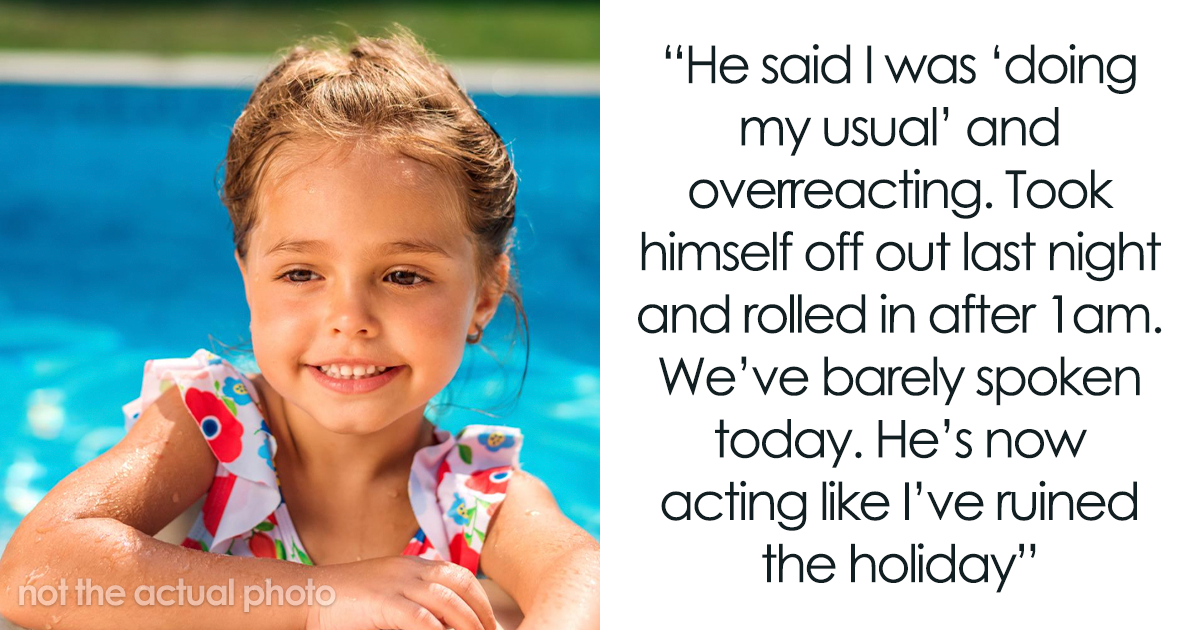
But one viral parenting story turned a normal vacation headache into a serious debate about child safety. A wife reportedly became furious after discovering that her husband had left their 7-year-old child alone near a pool while he went to a bar. The child was later found terrified and alone. The father, according to the account, treated the situation as if it were a small misunderstanding. The internet, unsurprisingly, did not.
The story has all the ingredients that make people stop scrolling: a careless decision, a frightened child, an exhausted mother, and a parent who seemed more interested in defending himself than understanding why everyone else was alarmed. But beneath the drama is a larger issue that deserves more than quick outrage. This is not simply about one dad wanting a drink. It is about what happens when one parent checks out, the other parent is forced into default-manager mode, and a child becomes the person paying the price.
Why Leaving a 7-Year-Old Alone Near a Pool Is Not “No Big Deal”
A 7-year-old may seem wonderfully independent. They can argue about cereal brands like a tiny attorney, remember the Wi-Fi password better than most adults, and somehow negotiate bedtime like a seasoned hostage mediator. But independence is not the same as emergency readiness.
Children around this age are still developing judgment, impulse control, emotional regulation, and the ability to respond under pressure. A child may know the rule “don’t go into the pool alone,” but panic, curiosity, embarrassment, or confusion can override that rule in seconds. Add an unfamiliar vacation setting, crowds, water, noise, and separation from a trusted adult, and the risk grows quickly.
Water safety experts consistently emphasize one core idea: supervision near water must be active, close, and sober. Drowning can happen quickly and quietly. It does not always look like the dramatic splashing scene people imagine from movies. A child in trouble may be silent, vertical, or unable to call for help. That is why leaving a young child alone near a pool is not comparable to letting them sit in a hotel room watching cartoons for ten minutes. A pool changes the entire risk profile.
In this case, the child was reportedly terrified. That detail matters. Even if nothing physically happened, the emotional impact was real. A child who realizes they have been left alone may not process it as “Dad stepped away briefly.” They may process it as “I was abandoned.” Children do not grade parental mistakes on adult technicalities. They feel them in the body first: fear, confusion, panic, and distrust.
The Bar Was Not the Main ProblemThe Broken Trust Was
Some readers may focus on the bar. Was he drinking? How long was he gone? Did he think another adult was watching? Those questions matter, but the deeper problem is trust.
When one parent says, “Please watch the child,” that is not a vague suggestion. It is a transfer of responsibility. It means the other parent is now the safety plan. If that parent walks away without clearly handing responsibility to another capable adult, the child is not being supervised. They are simply being hoped-for. And hope is not a childcare strategy, no matter how confidently someone shrugs afterward.
The wife’s anger, then, was not only about the 45 minutes. It was about the message behind those 45 minutes. She trusted him to parent. He treated that trust like an optional side quest. Then, according to the report, he minimized her reaction instead of apologizing. That is the part many parents found especially painful. Mistakes happen. Defensive denial is what turns a mistake into a pattern.
Default Parenting: When One Parent Carries the Mental Load
This story also sparked a familiar conversation about “default parenting.” In many families, one parent becomes the invisible project manager of everyday life. They remember the sunscreen, the swimsuits, the medicine, the snacks, the bedtime routine, the passports, the child who hates loud hand dryers, and the other child who will absolutely melt down if the blue cup is unavailable.
The other parent may technically be present but not fully engaged. They help when asked, but they do not anticipate. They supervise when reminded, but they do not own the responsibility. They say, “You should have told me,” while standing in the middle of a situation that any alert adult should have recognized.
That dynamic is exhausting. It turns one parent into the family’s operating system and the other into an unpredictable app that may or may not open. On vacation, the imbalance becomes even more obvious because routines are disrupted. Children are tired, overstimulated, and more likely to need close attention. The parent carrying the mental load never truly relaxes. They are not on vacation; they are just parenting in a different zip code.
Why “Nothing Happened” Is a Weak Defense
One common excuse in situations like this is, “But nothing happened.” That argument sounds logical until you apply it to any other safety issue.
If someone drives drunk and makes it home, we do not say the decision was safe. If a toddler runs into the street and avoids a car by luck, we do not call it good parenting. If a child plays with matches and the house does not burn down, nobody frames it as a successful fire-safety experiment.
Safety is not measured only by whether tragedy occurred. It is measured by whether the adult took reasonable steps to prevent tragedy. In this case, the concern was not imaginary. A 7-year-old alone near a pool is a genuine supervision problem. The fact that the child was found unharmed does not erase the risk. It only means the family got lucky.
Alcohol, Judgment, and Child Supervision
There is nothing automatically wrong with an adult having a drink on vacation. Parents are human. They are allowed to enjoy themselves. The issue begins when alcohol, distraction, or social plans compete with child supervision.
Alcohol can affect judgment, coordination, memory, and risk assessment. Even before someone appears visibly intoxicated, they may become more casual about decisions that require caution. When children are near water, that matters. The adult in charge needs to be alert enough to notice danger, respond quickly, and make clear decisions.
A parent who wants to go to the bar can do so responsibly by communicating first: “I want to grab a drink. Are you able to take over watching the kids?” That one sentence changes everything. It acknowledges responsibility and transfers it clearly. Without that step, leaving is not a break. It is abandonment of duty.
What Should Have Happened Instead?
This situation had several safer alternatives, none of them complicated.
1. Clearly hand over supervision
If the father wanted to leave the pool area, he needed to directly tell the mother or another trusted adult: “I am going to the bar. Can you watch her?” No assumptions. No disappearing act. No “I thought she was fine.” Parenting requires receipts, and verbal confirmation is the receipt.
2. Bring the child along
If no adult was available, he could have brought the child with him. A bored 7-year-old at a bar area may not be ideal, but it is safer than a frightened child left alone near water.
3. Wait
This is the option that shocks some people, but yes, adults can wait. The bar was not fleeing the country. The drink would still exist later. Parenting occasionally requires delaying personal wants because a child’s safety comes first. Revolutionary? No. Required? Absolutely.
4. Agree on vacation rules before the trip
Parents should decide before travel how pool supervision, meals, bedtime, naps, and adult downtime will work. Without a plan, one parent often assumes the other is “on duty,” while the other assumes everyone is magically fine. Magic is lovely in theme parks. It is terrible in safety planning.
The Wife’s Reaction Was About More Than One Incident
The wife’s fury makes sense because the reported incident represented more than a single lapse. It reflected a lack of partnership. She was not only angry that he left the child alone. She was likely angry that she had to be the one who noticed, the one who reacted, the one who comforted the child, and the one who explained why the situation was dangerous.
That emotional burden is heavy. When one parent is irresponsible, the other parent becomes both caregiver and damage control. They must protect the child, manage their own fear, confront the partner, and often absorb the partner’s defensiveness. That is not a marriage dynamic; that is crisis management with luggage.
For a relationship to recover from a moment like this, the careless parent has to do something difficult but necessary: stop arguing about intentions and start addressing impact. Maybe he did not intend harm. Fine. But his child felt scared, and his wife had reason to lose trust. Repair begins with ownership: “I made a dangerous choice. I understand why you are angry. I will not do that again.” Anything less sounds like a press release from the Department of Missing the Point.
What Parents Can Learn From This Viral Story
The lesson is not that parents can never take breaks. Breaks are healthy. Parenting without rest turns adults into emotionally crispy toast. The lesson is that breaks require coordination. Someone must always know who is responsible for the child.
Families can use a simple “tag-in, tag-out” system. One parent says, “You are on pool duty.” The other says, “Got it, I am watching.” When the supervising parent needs to step away, they must transfer the role clearly. This may sound formal, but it prevents confusion. In busy places like pools, beaches, airports, amusement parks, and hotels, clarity is safety.
Parents should also respect a child’s comfort level. Some children are confident being briefly alone in familiar settings; others become anxious quickly. A child’s fear is information. If a 7-year-old is terrified after being left alone, that child was not ready for that level of independence. Ignoring that fear teaches them that adults will debate their distress instead of responding to it.
How to Rebuild Safety After a Parenting Mistake
When a parent makes a serious supervision mistake, the next steps matter. A defensive parent may want everyone to “move on,” but children and partners need repair.
Apologize to the child
A simple apology can help restore security: “I should not have left you alone. That was my mistake. You did nothing wrong. I will make sure you are watched next time.” Children need to hear that the adult is responsible, not them.
Apologize to the other parent
The other parent deserves acknowledgment too. “I broke your trust” is more meaningful than “Sorry you got upset.” The first shows accountability. The second sounds like a customer service chatbot having a bad day.
Create a concrete rule
Repair requires a new plan. For example: “No child is left alone near water. The adult on duty must verbally hand off supervision before leaving.” A clear rule prevents the same argument from returning later wearing a different hat.
Watch for patterns
If this was a one-time mistake followed by sincere accountability, the family may move forward. If it is part of a pattern of neglect, minimization, drinking, or emotional immaturity, the other parent may need stronger boundaries and outside support.
Related Experiences: What Similar Parenting Moments Teach Us
Many parents have had a version of this moment, even if the details differ. One parent turns away at a playground and suddenly the child is climbing higher than expected. Someone assumes a grandparent is watching at a family barbecue, only to realize everyone thought someone else had the job. A parent checks a phone for “just a second” near a pool and looks up to find a child at the edge. These moments are terrifying because they reveal how quickly ordinary life can become risky.
The most useful experience many families share is learning that supervision must be assigned, not assumed. At a crowded birthday party, for example, ten adults may be present, yet no one is truly watching the toddler near the stairs. Everyone sees the child, but no one owns the responsibility. That is how preventable accidents happen. The safer approach is direct and almost comically simple: “You watch Mia while I get food.” “I’ve got her.” “I’m going inside now, can you take over?” These tiny exchanges may feel repetitive, but they create a chain of care.
Another common experience involves vacation expectations. One parent imagines the trip as relaxation. The other knows it is still parenting, just with sand in everyone’s shoes. Before traveling, couples should talk honestly about downtime. Who handles mornings? Who watches the kids at the pool? Who gets an hour alone? Who is responsible after dinner? Without that conversation, resentment grows fast. The parent who expected teamwork ends up doing everything, while the parent who expected freedom acts surprised when criticized. That mismatch can turn a beautiful hotel into a five-star argument facility.
Parents also learn that children remember how adults respond after mistakes. A child may not recall every detail of being left alone, but they may remember whether the adult comforted them or dismissed them. When a parent says, “You were fine,” the child learns their fear is inconvenient. When a parent says, “That must have been scary, and I am sorry,” the child learns that adults can make mistakes and repair them. That difference matters.
Finally, many families discover that safety rules work best when they are boring. The best rules do not rely on drama, guilt, or panic. They are steady: no unsupervised water access, no leaving young kids alone in unfamiliar places, no drinking while responsible for pool supervision, no assuming someone else is watching, and no mocking a child for being scared. Boring rules keep vacations fun. Exciting mistakes are overrated.
Conclusion: Parenting Means Being Present When It Counts
The story of a guy putting kids in danger to go to a bar is not viral simply because people enjoy judging strangers online, although the internet certainly treats judgment like an Olympic sport. It is viral because it touches a nerve. Parents know how fast things can go wrong. They also know how painful it is when one adult refuses to take responsibility while another adult carries the fear, planning, and cleanup.
A 7-year-old left terrified and alone near a pool is not a small misunderstanding. It is a warning sign. Whether the family moves forward depends on accountability, changed behavior, and a clear commitment to child safety. Parents do not have to be perfect, but they do have to be reachable, responsible, and honest when they fail.
Vacations should include laughter, snacks, naps, sunscreen battles, and maybe even a peaceful drink at the bar. But none of those things should come before a child’s safety. The drink can wait. The child cannot.