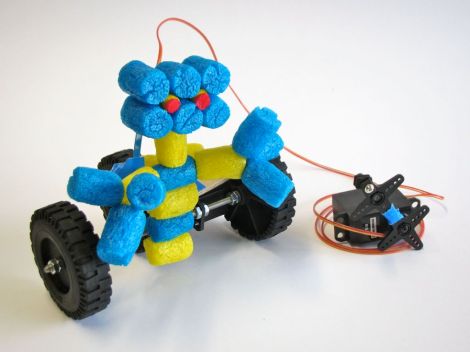
A hand cranked electric toy has no batteries or power supply, which sounds like something a magician would sell from a trench coat at a science fair. Yet the idea is not magic at all. It is physics wearing a tiny plastic hat. Turn a handle, spin a gear, rotate a magnet or coil, and suddenly a small light glows, a tiny motor whirs, or a miniature car scoots across the table like it has somewhere important to be.
In a world where nearly every gadget demands a charging cable, replacement batteries, an app update, and possibly your Wi-Fi password, battery-free toys feel delightfully rebellious. They prove that a toy can be electric without being plugged in. They also turn a simple motionyour hand moving a crankinto a clear lesson about energy conversion, electricity, magnets, design, sustainability, and patience. Especially patience, because crank too slowly and the toy politely refuses to perform.
This article explores how hand-cranked electric toys work, why they are useful for STEM learning, what makes them different from ordinary wind-up toys, and why the best ones can make kids and adults stare at a tiny LED like it just revealed the meaning of life.
What Is a Hand-Cranked Electric Toy?
A hand-cranked electric toy is a toy that uses human motion to generate the electricity it needs. Instead of relying on disposable batteries, rechargeable cells, wall adapters, or USB charging, it gets energy from a crank, lever, wheel, pull cord, or rotating handle. The user supplies mechanical energy by turning the crank. Inside the toy, a small generator converts that motion into electrical energy.
The result might be a glowing light, a spinning propeller, a moving vehicle, a buzzing sound, or a small electronic demonstration. In many versions, the toy does not store power for long. When you crank, it works. When you stop, it stops. That instant cause-and-effect is exactly what makes it so satisfying. There is no invisible battery hiding the lesson. The toy practically says, “You made this happen, chief.”
Common Examples of Battery-Free Electric Toys
Hand-cranked electric toys and related devices can appear in many forms. Some are made specifically as educational STEM kits. Others look like novelty gadgets, emergency tools, or classroom demonstrations. Examples include hand-crank flashlights, mini generator kits, crank-powered LED boards, toy cars powered by a dynamo, model wind turbines with crank attachments, small radios with hand-crank charging, and transparent generator toys that let students see gears and magnets moving inside.
What they all share is a beautifully simple idea: energy does not appear from nowhere. It changes form. Your hand provides motion. The mechanism converts that motion. The toy gives you light, sound, or movement in return.
How Can an Electric Toy Work With No Batteries?
The secret is electromagnetic induction, one of the most important ideas in modern electricity. A generator works by using motion to create a changing magnetic field around a conductor, usually copper wire. When a magnet moves near a coil of wire, or a coil moves through a magnetic field, electrons in the wire are pushed into motion. That movement of electrons is electric current.
In a full-size power plant, steam, water, wind, or another energy source spins a turbine connected to a generator. In a hand-cranked toy, your fingers are the power plant. This is humbling, especially if you crank for thirty seconds and begin respecting utility companies on a spiritual level.
The Basic Energy Chain
The energy pathway in a hand-cranked electric toy usually looks like this:
Human muscle power → mechanical rotation → generator motion → electrical energy → light, sound, or movement.
That chain is short enough for a child to understand but powerful enough to explain a large part of the modern electrical world. It is also honest. If you crank harder or faster, the toy usually becomes brighter, louder, or more active. If you slow down, the output drops. The toy gives immediate feedback, which is why hand-crank generator kits are popular in classrooms, museums, homeschool projects, and science demonstrations.
The Main Parts Inside a Hand-Crank Generator Toy
Although designs vary, most hand-cranked electric toys include a few familiar parts. These pieces work together like a tiny orchestra, except the conductor is your wrist.
1. The Crank or Handle
The crank is the part the user turns. A comfortable handle matters more than people think. If the crank is too small, stiff, or awkward, the experience becomes less “wow, science!” and more “why does my hand feel like it joined a gym?” Good toy design makes cranking smooth enough for repeated play while still requiring enough effort to feel the energy transfer.
2. The Gear Train
Many hand-cranked toys use gears to increase rotational speed. Your hand may turn the crank slowly, but the generator inside often needs faster rotation to produce useful electricity. Gears solve that problem by trading torque for speed. In simple terms, they help a relaxed hand motion become a speedy internal spin.
3. The Generator
The generator is the heart of the toy. It usually contains magnets and coils of wire. As the crank spins the generator shaft, magnetic fields move relative to the wire coils, creating voltage. In small toys, the generator may be a tiny DC motor used in reverse. When electricity flows into a motor, it spins. When you spin that same motor by hand, it can generate electricity. That reversibility is one of the most delightful “wait, seriously?” moments in beginner electronics.
4. The Output Device
The output device is what receives the electricity. It could be an LED, a tiny bulb, a buzzer, a mini fan, a toy vehicle motor, or a simple circuit board. LEDs are common because they need relatively little power and provide an obvious result. Nothing says “mission accomplished” like a tiny light turning on because you personally became a miniature power station.
5. Optional Storage: Capacitors or Small Rechargeable Cells
Some hand-cranked toys work only while the handle turns. Others include a capacitor or rechargeable storage component that holds a small amount of energy. A capacitor can release energy quickly, allowing a light to glow briefly after cranking stops. A rechargeable battery can store more, but if the toy truly has no battery, then it relies on direct generation or capacitor-based short-term storage instead.
Hand-Cranked Electric Toys vs. Wind-Up Toys
Hand-cranked electric toys are often confused with wind-up toys, but they are not the same. A wind-up toy usually stores mechanical energy in a spring. When released, the spring unwinds and drives gears that make the toy move. No electricity is needed.
A hand-cranked electric toy uses motion to generate electricity. It may still include gears, but the final output is electrical. That electricity may light an LED, power a small motor, or produce sound. The difference matters because hand-cranked electric toys teach a broader chain of energy conversion. They connect mechanical motion to electricity, which connects a desktop toy to wind turbines, hydroelectric dams, bicycle dynamos, and emergency radios.
Why These Toys Are Brilliant for STEM Learning
A good STEM toy does not merely entertain. It gives the brain something to chew on. A hand-cranked electric toy does this especially well because it makes invisible ideas visible. Electricity is usually hidden behind wall outlets and battery compartments. With a crank toy, the user feels the effort and sees the result immediately.
They Teach Cause and Effect
Turn the crank and the light comes on. Turn faster and it gets brighter. Stop and it fades. This direct relationship helps young learners understand that power has a source. It also encourages experimentation. What happens if the crank turns backward? What happens if the gear ratio changes? Why does one LED light more easily than a small motor? The toy invites questions without requiring a lecture that begins with “According to Chapter Seven.”
They Make Energy Conversion Concrete
Energy conversion can sound abstract. A hand-crank toy makes it physical. The user can feel resistance in the handle when the generator is powering a load. That resistance is part of the lesson. Electricity is not being created for free. The person cranking is doing work, and the toy is converting that work into another usable form.
They Encourage Problem Solving
Some kits allow students to connect different outputs, compare bulbs with LEDs, test gear arrangements, or measure voltage with a meter. Even without formal measuring tools, the toy encourages practical thinking. Why does a fan need more cranking than a light? Why does a toy car slow down on carpet? Why does the handle feel harder to turn when more devices are connected? These questions build engineering instincts.
Why “No Batteries” Is a Real Advantage
Batteries are useful, but they are not always convenient. They run out at the worst possible time, hide in drawers, leak if forgotten, and create disposal questions. Rechargeable batteries reduce waste, but they still require charging equipment and careful management. A hand-cranked electric toy avoids many of those problems by generating power on demand.
For parents, teachers, and gift buyers, this can be a quiet victory. No hunting for AA batteries. No tiny screwdriver emergency on a birthday morning. No toy going silent because someone borrowed the last battery for a remote control. A battery-free toy is always ready as long as someone is willing to crank it.
It Supports Sustainable Thinking
A hand-cranked toy is not going to save the planet by itself. It will not power your refrigerator, launch a satellite, or make your phone battery feel ashamed. But it does teach a sustainable mindset. It shows that energy has a cost, that design choices matter, and that not every playful object needs disposable power.
That lesson is valuable because modern households are full of small electronics. A child who understands where energy comes from is more likely to think critically about waste, efficiency, repairability, and responsible product design later on.
Safety Considerations for Hand-Cranked Electric Toys
Most hand-cranked electric toys produce low voltage and are designed for safe educational use. Still, toy safety should never be treated like a decorative sticker. Buyers should choose products appropriate for the child’s age, avoid kits with loose tiny parts for younger children, and check that the toy is sturdy enough for repeated use.
For electric toys, it is smart to look for recognized safety markings, clear age labels, and durable construction. If a toy includes magnets, small screws, exposed wires, or removable components, adult supervision may be needed. Hand-cranked toys should not be connected to household outlets or modified to power unknown devices. The goal is learning, not auditioning for a cartoon explosion.
Best Practices for Parents and Teachers
Before giving a hand-crank generator toy to a child, inspect it for cracked plastic, loose pieces, sharp edges, or wires that can be pulled free. Explain that cranking harder is not always better. Smooth, steady turning is usually more effective than frantic spinning. For classroom use, set simple rules: keep fingers away from gears, do not force the handle, and do not attach the toy to anything not included or approved by the kit instructions.
What Makes a Good Hand-Cranked Electric Toy?
A high-quality hand-cranked electric toy should be simple enough to use but not so simple that it becomes boring after one minute. The best designs balance fun, durability, and educational value.
Clear Visible Action
Transparent cases, exposed safe gears, visible LEDs, and open demonstration panels help users understand what is happening. When children can see the gears turn or the motor spin, the toy becomes more than a black box. It becomes a small machine with a story.
Responsive Output
The output should react quickly to cranking. If the light turns on immediately or the motor responds smoothly, the user feels connected to the result. Delayed or weak output can make the toy feel broken even when it is working.
Durable Construction
Cranking creates mechanical stress. A toy that uses flimsy gears, a wobbly handle, or poor internal connections may fail quickly. Strong plastic, secure wiring, smooth bearings, and well-aligned gears make a big difference.
Educational Flexibility
Some toys allow users to connect different loads, compare outputs, or experiment with speed. These features add replay value and make the toy useful for science lessons. A simple crank flashlight is fun. A crank generator kit that powers lights, buzzers, and motors is a mini laboratory with a handle.
Specific Examples of How the Toy Can Be Used
In a classroom, a teacher can use a hand-cranked electric toy to introduce generators before discussing power plants. Students can take turns cranking and observing how speed affects brightness. The teacher can then connect the toy to wind turbines, hydroelectric dams, and bicycle lights.
At home, a parent can use the toy as a rainy-day activity. Ask the child to predict what will happen when the crank turns slowly, quickly, or backward. Let them compare a small LED with a tiny motor. This keeps the activity playful while encouraging observation and reasoning.
For a science fair, a student can create a display showing mechanical energy turning into electrical energy. The project might compare different crank speeds, gear ratios, or output devices. It can also explore why low-power LEDs are easier to light than devices that require more current.
The Hidden Lesson: Power Is Not Free
One of the best things about a hand-cranked electric toy is that it teaches effort. When a child powers a light by turning a handle, electricity stops being an invisible convenience. It becomes work. That realization can be surprisingly powerful.
Crank a small generator for a minute and you begin to understand why engineers care so much about efficiency. Every bit of friction, every poorly aligned gear, every heavy electrical load makes the job harder. In a small toy, that means tired fingers. In the real world, it means wasted fuel, higher costs, and bigger design challenges.
This is why hand-cranked toys are more than novelties. They compress a major engineering truth into a tiny experience: useful energy requires thoughtful conversion.
Experiences Related to Hand-Cranked Electric Toys
The first experience many people have with a hand-cranked electric toy is mild disbelief. The box says “no batteries,” but the toy still lights up. Naturally, the first instinct is suspicion. There must be a hidden cell somewhere. Maybe the toy is lying. Maybe the crank is just for decoration. Then the handle turns, the LED flickers, and the mystery becomes personal. The user did something, and the toy answered.
That little moment is why these toys are memorable. Unlike many modern electronic toys, a hand-cranked electric toy does not perform while the user watches passively. It demands participation. The child is not just pressing a button and waiting for a pre-programmed jingle. The child is part of the circuit’s story. The toy becomes active only when the user supplies energy, which makes the result feel earned.
In group settings, the experience becomes even better. One child cranks too slowly and gets a faint glow. Another spins too fast and makes the light flare dramatically. Someone else discovers that steady motion works better than wild cranking. Suddenly, the room is full of observations. Nobody needs to announce, “We are now studying applied physics.” The lesson sneaks in wearing sneakers.
There is also a funny emotional shift that happens after a few minutes. At first, the toy feels effortless. Then the hand gets tired. The user realizes that keeping even a tiny device powered takes work. That is the moment when the toy quietly becomes a teacher. It shows that energy is not just something that comes from “the wall” or “the battery drawer.” It has to be produced, transferred, and managed.
For parents, the experience can be refreshingly low-maintenance. A hand-cranked toy does not need a charger, and it does not become useless because the batteries died. It can sit in a closet for months and still work the next time it is picked up, assuming the gears and wires are intact. That reliability gives it a different kind of charm. It feels old-fashioned and futuristic at the same time.
For teachers, the toy is valuable because it turns abstract science into a shared demonstration. Students can feel resistance in the crank, watch brightness change, compare devices, and ask questions based on what they actually observe. That is far more powerful than memorizing a definition of electromagnetic induction and immediately forgetting it during lunch.
For curious adults, the experience can be oddly humbling. A tiny hand generator reminds us that electricity is not magic, even when it behaves like magic. It is the result of clever design, physical laws, and energy moving from one form to another. A hand-cranked electric toy may look simple, but it tells a big story: motion can become electricity, electricity can do work, and sometimes the best “power supply” is a person willing to turn the handle.
Conclusion
A hand cranked electric toy has no batteries or power supply because it brings its own tiny power station to the party. More accurately, it lets the user become the power station. By turning a crank, the user creates motion. The toy’s generator turns that motion into electricity. That electricity powers a light, motor, buzzer, or other small output.
The result is fun, educational, and surprisingly meaningful. It teaches electromagnetic induction, energy conversion, sustainability, mechanical design, and the value of efficiency without sounding like a textbook that needs a nap. It also proves that the simplest toys can sometimes spark the biggest curiosity.
Note: This article is intended for educational web publication. Hand-cranked electric toys should always be used according to the manufacturer’s age recommendations and safety instructions.