French ironstone plates have a quiet way of stealing the show. They do not shout for attention like jewel-toned glassware or gold-rimmed porcelain. Instead, they sit there with creamy white glaze, graceful edges, charming transferware patterns, and the calm confidence of something that has survived more dinner parties than most of us have survived Monday mornings.
For collectors, decorators, vintage lovers, and anyone who has ever whispered “I don’t need another plate” while absolutely buying another plate, French ironstone is a small domestic treasure. These plates combine durability, history, and effortless style. They look equally at home on a farmhouse table, a French country hutch, a modern open shelf, or a wall display that says, “Yes, I have taste, and yes, I also know how to use a plate hanger.”
But what exactly are French ironstone plates? Why do some pieces say terre de fer? How do they differ from English ironstone, French faïence, porcelain, or ordinary earthenware? And how can you tell whether a plate is a true antique, a later vintage piece, or a charming modern reproduction wearing a very convincing old-world costume?
This guide walks through the history, features, styles, identification tips, decorating ideas, care advice, and real-life collecting experiences connected with French ironstone plates. Consider it your friendly map through the world of creamy ceramics, tiny maker’s marks, and plates that somehow make toast look more sophisticated.
What Are French Ironstone Plates?
French ironstone plates are durable ceramic plates, usually made from a dense white or cream-colored earthenware body, often associated with the French term terre de fer, meaning “iron earth.” Despite the name, they are not made of iron, and they will not help you build a bridge. The name refers to their strength, weight, and resistance compared with more fragile traditional earthenware.
Ironstone china originally became popular in nineteenth-century England as manufacturers tried to create strong, affordable tableware that resembled porcelain but was easier to produce for everyday use. French ceramic makers later developed their own versions, especially through faïence fine and terre de fer production. These wares offered a similar promise: elegant plates that could handle daily meals without fainting dramatically at the first sight of gravy.
French ironstone plates are usually heavier than porcelain, less translucent, and more softly toned than bright white modern ceramics. Their glaze may appear creamy, bluish-white, ivory, gray-white, or slightly tea-stained with age. Many pieces feature transfer-printed designs in blue, brown, black, green, red, or sepia. Others are plain white, letting their shape, rim detail, and soft patina do the talking.
A Brief History of French Ironstone and Terre de Fer
To understand French ironstone plates, it helps to start with Europe’s long love affair with ceramics. French faïence, a tin-glazed earthenware tradition, became important in France from the sixteenth century onward. Regions such as Rouen, Nevers, Strasbourg, Moustiers, Lunéville, and Marseille developed recognizable ceramic styles, many of them colorful, decorative, and closely tied to regional identity.
By the nineteenth century, however, the ceramic world was changing. Industrial production, transfer printing, and new earthenware formulas made it possible to produce attractive tableware in larger quantities. English potteries, especially in Staffordshire, had already turned ironstone into a practical alternative to porcelain. French manufacturers responded with their own strong white-bodied ceramics, often labeled terre de fer.
French factories such as Creil et Montereau, Sarreguemines, Gien, Longwy, Longchamp, Saint-Amand, Choisy-le-Roi, Lunéville, and Clairefontaine became associated with durable faïence fine, transferware, and terre de fer tableware. These factories produced plates for middle-class households, hotels, restaurants, and everyday dining rooms that wanted elegance without needing a household budget supervised by royalty.
The result was practical beauty. French ironstone plates were not just decorative objects. They were meant to be used, washed, stacked, served on, and passed around the table. That is part of their charm today. A tiny chip, a smoky stain, a soft gray crazing line, or a faded backstamp often tells a story of real domestic life.
French Ironstone vs. English Ironstone
English and French ironstone share a family resemblance, but they have different personalities. English white ironstone often appears bold, sculptural, and highly durable, with molded wheat, paneled, Gothic, or grape designs. It was heavily exported and became common in American households during the nineteenth century.
French ironstone plates tend to lean more romantic and decorative. While plain white examples certainly exist, many French pieces feature delicate transferware borders, floral garlands, birds, landscapes, pastoral scenes, architectural vignettes, or botanical motifs. Where English ironstone might say, “I am sturdy enough for Sunday roast,” French ironstone might add, “And I brought lavender.”
French terre de fer plates also often carry factory marks, pattern names, or regional manufacturer stamps on the back. These marks can help identify the maker, approximate age, and sometimes the pattern. Collectors often enjoy turning plates over as much as looking at the front. It is the ceramic equivalent of checking the author bio before buying the book.
Common Features of French Ironstone Plates
1. A Dense, Heavy Feel
Authentic antique or vintage French ironstone plates usually feel substantial in the hand. They are heavier than fine porcelain and less delicate. The body is dense and opaque, which gives the plate a satisfying weight. If porcelain is a ballet dancer, ironstone is the friend who helps you move furniture.
2. Creamy White or Ivory Glaze
Many French ironstone plates have a soft white, ivory, gray-white, or cream glaze. Age can deepen the tone, especially where crazing, use, or storage conditions have created warm patina. This mellow surface is one reason decorators love ironstone: it blends beautifully with wood, linen, brass, stone, and natural textures.
3. Transferware Decoration
Transfer printing allowed manufacturers to apply detailed designs more efficiently than hand-painting each plate. French transferware plates may show repeating floral borders, birds, scrolls, medallions, rural scenes, or geometric ornament. Blue is classic, but brown, black, green, red, and sepia designs are also loved by collectors.
4. Maker’s Marks and Pattern Names
Backstamps are important clues. Names such as Sarreguemines, Gien, Creil et Montereau, Longwy, Saint-Amand, Longchamp, Choisy-le-Roi, and Lunéville may appear on the underside. Some marks include the words terre de fer, faïence, opaque, France, or a pattern title. The exact mark style can help narrow the production period.
5. Crazing and Patina
Crazing refers to the fine crackle lines that can appear in the glaze over time. It is common on older ironstone and faïence. Light crazing can add character, while heavy staining or structural cracks may affect value and usability. In other words, a little wrinkle is charming; a plate held together by optimism is a problem.
Popular Styles and Patterns
French ironstone plates come in many styles, which is excellent news for collectors and dangerous news for shelf space. Some people collect only plain white plates, focusing on shape and patina. Others hunt for specific colors, such as blue transferware or brown floral designs. Some prefer one factory, while others happily mix makers as long as the plates look good together.
Plain White French Ironstone
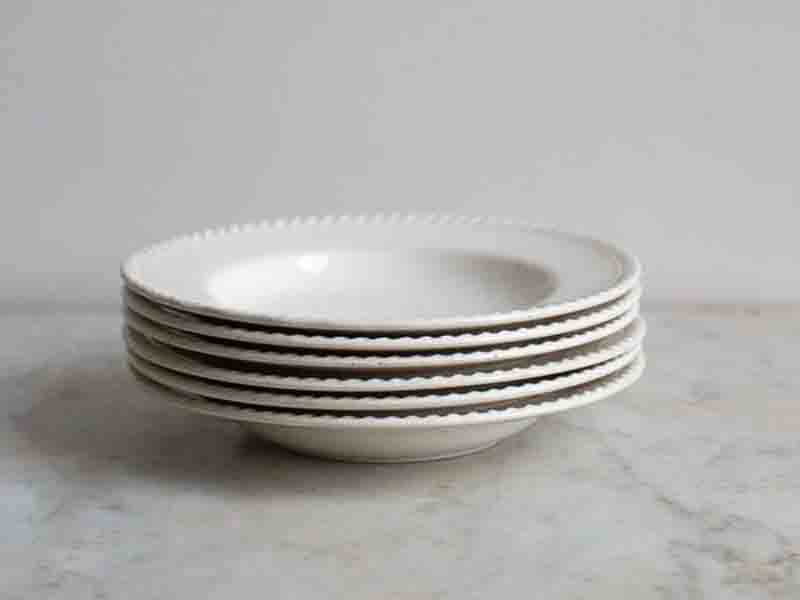
Plain white or cream French ironstone plates are beloved for their versatility. They can look rustic, refined, minimalist, or farmhouse-style depending on how they are displayed. A stack of white ironstone plates on an open kitchen shelf creates instant warmth without visual clutter. It is the design equivalent of a deep breath.
Blue Transferware
Blue transferware is one of the most recognizable and collectible styles. French blue designs may include flowers, vines, birds, landscapes, or decorative borders. Blue-and-white plates pair beautifully with natural wood, white cabinetry, and classic French country interiors.
Brown and Sepia Transferware
Brown, sepia, and black transferware plates have a moodier, antique-library charm. They work especially well in autumn tablescapes, vintage wall groupings, and interiors with darker woods or brass accents. A brown transferware plate can make a slice of pie look like it has a family estate.
Green and Red Patterns
Green and red French ironstone plates are less neutral but very appealing. Green patterns often feel botanical and fresh, while red transferware can look festive, bold, and warm. These colors are wonderful for seasonal decorating, especially when mixed with plain white ironstone.
How to Identify Authentic French Ironstone Plates
Identification is part research, part observation, and part detective work conducted while holding a plate upside down in an antique shop. Here are the main clues to examine.
Check the Backstamp
Look for impressed, printed, or stamped marks on the underside. A clear factory name can be very helpful. Words such as terre de fer, faïence fine, opaque, or France may appear. Some marks are crisp; others are faded, blurred, or partially missing because the plate has lived a full life and is not applying for a passport.
Study the Weight and Body
French ironstone should feel dense and opaque. Hold the plate up to light. Porcelain often has some translucency, while ironstone usually does not. The edge or foot ring may reveal the ceramic body beneath the glaze, especially if there is a tiny chip.
Look at the Glaze
Older glaze may show crazing, slight pooling, soft irregularity, or warm color variation. Modern reproductions can be attractive, but they often look too perfect, too bright, or too evenly aged. Real age is rarely symmetrical. It is more like “graceful patina,” less like “printed-on distressing from a factory meeting.”
Evaluate the Decoration
Transferware designs on antique pieces may show tiny breaks, overlaps, or softness where the transfer was applied by hand. A perfectly sharp, digitally uniform pattern may suggest a newer plate. That does not make it bad, but it may affect value and authenticity.
Consider Shape and Rim Detail
Many older French plates have scalloped rims, molded edges, paneled shapes, or subtle relief decoration. Compare the shape with known examples from French factories. Shape alone is not proof, but it adds to the overall evidence.
Are French Ironstone Plates Valuable?
The value of French ironstone plates depends on age, maker, rarity, condition, pattern, color, and demand. A single common plate with chips may be affordable, while a rare pattern, matching set, unusual color, or highly desirable maker can command much more. Plates from respected factories such as Gien, Sarreguemines, Creil et Montereau, Longwy, or Choisy-le-Roi may attract stronger interest, especially when the pattern is beautiful and the condition is good.
Collectors often pay more for plates with clear marks, strong decoration, minimal damage, and appealing patina. Matching sets are harder to find than individual plates, so complete groups may be more desirable. However, many decorators prefer mismatched French ironstone because it looks collected over time rather than purchased in one efficient but emotionally sterile shopping cart.
Condition matters, but perfection is not always required. Small utensil marks, gentle discoloration, and light crazing can be acceptable. Large cracks, old repairs, severe staining, and missing chunks will usually lower value. A plate can still be beautiful for display even if it is not ideal for serving food.
Can You Use French Ironstone Plates for Food?
Some French ironstone plates were originally made for everyday dining, but antique ceramics require caution. If a plate has heavy crazing, cracks, repairs, staining, or unknown glaze safety, it is better used for display. Older ceramic glazes may not meet modern food-safety standards, and damaged glaze can trap moisture or bacteria.
For actual dining, use only pieces in excellent condition and avoid acidic foods if you are unsure about glaze stability. Do not microwave antique ironstone, especially if it has repairs, metallic decoration, cracks, or unknown materials. Dishwashers are also risky because heat, water pressure, and detergents can worsen crazing or damage decoration.
The safest approach is simple: reserve your most precious antique French ironstone plates for display and use newer, food-safe plates for daily meals. Your antique plate has survived more than a century. It does not need to prove itself against lasagna night.
How to Clean and Care for French Ironstone Plates
French ironstone is sturdy, but antique pieces still need gentle care. Wash plates by hand with mild soap, warm water, and a soft cloth. Avoid abrasive scrubbers, bleach baths, harsh chemicals, and sudden temperature changes. Never soak badly crazed or cracked plates for long periods, because water can seep into the ceramic body.
For display, use stable plate stands, wall hangers designed for ceramics, or padded shelves. If stacking plates, place a soft barrier such as felt, acid-free paper, or cloth between them to prevent scratches. Keep valuable pieces away from shelf edges, curious pets, and humans who gesture dramatically while telling stories.
Stains can be difficult. Some collectors use careful cleaning methods, but aggressive stain removal can damage glaze or worsen cracks. When in doubt, consult a ceramic conservation professional, especially for rare or valuable pieces. Patina is part of the charm; not every mark needs to be erased.
Decorating with French Ironstone Plates
French ironstone plates are wonderfully flexible in interior design. They can be rustic, elegant, romantic, minimalist, or layered depending on how you style them. Their neutral tones and classic patterns make them easy to mix with many decorating styles.
Open Kitchen Shelves
Stacks of white or transferware plates on open shelves create a warm, lived-in kitchen look. Mix plates with pitchers, bowls, cutting boards, and small plants for a French farmhouse effect. The goal is casual abundance, not “museum display guarded by invisible lasers.”
Wall Displays
A plate wall can turn French ironstone into art. Mix sizes, shapes, and patterns for an organic look, or create symmetry with matching plates. Blue transferware works beautifully in dining rooms, breakfast nooks, hallways, and above sideboards.
Table Settings
French ironstone plates can create memorable table settings, especially when layered with linen napkins, vintage flatware, clear glassware, and seasonal greenery. Even a simple meal feels more special when served on a plate with history. Suddenly soup is not just soup; it is soup with a backstory.
Seasonal Displays
Use brown transferware in fall, red patterns during winter holidays, blue-and-white plates in spring and summer, and plain white ironstone year-round. Add candles, fruit, flowers, or natural textures to change the mood without changing the collection.
Where Collectors Commonly Find French Ironstone Plates
Collectors find French ironstone plates at antique stores, estate sales, flea markets, online vintage shops, auctions, and specialty dealers. The best finds often require patience. One day you may see only chipped souvenir plates and a mug shaped like a cabbage. The next day, there it is: a marked Sarreguemines plate with a dreamy blue border, waiting like it knew you were coming.
When buying online, ask for clear photos of the front, back, rim, foot ring, and any damage. Measurements matter, because dessert plates, dinner plates, soup plates, and serving pieces can look similar in photos. Read descriptions carefully, especially condition notes. Words such as “crazing,” “hairline,” “flea bite,” “staining,” and “repair” are not decorative adjectives; they are important information.
Common Mistakes to Avoid
One common mistake is assuming every old-looking white plate is ironstone. It might be porcelain, semi-porcelain, stoneware, faïence, or modern ceramic. Another mistake is ignoring the underside. The back of the plate often contains the best clues.
A third mistake is overpaying for damage. Charming wear is one thing; a structural crack running across the plate is another. Also, do not assume “France” automatically means antique. Country-of-origin marks can help with dating, but they must be interpreted with other evidence.
Finally, avoid buying only because a plate is trendy. Choose pieces you genuinely like. Trends change, but a plate that makes you smile every time you see it has already earned its shelf space.
Experience-Based Reflections on Living with French Ironstone Plates
The experience of collecting French ironstone plates is rarely logical, and that is part of the fun. Most collections do not begin with a grand plan. They begin with one plate. Maybe it is a creamy white dinner plate with a scalloped rim. Maybe it is a blue transferware plate with a floral border that looks like it wandered out of a country inn in Provence. You buy it because it feels special. Then, without warning, you begin noticing plates everywhere. Antique shops become treasure maps. Estate sales become weekend cardio. Online listings become “research,” which is what collectors call shopping when they want to sound responsible.
One of the best experiences with French ironstone is learning to appreciate imperfection. A modern plate often wants to look flawless. An old ironstone plate has no such insecurity. It may have light crazing, utensil marks, a softened rim, or a backstamp that has faded into mystery. These details can make the plate more engaging, not less. They suggest years of meals, hands, shelves, cupboards, and family routines. A small mark can feel like punctuation in a story.
Displaying French ironstone also changes how a room feels. A stack of plain white plates can calm a busy kitchen. A row of transferware plates can give a dining room instant character. Even one plate leaning behind a pitcher or framed by open shelving can create a sense of age and depth. It is not flashy decorating. It is quieter than that. It says the home has layers, and at least one of those layers enjoys excellent ceramics.
Using French ironstone in tablescapes can be equally satisfying, even when the oldest pieces are reserved for display. A mix of antique plates, modern food-safe dishes, linen napkins, and simple glassware creates a table that feels collected rather than staged. The beauty is in the mix. Matching everything perfectly can look formal; mixing compatible pieces can look personal. French ironstone is especially forgiving because its soft whites and classic patterns work with so many colors.
The hunt itself may be the most memorable part. Collectors often remember where they found a favorite plate: a dusty booth in a small antique mall, a flea market table under a striped awning, a quiet estate sale kitchen, or a listing discovered late at night while “just browsing.” The plate becomes attached to the moment. That is why French ironstone can feel different from ordinary décor. It is not just something placed in a room. It is something found, chosen, carried home, cleaned gently, studied, and given a place.
There is also pleasure in learning the names: Sarreguemines, Gien, Longwy, Creil et Montereau, Saint-Amand, Longchamp. At first they may look like elegant tongue twisters. Over time, they become familiar signposts. You begin to recognize certain marks, colors, rims, and patterns. You learn when to buy quickly, when to negotiate, and when to walk away from a plate whose crack is doing too much emotional labor.
French ironstone plates reward patience. They teach the collector to slow down, look closely, and value small distinctions. They are practical objects turned historical keepsakes, humble plates that carry artistry, industry, and domestic memory. That combination is hard to resist. After all, a plate that can hold both a slice of cake and a century of history deserves a little admiration.
Conclusion: Why French Ironstone Plates Still Matter
French ironstone plates remain beloved because they balance strength and beauty. They are durable but graceful, historic but usable in design, collectible but approachable. Whether plain white, richly transfer-printed, perfectly preserved, or gently worn, they bring warmth and character to modern homes.
For collectors, they offer endless variety: makers, marks, patterns, colors, shapes, and stories. For decorators, they offer timeless texture. For history lovers, they connect everyday dining to nineteenth-century industry and French ceramic tradition. And for the rest of us, they provide a very elegant excuse to say, “I bought another plate, but this one has cultural significance.”
If you are new to French ironstone, start small. Choose one plate you love. Study the mark, feel the weight, notice the glaze, and enjoy the hunt. A single French ironstone plate can be a beautiful object. A collection can become a personal archive of taste, travel, history, and happy discoveries.