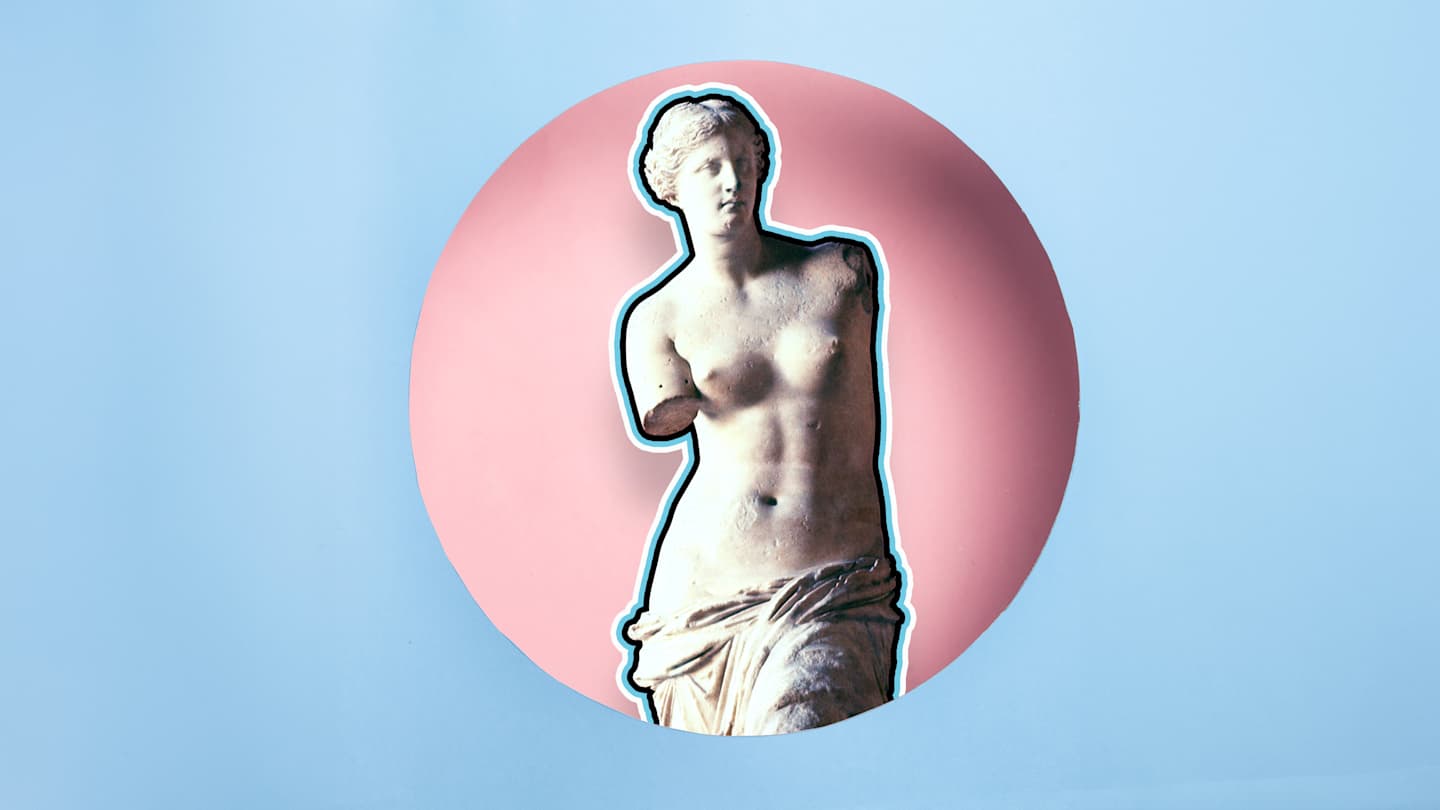
Some artworks whisper. The Venus de Milo does not. She strolls into art history with no arms, no obvious accessories, and no intention of explaining herself to anyone. And yet this ancient Greek sculpture has become one of the most recognized statues on Earth. That is a pretty impressive career arc for a marble figure discovered in pieces on a Mediterranean island.
The statue is usually identified as Aphrodite, the Greek goddess of love and beauty, though scholars have kept a healthy academic side-eye on that conclusion for generations. Add in a missing pair of arms, a mystery about what she originally held, a dramatic trip to the Louvre, and a modern afterlife that stretches from classroom plaster casts to surrealist art, and you have a masterpiece with enough plot twists for a prestige miniseries.
Below are 16 fascinating facts about the Venus de Milo, followed by a longer reflection on what makes this Louvre masterpiece feel so unforgettable in person. Spoiler: marble should not be this charismatic.
16 Fascinating Facts About the Venus de Milo
1. Her name is basically a map in disguise.
The name “Venus de Milo” comes from Melos, or Milos, the Greek island where the statue was found in 1820. “Venus” is the Roman name for Aphrodite, which means the title is already doing a little cultural translation. In other words, the statue’s name is part mythology, part geography, and part branding genius. Few artworks get a title that sounds both elegant and slightly like a luxury perfume.
2. She was discovered in pieces, not in one grand dramatic reveal.
One reason the statue keeps attracting curiosity is that she did not emerge from the ground looking camera-ready. She was found in fragments on Milos, which immediately turned her into an archaeological puzzle. That broken condition shaped nearly everything that came after: debates over her identity, theories about her pose, and of course the giant question that has followed her around for two centuries like an overly enthusiastic tour guide: what happened to the arms?
3. She is usually called Aphrodite, but the case is not totally closed.
Most people identify the statue as Aphrodite, and that is still the most common interpretation. The partly draped body, graceful pose, and feminine ideal all support that reading. Still, some scholars have proposed that she may represent Amphitrite, a sea goddess associated with Milos. Art history, as usual, likes to keep one eyebrow raised. The mystery is part of the statue’s power: she is famous, but not fully pinned down.
4. An apple may be the clue that tipped the scales.
A hand holding an apple was reportedly found near the statue, and that detail matters because the apple is strongly associated with Aphrodite. It calls to mind the mythic “Judgment of Paris,” in which the goddess receives the prize for beauty. If that hand belonged to the statue, it helps explain why so many scholars leaned toward the Aphrodite identification. One tiny piece of marble, one very large interpretive headache solved. Maybe.
5. She may have held a shield instead of just posing beautifully.
Not everyone buys the apple theory as the whole story. Another long-running idea is that the Venus de Milo once interacted with a shield, possibly writing on it or leaning against it in a pose associated with Venus Victrix, a victorious version of the goddess. That reading makes the statue feel less like a passive beauty icon and more like a figure with narrative purpose. She is not simply standing there being admired; she may have been doing something.
6. She dates to the Hellenistic period, not the peak Classical age.
The statue is usually dated to around 150 to 100 BCE, which places it in the Hellenistic period of Greek art. That matters because many early viewers treated the statue as if it belonged to an earlier Classical ideal. The Hellenistic world, however, loved drama, motion, individuality, and a more flexible approach to style. The Venus de Milo beautifully blends calm balance with a subtle twist through the torso and hips. She is poised, but she is not stiff.
7. She is often attributed to Alexandros of Antioch.
An associated inscription links the sculpture to Alexandros of Antioch on the Maeander. That attribution is widely repeated, though the statue still carries a touch of mystery because the inscription is not displayed with the work and scholarship has long debated the details. Even so, the name Alexandros often travels with the statue in modern discussions. It is one of those rare cases where the artist is both known and somehow still slightly ghostlike.
8. She is carved from Parian marble, the luxury material of the ancient world.
The Venus de Milo was carved from Parian marble, a fine-grained stone from the Greek island of Paros that ancient sculptors prized for its quality and luminosity. If marble had a VIP section, Parian would be on the list. The material helps explain the statue’s soft-looking surface and remarkable finish. Stone is supposed to feel cold, but this sculpture often seems to glow, which is a neat trick for something that has been around since before indoor plumbing went mainstream.
9. The body was built from multiple pieces.
Despite her calm appearance, the statue is something of a technical construction project. The torso and lower body were carved from separate blocks, and the arms were made separately as well before being attached. A mounting hole at the shoulder supports that idea. This was not unusual in ancient sculpture, but it is fascinating because it reminds us that the statue was engineered as much as sculpted. Even masterpieces, it turns out, involve assembly.
10. She once wore jewelry.
One of the easiest details for modern viewers to miss is that the figure likely once had metal jewelry. The Louvre has noted that this lost adornment helped support the identification as Aphrodite. That means the statue we admire today is already incomplete in more ways than the missing arms suggest. Ancient viewers may have seen a more embellished, more vivid, and perhaps even more luxurious figure than the austere white marble icon we know today.
11. She is more than life-size.
The statue stands about 202 centimeters tall, or roughly 6 feet 8 inches. That scale matters. The Venus de Milo is not colossal, but she is definitely not modestly sized either. She occupies space with quiet confidence, which is probably one reason she has such presence in the gallery. She does not need to loom over visitors like a giant. She simply stands there and lets proportion, balance, and attitude do the heavy lifting.
12. The Louvre received her at exactly the right political moment.
When the statue entered the Louvre in 1821, the museum had recently lost many important works after the fall of Napoleon and the return of looted art under the post-Waterloo settlement. Into that gap stepped the Venus de Milo, instantly celebrated as a major masterpiece. Her arrival was not just an artistic event; it was a cultural and political one. She helped restore prestige to the museum at a moment when France badly wanted a fresh symbol of artistic greatness.
13. People considered restoring the arms and then wisely backed away.
Early on, there were serious discussions about restoring the missing limbs. Thankfully, that plan was abandoned. Imagine the chaos if someone had confidently glued on the wrong gesture for eternity. By leaving the statue incomplete, curators preserved both its authenticity and its mystery. The missing arms became part of the work’s identity rather than a flaw to “fix.” Sometimes the smartest restoration decision is to admit that ancient art does not owe us neat endings.
14. Her missing arms helped make her unforgettable.
This sounds backward, but it is probably true: the damage added to the fame. The missing arms create a tension between loss and perfection. The torso is beautifully resolved, while the absence invites the imagination to start working overtime. Viewers do not just observe the statue; they mentally collaborate with it. That kind of participation is powerful. Plenty of statues are complete. Very few manage to look both damaged and definitive at the same time.
15. The Louvre now gives her room to command attention almost alone.
Today the statue is displayed in a way that emphasizes her celebrity and sculptural power. Rather than burying her in a crowded visual conversation, the Louvre lets her stand in near-isolation, where visitors can circle around and absorb the twist of the body, the drapery at the hips, and the striking balance between motion and stillness. It is a smart curatorial move. Some artworks benefit from context. The Venus de Milo benefits from an audience and a little personal space.
16. She has had an extraordinary afterlife in modern art and popular culture.
The Venus de Milo did not stop being influential after antiquity; she simply switched careers. By the 19th century, she was appearing in photography. Paul Cézanne made a study of her. Salvador Dalí turned a plaster version into Venus de Milo with Drawers, which is exactly the kind of sentence art history occasionally gifts the world. Reproductions of the statue spread through museums, schools, studios, and public spaces. She is not just an ancient sculpture anymore. She is a cultural shorthand for beauty, mystery, classicism, and reinvention.
Why the Venus de Milo Still Feels So Modern
The genius of the Venus de Milo is that she manages to satisfy two opposite desires at once. On one hand, she offers the timeless appeal people expect from ancient Greek art: balance, harmony, proportion, and the dream of ideal beauty. On the other hand, she feels startlingly open-ended. Because parts are missing, the statue never fully closes the conversation. She keeps viewers guessing, projecting, and debating.
That open-endedness makes her feel oddly modern. Contemporary audiences are used to ambiguity. We like stories with unresolved details, characters with uncertain motives, and artworks that do not explain themselves in a tidy paragraph. The Venus de Milo has been doing that routine for two thousand years. She is elegant, yes, but also slippery. She offers clarity in form and mystery in meaning. That combination is almost unfairly effective.
She also disrupts the lazy assumption that classical sculpture is emotionally distant. Spend a few minutes looking at her, and the work starts to pulse with decisions: the turn of the waist, the weighted stance, the drapery gathering at the hips, the slight shift that suggests action interrupted. The statue is not frozen in a bland pose. It feels like a moment paused midway through a gesture we can no longer fully reconstruct.
And then there is the cultural afterlife. Once an artwork becomes famous enough to be copied, photographed, parodied, and reimagined, it risks becoming a cliché. The Venus de Milo somehow dodges that fate. Even after centuries of reproductions, she still feels sharper than the imitations. She survives the souvenir shop. Frankly, that may be the ultimate test of greatness.
An Extended Reflection: The Experience of Encountering the Venus de Milo
Reading about the Venus de Milo is one thing. Standing in front of her is something else entirely. On a screen, the statue can seem familiar to the point of overexposure. You have seen the image in textbooks, documentaries, art memes, posters, museum gift shops, and probably at least one dorm room that was trying very hard to look intellectual. In person, though, the sculpture resets the whole conversation. She stops being an icon and becomes an object with mass, scale, silence, and astonishing physical presence.
One of the first surprises is how balanced she feels. Reproductions often flatten her into a symbol of “the armless statue.” The real work is much more subtle. Your eye travels from the face to the shoulders, then down through the torso to the drapery wrapped around the hips and legs. The composition has a rhythm that is hard to appreciate in photographs. She does not just stand there; she pivots. The body seems to turn very slightly, as if the next moment has been delayed for two millennia.
The gallery experience matters too. Even in a room with other visitors, there is often a strange hush around famous sculpture. People approach with the excitement of finally seeing something legendary, but once they arrive, many slow down. The usual museum shuffle gives way to circling, leaning, staring, and trying to solve visual riddles. What was in the left hand? Was the right arm raised? Is she serene, distant, amused, or simply beyond the need to perform emotion for us? The sculpture invites all those questions without rushing to answer a single one.
There is also something moving about the damage itself. The missing arms are not just absences; they are active parts of the experience. They make viewers aware of time, chance, loss, excavation, and survival. You are not looking at a flawless object preserved in some magical vacuum. You are looking at a survivor. The brokenness does not diminish the statue’s beauty. It changes the kind of beauty on offer. It becomes less about perfection and more about endurance.
That may be why so many people remember the encounter so vividly. The Louvre masterpiece feels both remote and immediate. It belongs to another civilization, another religious world, another idea of the body, and yet it still reads as intensely human. The face is calm, but not blank. The torso is idealized, but not lifeless. The drapery has weight. The stance suggests movement. The whole figure occupies that magical territory where an artwork feels finished and unfinished at once.
In the end, seeing the Venus de Milo in person can leave you with a slightly ridiculous but sincere thought: maybe marble should not be allowed to do this. It should not be able to look soft, poised, enigmatic, and stubbornly alive after so many centuries. But there she is, still outlasting empires, arguments, trends, and probably several thousand bad takes. Not bad for a statue with no arms and absolutely no interest in explaining herself.
Conclusion
The Venus de Milo is not famous by accident. She combines technical brilliance, historical drama, interpretive mystery, and visual magnetism in one unforgettable work. Whether you approach her as an Aphrodite statue, a masterpiece of Hellenistic sculpture, or the Louvre’s ultimate lesson in the power of incomplete beauty, she keeps giving viewers something to think about.
That is the real secret of her staying power. She is ancient, but she never feels finished. And because she never feels finished, every generation gets to meet her all over again.