Extra virgin olive oil has managed to become a salad-dressing staple, a Mediterranean-diet celebrity, and the bottle everyone feels vaguely guilty about storing reducing inflammation, improving flavor, and making vegetables considerably less likely to be abandoned on the dinner plate.
But is extra virgin olive oil really healthier than canola, avocado, coconut, or regular olive oil? Can you safely cook with it? Does “light olive oil” contain fewer calories? And must a quality bottle cost as much as a small kitchen appliance?
The answers are more practical than the marketing suggests. Extra virgin olive oil, commonly shortened to EVOO, is a nutritious unsaturated fat with beneficial plant compounds. It works especially well when it replaces butter, lard, shortening, or other foods high in saturated fat. It is not, however, a calorie-free medicine, a detox potion, or an excuse to turn every meal into an oil slick.
What Is Extra Virgin Olive Oil?
Extra virgin olive oil is the highest recognized grade of virgin olive oil. It is produced mechanically from olives without chemical refining and must meet specific chemical and sensory standards. A qualifying oil should have acceptable acidity, freshness, aroma, and flavor, with no significant sensory defects.
term “extra virgin” describes quality and processingnot added vitamins, lower calories, or an especially dramatic personality. Because EVOO undergoes less processing than refined olive oil, it generally retains more naturally occurring polyphenols, pigments, aromas, and flavors.
Extra Virgin Olive Oil vs. Virgin Olive Oil
Both types are made directly from olives using mechanical processes. Extra virgin olive oil must meet stricter quality standards and be free from notable flavor defects. Virgin olive oil may have slightly higher acidity and minor sensory imperfections. It can still be used for cooking, but it is less commonly stocked in mainstream American supermarkets.
Extra Virgin Olive Oil vs. Regular Olive Oil
A bottle labeled simply “olive oil,” “pure olive oil,” or sometimes “classic olive oil” usually contains refined olive oil blended with a smaller amount of virgin olive oil. Refining produces a neutral taste and removes some compounds responsible for bitterness, pepperiness, color, and aroma.
Regular olive oil and EVOO contain similar calories and broadly similar fatty-acid profiles. The major differences are flavor, processing, and the amount of antioxidant plant compounds. EVOO is usually the better choice for dressings, dipping, finishing, and recipes where the oil’s flavor matters. Regular olive oil can be useful when a neutral taste or lower price is the priority.
What Does “Light Olive Oil” Mean?
“Light” refers to lighter flavor and color, not fewer calories. Light olive oil is typically highly refined and has approximately the same number of calories per tablespoon as EVOO. The label is one of the food industry’s cheekier little misunderstandings.
Extra Virgin Olive Oil Nutrition
One tablespoon of olive oil contains roughly 120 calories and 14 grams of fat. Most of that fat is monounsaturated, primarily oleic acid. It also contains smaller amounts of polyunsaturated and saturated fat.
EVOO provides modest amounts of vitamin E and vitamin K, but its most distinctive nutritional feature is its collection of phenolic compounds. These include hydroxytyrosol, oleuropein derivatives, and oleocanthal. The exact amounts vary according to olive variety, growing conditions, harvest timing, processing, storage, age, and exposure to heat, oxygen, and light.
ential Health Benefits of Extra Virgin Olive Oil
1. It May Support Heart Health
The clearest benefit of EVOO comes from using it in place of fats rich in saturated fat. Monounsaturated fats can help lower LDL cholesterol when they replace saturated fats such as those found in butter, lard, fatty meat, and certain tropical oils.
The U.S. Food and Drug Administration has acknowledged credible evidence supporting a qualified health claim for oleic-acid-rich oils and coronary heart disease risk when these oils replace fats higher in saturated fat without increasing total calorie intake.
Large observational studies have also linked higher olive oil consumption with lower risks of cardiovascular disease and premature death. In the PREDIMED clinical trial, a Mediterranean eating pattern supplemented with extra virgin olive oil or nuts produced fewer major cardiovascular events than the comparison diet among adults at elevated cardiovascular risk.
does not mean one tablespoon can cancel a diet built around processed meat, sugary drinks, and deep-fried everything. Olive oil works best as part of a dietary pattern rich in vegetables, fruits, beans, whole grains, nuts, seafood, and minimally processed foods.
2. Its Polyphenols Have Antioxidant and Anti-Inflammatory Activity
Normal metabolism produces unstable molecules called free radicals. The body has its own antioxidant defenses, but dietary antioxidants may provide additional support. EVOO’s phenolic compounds have demonstrated antioxidant and anti-inflammatory activity in laboratory studies and human research.
Oleocanthal, the compound associated with the peppery sensation in the throat, has attracted particular attention. That little cough produced by a robust oil is not necessarily a defect; it may signal the presence of phenolic compounds. However, the amount in a normal serving is not equivalent to an anti-inflammatory medication, and olive oil should never be used as a replacement for prescribed treatment.
It May Improve the Overall Quality of a Meal
Extra virgin olive oil makes nutritious foods more appealing. A spoonful can turn plain tomatoes, beans, greens, roasted cauliflower, or whole-grain bread into something people genuinely want to eat. That practical benefit matters because a healthy diet is useful only when it survives contact with an actual dinner table.
Fat also helps the body absorb fat-soluble vitamins and plant compounds, including carotenoids found in colorful vegetables. Pairing a reasonable amount of EVOO with leafy greens, carrots, tomatoes, peppers, or squash can therefore improve both flavor and nutrient absorption.
4. It May Have Metabolic Benefits
Mediterranean-style diets that include extra virgin olive oil have been associated with improvements in blood pressure, blood sugar regulation, and other metabolic markers. Some clinical findings suggest that the benefit comes from the entire eating pattern rather than olive oil acting alone.
People with diabetes can include EVOO in a balanced meal, but portions still matter. Olive oil contains no carbohydrate, yet its calories add up quickly. Two generous unmeasured pours can quietly contribute several hundred calories before the bread basket even arrives.
It May Be Associated With Brain Health
Research involving U.S. adults has found an association between regular olive oil intake and a lower risk of dementia-related death. Possible explanations include better vascular health, reduced oxidative stress, and healthier dietary substitution.
This research is encouraging, but observational studies cannot prove that olive oil alone prevents dementia. People who regularly use olive oil may also eat more vegetables, exercise more often, smoke less, or have other health-supporting habits. Consider EVOO one useful part of a brain-friendly lifestyle, not a memory shield in a glass bottle.
ra Virgin Olive Oil vs. Other Oils and Fats
| Oil or Fat | Main Characteristics | Best Uses | How It Compares With EVOO |
|---|---|---|---|
| Extra virgin olive oil | Rich in monounsaturated fat and flavorful plant compounds | Dressings, sautéing, roasting, baking, marinades, finishing | Strong combination of research support, flavor, and versatility |
| Regular olive oil | Mostly refined, neutral flavor, fewer phenolic compounds | High-volume cooking, baking, neutral-flavored dishes | Similar fat profile but less flavor and generally fewer antioxidants |
| Avocado oil | High in monounsaturated fat with a mild taste | Roasting, grilling, frying, neutral dressings | A good alternative, particularly for high-heat or mild-flavor recipes |
| Canola oil | Low in saturated fat, neutral, contains monounsaturated and polyunsaturated fats | Baking, stir-frying, sautéing, mayonnaise | Affordable and heart-friendly, but lacks EVOO’s distinctive flavor and phenolic profile |
| Coconut oil | High in saturated fat and often solid at room temperature | Selected baked goods, curries, recipes needing coconut flavor | EVOO is generally the better everyday choice for cardiovascular health |
| Butter | Flavorful, high in saturated fat, contains milk solids | Baking, browning, pastries, occasional finishing | EVOO is preferable for routine cooking when reducing saturated fat |
| Generic vegetable oil | Usually a neutral refined oil, commonly soybean-based | Frying, baking, commercial-style cooking | Useful and affordable, although less flavorful than EVOO |
Canola, soybean, sunflower, corn, and other seed oils are not automatically unhealthy. Many supply unsaturated fats and can be reasonable choices. The more useful question is what an oil is replacing and how it is being used. Replacing butter with canola oil is generally an improvement; adding unlimited oil to an already energy-dense meal is not.
You Cook With Extra Virgin Olive Oil?
Yes. EVOO can be used for sautéing, roasting, baking, grilling, and many types of pan-frying. Olive oil smoke points vary with grade, freshness, quality, and composition, but good-quality olive oil is suitable for most home-cooking temperatures.
Smoke point is not the only measure of cooking stability. Fatty-acid composition and antioxidant content also affect how an oil behaves under heat. EVOO’s high proportion of monounsaturated fat and its natural antioxidants help it remain stable during normal cooking.
t Ways to Use EVOO
- Salad dressing: Whisk it with vinegar, lemon juice, mustard, herbs, salt, and pepper.
- Sautéing: Use it over low to medium-high heat for vegetables, seafood, chicken, eggs, and aromatics.
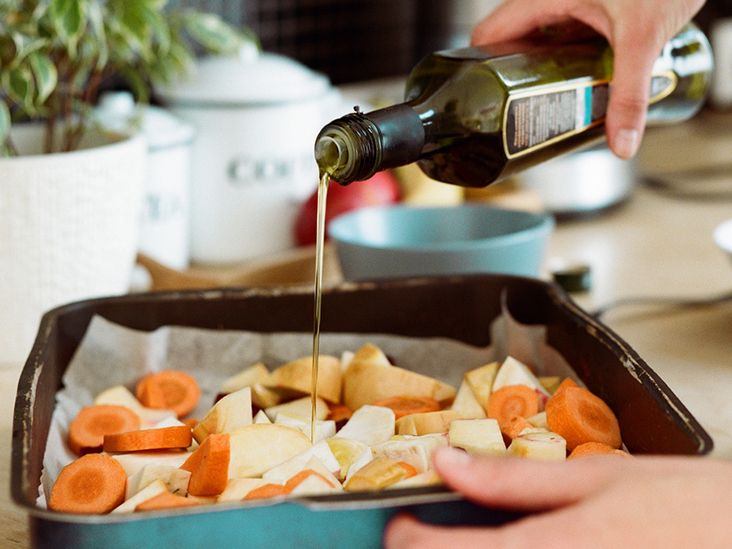
- Roasting: Toss vegetables with a measured amount before roasting.
- Baking: Substitute it in cakes, muffins, focaccia, and quick breads that suit its flavor.
- Marinades: Combine it with acid, herbs, spices, and garlic.
- Finishing: Add a small drizzle to soup, beans, pasta, grilled fish, or hummus immediately before serving.
Avoid allowing any cooking oil to smoke heavily. Smoking creates unpleasant flavors and signals that the oil is breaking down. If the pan begins producing a blue-gray haze, lower the heat, improve ventilation, and start over when necessary. The goal is dinner, not a kitchen fog machine.
How Much Extra Virgin Olive Oil Should You Use?
There is no universal serving that is ideal for everyone. Many people use one to two tablespoons across a day, but appropriate intake depends on total calorie needs, health goals, and the rest of the diet.
The key word is replace. Use EVOO instead of butter on vegetables, instead of creamy dressing on salad, or instead of shortening in a suitable recipe. Pouring olive oil over a meal without removing another calorie source may increase energy intake without delivering the intended benefit.
Measuring can be useful during weight management. Try pouring oil into a spoon before adding it to a pan. It is surprisingly easy for an enthusiastic “glug” to become three tablespoons.
How to Choose a Good Extra Virgin Olive Oil
Check the Container
Dark glass, opaque metal, and other light-blocking packages help protect oil from deterioration. Clear glass looks attractive under supermarket lighting, but olive oil is not auditioning for a beauty pageant. Protection from light is more useful than shelf glamour.
Look for Freshness Information
A harvest date is especially helpful because it tells you when the olives were processed. A best-by date is less informative but still useful. Choose a bottle you can finish within a few months after opening rather than buying a decorative half-gallon that will celebrate two birthdays in your pantry.
Expect Flavor, Not Blandness
Fresh EVOO may taste fruity, grassy, herbal, nutty, bitter, or peppery. Mild oils are not necessarily inferior, but completely flat, waxy, musty, or crayon-like flavors may indicate age or poor storage.
Do Not Judge Quality by Color
Good olive oil may be golden, pale green, or deep green. Color depends on olive variety, ripeness, pigments, and processing. Professional tasters often use colored glasses so appearance does not influence their judgment.
How to Store Extra Virgin Olive Oil
Olive oil’s main enemies are heat, light, oxygen, and time. Keep the bottle tightly closed in a cool, dark cabinet away from the oven, sunny window, or top of the refrigerator. A convenient cabinet near the preparation area is usually better than the shelf directly above the range.
After opening, aim to use the oil while its aroma and flavor remain lively. Storage recommendations vary, but buying quantities that can be finished within roughly three to five months is a practical approach for many households.
igeration is usually unnecessary and may make olive oil cloudy or partially solid. This does not necessarily mean it has spoiled; the oil generally clears after returning to room temperature.
Common Myths About Extra Virgin Olive Oil
Myth: You Should Drink It Like a Supplement
There is no established advantage to swallowing a shot of oil instead of using it in food. Adding EVOO to vegetables, beans, whole grains, and other nutritious ingredients provides flavor and encourages a healthier overall eating pattern. A morning oil shot mostly provides a rapid delivery of calories and an unforgettable mouthfeel.
Myth: More Is Always Better
Olive oil is nutritious, but it remains energy-dense. Excess intake can make weight management more difficult. Health benefits do not increase indefinitely with every additional pour.
Myth: Bitter or Peppery Oil Has Gone Bad
Bitterness and throat pepperiness can be normal characteristics of fresh, phenolic-rich EVOO. Rancid oil is more likely to taste stale, waxy, greasy, putty-like, or reminiscent of old nuts.
Myth: EVOO Cannot Be Heated
Quality EVOO is appropriate for most household cooking. Very high-temperature commercial frying may call for a different oil based on flavor, cost, and repeated-use stability, but ordinary roasting and sautéing are well within EVOO’s practical range.
Practical Experiences With Extra Virgin Olive Oil
The biggest lesson from using extra virgin olive oil regularly is that the “best” bottle depends on the job. A bold, peppery oil can be fantastic over white beans, tomato soup, grilled steak, or toasted sourdough. The same oil may overwhelm a delicate vanilla cake or mild piece of fish. Keeping one moderately priced everyday EVOO and one more flavorful finishing bottle often works better than searching for a single mythical oil that does everything.
Measuring the oil for several days can also be surprisingly educational. A tablespoon looks generous in a spoon but nearly invisible when spread across a large sheet pan of vegetables. This explains why people frequently use far more than they estimate. Measuring does not need to become a permanent kitchen ritual, but it helps train the eye. After a week, it becomes easier to distinguish a teaspoon, tablespoon, and accidental indoor waterfall.
Another practical discovery is that EVOO can improve meal consistency. A simple dressing made with olive oil, lemon, mustard, salt, and pepper takes about two minutes and works on greens, grain bowls, roasted vegetables, lentils, and leftover chicken. Because the same basic formula can be adjusted with garlic, honey, herbs, chili flakes, or vinegar, it reduces dependence on bottled dressings that may contain more sodium or added sugar.
Cooking with EVOO also reveals that heat is less frightening than internet debates make it sound. Vegetables sauté normally, eggs develop crisp edges, and chicken browns without the oil spontaneously becoming toxic at the sight of a warm skillet. The important habits are controlling the burner, avoiding prolonged smoking, and choosing a pan large enough that food cooks instead of steaming in a crowded heap.
Storage makes a noticeable difference. A large bottle left beside a hot stove may lose its fresh aroma long before it is empty. Moving it into a dark cabinet and using a smaller working bottle can preserve flavor. Buying smaller containers may cost slightly more per ounce, but wasting half of an oxidized bargain bottle is not much of a bargain.
Taste comparisons are useful too. Pour small samples of EVOO, regular olive oil, avocado oil, and canola oil onto separate spoons or pieces of bread. EVOO usually contributes the most recognizable aroma and bitterness. Regular olive oil is softer and more neutral, while avocado and canola oils may fade quietly into the background. That does not make one oil universally superior. It shows why a neutral oil may suit pancakes or mayonnaise while a lively EVOO earns its place on bruschetta.
The most sustainable habit is using olive oil to replace something less favorable. Brush it onto bread instead of spreading a thick layer of butter. Toss vegetables with it instead of covering them in cheese sauce. Use an olive-oil vinaigrette in place of a heavy creamy dressing. These swaps preserve pleasure while improving the balance of unsaturated and saturated fats.
Finally, expensive oil is not automatically better for every purpose. A fresh, properly stored supermarket EVOO with a flavor you enjoy is more useful than an award-winning bottle kept unopened because it feels too precious. Olive oil is food, not a museum artifact. Use it while it is fresh, pair it with ingredients that benefit from it, and let the empty bottlenot a dusty expiration datebe the sign that you chose well.
Conclusion
Extra virgin olive oil is one of the most versatile sources of unsaturated fat. It provides monounsaturated fatty acids, flavorful plant compounds, and enough culinary flexibility to handle everything from salad dressing to roasted vegetables.
Its strongest health advantage appears when it replaces foods higher in saturated fat and becomes part of a balanced Mediterranean-style eating pattern. EVOO is generally more flavorful and less processed than regular olive oil, more suitable for everyday heart-conscious use than coconut oil or butter, and competitive with canola and avocado oils as a healthy kitchen staple.
Choose a fresh bottle in protective packaging, store it away from heat and light, measure it when portions matter, and use it before its flavors fade. In other words, treat EVOO like a delicious ingredient rather than a miracle cure. Your vegetablesand possibly your cardiologistwill appreciate the distinction.
Note: This article is intended for general educational purposes and does not replace individualized nutrition or medical advice. People with specific health conditions should discuss major dietary changes with a qualified healthcare professional.