People often ask me what made me give up a “normal life” for wildlife photography. The honest answer is simple: normal life was too loud, too fast, and suspiciously full of emails marked “urgent” by people who had clearly never watched an owl blink in slow motion.
I did not wake up one morning, throw my office shoes into a river, and ride into the wilderness on the back of a majestic elk. The change was quieter than that. It started with weekend hikes, then sunrise drives, then one unforgettable morning when a fox paused in golden grass and looked straight through my lens as if it knew I was about to ruin my old life in the best possible way.
Wildlife photography is not just about beautiful animals. It is about patience, discomfort, responsibility, and learning to disappear without actually becoming a wizard. It is about understanding that the best photo is never worth disturbing an animal, trampling habitat, or turning nature into a stage set. The camera may be mine, but the world in front of it belongs to the creatures living there.
Why I Chose Wildlife Photography Over “Normal Life”
Normal life had its comforts: predictable meals, clean socks, reliable phone signal, and chairs that were not secretly wet. But it also had a strange emptiness. I was spending my best daylight indoors and saving my wonder for vacations. Wildlife photography changed that. Suddenly, a Tuesday morning could become an expedition. A muddy trail could become a classroom. A common bird on a fence post could become a masterpiece if the light arrived wearing its fancy hat.
The first thing I learned was that wildlife does not care about my schedule. Animals do not pose because I drove three hours, forgot breakfast, and carried a lens heavy enough to qualify as gym equipment. A heron may stand still for twenty minutes, then strike at the exact moment I sneeze. A deer may appear in perfect fog, then vanish behind the only ugly branch in the entire forest. This is not failure. This is the job.
To photograph wildlife well, I had to become less impatient and more observant. I studied behavior, tracks, feeding patterns, migration windows, weather, and habitat. I learned when to stay back, when to leave, and when to accept that the animal had won the negotiation. Spoiler: the animal usually wins.
The Real Rules Behind Ethical Wildlife Photography
Before I talk about the 40 photos, I need to talk about the rule that guides every frame: the animal comes first. A powerful wildlife image should show natural behavior, not stress caused by a photographer with main-character energy.
Keep a respectful distance
A long lens is not a luxury in wildlife photography; it is a form of respect. If an animal changes its behavior because I am there, I am too close. That means backing up, staying quiet, and letting the subject decide whether the encounter continues.
Never feed or bait wild animals
Feeding wildlife may look harmless in the moment, but it can change natural behavior, create dependence, increase conflict with humans, and put animals in danger. A photo won with snacks is not a wildlife photo; it is a bad contract written in breadcrumbs.
Protect nests, dens, and sensitive places
Some of the most dramatic wildlife moments happen during nesting, mating, migration, or raising young. They are also the moments when animals can be most vulnerable. I avoid crowding nests, revealing exact locations of sensitive species, or returning too often to a place where my presence might add pressure.
Leave the habitat unchanged
No broken branches for a cleaner background. No moving logs, rocks, eggs, feathers, or “just one tiny twig.” Nature is not a studio. If the scene is messy, I either make the mess part of the story or move on like a grown-up with a tripod.
Here Are 40 Of My Wildlife Photography Moments
Each of these photos represents a lesson. Some were captured after hours of waiting. Some happened in seconds. A few were pure luck dressed up as skill, which is basically wildlife photography’s unofficial uniform.
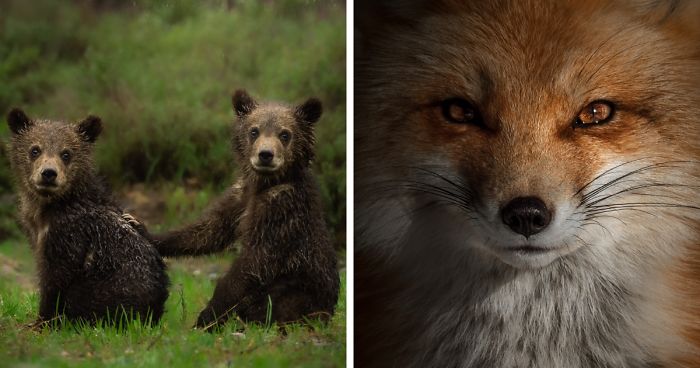
- The Fox In Morning Grass: A red fox paused in amber light, ears forward, pretending it had not noticed me.
- Great Blue Heron Takeoff: One slow wingbeat turned a quiet marsh into a cathedral.
- Raccoon At The Creek: Tiny wet paws, suspicious eyes, and the expression of a burglar caught mid-snack.
- Snowy Egret Reflection: White feathers, black water, yellow feet, and perfect natural contrast.
- Coyote In Winter Fog: A ghost-colored hunter crossing a field before sunrise.
- Owl In Old Oak: Two golden eyes hidden in bark, watching the world spend too much energy.
- Deer At The Tree Line: A quiet stare from the edge between forest and field.
- Dragonfly On Reed: Tiny stained-glass wings trembling in summer heat.
- Pelican Squadron: Brown pelicans flying low over waves like prehistoric pilots.
- Chipmunk With Seeds: Proof that cheeks are nature’s most underrated storage system.
- Bald Eagle In Wind: A sharp profile against a stormy sky, all focus and feathers.
- Alligator Eye At Dusk: Just one eye above the water, enough to make every mosquito feel dramatic.
- Hummingbird Hover: A flying jewel suspended between flower and impossible physics.
- Black Bear From A Safe Distance: A powerful reminder that zoom lenses exist for excellent reasons.
- Fawn In Ferns: Soft spots, soft light, and a scene I left quickly and quietly.
- Sandhill Crane Dance: Wings open, feet lifting, elegance with a hint of comedy.
- Otter With A Shell: Playful, clever, and better at lunch breaks than most humans.
- Pronghorn On Open Plain: Speed standing still under a huge Western sky.
- Butterfly On Milkweed: A small frame about survival, migration, and fragile beauty.
- Moose In Willow: Massive, calm, and photographed with deep respect and generous distance.
- Bobcat In Shadow: A brief glimpse of muscle, whiskers, and disappearing talent.
- Sea Lion Yawn: Less roar, more “I need five more minutes.”
- Wild Turkey Display: Feathers fanned like a tiny parade with serious self-confidence.
- Beaver At Twilight: A ripple, a tail, and one hard-working engineer heading home.
- Mountain Goat On Rock: Balance so good it made my hiking boots feel personally attacked.
- Kingfisher Dive: A blue flash, a splash, and one very lucky shutter burst.
- Elk In Autumn: Antlers framed by golden leaves and cold breath.
- Frog In Rain: A tiny amphibian philosopher sitting in a puddle like it paid rent there.
- Red-Tailed Hawk Landing: Talons forward, wings wide, air suddenly serious.
- Arctic Hare In Snow: Nearly invisible until the eye found the eye.
- Prairie Dog Alarm Call: Small body, huge attitude, excellent neighborhood watch.
- Manatee In Clear Spring: Gentle movement beneath glassy water.
- Wolf Track In Mud: No animal in the frame, but the story was unmistakable.
- Monarch At Sunset: Orange wings glowing against a fading field.
- Osprey With Fish: A clean catch, strong wings, and one very bad day for the fish.
- Bat At Last Light: A silhouette that reminded me night has its own wildlife rush hour.
- Turtle Crossing Trail: Slow determination in a world addicted to speed.
- Bison In Snow: Steam rising from a giant shape built for weather.
- Seal Pup On Sand: Photographed from far away, with the beach left quiet behind me.
- Fireflies Over Meadow: Not one animal portrait, but hundreds of tiny signals saying the wild is still speaking.
What These Photos Taught Me About Wildlife And Myself
The biggest surprise was not how much I learned about animals. It was how much I learned about attention. A person can spend ten minutes in a forest and see “trees.” Spend ten hours there and the forest becomes a city: squirrels arguing, beetles working, woodpeckers drilling, leaves warning you which way the wind is moving.
Wildlife photography trained me to notice the small clues. A bird suddenly goes quiet. A deer lifts its head but does not run. A flock changes direction. A shadow moves against the pattern of branches. These details matter more than expensive gear. Gear helps, yes, but patience is the lens that actually changes everything.
I also learned that failure is not wasted time. Most days do not produce award-winning images. Some days produce only wet boots and a granola bar flattened beyond recognition. But even those days build the instincts that make the rare moments possible. You learn where the light falls, which trail stays quiet, how wind carries scent, and how to walk without sounding like a drawer full of spoons.
How I Approach A Wildlife Photography Trip
Research comes before the camera
Before visiting a location, I research the species that live there, local regulations, safe viewing distances, seasonal behavior, and habitat sensitivity. I want to know what signs of stress look like before I ever raise the camera. Good wildlife photography begins long before the shutter clicks.
Light matters, but behavior matters more
Golden hour can make almost anything look magical, including a trash can. But behavior gives a photo meaning. A fox listening under snow, a heron hunting, a crane dancing, or a bison pushing through weather tells a stronger story than a perfectly lit animal doing absolutely nothing.
The background is part of the subject
I used to chase tight portraits. Now I often include more habitat because animals are not decorations floating in blurry space. A wetland explains the heron. A meadow explains the coyote. A dead tree explains the owl. Habitat is biography.
Knowing when not to shoot is a skill
Sometimes the ethical choice is to lower the camera. If an animal is nervous, guarding young, cornered by people, or already dealing with environmental stress, I leave. There will be other photos. There may not be another chance for that animal to rest, feed, or care for its young without pressure.
Why Wildlife Photography Still Matters
We live in a time when many people experience wildlife mainly through screens, headlines, and quick social media clips. A thoughtful photograph can slow people down. It can turn an animal from an abstract idea into a neighbor. It can show beauty, but also habitat loss, migration challenges, climate pressure, and the delicate connection between human choices and wild survival.
That does not mean every wildlife photo must be sad or serious. Joy matters too. A rolling otter, a dancing crane, or a muddy raccoon can remind people that conservation is not only about preventing loss. It is also about protecting delight.
The best wildlife photographers I admire are not conquerors of nature. They are translators. They bring back evidence that the world is alive in ways many of us forget during normal life. They show us that the ordinary is often extraordinary if we are willing to sit still long enough.
My Field Experience: What Giving Up “Normal Life” Really Feels Like
Giving up normal life sounds romantic until you are eating a cold sandwich in a parking lot at 5:12 a.m. while your camera battery blinks like it has personal problems. The lifestyle has beauty, yes, but it is not a permanent vacation. It is a routine built around uncertainty. Weather changes, animals disappear, roads close, memory cards fail, and the best light often happens while you are still wrestling with a tripod leg that has chosen violence.
In the beginning, I thought wildlife photography would make me more adventurous. It did, but not in the way I expected. The real adventure was not always climbing higher or traveling farther. It was learning to stay. Stay in one blind for six hours. Stay quiet while mosquitoes treat you like a buffet with a camera strap. Stay patient when nothing happens. Stay humble when a beginner beside you gets the shot you dreamed of because the bird landed in front of them instead of you. Nature is wonderfully unfair that way.
I learned to plan carefully but hold plans loosely. I might head out hoping to photograph elk and come home with my favorite image of frost on grass. I might spend a week tracking shorebirds and end up captivated by a crab carrying a shell like a tiny real estate investor. The wild constantly edits my expectations. It reminds me that control is overrated and observation is a better guide.
Money also became different. Instead of spending on the symbols of a normal life, I invested in field gear, repairs, fuel, permits, warm layers, and backup drives. Very glamorous, I know. Nothing says “living the dream” like labeling hard drives at midnight. But those choices gave me access to mornings and moments I would never trade: wolves calling in the distance, cranes lifting out of mist, the first wingbeats of a hawk leaving its perch.
The hardest part was explaining the change to people who measured success in safer shapes. They understood promotions, houses, and routines. They did not always understand waiting three days for one clean frame of an animal that might never appear. But wildlife photography gave me a different kind of success: presence. I became more aware of seasons, animal behavior, weather, silence, and my own limits. I stopped treating nature as background and started treating it as a relationship.
Do I miss normal life? Sometimes. I miss clean shoes. I miss predictable weekends. I miss not finding sand in camera bags, jacket pockets, and places sand has no legal right to be. But I do not miss feeling disconnected from the living world. Wildlife photography gave me a reason to wake before sunrise with purpose. It gave me stories written in tracks, feathers, fog, and light. Most of all, it taught me that a meaningful life does not have to look normal from the outside. It only has to feel true from the inside.
Conclusion
I gave up “normal life” for wildlife photography because the wild kept offering a better invitation. Not an easier one, not a cleaner one, and definitely not one with guaranteed Wi-Fi, but a better one. These 40 photos are more than images; they are reminders of patience, respect, failure, luck, and wonder.
Wildlife photography has taught me that the best moments cannot be forced. They arrive when I prepare well, behave ethically, and let animals remain wild. The goal is not to dominate nature with a camera. The goal is to witness it honestly, protect what makes it possible, and share enough beauty that someone else might care too.