Note: This article synthesizes current U.S. education, civic learning, media literacy, and youth development guidance. Source links are intentionally omitted for publication-ready use.
Explaining polarization to middle and high school students can feel a little like walking into the cafeteria with a tray full of soup during a fire drill. Everyone has an opinion, the floor is slippery, and someone is probably recording it. Yet students are already living inside a polarized world: in group chats, social feeds, family conversations, classroom debates, sports sidelines, and even comment sections that somehow turn a harmless video about pancakes into a constitutional crisis.
The good news is that helping students navigate today’s polarization does not require teachers, parents, or school leaders to become political referees in striped shirts. It requires something more useful: teaching young people how to ask better questions, evaluate information, listen without surrendering their values, disagree without dehumanizing others, and recognize when online conflict is designed to keep them angry.
For middle and high school students, polarization is not just a civics vocabulary word. It is a daily social experience. A student may hesitate to share an opinion because they fear being labeled. Another may repeat a viral claim because it came wrapped in a confident video with dramatic music. Another may assume that people who disagree with them are not merely wrong, but bad. That is where educators and families can step innot to tell students what to think, but to teach them how to think in public without turning every disagreement into a gladiator match with Wi-Fi.
What Is Polarization? A Student-Friendly Explanation
Polarization happens when people or groups move farther apart in their beliefs, identities, and emotions. In politics and civic life, it often means that people begin to see issues as “us versus them.” The disagreement becomes less about a policy, a law, or a social problem and more about whether the other side is trustworthy, intelligent, moral, or even worth hearing.
A simple way to explain it to students is this: disagreement is normal; polarization is what happens when disagreement hardens into teams that stop listening. In a healthy classroom discussion, students might say, “I see this differently because…” In a polarized discussion, students are more likely to say, “Only a terrible person would believe that.” The first sentence opens a door. The second sentence slams it, locks it, and posts a dramatic quote on Instagram.
Students also need to understand the difference between ideological polarization and affective polarization. Ideological polarization means people disagree strongly about ideas or policies. Affective polarization means people dislike, distrust, or look down on people from the other group. Schools cannot eliminate disagreement, and they should not try. Democracy needs disagreement the way a gym needs weights: without resistance, nobody gets stronger. But schools can help reduce contempt, stereotyping, and the habit of treating classmates like walking comment sections.
Why Today’s Students Experience Polarization So Intensely
Middle and high school students are growing up in an information environment that is fast, emotional, visual, and algorithmic. Pew Research Center’s recent teen technology research shows that platforms such as YouTube, TikTok, Instagram, and Snapchat remain deeply woven into teen life, with many teenagers reporting frequent or near-constant online activity. That does not mean social media is automatically bad. It means students are often encountering civic issues in formats designed for speed, reaction, and shareability.
Political and social content now arrives through memes, short videos, influencer commentary, livestream clips, screenshots, AI-generated images, and posts from friends. Much of it lacks context. Some of it is accurate. Some of it is misleading. Some of it is technically true but framed to provoke maximum outrage with minimum explanation, which is basically the junk food of civic life: tasty, quick, and not something you want as your entire diet.
Students also see adults struggling with polarization. They hear family members argue. They watch public figures insult each other. They observe communities divide over curriculum, identity, elections, school safety, climate, immigration, gender, race, religion, and free speech. If adults model panic, mockery, and all-caps certainty, students learn that civic participation means choosing a team and yelling louder. If adults model curiosity, evidence, humility, and boundaries, students learn something far more powerful.
Start With Norms Before Starting With Hot Topics
One of the biggest mistakes adults make is jumping straight into controversial topics without building the discussion muscles first. That is like asking students to run a marathon before teaching them how to tie their shoes. Before discussing polarized issues, classrooms and families need clear norms.
Useful Discussion Norms for Students
Good norms are short, memorable, and practiced repeatedly. Try these:
- Critique ideas, not people. “That argument needs evidence” is different from “You are ignorant.”
- Use evidence before volume. Loudness is not a citation.
- Ask before assuming. Students should learn to say, “What do you mean by that?” before launching a counterattack.
- Summarize fairly. Before disagreeing, restate the other person’s point in a way they would recognize.
- Make room for complexity. Many civic questions do not fit neatly into a bumper sticker.
- Know when to pause. A heated conversation can continue later; a damaged relationship is harder to repair.
Teachers can make these norms visible on the wall, revisit them before discussions, and use them as neutral anchors when emotions rise. Parents can use similar language at home. Instead of saying, “Do not talk about politics at dinner,” families might say, “We can discuss hard issues, but we do not insult people at the table. Also, please pass the potatoes like civilized citizens.”
Teach Students the Difference Between Facts, Opinions, and Values
Many polarized arguments become messy because students mix facts, opinions, and values without realizing it. A fact can be checked. An opinion is a judgment or interpretation. A value is a belief about what matters. Strong civic thinking requires all three, but students need to know which one they are using.
For example, consider a debate about school phone policies. A factual question might be: “How many students report being distracted by phones during class?” An opinion might be: “The school’s phone policy is too strict.” A value might be: “Students deserve independence,” or “Classrooms should protect focus.” Once students identify the category, the conversation becomes less chaotic. They can fact-check facts, explain opinions, and compare values without pretending every disagreement is a conspiracy.
Build Media Literacy Into Everyday Learning
Media literacy is now a core civic skill. Students need to know how to evaluate online information, especially when it confirms what they already believe. Programs and frameworks from groups such as the Digital Inquiry Group, iCivics, Common Sense Education, and the News Literacy Project emphasize practical habits like lateral reading, source evaluation, evidence checking, and recognizing misinformation techniques.
Three Questions Students Should Ask Online
Instead of giving students a giant checklist they will abandon faster than a New Year’s resolution, teach three repeatable questions:
- Who is behind this information? Students should investigate the author, organization, funding, expertise, and purpose.
- What is the evidence? Claims should be supported by reliable data, documents, reporting, or expert analysis.
- What do other credible sources say? Lateral reading helps students leave the original page and compare information across trustworthy sources.
These questions work for news articles, viral videos, screenshots, political ads, influencer posts, AI-generated content, and that one mysterious chart shared by someone’s uncle who always types “wake up” under everything.
Use Low-Stakes Topics Before High-Stakes Topics
Students need practice disagreeing before the topic becomes emotionally loaded. Start with low-stakes debates: Should homework be graded? Should school start later? Should cafeteria pizza legally be called pizza? These topics allow students to practice claims, evidence, listening, and rebuttal without feeling personally attacked.
Once students can handle low-stakes disagreement, gradually move into more complex civic questions. Teachers might use historical case studies, local issues, fictional scenarios, or structured academic controversies. The goal is not to avoid real-world problems forever; the goal is to build enough trust and skill so students can discuss real-world problems responsibly.
Help Students See the Human Being Behind the Opinion
Polarization thrives when people become symbols instead of humans. Students may hear “conservative,” “liberal,” “activist,” “religious,” “rural,” “urban,” “immigrant,” “elite,” “poor,” “rich,” or “influencer” and instantly attach assumptions. Educators can slow this process by teaching perspective-taking without forcing agreement.
A useful classroom exercise is the “story behind the stance.” Ask students to imagine what experiences, fears, hopes, or community influences might lead a person to hold a particular view. This does not mean every view is equally accurate or ethical. It means students learn that people usually arrive at beliefs through a mix of family, media, identity, experience, geography, faith, economic pressure, peer groups, and personal history.
When students understand that opinions have backstories, they are less likely to flatten people into villains. And when they resist villain-making, they become harder to manipulate by outrage-driven media.
Keep the Teacher’s Role Clear and Nonpartisan
Teachers do not need to pretend they are emotionless robots who were assembled in a civics textbook factory. Students know adults have values. But in a classroom, the teacher’s job is to protect inquiry, fairness, accuracy, and student dignity. That means avoiding the temptation to turn class into a personal opinion podcast with worksheets.
A strong teacher stance might sound like this: “My role is not to tell you which conclusion to reach. My role is to help you examine evidence, understand different arguments, challenge weak reasoning, and communicate respectfully.” This approach builds trust across students and families because the classroom becomes a place for disciplined thinking rather than ideological recruitment.
Use Structured Dialogue Instead of Free-for-All Debate
Unstructured debate often rewards the fastest talkers, the sharpest insults, and the students most comfortable performing confidence. Structured dialogue gives everyone a better chance to participate. Try formats such as Socratic seminars, fishbowl discussions, four-corners activities, written reflections before speaking, paired listening, or evidence-based position papers.
A Simple Four-Step Dialogue Routine
- Prepare: Students read balanced background materials and identify key facts.
- Reflect: Students write privately about what they think and what questions they still have.
- Listen: Students summarize a partner’s view before sharing their own.
- Revise: Students explain whether their thinking changed, became stronger, or became more nuanced.
This routine teaches students that changing your mind is not the only sign of learning. Sometimes learning means keeping your position but understanding the issue more honestly. Sometimes it means realizing the slogan was easier than the problem. That is a very grown-up discovery, and frankly, many adults could use the worksheet.
Teach Emotional Regulation as a Civic Skill
Polarization is not only intellectual. It is emotional. Students may feel anger, fear, embarrassment, loyalty, defensiveness, or pressure to perform for peers. Helping students name those emotions can prevent discussions from turning into personal battles.
Before a difficult conversation, teachers can ask students to notice their physical responses: tight shoulders, fast heartbeat, clenched jaw, or the sudden desire to deliver a courtroom speech despite being in seventh grade. Then teach pause strategies: breathe, write first, ask a clarifying question, request a break, or say, “I need a minute to think.”
Students should learn that calm does not mean passive. Respect does not mean silence. Being emotionally regulated simply means they are steering the car instead of letting outrage grab the wheel.
Make Room for Student Voice and Civic Agency
Research on youth civic engagement consistently shows that young people benefit from opportunities to use their voices, participate in school life, and connect learning to community problem-solving. When students feel ignored, polarization can become more attractive because it offers identity, belonging, and a sense of power. When students feel heard, they are more likely to practice constructive civic participation.
Schools can support student voice through student advisory groups, classroom choice, youth-led forums, community interviews, service learning, school climate surveys, and local problem-solving projects. For example, instead of debating “the environment” in the abstract, students might analyze cafeteria waste and propose realistic changes. Instead of arguing about “free speech” only as a slogan, students might examine school speech policies and discuss how rights and responsibilities work together.
Address Online Behavior Without Shaming Students
Students often know that online spaces can be toxic, but they may not know how to step out of the cycle. Adults should avoid lectures that begin with “Back in my day,” because students will immediately power down like laptops at 1 percent battery. Instead, ask practical questions:
- What kinds of posts make people angrier than they were before?
- How do algorithms reward conflict?
- When does sharing information help, and when does it spread harm?
- What is the difference between calling out a false claim and humiliating a person?
- How can someone leave a conversation without looking weak?
Students need scripts. They can say, “I’m going to check that before I share it,” “I disagree, but I’m not doing insults,” “This thread is getting nasty, so I’m out,” or “Can you send a source for that?” These simple phrases help students practice digital citizenship in real time.
Give Students Better Models of Disagreement
One of the most powerful ways to teach students about polarization is to show them examples of disagreement done well. Use clips, transcripts, court opinions, historical debates, town hall formats, student panels, or paired essays that demonstrate thoughtful disagreement. Ask students to identify what made the exchange productive: Did participants define terms? Use evidence? Admit uncertainty? Avoid personal attacks? Ask sincere questions?
Schools can also invite speakers with different professional or community perspectives, as long as the event is carefully framed with norms, preparation, and reflection. Students should not be thrown into conflict as spectators. They should be trained as civic thinkers who can evaluate how disagreement works.
What Parents Can Do at Home
Parents and caregivers play a major role in helping students navigate polarization. Home is where many young people first learn whether disagreement is dangerous, shameful, exciting, or manageable. Adults can model curiosity by saying, “I had not thought of it that way,” or “Let’s look that up together,” or “I disagree with that argument, but I do not want to mock the person making it.”
Families can also create media habits together. That might mean comparing headlines from different outlets, checking original sources, talking about how images shape emotions, or discussing why a post went viral. The point is not to drain every conversation of fun. It is to help students become less gullible, less reactive, and more confident. A teenager who can fact-check a viral claim before reposting it is already doing civic work, even if they are wearing pajama pants and eating cereal at 11 p.m.
Common Mistakes to Avoid
Adults often mean well but accidentally make polarization worse. Avoid these traps:
- Turning every issue into two equal sides. Some claims are false, harmful, or unsupported. Balance should not replace truth.
- Shutting down all controversy. Avoidance teaches students that difficult issues are too dangerous to discuss.
- Rewarding the loudest voices. Structured participation helps quieter students contribute.
- Confusing neutrality with silence. Adults can uphold respect, accuracy, and dignity without endorsing a partisan position.
- Overloading students with doom. Young people need agency, not a daily buffet of civic despair.
Practical Classroom Activities for Navigating Polarization
1. The Claim-Evidence-Question Chart
Students divide a page into three columns: claim, evidence, and question. When they encounter a controversial statement, they identify what is being claimed, what evidence supports it, and what questions remain. This slows thinking and reduces instant reaction.
2. The Opposite-Side Summary
Students summarize an opposing view as fairly as possible before responding. The rule is simple: the other side should be able to say, “Yes, that represents my view.” This builds listening and intellectual humility.
3. The Media Autopsy
Students examine a viral post after the emotional moment has passed. They ask who created it, what emotion it triggered, what context was missing, and whether the claim held up. It is like CSI, but with fewer sunglasses and more tabs open.
4. The Values Line
Students identify values behind a disagreement, such as fairness, freedom, safety, responsibility, equality, tradition, innovation, or community. This helps them see why reasonable people can prioritize different concerns.
5. The Local Problem Project
Students choose a school or community issue, research it, interview stakeholders, and propose solutions. Local problem-solving turns civic learning from abstract argument into practical action.
Experience Notes: What This Looks Like in Real School Life
The following composite experiences reflect common classroom and family situations related to helping middle and high school students navigate today’s polarization. They are not about one specific school; they represent patterns many educators, parents, and students will recognize.
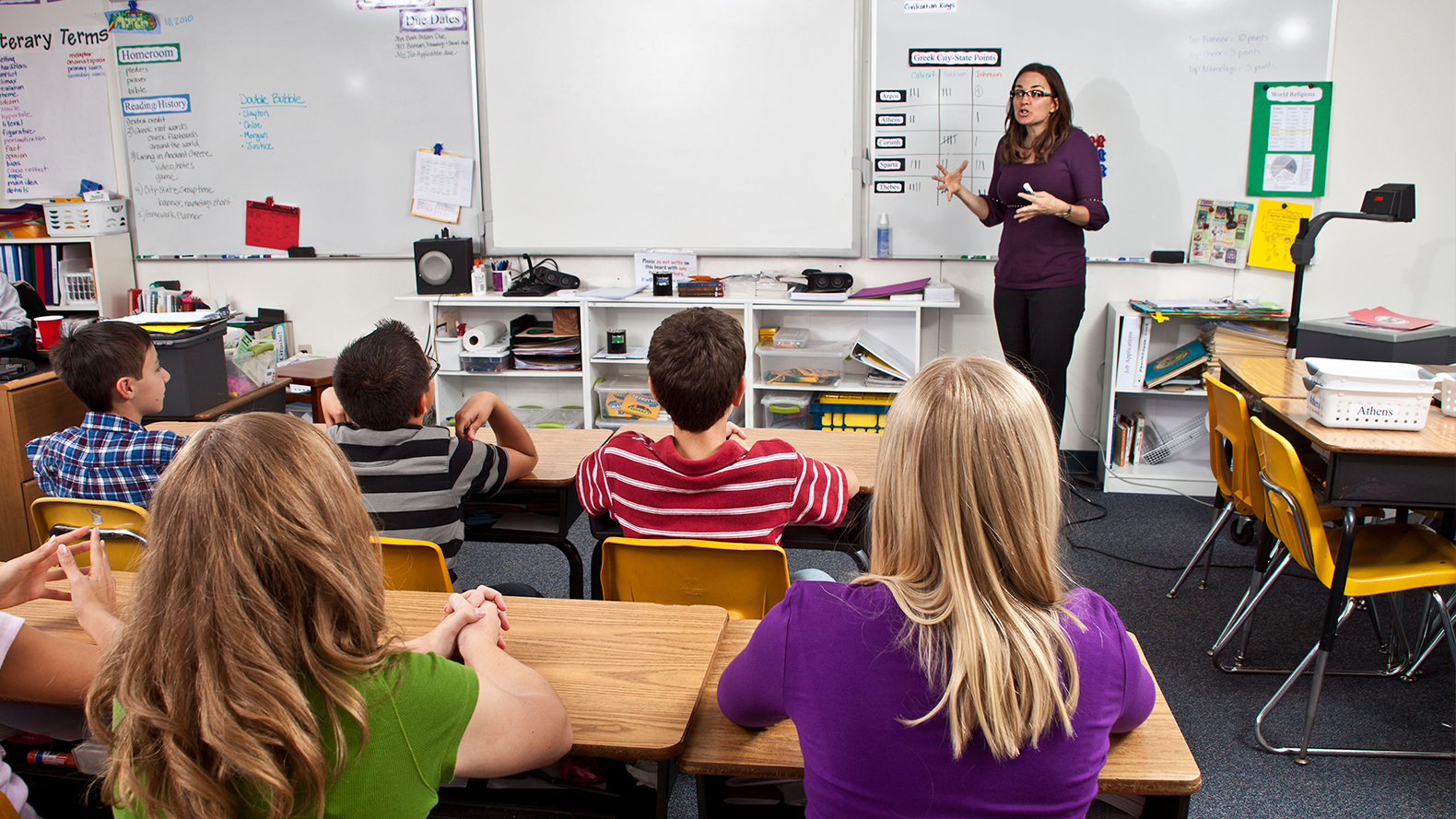
In one middle school classroom, a teacher noticed that students could debate fictional characters with impressive fairness but became instantly defensive when discussing real social issues. So she began with a story. Students analyzed a conflict between two characters who both wanted justice but defined it differently. Once students could identify competing values in fiction, the teacher moved to a school issue: whether students should have more freedom during lunch. The conversation was lively, but because students had already practiced naming values, they said things like, “I think safety matters more here,” or “I think trust should count too.” Nobody solved democracy before the bell rang, but they did learn that disagreement can have structure.
In a high school history class, students were convinced that every source they disagreed with was biased and every source they liked was “just facts.” The teacher introduced lateral reading. Instead of staying on one website, students opened new tabs to investigate the author, organization, funding, and reputation. At first, they treated it like detective work. Then they realized something uncomfortable: even sources that supported their views needed checking. That lesson mattered. A student later admitted that she had almost reposted a dramatic claim but stopped because she could not verify it. The post lost one share; the student gained one civic muscle.
At home, one parent described political conversations with a ninth grader as “a door that either stayed closed or flew off the hinges.” The family changed the format. Instead of surprise debates during dinner, they started a once-a-week “bring one thing you saw online” conversation. The rule was not “defend your side.” The rule was “explain how the post tried to persuade you.” Sometimes the teen brought a meme. Sometimes a headline. Sometimes a video that looked convincing until they checked the original context. The family still disagreed on plenty of issues, but the conversation shifted from accusation to investigation.
In another school, student leaders helped create discussion norms for advisory periods. Because the norms came from students, not just adults, they had more power. Students included lines such as “Do not turn someone’s opinion into gossip after class” and “Ask questions before you screenshot.” Those rules were funny, painfully accurate, and deeply practical. They recognized that polarization does not end when the bell rings; it follows students into hallways, phones, buses, and weekend plans.
The biggest lesson from these experiences is that students do not need adults to remove every difficult topic. They need adults to provide tools, boundaries, and examples. They need spaces where they can be curious without being mocked, wrong without being destroyed, passionate without being cruel, and uncertain without being dismissed. Helping students navigate polarization is not about making them bland or silent. It is about helping them become brave, careful, informed, and humane.
Conclusion: Teaching Students to Disagree Without Falling Apart
Today’s polarization is real, but it is not unbeatable. Middle and high school students can learn to navigate it when adults teach the skills directly: media literacy, civil discourse, emotional regulation, evidence-based reasoning, perspective-taking, and civic action. These skills do not appear magically because students sit near a textbook. They grow through practice, reflection, mistakes, repair, and better models of disagreement.
The goal is not to create students who never argue. The goal is to create students who know how to argue well. They should be able to challenge weak evidence, question viral outrage, recognize complexity, defend their values, and still see the humanity of people who think differently. That kind of education prepares young people not only for tests, but for citizenship, leadership, relationships, and the wild public square they are already carrying in their pockets.
In a polarized age, helping students think clearly and speak responsibly is not extra credit. It is one of the most important lessons schools and families can teach. And unlike a cafeteria mystery casserole, it is something students may actually use for the rest of their lives.