Bees are wonderful little overachievers. They pollinate flowers, help grow food, make honey, and somehow manage to run a more organized society than most office meetings. But when a buzzing crowd sets up camp in your wall, under your deck, near your front door, or beside the kids’ playset, admiration quickly turns into one very reasonable question: how do you remove bees safely?
The best answer depends on what you are seeing. A few bees visiting clover in the lawn are not a bee problem. A temporary swarm hanging from a tree branch is different from an established colony inside a wall. Ground-nesting yellowjackets are not the same as honey bees, even though many people call everything with wings and attitude a “bee.” Before you reach for a spray can, a broom, or your bravest pair of flip-flops, slow down. Safe bee removal is about identification, timing, protection, and choosing the least harmful solution that actually works.
This guide explains three practical ways to remove bees: encouraging temporary bees to move along, relocating honey bees with help from a beekeeper, and hiring a licensed pest control professional when the nest is dangerous, inaccessible, or not actually a honey bee colony. Along the way, we will cover what not to do, how to protect your household, and how to prevent bees from moving back in like tiny striped tenants with no deposit.
First, Make Sure They Are Really Bees
Before choosing a removal method, identify the insect as accurately as possible from a safe distance. Honey bees are usually fuzzy, golden-brown, and focused on flowers, water sources, or a single entrance to a cavity. Bumble bees are larger, rounder, and extra fuzzy, often nesting in abandoned rodent holes, compost piles, or thick grass. Carpenter bees look like bumble bees but often have shiny black abdomens and hover around exposed wood.
Wasps, hornets, and yellowjackets are often smoother, slimmer, and more defensive around nests. Yellowjackets may nest underground, in wall voids, or in landscape timbers. Paper wasps build open, umbrella-shaped nests under eaves. Hornets can build large enclosed paper nests in trees, shrubs, or structures. This matters because honey bee removal often focuses on relocation, while wasp or hornet control may require a different safety plan.
Signs You May Have a Honey Bee Colony
A honey bee colony usually has steady traffic in and out of one opening. You may see bees entering a crack in siding, a gap near a chimney, a hole in a tree, or an opening around utility lines. If the colony is inside a wall, you might hear faint buzzing indoors. In warm weather, bees may cluster outside the entrance to cool the hive. You may also notice sticky honey stains, wax, or a sweet odor if the colony has been active for a while.
Signs You May Have a Temporary Swarm
A swarm often looks dramatic but may be less dangerous than it appears. Honey bees swarm when part of a colony leaves with a queen to find a new home. They may cluster on a branch, fence, mailbox, or outdoor furniture while scout bees search for a cavity. Swarms can remain for a few hours or a couple of days. They are often calmer than an established colony because they are not defending brood or stored honey, but that does not mean you should poke them with a rake for science.
When Bee Removal Becomes Urgent
Removal becomes more urgent when bees are inside living spaces, near doors or walkways, in schools or businesses, around pets, near people with sting allergies, or in a structure where honey and wax could cause damage. Multiple stings, aggressive behavior, or bees entering indoor rooms should be treated as a safety issue. If anyone has trouble breathing, swelling of the throat or tongue, dizziness, widespread hives, or other signs of a severe allergic reaction after a sting, call emergency services immediately.
Way 1: Remove the Attraction and Let Temporary Bees Move On
The simplest way to remove bees is not always dramatic. Sometimes the smartest solution is to remove what is attracting them and give them space. This method works best for foraging bees, scout bees, or a temporary swarm that has not moved into a wall, attic, chimney, shed, or tree cavity.
Bees may gather around flowering weeds, spilled soda, hummingbird feeders, pet water bowls, leaky irrigation, open trash cans, compost bins, fruit trees, or damp areas during hot weather. They are not necessarily nesting there. They may simply be shopping, drinking, or browsing the buffet. In that case, your goal is to make the area less interesting without harming the bees.
How to Reduce Bee Activity Outdoors
Start by cleaning up sweet spills, covering trash cans, removing fallen fruit, and rinsing recycling containers before storing them outside. If bees are crowding a hummingbird feeder, take it down for a few days, clean it thoroughly, and move it farther from doors and seating areas. Repair dripping faucets, irrigation leaks, and air-conditioning condensation lines if bees are using them as a water source.
If bees are visiting clover or flowering weeds in a lawn where children play barefoot, mow the flowers before heavy use of the area. Do this when bees are less active, such as early morning or evening, and avoid mowing directly over visible ground nests. If the issue is a garden bed, consider creating a people-free pollinator zone rather than removing every flower. Bees are doing useful work; they simply need a better boundary between their lunch counter and your patio chair.
How to Handle a Swarm That Is Not in the Way
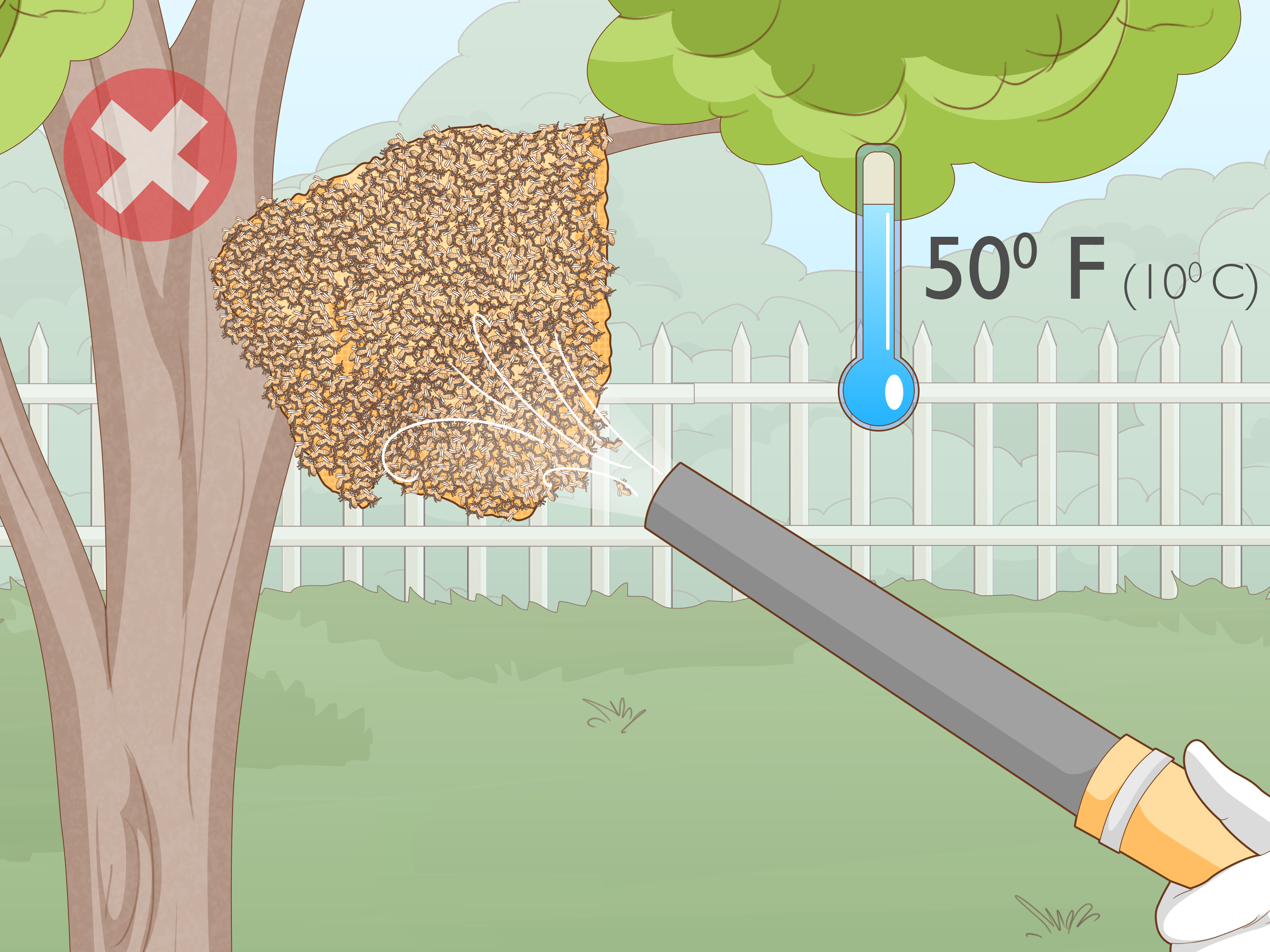
If a swarm is hanging in a tree or shrub away from people, pets, doors, and walkways, the safest option may be to leave it alone and monitor it. Many swarms leave on their own once scout bees choose a permanent nesting site. Keep children and pets away, avoid vibration near the cluster, and do not spray water or insecticide. Spraying a swarm can turn a calm situation into a defensive one, which is a bad trade unless your hobby is sprinting.
If the swarm is low, reachable, or near activity, contact a local beekeeper or bee removal specialist quickly. Swarm capture is usually easier before bees enter a structure. The longer a swarm remains near a house, the greater the chance it may choose an opening in the building as its new address.
What Not to Do
Do not seal bees into a wall, chimney, or attic. Trapped bees may find another way into the living space, and dead bees, honey, and comb can create odor, stains, moisture issues, and pest problems. Do not pour gasoline, bleach, boiling water, or random household chemicals into a nest. These methods are dangerous, environmentally irresponsible, and often ineffective. Also avoid swinging wildly at bees. They are tiny, but they have excellent customer service escalation procedures.
Way 2: Call a Beekeeper for Honey Bee Swarm or Colony Relocation
When the insects are honey bees, relocation is often the best removal method. Honey bees are valuable pollinators, and many beekeepers are willing to collect accessible swarms. Some professionals also perform live colony removals from walls, sheds, trees, or other cavities. This is more complex than scooping bees into a box; it may require opening part of a structure, removing comb, transferring bees, and repairing the space afterward.
A beekeeper can often remove a swarm by gently placing the cluster into a ventilated box or hive equipment. If the queen is collected, most of the bees will follow. For a homeowner, this can look surprisingly calmalmost too calm, considering there may be thousands of bees involved. That calmness comes from experience, protective gear, and knowing bee behavior. It is not a sign that anyone should try it barehanded after watching one short video online.
Information to Gather Before Calling
When contacting a beekeeper or bee removal company, provide clear details. Explain where the bees are located, how high the cluster or entrance is, how long they have been there, whether they are in a structure, and whether anyone has been stung. Share photos or video taken from a safe distance. Mention obstacles such as steep roofs, locked gates, pets, electrical wires, or limited parking.
Ask whether the provider handles swarms only or also removes established colonies from structures. Many hobby beekeepers collect accessible swarms but do not cut open walls or remove comb. Structural removals may require a specialist with carpentry skills, insurance, and knowledge of how to remove bees and repair the entry point correctly.
Why Comb Removal Matters
If honey bees have built comb inside a wall, removing only the adult bees is not enough. Wax, honey, pollen, and brood can remain behind. Leftover comb can melt, leak, attract ants, roaches, wax moths, rodents, and new bees. It may also create stains or odors. A proper removal includes taking out the bees, removing comb, cleaning the cavity when appropriate, and sealing entry points after activity has stopped.
This is why established honey bee colonies inside structures are usually not a quick weekend chore. A complete job may involve a beekeeper, pest professional, and contractor. It can cost more than a simple spray treatment, but it reduces the chance of future damage and repeat infestations. In bee removal, cheap shortcuts often return wearing wings.
When Relocation Is the Best Option
Choose relocation when the insects are confirmed honey bees, the colony is accessible, and there is no immediate life-threatening risk. Relocation is also ideal for swarms on branches, fences, bushes, mailboxes, or exterior surfaces. If the bees are inside a tree, wall, soffit, or chimney, professional evaluation is still the right step, but the process may be more involved.
Way 3: Hire a Licensed Pest Control Professional for Dangerous or Inaccessible Nests
Sometimes bee removal is not really bee removal. It is yellowjacket control, hornet control, or stinging insect management. If the nest is underground, inside a wall void, high on a structure, in a chimney, or producing aggressive behavior, a licensed pest control professional is usually the safest choice. This is especially true if someone in the home is allergic to stings, if the nest is near heavy foot traffic, or if you cannot identify the insect confidently.
Professionals have protective equipment, application tools, training, and access to products that are labeled for specific pests and locations. They also know how to reduce exposure risk for people, pets, pollinators, and the environment. A good pest professional will not simply blast every buzzing insect on sight. They should identify the pest, locate the nest, explain the treatment plan, and discuss prevention.
What a Professional May Do
For wasps or hornets, treatment may involve applying an approved product directly to the nest or entry point when insects are less active, often in the evening or early morning. For ground-nesting yellowjackets, the professional may treat the entrance and advise you to avoid the area until activity stops. For wall void nests, treatment may require dusts or other labeled products placed into the void, followed by sealing after the colony is inactive.
For honey bees, many pest control companies will recommend live removal or refer you to a beekeeper when possible. In some situations, however, elimination may be required because the colony is aggressive, inaccessible, located in a dangerous public area, or impossible to remove alive safely. If pesticides are used, the product must be labeled for the site and pest, and the applicator should follow all directions.
Questions to Ask Before Hiring
Ask whether the company is licensed and insured. Ask if they have experience with honey bees, wasps, hornets, and yellowjackets. Ask whether they remove comb from structures or only treat the insects. Ask what you should do before and after treatment, including how long to keep people and pets away. If honey bees are involved, ask whether live removal is possible.
Be cautious of anyone who promises instant results without inspecting the site or identifying the insect. Also be cautious of advice that involves sealing active bees inside a wall or using unsafe substances. The goal is not only to stop today’s buzzing; it is to prevent tomorrow’s surprise sequel.
How to Prevent Bees From Coming Back
After bees or wasps are removed, prevention is the next step. Inspect your home for openings larger than a small crack. Check around siding, vents, soffits, fascia boards, chimneys, utility penetrations, rooflines, and gaps around windows or doors. Seal holes after you are certain the colony is gone. Use appropriate materials such as caulk, hardware cloth, vent screens, or professional repairs depending on the opening.
Keep outdoor trash sealed, rinse sticky containers, pick up fallen fruit, and avoid leaving sweet drinks uncovered. Store pet food indoors. Maintain screens on windows and vents. If you keep birdhouses, sheds, or unused equipment outdoors, inspect them periodically. Bees and wasps love quiet cavities, and your forgotten storage box may look like a luxury condo to them.
Landscaping can also help. Keep dense shrubs trimmed away from entrances, decks, and walkways. Fill abandoned rodent holes if yellowjackets are a recurring problem. Paint or seal exposed wood to discourage carpenter bees. For pollinator-friendly yards, plant flowers away from high-traffic areas so bees have a safe place to work without becoming uninvited guests at every barbecue.
Safety Tips During Any Bee Removal Situation
Stay calm and move slowly away from bees. Do not swat, scream, or create vibration near the nest. Wear shoes outdoors if bees are active in the lawn. Keep children and pets away from the area until it is resolved. If a bee lands on you, gently brush it away or wait for it to leave. If you are attacked by many bees or wasps, protect your face and move quickly indoors or into a vehicle.
If stung, move away from the area first. Honey bees may leave a stinger in the skin; remove it quickly by scraping or flicking it out. Wash the area with soap and water, apply a cold pack, and monitor symptoms. Seek urgent medical help for trouble breathing, swelling beyond the sting area, dizziness, faintness, tightness in the throat, or widespread hives. Anyone with a known severe sting allergy should follow their emergency action plan and use prescribed epinephrine as directed.
Common Mistakes Homeowners Make
Mistake 1: Treating Every Buzzing Insect the Same
Honey bees, bumble bees, carpenter bees, yellowjackets, paper wasps, and hornets behave differently. They nest differently, defend differently, and require different solutions. Guessing can lead to stings, wasted money, and unnecessary harm to beneficial pollinators.
Mistake 2: Blocking the Entrance Too Soon
Sealing an active entrance can trap insects inside and push them into living spaces. It can also leave comb and honey behind. Seal openings only after removal or treatment is complete and activity has stopped.
Mistake 3: Using Unsafe DIY Chemicals
Gasoline, bleach, fire, and homemade chemical mixtures are not safe bee removal tools. They can harm people, pets, soil, water, structures, and beneficial insects. If a pesticide is necessary, use only a labeled product exactly as directed or hire a licensed professional.
Real-World Experience: What Bee Removal Usually Feels Like for Homeowners
Most bee removal stories begin with a small mystery. Someone notices a few bees near a window, a chimney, or a corner of the deck. At first, it seems harmless. Then the pattern becomes obvious: bees are entering the same gap every few seconds, like commuters using a tiny airport. That is usually the moment the homeowner realizes this is not just “nature being nature.” This is nature with a forwarding address.
One of the most common experiences is confusion between a swarm and a nest. A swarm on a low tree branch can look terrifying because there may be thousands of bees in one pulsing cluster. But if it is a honey bee swarm, it may be temporary and relatively calm. Many homeowners who call a beekeeper are surprised by how smoothly the removal goes. The beekeeper arrives in protective gear, places a box or hive body under the swarm, shakes or brushes the bees inside, and waits for the remaining bees to follow the queen. What looked like a backyard emergency becomes a fascinating biology lesson with fewer dramatic sound effects than expected.
Wall colonies are a very different experience. Homeowners may hear buzzing indoors but see only a small exterior crack. The colony may have been growing for weeks or months. A proper removal can involve opening a section of wall, carefully cutting out comb, vacuuming or collecting bees with specialized equipment, and cleaning the cavity. It is slower, messier, and more expensive than swarm capture, but it solves the real problem. People who skip comb removal often discover ants, odors, stains, or new bee activity later. The lesson is simple: when bees have built inside a structure, removing the bees without removing the comb is like cleaning the kitchen but leaving a cake under the floorboards.
Another familiar scenario involves “bees” that turn out to be yellowjackets. These cases often feel more intense because yellowjackets can be defensive, especially near underground nests or wall voids. Homeowners may notice stings while mowing, trimming shrubs, or walking near a hidden entrance. In these situations, professional help is worth it. A trained technician can identify the insect, locate the nest entrance, treat it safely, and explain when the area can be used again. The homeowner’s job is mostly to keep distance, mark the location from afar, and resist the heroic urge to investigate with a flashlight and sandals.
Good bee removal also teaches patience. Activity may not stop the instant someone leaves your property. Foragers can return to the old location for a short time. A treated wasp nest may show reduced but continuing activity until the product works through the colony. A relocated swarm may leave a few confused bees circling the branch. This does not always mean the removal failed. It means insects do not read service invoices. Still, if heavy activity continues beyond the timeline given by the professional, call for a follow-up.
The best experiences happen when homeowners focus on safety and prevention rather than panic. They take photos from a distance, call the right person, keep kids and pets away, and repair entry points after removal. They also learn to respect bees without letting them move into the house. That is the balance: protect pollinators when possible, protect people always, and never underestimate a creature that can fly, organize, and defend a queen without a single team-building seminar.
Conclusion
Removing bees safely starts with a calm look at the situation. If bees are only visiting flowers, water, or sweet spills, remove the attraction and give them space. If you have a honey bee swarm or accessible colony, call a beekeeper or bee removal specialist for relocation. If the nest is aggressive, hidden, high, underground, or possibly made by wasps or hornets, hire a licensed pest control professional.
The safest bee removal plan protects people first, preserves beneficial bees when possible, and prevents future nesting by sealing entry points after the colony is gone. Bees may be tiny, but the wrong removal method can create big problems. Choose the smart route, and you can reclaim your space without turning your backyard into a low-budget action movie.