Temporary hit points in D&D 5e are one of those rules that look tiny on the character sheet but become surprisingly important the moment a goblin crits your wizard. They are not healing. They are not bonus maximum hit points. They are not a secret second health bar you can stack like pancakes at a tavern breakfast. They are a damage buffer: a short-lived layer of protection that gets chewed up before your real hit points do.
Used well, temporary HP can keep a front-line fighter standing, help a warlock punish enemies with icy revenge, give a nervous bard a reason to stop hiding behind the drapes, and make a party feel far sturdier than its actual hit point totals suggest. Used poorly, it can create rules arguments, wasted spells, and the classic table sentence: “Wait, do I have 8 temporary hit points or 13?” That sentence has ended more friendships than mimic chests. Almost.
This guide explains how temporary hit points work in D&D 5e, how the 2024 rules clarify them, what they do and do not protect against, and how players and Dungeon Masters can use them strategically without turning combat into an accounting seminar.
What Are Temporary Hit Points in D&D 5e?
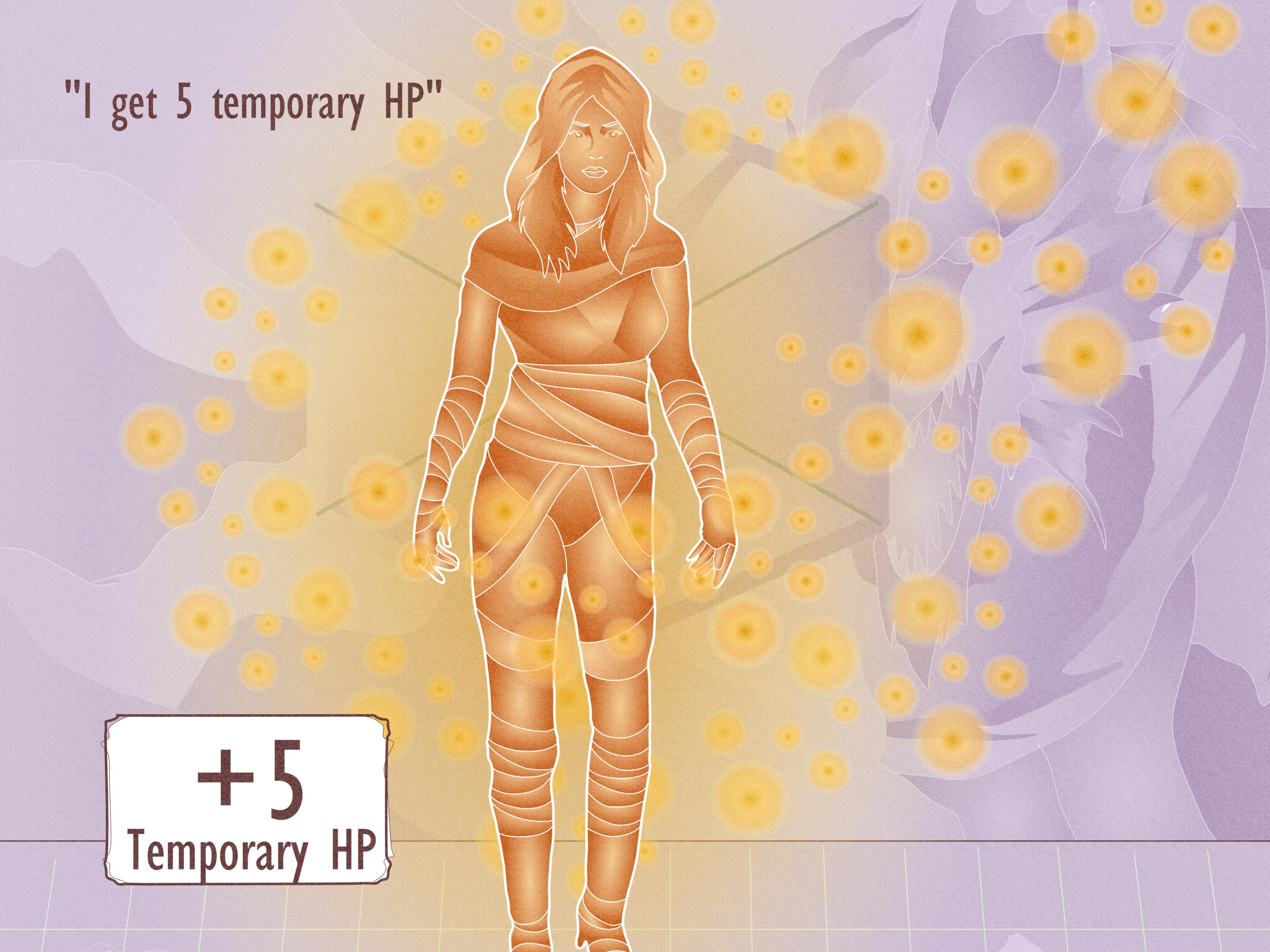
Temporary hit points, often shortened to temporary HP or temp HP, are extra points that absorb damage before your normal hit points are reduced. Think of them as magical padding, heroic confidence, divine encouragement, necromantic bubble wrap, or whatever flavor best matches the source. A spell like False Life might wrap you in grim magical vitality, while Heroism represents courage so strong it practically wears a helmet.
The key rule is simple: when a creature with temporary hit points takes damage, the damage comes out of the temporary hit points first. If any damage remains, it carries over to the creature’s actual hit points. For example, if your cleric has 6 temporary hit points and takes 10 slashing damage, the temporary hit points absorb 6, and the cleric loses only 4 real hit points.
Temporary HP can exist while a character is already at full health. A fighter with 44 out of 44 hit points can still gain 10 temporary hit points. Their current hit points remain 44, but enemies must carve through the 10-point buffer first. This is why temporary hit points are so useful before combat begins: they prevent damage rather than repair it later.
Temporary Hit Points Are Not Real Hit Points
The most common mistake is treating temporary hit points as normal hit points with a fancier hat. They are separate. They do not increase your hit point maximum, they do not count as healing, and they are not restored by healing magic.
If a paladin casts Cure Wounds on a rogue who has 5 temporary hit points remaining, the healing restores the rogue’s real hit points only. The temporary hit points stay exactly where they are unless damage removes them, the relevant duration ends, or a rule says otherwise. Healing does not “top off” temporary hit points. Your cleric cannot heal your magical confidence. That is a therapy arc, not a spell slot.
This distinction also matters for features triggered by healing. Since receiving temporary hit points is not healing, it usually does not trigger effects that activate when a creature regains hit points. A character who gains temporary HP has received protection, not recovery.
Temporary Hit Points Do Not Stack
One of the most important rules in D&D 5e is that temporary hit points do not stack. If you already have temporary hit points and receive more, you choose whether to keep the current amount or replace it with the new amount. You do not add them together.
For example, suppose your warlock has 8 temporary hit points from False Life. Later, a bard gives the warlock 5 temporary hit points from another feature. The warlock can keep the 8 or replace them with 5. The correct answer is usually “keep the 8,” unless some special effect is attached to the new source. You cannot combine them into 13.
This rule applies regardless of source unless a feature specifically says otherwise. Two spells, a feat and a spell, a class feature and a magic itemnone of them stack just because they came from different places. Temporary hit points are more like wearing one excellent coat than wearing six coats and calling yourself a fortress.
Why the No-Stacking Rule Matters
The no-stacking rule keeps defensive buffs from getting out of control. If temporary hit points stacked freely, a party could pile False Life, Heroism, Inspiring Leader-style benefits, subclass abilities, and magic items into a cushion so thick the dragon would need a customer support ticket to hurt anyone.
Instead, temporary HP asks players to make decisions. Do you keep the larger pool? Do you replace it because the new pool has a valuable rider effect? Do you spend a resource now or wait until the current buffer is gone? These choices make the mechanic tactical without turning it into a math swamp.
How Long Do Temporary Hit Points Last?
In the 2024 D&D rules, temporary hit points generally last until they are depleted or until you finish a Long Rest. That means if you gain temporary HP from an effect and no other rule removes it earlier, the buffer can remain for quite a while. In older 2014-style wording, some sources also had their own durations, so table rulings often depended heavily on the spell or feature text.
The practical advice is this: always read the specific source. If a spell says the temporary hit points disappear when the spell ends, follow that. If a feature says the target loses remaining temporary hit points at a certain time, follow that. If nothing special overrides the general rule, the buffer remains until damage eats it or the character finishes a Long Rest.
For players, this means temporary hit points gained before a fight can matter later. For DMs, it means you should remind players to track them cleanly. A little “Temp HP” box on the sheet saves everyone from asking whether the wizard’s spooky bonus points came from this combat, last combat, or a dream sequence involving suspicious cheese.
Temporary Hit Points and Dropping to 0 HP
Temporary hit points do not bring a creature back from 0 hit points. If your character is unconscious at 0 HP and someone gives them temporary hit points, they remain unconscious. The buffer can absorb future damage, but it does not wake them up, stabilize them by itself, or reset death saving throws.
Only actual healing can restore a creature to consciousness. A healing spell, a potion of healing, or another effect that restores real hit points can get the character back on their feet. Temporary hit points are a shield; they are not a defibrillator.
Example: Temp HP at 0 Hit Points
A ranger is unconscious at 0 hit points. A nearby ally grants the ranger 7 temporary hit points. The ranger still has 0 real hit points and remains unconscious. If an enemy hits the ranger for 5 damage, that damage removes 5 temporary hit points first. The ranger now has 2 temporary hit points and still has 0 real hit points. Depending on the rules for damage at 0 HP in your game, taking damage while unconscious can still have serious consequences, so temporary HP may soften the blow but does not solve the emergency.
Common Sources of Temporary Hit Points
Temporary hit points appear across many D&D 5e spells, class features, feats, and magic items. Some are personal defenses, while others protect allies. Knowing the difference helps you choose when to spend resources and who benefits most.
False Life
False Life is one of the classic self-protection spells. It grants temporary hit points to the caster, making it useful for fragile spellcasters who expect danger. In 2024 rules, the spell became more straightforward and stronger at low levels, giving a fixed dice-based pool of temporary HP and additional temporary HP when cast with higher-level slots.
Best use: cast it before entering danger, especially if you are a wizard or sorcerer who expects arrows, claws, or rude skeletons.
Heroism
Heroism protects a willing creature from being frightened and grants temporary hit points repeatedly while the spell lasts. Because temporary hit points do not stack, the target does not keep adding the new amount every turn. Instead, the spell refreshes the buffer if the target has lost it or has a lower amount.
Best use: cast it on a front-line ally who is likely to take repeated hits and may also face fear effects.
Armor of Agathys
Armor of Agathys is a favorite warlock spell because it grants temporary hit points and punishes creatures that hit the caster with melee attacks. The brilliance of this spell is that it turns defense into offense. An enemy hits you, your temporary HP absorbs damage, and the enemy takes cold damage for its trouble. It is the magical equivalent of wearing a cactus made of winter.
Best use: cast it when you expect melee enemies to attack you. It is especially satisfying against creatures with multiple low-damage attacks, as long as the temporary HP lasts.
Inspiring Leader-Style Features
Some feats and features let a charismatic or supportive character grant temporary hit points to multiple allies after a speech, ritual, or brief preparation. These are excellent before opening a dungeon door, entering a boss chamber, or investigating anything described by the DM as “eerily quiet.”
Best use: apply party-wide temporary HP before combat, not after everyone has already been bitten by wolves.
Druid Wild Shape in 2024 Rules
In the 2024 rules, Wild Shape uses temporary hit points as part of the druid’s transformation instead of simply replacing the druid’s hit point pool with the beast’s full hit points as older 5e players may remember. This makes temporary HP a major part of modern druid durability and changes how druids judge when to transform.
Best use: treat Wild Shape temporary HP as a tactical buffer, especially when scouting, tanking briefly, or absorbing damage that would otherwise threaten your normal form.
Temporary HP Versus Increasing Hit Point Maximum
Temporary hit points are not the same as increasing your hit point maximum. This distinction matters for spells like Aid, which increases current and maximum hit points for a duration in many versions of D&D 5e. Increased maximum HP changes the size of your real hit point pool. Temporary HP sits outside that pool.
That means a character can benefit from both. If your cleric’s spell increases your maximum hit points and another effect gives you temporary hit points, those are different mechanics. The maximum HP increase affects your real health total; the temporary HP acts as a separate shield in front of it.
Players often confuse these because both make a character harder to kill. The easiest way to remember the difference is this: maximum HP expands the bucket, while temporary HP puts a lid on the bucket and dares the monster to chew through it first.
How Damage Works with Temporary Hit Points
Damage is applied to temporary hit points before real hit points. If the damage is less than or equal to the temporary HP, your real hit points stay untouched. If the damage exceeds the temporary HP, the excess spills over.
Example: Simple Damage
A fighter has 12 temporary hit points and 38 real hit points. An ogre hits for 15 bludgeoning damage. The fighter loses all 12 temporary hit points and then loses 3 real hit points, dropping to 35 HP.
Example: Resistance and Temporary HP
If a character has resistance to the incoming damage type, the damage is reduced before it is applied to temporary hit points. For example, a barbarian with resistance to bludgeoning damage takes 18 bludgeoning damage. The damage is halved to 9, and then the 9 damage comes out of temporary HP first. This makes temporary hit points especially powerful on characters with resistance, because each temporary point effectively stretches further.
Example: Big Hit, Small Buffer
A wizard has 4 temporary hit points and 22 real hit points. A troll hits for 11 damage. The wizard loses 4 temporary hit points and 7 real hit points. The temporary HP helped, but it did not magically turn the wizard into a castle. That requires higher-level magic, better armor, or not standing next to a troll like a person auditioning for “Most Biteable Scholar.”
Best Strategies for Players
Temporary hit points shine when used proactively. If you wait until everyone is already injured, healing may be more urgent. If you apply temporary HP before damage happens, you reduce the need for healing later.
Use Temporary HP Before Expected Combat
If your party hears chanting behind a door, sees claw marks on the walls, or watches the DM arrange too many miniatures, it is probably time to prepare. Temporary hit points are often best before initiative is rolled, especially when they last long enough to cover the next encounter.
Put the Buffer on Whoever Gets Hit Most
The best target is not always the character with the lowest hit points. It is often the character most likely to take damage. A barbarian, fighter, paladin, moon druid, or melee ranger may get more value from temporary HP than a wizard hiding behind three friends and a suspiciously sturdy barrel.
Pair Temporary HP with Resistance
Temporary hit points become stronger when damage is reduced before reaching them. Barbarians, characters with resistance spells, and creatures protected against specific damage types can stretch small temp HP pools into meaningful defense.
Do Not Waste Better Temporary HP
Because temporary hit points do not stack, communicate before applying them. If the warlock already has 15 temporary HP from Armor of Agathys, do not casually replace it with 5 from a weaker source unless the warlock wants that. Accidentally overwriting a valuable buffer can feel like handing someone a smaller umbrella during a meteor shower.
Best Strategies for Dungeon Masters
For DMs, temporary HP is a useful pacing tool. It can make enemies more durable without changing their core statistics, give villains a dramatic entrance, or help NPC allies survive without requiring constant healing.
Use Temporary HP to Signal Prepared Enemies
If the cult champion begins combat with a dark ritual that grants temporary hit points, players immediately understand that this enemy prepared for trouble. It adds flavor and mechanics at the same time. The same works for monsters protected by shamans, necromancers, infernal patrons, or magical armor.
Track It Openly When Possible
Temporary hit points can slow play if nobody knows what is happening. For monsters, consider using tokens, counters, or notes. For players, encourage one visible number on the sheet. The rule is simple; the confusion usually comes from tracking, not from the mechanic itself.
Do Not Overuse It on Every Enemy
Temporary HP is fun when it creates a twist. If every bandit has a mysterious 10-point buffer, combat can feel padded in the dull way, not the tactical way. Use it to highlight special enemies, prepared defenses, or magical support units.
Common Rules Questions About Temporary Hit Points
Can Temporary Hit Points Exceed Your Hit Point Maximum?
Yes. Since temporary hit points are separate from your actual hit points, they can sit on top of your normal maximum. A character at full HP can still gain temporary HP.
Can Healing Restore Temporary Hit Points?
No. Healing restores real hit points, not temporary hit points. If temporary HP is gone, it is gone unless another feature grants more.
Can You Choose a Lower Amount of Temporary HP?
Yes, if you receive new temporary hit points while you already have some, you choose whether to keep your current amount or take the new amount. Usually you keep the higher number, but special effects may change that decision.
Do Temporary Hit Points Prevent Concentration Checks?
No. If you take damage, even if that damage only removes temporary hit points, you still took damage. A spellcaster maintaining concentration must still make the required Constitution saving throw unless a rule says otherwise.
Do Temporary Hit Points Stop Instant Death?
They can reduce incoming damage before it reaches real hit points, which may help prevent a character from dropping to 0 or suffering massive leftover damage. However, if a character is already at 0 HP, temporary hit points do not restore consciousness or replace real healing.
Player Experience: What Temporary HP Feels Like at the Table
In actual play, temporary hit points often feel more valuable than they look on paper. Five or eight points may not sound heroic when dragons are breathing elemental disaster across the battlefield, but at low levels, that small buffer can be the difference between “I’m still up” and “Please bury me with my dice.” Even at higher levels, temporary HP can absorb chip damage, protect concentration, and reduce the party’s dependence on emergency healing.
One of the best uses I have seen is the pre-door ritual. The party gathers outside a suspicious chamber. The rogue listens. The cleric frowns. The barbarian asks whether the door is edible. Before anyone kicks anything open, the support character grants temporary hit points. Nothing flashy happens, but everyone enters the room with a little extra confidence. Then the fight starts, and those points quietly erase the first few hits. It feels smooth, smart, and very satisfying.
Another memorable experience comes from Armor of Agathys. A warlock steps into melee with icy temporary hit points and dares enemies to attack. The first enemy lands a hit and immediately takes cold damage. The second enemy does the same. Suddenly the monster side of the table realizes the “squishy caster” is actually a frosty bear trap with a personality. This creates a fun tactical mini-game: enemies may avoid the warlock, the warlock may try to provoke attacks, and the rest of the party can exploit that hesitation.
Temporary hit points also create interesting emotional beats. A bard using Heroism on a frightened ally does more than add a number. It tells the story of someone finding courage in the middle of chaos. A druid entering Wild Shape and gaining temporary HP feels like the character is bracing for impact, not just changing shape. A necromancer casting False Life before touching a cursed altar tells everyone, “I know this is a bad idea, but I brought a receipt.”
The biggest lesson from table experience is communication. Players should announce their current temporary HP clearly: “I have 9 temp HP from Inspiring Leader.” If another source appears, ask before replacing it. DMs should remind players that temporary hit points do not stack and do not heal. These quick reminders prevent slowdowns and keep the mood focused on adventure rather than spreadsheet archaeology.
Temporary HP also encourages smart pacing. Parties that use it well often spend fewer healing resources after every fight. They can push deeper into a dungeon, survive ambushes more comfortably, and feel rewarded for preparation. That is the heart of the mechanic: it makes planning matter. You are not just reacting to damage after it happens; you are telling damage to take a number and wait in line.
Conclusion
Temporary hit points in D&D 5e are simple once you separate them from healing and normal hit points. They absorb damage first, do not stack, can exist above your hit point maximum, and do not bring unconscious creatures back to the fight. They are best used before danger arrives, especially on characters likely to take hits or characters who can combine them with resistance, defensive spells, or tactical positioning.
For players, temporary HP is a way to survive longer and spend fewer resources on recovery. For Dungeon Masters, it is a clean tool for adding drama, durability, and magical flavor. Whether it comes from a stirring speech, a necromantic spell, a heroic enchantment, or a warlock covered in revenge snow, temporary HP proves that sometimes the best hit points are the ones enemies have to waste first.
Note: This article is written as original, publication-ready content based on official D&D 5e and 2024 rules language, common tabletop rulings, and established play examples. Always follow the specific wording of the spell, feature, or magic item used at your table.