Note: Body-only HTML, publish-ready, and cleaned of placeholder citation artifacts.
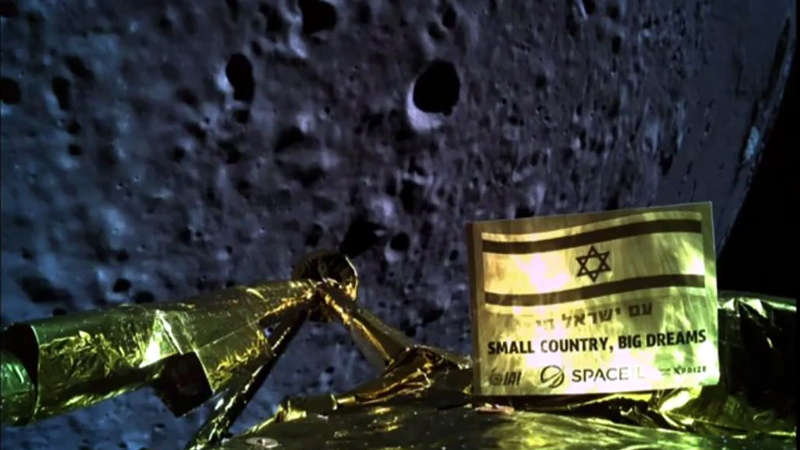
Moon landings have a way of making humanity look either brilliantly evolved or hilariously overconfident. There is rarely an in-between. In April 2019, Israel’s Beresheet moon lander came heartbreakingly close to pulling off one of the boldest lunar feats of the modern space age. It launched on a relatively modest budget, rode a SpaceX rocket into space, reached lunar orbit, and then, just before touchdown, crashed.
On paper, that sounds like a failure with extra steps. In reality, it was something far more interesting: proof that the moon is still hard, private space exploration is getting real, and a mission does not have to end with confetti to matter. Beresheet did not stick the landing, but it absolutely made a point.
That point is simple. Ambitious space missions do not always succeed on the first try. Sometimes they do something nearly as valuable instead: they expand the map of what smaller nations, nonprofit teams, and commercially backed ventures can realistically attempt. Beresheet crashed, yes. But it also reached the moon, inspired a generation of students, and helped normalize the idea that lunar exploration is no longer reserved for a tiny club of superpowers with bottomless budgets.
Beresheet Was a Small Spacecraft With Very Big Nerve
Beresheet, whose name means “in the beginning,” was Israel’s first mission to the moon. It was developed by the nonprofit SpaceIL in partnership with Israel Aerospace Industries and began as part of the now-defunct Google Lunar XPRIZE effort. Even after that competition ended without a winner, the team kept going. That stubbornness alone deserves a slow clap.
The spacecraft itself was compact, lightweight, and relatively inexpensive by space standards, with the mission often described as costing about $100 million. In the world of lunar exploration, that is practically couponing. Beresheet launched in February 2019 aboard a Falcon 9 rocket from Cape Canaveral and took an energy-saving route to the moon, looping around Earth repeatedly to raise its orbit before being captured by lunar gravity.
That journey mattered. Beresheet was not a giant government moonshot built to flex national muscle the way Cold War missions often were. It was a leaner, modern effort designed to prove that a smaller, more nimble mission could still reach deep space and attempt a lunar landing. Even before the final descent, it had already achieved something significant by reaching lunar orbit. That alone placed Israel in rare company.
And there was more at stake than hardware. SpaceIL repeatedly framed the mission as an educational effort meant to inspire children to study science, technology, engineering, and mathematics. In other words, Beresheet was not just trying to land on the moon. It was trying to land in classrooms, imaginations, and long-term national ambition.
So, What Went Wrong?
The short version is that the moon did what the moon has done to many spacecraft before: it punished even a small mistake with spectacular indifference.
During Beresheet’s landing attempt on April 11, 2019, the spacecraft suffered problems during its final descent toward Mare Serenitatis, also known as the Sea of Serenity. Reports afterward pointed to issues involving the main engine and onboard systems during the last stretch of landing. Communication was lost, the spacecraft could not slow down enough, and the mission ended in a hard impact instead of a soft touchdown.
That is the brutal math of lunar landing. Orbiting the moon is difficult. Landing on it is something else entirely. A spacecraft has to manage altitude, velocity, navigation, engine performance, and timing with almost no margin for error. There is no atmosphere to help slow the vehicle down with parachutes. There is no forgiving ocean splashdown. There is only dust, rock, momentum, and consequences.
That is one reason Beresheet’s crash should be viewed with perspective. This was not a case of a mission failing to leave the pad or wandering off into space with the celestial equivalent of a wrong turn. Beresheet made it all the way to the moon and got into the last phase of descent. The mission did not collapse because the goal was silly. It crashed because moon landings remain one of the toughest things engineering can ask a machine to do.
Why a Crash Can Still Be a Win
At first glance, calling a lunar crash “OK” sounds like the kind of thing someone says while trying not to cry into a headset. But the argument holds up surprisingly well.
1. Beresheet Proved That Smaller Players Can Reach the Moon
For decades, successful lunar exploration was largely the domain of major national governments. Beresheet helped crack that old mental model. It showed that a nonprofit-led mission with private backing and public partnership could design a spacecraft, launch it, navigate cislunar space, enter lunar orbit, and make a real landing attempt. That is not a symbolic achievement. That is operational progress.
2. It Turned “Private Moon Mission” From Buzzword Into Reality
Before Beresheet, the idea of a privately funded moon lander still sounded a bit like one of those conference-slide promises that disappear after the coffee break. Beresheet changed that. It forced the global space community to treat privately backed lunar missions as serious engineering efforts rather than speculative branding exercises.
3. It Generated Data, Experience, and Hard Lessons
Space history is full of missions that taught the future by failing in public. Beresheet joined that club. Engineers learned more about system vulnerabilities, descent operations, fault handling, and decision-making under pressure. Those lessons matter not just to SpaceIL, but to the broader ecosystem of lunar missions that followed. Sometimes the most expensive sentence in aerospace is, “We assumed it would be fine.” Beresheet made sure fewer teams would say that casually.
4. It Inspired People Anyway
There is a strange myth that only flawless victories inspire the public. History says otherwise. Near-misses, comeback stories, and audacious attempts often carry more emotional force than tidy success. Millions of people watched Beresheet’s journey. Students followed it. Teachers used it. Engineers admired it. And when the mission failed, the reaction was not mockery. It was heartbreak mixed with respect.
That emotional response matters because public imagination is fuel. A mission that makes young people think, “I want to build the next one,” has not failed in the biggest sense.
The Moon Has a Long Memory for Failure
One reason the Beresheet story deserves generosity is that lunar exploration has always been messy. Modern audiences sometimes remember only the greatest hits: Apollo 11, dramatic footprints, triumphant headlines, and iconic photos. What gets edited out is the mountain of trial, error, hardware loss, and expensive disappointment that made those moments possible.
The moon is not a beginner-friendly destination. Many robotic lunar missions across history failed before the world learned how to do it reliably. Even national space programs with enormous budgets and deep technical benches have suffered hard lessons trying to descend to the lunar surface. Beresheet’s crash did not reveal incompetence. It revealed continuity. It joined a very old tradition: learning lunar exploration the difficult way.
That is why the phrase “space is hard” became shorthand around the mission. It can sound glib, but it is true. Spacecraft do not operate in a forgiving environment. A tiny systems glitch, a sensor issue, or a mistimed correction can turn years of work into a crater. On Earth, you can patch a bug after lunch. On the moon, the bug may patch you.
What Beresheet Meant for Israel
Beresheet also mattered as a national milestone. It put Israel into the conversation of countries and organizations capable of sending hardware to lunar orbit. Even without a successful landing, that is a serious technological achievement. It signaled engineering capability, ambition, and the willingness to compete in a domain that still carries enormous prestige.
There was also a cultural dimension. Beresheet became a public event, not just a technical one. Its launch and landing attempt were followed far beyond aerospace circles. It gave people a story larger than the mechanics of propulsion and telemetry. It was about national aspiration, educational outreach, and the idea that a comparatively small country could still do something globally significant.
That matters because big projects help nations narrate themselves. Beresheet said that Israel intended to be part of the future of space exploration, not just a spectator with good Wi-Fi.
The Mission Had a Few Extra Plot Twists, Too
Beresheet’s story also picked up a weirdly modern side note: the spacecraft carried a small “lunar library” assembled by the Arch Mission Foundation. Later coverage about that payload sparked headlines involving tardigrades, those famously resilient microscopic creatures that seem designed by a science writer trying too hard. The episode stirred conversation about planetary protection, payload disclosure, and how commercial or nonprofit missions should handle biological or archival material sent beyond Earth.
Was that the central point of the mission? Not at all. But it did underline something important: once access to the moon broadens, the questions become bigger than engineering. Who gets to send what? Under what rules? With what transparency? Beresheet helped open those conversations too, even if in a somewhat bizarre “wait, there were tiny water bears involved?” sort of way.
Why “That’s OK” Is the Right Take
Saying “that’s OK” does not mean pretending the crash was ideal. The team wanted a soft landing. The public wanted a soft landing. The spacecraft would very likely have preferred a soft landing as well. But “OK” here means the mission still has value. It still moved the field forward. It still justified the attempt.
There is a difference between failure that closes doors and failure that opens them wider. Beresheet belongs in the second category. It told governments, startups, educators, funders, and engineers that the moon was once again a place people could seriously aim for. Not just dream about. Not just model in a glossy animation. Actually attempt.
And that shift matters. Space progress rarely arrives in one perfect arc. It comes through sequences of efforts, some elegant, some awkward, some historic, and some face-first into regolith. Beresheet’s impact site is real. So is its impact on the future.
What the Experience of Beresheet Still Feels Like
To really understand why Beresheet mattered, it helps to step away from the telemetry for a minute and think about the human experience around it. This was not just a spacecraft descending through lunar silence. It was a live public drama. Engineers stared at screens. Schoolchildren watched the countdown. Families refreshed news feeds. People who normally could not tell a lander from a toaster suddenly cared deeply about descent velocity.
That emotional whiplash is part of the story. One minute, the mood was pure possibility. Here was a small mission from a small country about to do something huge. The next minute, there was confusion, lost communication, and then the awful clarity that the spacecraft had crashed. It felt like watching a marathon runner stumble just before the finish line, except the finish line was the moon and the runner cost about $100 million.
And yet, that public heartbreak is exactly why the mission stuck in people’s minds. Perfect success can feel neat and sealed. Near-success feels alive. Beresheet gave the world a front-row seat to the vulnerability of exploration. You could see the courage in it. You could see the risk. You could see how much effort had been packed into one tiny machine making one lonely descent over an airless world.
For students, the experience was especially powerful. Beresheet did not present science as a dry pile of facts. It presented engineering as suspense, creativity, stubbornness, and teamwork under pressure. It showed that exploration is not just about being correct. It is about being brave enough to try something difficult in public, knowing the universe is not in the business of handing out participation trophies.
For engineers and space watchers, the mission felt like a preview of a new era. The old space model was built around giant national programs. Beresheet hinted at something more distributed and more chaotic: nonprofit groups, commercial launch providers, mixed funding, smaller spacecraft, and faster cycles of learning. That world is exciting partly because it is less polished. It allows more attempts, more entrants, and yes, more visible failure.
There is also something strangely hopeful about a mission that almost made it. Beresheet did not vanish into irrelevance after the crash. It stayed in conversation because people recognized the attempt as meaningful. The lander missed the ideal ending, but it still delivered something memorable: a reminder that progress in space is often built by missions that do not quite make it, but still pull the future closer.
That is why the Beresheet experience still lands emotionally years later. It was thrilling, painful, inspiring, nerdy, and very human. It captured the exact feeling of reaching beyond your weight class and nearly connecting. And in exploration, nearly connecting is not nothing. Sometimes it is the rehearsal that makes the next breakthrough possible.
So yes, Israel’s moon lander crashed. That part is true. But so is this: it made the moon feel reachable again. It made failure look useful instead of fatal. It made people care. And in the long arc of exploration, that is more than OK. That is how the story keeps going.