A small kitchen can feel like a practical joke played by an architect who has never owned a frying pan. One minute you are calmly making breakfast; the next, you are balancing a cutting board over the sink, negotiating with a drawer that refuses to close, and wondering why one lonely spatula somehow needs the same real estate as a sectional sofa.
But here is the good news: a small kitchen does not have to be a daily obstacle course. With smart kitchen organization, clever storage ideas, and a few design tricks that do not require winning the lottery or knocking down a wall, even the tiniest kitchen can become efficient, attractive, and surprisingly pleasant to cook in.
The secret is not buying more stuff. It is making every inch earn its keep. Walls, cabinet doors, corners, drawers, the space above cabinets, and even the awkward gap beside the fridge can all become useful. Think of your kitchen like a tiny employee: it may be small, but with the right job description, it can be extremely productive.
Why Small Kitchens Feel So Hard to Use
Most small kitchens struggle for three reasons: too little counter space, poor storage systems, and visual clutter. When everything lives on the counter, the kitchen feels smaller. When deep cabinets become caves of mystery, you buy another jar of cumin because the first three are hiding behind the pasta. When tools are stored far from where they are used, cooking becomes a scavenger hunt with onions.
The goal is to create a kitchen that supports real life. That means faster meal prep, fewer duplicate purchases, easier cleaning, and storage that does not require a yoga certification. These 21 small kitchen hacks are practical, flexible, and renter-friendly where possible. Let’s make that kitchen work harder than your coffee maker on a Monday morning.
21 Small Kitchen Hacks That Actually Work
1. Declutter Before You Organize
Before you buy a single bin, pull everything out and be honest. Do you really need four vegetable peelers? Is that chipped mug sentimental, or is it just avoiding retirement? Small kitchen storage works best when you are not organizing things you do not use.
Start with expired food, duplicate utensils, cracked containers, mystery lids, and specialty gadgets that have not seen daylight since the last presidential administration. Less clutter instantly gives your cabinets breathing room and makes every later hack more effective.
2. Create Kitchen Zones
A small kitchen works better when it is organized by task. Keep coffee supplies near the coffee maker, knives and cutting boards near the prep area, pots near the stove, and dish soap near the sink. This sounds obvious until you realize your measuring cups live three cabinets away from the flour like they had a disagreement.
Kitchen zones reduce wasted steps. In a tiny kitchen, every unnecessary step feels like a commute. Even a simple breakfast station with mugs, coffee, filters, sugar, and spoons in one place can make mornings smoother.
3. Use Vertical Space Like It Pays Rent
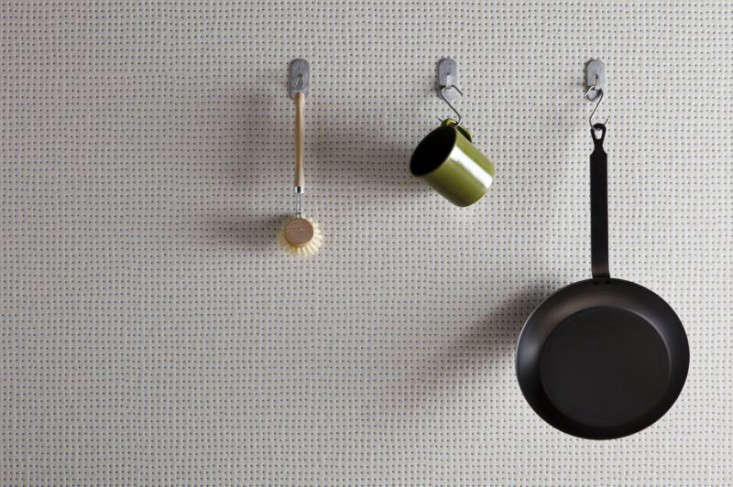
Walls are often the most underused storage area in a small kitchen. Add narrow shelves, rails, hooks, or a pegboard to hold mugs, utensils, pans, cutting boards, or spices. Vertical storage keeps essentials accessible without swallowing counter space.
If you are worried about visual clutter, keep wall storage intentional. Hang matching tools, choose simple shelves, and avoid turning the wall into a garage sale with garlic powder.
4. Add Floating Shelves
Floating shelves can make a small kitchen feel lighter than bulky cabinets, especially when used for everyday items. Store plates, bowls, glasses, cookbooks, or pretty jars of pantry staples. The trick is to style shelves for function first.
Keep the items you use most often within easy reach. Put decorative pieces higher up, but do not let the shelf become a museum of things you dust but never touch. In a small kitchen, beauty and usefulness should be roommates.
5. Install Hooks Under Shelves or Cabinets
Under-shelf hooks are tiny heroes. Use them for mugs, measuring spoons, pot holders, lightweight utensils, or small baskets. They free cabinet space and keep frequently used items close.
This hack is especially helpful near a coffee station or sink. A few hanging mugs can turn an awkward blank space into a cozy, functional corner. Bonus: your favorite mug finally gets the celebrity treatment it deserves.
6. Try a Magnetic Knife Strip
A knife block can eat up precious counter space. A magnetic knife strip moves knives to the wall, keeps them visible, and frees a drawer or countertop corner. It also makes cooking feel slightly more professional, even if dinner is boxed mac and cheese with ambition.
Install the strip away from children’s reach and make sure it is mounted securely. You can also use magnetic strips for metal measuring spoons or small spice tins.
7. Store Baking Sheets and Cutting Boards Vertically
Stacked baking sheets are annoying. You need the bottom one, so naturally everything on top collapses like a kitchen-themed avalanche. Vertical dividers solve this problem.
Use cabinet dividers, tension rods, or file organizers to store baking sheets, cooling racks, muffin tins, lids, and cutting boards upright. You will be able to slide out exactly what you need without waking every pan in the cabinet.
8. Add Pull-Out Drawers Inside Cabinets
Deep lower cabinets often become black holes. Pull-out drawers or sliding shelves let you access the back without crawling halfway inside like you are searching for buried treasure.
Use pull-outs for pots, pans, pantry items, cleaning supplies, or small appliances. This upgrade can be inexpensive compared with a remodel, but it makes cabinets feel custom and far more usable.
9. Use Lazy Susans for Corners and Condiments
Lazy Susans are perfect for awkward corners, spices, oils, vinegars, sauces, and fridge condiments. A quick spin lets you find what you need instead of knocking over five bottles to reach the sesame oil.
They work in cabinets, pantries, refrigerators, and even on countertops. Choose raised-edge versions for bottles and non-slip versions for heavier items.
10. Decant Pantry Staples Into Clear Containers
Clear, stackable containers make dry goods easier to see and easier to store. Flour, sugar, rice, pasta, cereal, coffee, oats, and snacks often take up less space when removed from bulky original packaging.
Label everything, especially if you decant similar-looking ingredients. Flour and powdered sugar look friendly until you mix them up. Your pancakes will have questions.
11. Use the Inside of Cabinet Doors
Cabinet doors are secret storage panels. Add slim racks, adhesive hooks, cork tiles, or small organizers to hold spices, measuring cups, pot lids, cleaning gloves, foil, parchment paper, or grocery lists.
Before installing anything, check that shelves still close properly. A door organizer is only helpful if it does not turn the cabinet into a wrestling match.
12. Bring in a Rolling Cart
A rolling cart is a small kitchen’s stunt double. It can act as a mobile pantry, coffee bar, baking station, extra counter, or produce storage. When you need space, roll it out. When guests come over, roll it away and pretend you are naturally this organized.
Choose a cart with locking wheels, shelves, and a size that fits your traffic flow. Narrow carts can slide beside the fridge or between cabinets.
13. Choose Nesting and Stackable Tools
Nesting bowls, stackable measuring cups, collapsible colanders, and compact food containers can save serious space. Small kitchens reward items that fit together instead of spreading out like they own the place.
When replacing old tools, look for pieces that serve multiple functions. A mixing bowl with a lid can become prep bowl, serving bowl, and leftover container. That is the kind of teamwork we like to see.
14. Edit Your Countertops Ruthlessly
Counter space is the beachfront property of a small kitchen. Do not give it away to appliances you use once a month. Keep only daily essentials out, such as a coffee maker, toaster, or knife strip if wall-mounted storage is not possible.
Store occasional appliances in upper cabinets, a closet, or a rolling cart. The clearer your counter, the larger and calmer your kitchen feels.
15. Use Over-the-Sink or In-Sink Accessories
If you have almost no prep space, the sink can help. An over-the-sink cutting board, roll-up drying rack, or in-sink dish drainer adds temporary surface area without permanent changes.
This is especially useful in apartments and galley kitchens. Just remember to clean and dry these accessories regularly so your clever hack does not become a sponge convention.
16. Add a Slim Pantry Wherever It Fits
No pantry? Make one. A slim cabinet, narrow rolling shelf, wall-mounted rack, or bookcase can become pantry storage. Look for unused spaces beside the refrigerator, near the dining area, or along a blank wall.
Keep pantry categories simple: breakfast, snacks, baking, dinner staples, cans, and sauces. If everything has a category, grocery unloading becomes less chaotic.
17. Hang Pots and Pans
Pots and pans are bulky, noisy, and weirdly talented at jamming drawers. If cabinet space is tight, hang them from a ceiling rack, wall rail, or sturdy hooks.
This hack works best when your cookware is attractive enough to display and light enough to hang safely. Keep the pieces you use most often within easy reach and store special-occasion cookware elsewhere.
18. Use Drawer Dividers for Utensils and Tools
Drawers become chaos when everything slides around freely. Adjustable dividers create sections for utensils, knives, measuring tools, wraps, towels, and gadgets.
Do not organize drawers by fantasy. Organize them by behavior. If you always grab the spatula near the stove, store it near the stove. If you make coffee every morning, spoons should not be on a distant expedition.
19. Make Lighting Work Harder
A small kitchen can feel cramped simply because it is dim. Under-cabinet lighting, plug-in light bars, or battery-powered puck lights brighten prep zones and make the space feel cleaner and larger.
Good lighting also improves safety. Chopping onions under weak lighting is not charming; it is a suspense film.
20. Use Color and Visual Continuity
Light colors, simple backsplashes, and consistent materials can make a small kitchen feel more open. That does not mean everything must be white. Soft neutrals, muted greens, warm wood, or a single bold accent can work beautifully.
The key is avoiding too many visual breaks. Coordinated containers, fewer labels, and a limited color palette help the eye move smoothly through the space.
21. Build Habits That Maintain the System
The best small kitchen hack is not a product. It is a habit. Reset the kitchen every night, return items to their zones, wipe counters, and do a quick weekly check for expired food or wandering gadgets.
A small kitchen gets messy faster than a large one because there is less buffer space. Five minutes of daily maintenance can prevent the dreaded Sunday cabinet explosion.
Small Kitchen Layout Tips That Make Everything Easier
Storage matters, but layout matters too. If your kitchen is narrow, keep one side visually lighter with open shelves or fewer bulky items. If your kitchen is L-shaped, make the corner work with a lazy Susan, pull-out shelf, or appliance garage. If your kitchen opens into a living room, use a cart, small island, or dining bench with storage to create a soft boundary.
Think about movement. Can two people pass each other without performing a dramatic tango? Can you unload the dishwasher without walking across the room? Can you prep food near the trash or compost bin? These questions reveal whether your kitchen is organized for real life or just for a photo.
Budget-Friendly Small Kitchen Upgrades
You do not need a renovation to make a small kitchen work. Start with low-cost upgrades: shelf risers, drawer dividers, command hooks, tension rods, clear bins, labels, magnetic strips, and under-shelf baskets. These simple tools can unlock storage you already have.
If you have a little more budget, consider pull-out cabinet shelves, better lighting, a rolling cart, a compact island, or custom-size pantry storage. The best upgrade is the one that solves your biggest daily frustration. If you never have prep space, buy a sink board or cart. If you cannot find food, fix the pantry. If your pans are staging a rebellion, add dividers or hooks.
Common Small Kitchen Mistakes to Avoid
The first mistake is buying organizers before decluttering. Organizers should solve problems, not hide them in matching plastic. The second mistake is keeping every appliance on the counter. Unless you use it daily, it should not live in your most valuable workspace.
The third mistake is ignoring height. In small kitchens, vertical space is not optional; it is survival. The fourth mistake is storing items where they fit instead of where they function. A waffle maker above the fridge is fine if you use it twice a year. Your everyday skillet should not require a ladder, a prayer, and upper-body strength.
Experience Notes: What Actually Happens When You Start Hacking a Small Kitchen
Here is the honest truth: improving a small kitchen is less like a makeover show and more like training a stubborn little horse. You try one system, it works for three days, then the measuring spoons migrate back into the junk drawer. That does not mean you failed. It means your kitchen is giving feedback.
One of the most useful experiences people have with small kitchen organization is discovering that the first version does not have to be perfect. Maybe you move spices to a wall rack and realize the rack is too far from the stove. Maybe you put snacks in pretty bins and then learn that nobody in the house will open a lid for pretzels. Maybe you buy a beautiful countertop canister set and realize it has stolen the exact space where you actually chop vegetables. The kitchen will tell you what works if you pay attention.
A practical way to begin is with a seven-day observation period. Do not reorganize everything immediately. Instead, cook as usual and notice the friction. Where do you pause? What do you reach for most? Which cabinet makes you sigh? What lands on the counter because it has no home? These little irritations are clues. Solve those first, and the kitchen improves quickly.
For example, if breakfast is always chaotic, create a breakfast zone. Put coffee, tea, mugs, cereal, oatmeal, sweetener, and breakfast bowls together. If dinner prep is frustrating, create a prep zone with knives, cutting boards, mixing bowls, salt, oil, and trash access nearby. If cleaning is the problem, simplify the sink area with a compact caddy, sponge holder, and under-sink pull-out bin.
Another lesson: small kitchens punish duplicates. Two colanders, three ladles, five half-used bags of rice, and a mysterious number of plastic lids can overwhelm a tiny space. Keep the best version of each item and let the extras go. This is not minimalism for the sake of looking fancy. It is practical self-defense against drawer chaos.
It also helps to treat your kitchen like a living system, not a finished project. Seasons change. Cooking habits change. Maybe you start meal prepping, baking sourdough, making smoothies, or packing school lunches. Your storage should adapt. A bin that once held baking chocolate might become a lunchbox station. A cart that served as a coffee bar might become a baby-food command center. Flexibility is the real luxury.
Finally, do not underestimate the emotional effect of a kitchen that works. When counters are clear, tools are easy to grab, and food is visible, cooking feels less like a chore. You waste less, clean faster, and stop buying duplicate cumin. A small kitchen may never feel like a celebrity chef’s studio, but it can feel calm, capable, and completely yours.
Conclusion
A small kitchen does not need to be bigger to be better. It needs smarter storage, clearer zones, better lighting, fewer unnecessary items, and habits that keep the system alive. The best hacks are the ones that match how you actually cook, clean, shop, and live.
Start with one annoying problem. Clear the counter. Add a shelf. Divide a drawer. Hang the pan. Create a coffee zone. Small changes stack up quickly, and before long, your tiny kitchen stops feeling like a punishment and starts feeling like a highly efficient little command center with snacks.
Note: This article was written for web publication in standard American English and synthesizes practical small-kitchen organization principles from reputable U.S. home, design, lifestyle, and improvement resources. It is fully rewritten in an original, natural style for SEO and reader experience.