Life is too short for flavorless meals, forgettable desserts, and wine selected solely because the label has a charming castle on it. Somewhere in the world, dough is blistering inside a wood-fired oven, lamb is slowly turning over glowing coals, and a pastry chef is spreading apricot jam across a chocolate cake with the concentration of a surgeon.
This culinary bucket list is not simply a collection of expensive foods. It is a tour through history, geography, craftsmanship, and the universal human desire to eat something so delicious that conversation temporarily becomes impossible. Some of these delights are luxurious. Others are wonderfully ordinary when eaten in their natural setting. All ten offer more than flavor: they provide a reason to travel, gather around a table, and loosen your belt by one discreet notch.
What Makes a Food Worth Adding to Your Bucket List?
A true bucket-list food should deliver a complete experience. Taste matters, obviously, but so do aroma, texture, setting, tradition, and the people who prepare it. A great pizza eaten beside a humming refrigerator at midnight can be satisfying. The same style of pizza eaten in Naples while a pizzaiolo works a roaring oven becomes a story you may tell for decades.
The following foods and drinks were selected because they connect strongly to a particular place or culinary tradition. You may find versions elsewhere, but sampling them near their cultural home reveals why they became famous in the first place.
1. Macallan 25-Year-Old Scotch in Speyside, Scotland
Why It Is Special
A well-aged single malt is less like taking a shot and more like opening a tiny liquid time capsule. Macallan’s 25-Year-Old Sherry Oak expression matures in sherry-seasoned oak casks, developing layers commonly associated with dried fruit, citrus peel, chocolate, burnt sugar, warm spice, and seasoned wood.
The experience begins before the whisky reaches your mouth. Pour a modest amount into a tulip-shaped glass, let it rest, and explore the aroma gradually. Adding a few drops of water can reveal additional flavors. Throwing it back in one gulp, meanwhile, is an efficient way to make a whisky enthusiast stare at you as though you just microwaved a family heirloom.
How to Enjoy It
Drink it slowly in Speyside, ideally after visiting a distillery or walking through the region’s green valleys and riverside landscapes. The bottle can be extremely expensive, but many serious whisky bars sell individual pours. Sharing one measure may be a much more financially responsible route to the same memorable experience.
2. Spotted Dick with Custard in London, England
Look Beyond the Name
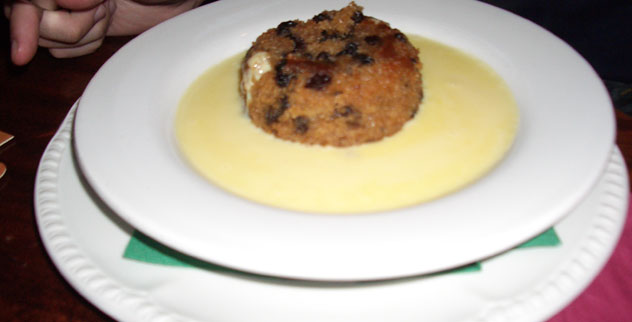
Spotted dick may inspire a few childish jokes, but the dessert itself is serious British comfort food. It is a dense steamed pudding traditionally made with suet and dried currants or raisins. The fruit creates the “spots,” while the precise origin of the second half of the name remains a source of linguistic debate and endless restaurant-table giggling.
Properly prepared spotted dick is moist, rich, and gently sweet rather than sugary. Lemon zest may brighten the pudding, while hot vanilla custard provides the creamy finish it desperately deserves. Serving it without custard would be like sending someone into a London rainstorm without an umbrella: technically possible, but unnecessarily cruel.
Where the Experience Comes Alive
Try it in a traditional pub or historic dining room during colder weather. The contrast between chilly streets and a warm steamed pudding is part of the appeal. It is not delicate, fashionable, or likely to arrive decorated with edible flowers. It is a sturdy dessert built to restore morale.
3. Churrasco at a Brazilian Churrascaria
A Celebration Built Around Fire
Churrasco broadly refers to grilled meat traditions found across South America, with particularly famous expressions in Brazil and Argentina. In a Brazilian churrascaria, servers may circulate through the dining room carrying long skewers loaded with beef, pork, lamb, sausage, or chicken. Each portion is sliced directly onto your plate.
The meat is often seasoned simply, allowing salt, smoke, fat, and careful cooking to do most of the work. Popular cuts can include picanha, a prized top sirloin cap with a generous layer of fat. Side dishes such as rice, beans, farofa, salads, fried plantains, or pão de queijo balance the parade of protein.
How to Survive the Feast Gracefully
Do not fill your plate during the opening minutes. Churrascaria dining rewards patience. Taste small portions, identify your favorite cuts, and save room for the dishes you genuinely love. Otherwise, you may reach your dream steak while already experiencing the physical limitations of a person wearing an inflatable life jacket.
4. Neapolitan Pizza in Naples, Italy
Simple Ingredients, Serious Technique
Neapolitan pizza proves that simplicity is not the same as easiness. A classic pizza may contain only dough, tomatoes, mozzarella, basil, olive oil, and salt, yet every element must work together. The dough is stretched by hand, topped sparingly, and baked rapidly in an extremely hot oven.
The result should have a soft, elastic center and a raised rim marked by dark blisters. It is not supposed to resemble a rigid cracker capable of supporting office supplies. A Margherita brings together tomato, mozzarella, basil, and olive oil, while a marinara traditionally relies on tomato, garlic, oregano, and oil without cheese.
Why Naples Matters
In Naples, pizza is both everyday food and cultural craft. Watching an experienced pizzaiolo shape dough and manage a wood-burning oven adds meaning to the meal. Order one pizza per person, eat it while hot, and do not panic if the center requires a knife and fork. Folding, slicing, and strategic maneuvering are all acceptable when molten cheese is involved.
5. Fire-Roasted Lamb in Greece
A Feast That Requires Time
Greek lamb traditions vary by region and occasion. Whole animals may be roasted over natural charcoal during major celebrations, while island cooks have historically prepared lamb in ovens or clay vessels with herbs, olive oil, citrus, and potatoes. In either form, the pleasure comes from slow cooking and communal anticipation.
Garlic, oregano, rosemary, lemon, olive oil, salt, and pepper complement the meat without disguising it. When roasted carefully, the exterior becomes deeply browned while the interior remains succulent. Crisp pieces from the surface often disappear first, usually into the hands of people who have been “checking the lamb” every seven minutes.
Make It a Complete Greek Meal
Enjoy the lamb with roasted potatoes, village salad, olives, feta, warm bread, stuffed grape leaves, and a bright sauce such as ladolemono or tzatziki. A local wine can complete the meal. More important, eat it with a group. Fire-roasted lamb is not designed for lonely desk lunches conducted beside an unanswered email inbox.
6. Sachertorte in Vienna, Austria
Chocolate Cake with a Famous History
Sachertorte is a Viennese chocolate cake associated with Franz Sacher, who created an early version in 1832. The classic dessert combines dense chocolate cake, apricot preserves, and a smooth chocolate coating. It is traditionally served with unsweetened whipped cream, which balances the cake’s richness and relatively firm texture.
Vienna’s Hotel Sacher and Demel bakery became famous for their competing interpretations, even engaging in a lengthy legal dispute over which establishment could claim the “original” version. The deliciously sensible response is to visit both. This is called research, and it may require two afternoons.
How to Order It Properly
Pair a slice with Viennese coffee and resist the temptation to rush. Vienna’s coffeehouse culture encourages lingering, reading, talking, and observing the room. Sachertorte is best understood not as a giant wedge of moist American layer cake, but as an elegant composition of chocolate, fruit, and cream.
7. Trockenbeerenauslese from Germany or Austria
A Dessert Wine Created by Noble Rot
Trockenbeerenauslese, commonly shortened to TBA, is one of the most concentrated styles of sweet wine produced in Germany and Austria. Despite containing the German word for “dry,” it is intensely sweet. The term refers to selected berries that have shriveled on the vine, often under the influence of beneficial Botrytis cinerea, known as noble rot.
The fungus pierces grape skins, allowing water to evaporate and concentrating sugar, acidity, and flavor. Suitable conditions are rare, individual berries may need to be selected by hand, and yields are tiny. These challenges explain why the wines can be scarce and expensive.
What It Tastes Like
Depending on grape variety, vintage, and origin, TBA may suggest honey, apricot, marmalade, pineapple, citrus peel, spice, or dried fruit. The best examples retain enough acidity to prevent the sweetness from becoming tiring. Serve a small portion with blue cheese, foie gras, fruit-based dessert, or nothing at all. One glass can deliver more drama than an entire season of reality television.
8. Fresh Lobster and Crab in The Bahamas
Seafood with a Caribbean View
Fresh shellfish becomes even more memorable when eaten near the water from which it came. In The Bahamas, menus may feature spiny lobster, crab, conch, snapper, and other regional seafood prepared through grilling, blackening, frying, or stewing.
Harbour Island is especially famous for its long pink-sand beach. The sand’s color is associated with tiny marine organisms called foraminifera, whose reddish shells mix with pale sand and coral fragments. Add turquoise water, a warm breeze, and a plate of grilled lobster, and suddenly every indoor lunch you have ever eaten feels like an administrative error.
Order According to the Season
Ask what was caught locally and which preparation the kitchen recommends. Simple grilling may be the best choice when the seafood is exceptionally fresh. Accompany it with peas and rice, plantains, vegetables, citrus, or a cold tropical drink. Follow local fishing regulations and seasonal restrictions, which help protect marine resources for future diners.
9. Romanée-Conti from Burgundy, France
One of the World’s Rarest Wines
Romanée-Conti is the flagship wine of Domaine de la Romanée-Conti, commonly called DRC. It comes from a tiny Grand Cru vineyard in Burgundy planted with Pinot Noir. Annual production is generally only a few thousand bottles, while global demand is enormous.
Its reputation rests on more than scarcity. Collectors admire the wine for its perfume, complexity, longevity, finesse, and ability to express the character of its vineyard. Mature bottles can command astonishing auction prices, especially when the vintage and storage history are exceptional.
A Realistic Way to Approach It
Most people will never purchase a bottle, and that is perfectly fine. A reputable restaurant, organized tasting, or group purchase may occasionally provide access to a small pour. Less expensive Burgundy from respected producers can also introduce the region’s style without requiring you to sell your car, your furniture, and possibly a relative’s car.
Should you ever taste genuine Romanée-Conti, slow down. Notice the aroma before drinking, revisit the glass as it evolves, and share the experience with someone who cares. A wine this rare deserves attention rather than a hurried verdict delivered between phone notifications.
10. Ragù alla Bolognese with Tagliatelle in Bologna, Italy
Forget What You Know About “Spaghetti Bolognese”
Outside Italy, Bolognese sauce is commonly imagined as a tomato-heavy ground-beef sauce poured over spaghetti. Bologna’s traditional ragù is different. It is a slow-cooked meat sauce commonly built from finely chopped onion, carrot, celery, beef, pork or pancetta, wine, milk, and a restrained quantity of tomato.
The long simmer produces a rich, velvety texture in which meat remains the central flavor. In Bologna, ragù is traditionally paired with tagliatelle, whose broad surface holds the substantial sauce more effectively than thin spaghetti. It may also appear in lasagna verde.
Why It Deserves the Final Spot
Ragù alla Bolognese demonstrates what patience can do to ordinary ingredients. There is no rare fungus, precious vineyard, or bottle locked behind museum-grade security. The magic comes from careful chopping, gentle browning, balanced seasoning, and several hours of cooking.
Eat it in a family-run trattoria in Bologna, ideally with grated Parmigiano-Reggiano and a regional wine. The dish is comforting without being crude and complex without showing off. It may be the most achievable delight on this listand the one you will most urgently attempt to reproduce at home.
How to Turn These Delights Into Experiences Worth Remembering
Choose Authenticity Over Status
A bucket-list meal does not need to be the most expensive version available. A simple pizza made by a skilled neighborhood baker may offer a deeper connection to Naples than an elaborate reinterpretation served under a chandelier. Likewise, a village lamb feast can be more emotionally memorable than a formal tasting menu. Seek cooks who understand the tradition rather than establishments that merely understand luxury pricing.
Learn Before You Arrive
Spend a little time understanding what you are about to eat. Learn how Neapolitan pizza differs from New York pizza, why noble rot is valuable in a vineyard, or why tagliatelle suits ragù better than spaghetti. Background knowledge sharpens your attention. It also helps you ask useful questions without interrogating the server like a detective in a pasta-related crime drama.
Engage All Five Senses
Memorable dining involves more than taste. Listen to meat sizzling over charcoal. Notice the smoky aroma of an old whisky, the glossy surface of chocolate glaze, or the sound of a pizza crust tearing. Observe the dining room and the pace of local service. These sensory details often become the strongest parts of the memory.
Share the Experience
Some foods become better when discussed. Split a rare whisky pour with a friend, compare two versions of Sachertorte, or invite several people to a Brazilian steakhouse so everyone can try different cuts. Sharing also makes costly items more accessible. Romanée-Conti may remain beyond reach, but the principle applies to tasting menus, special bottles, and celebratory feasts.
Keep Notes Without Turning Dinner Into Homework
Record the restaurant, location, dish, and one or two impressions after the meal. A quick photograph can help, but avoid spending ten minutes arranging forks while the food cools. Your future self will appreciate a short description such as “smoky, citrusy, and surprisingly delicate” more than 47 nearly identical pictures of a lamb chop.
Respect Local Customs
Follow the rhythm of the place you are visiting. In a Viennese coffeehouse, linger. At a churrascaria, pace yourself. In a whisky bar, sip instead of shooting. When eating seafood, ask about seasonal availability. Respectful curiosity usually produces better service, better conversations, and a more genuine understanding of the food.
Accept That Not Every Famous Food Will Become Your Favorite
A culinary bucket list is about discovery, not compulsory admiration. You may find spotted dick too heavy, TBA too sweet, or an aged wine less exciting than expected. That does not make the experience a failure. Taste is personal, and learning what you do not love is part of developing a palate.
Recreate the Memory at Home
After traveling, cook an approachable version of the dish. Make ragù on a quiet weekend, prepare Greek-style lamb for friends, or practice pizza dough until your smoke alarm develops trust issues. Home cooking will not duplicate the original setting, but it can bring back the aromas and emotions attached to the trip.
The greatest delight is rarely just the item placed on the table. It is the combination of anticipation, place, company, tradition, and surprise. A perfect meal reminds us that pleasure does not have to be complicated, although it occasionally requires a reservation six months in advance.
Final Thoughts
These ten delights span humble puddings, slow-cooked sauces, ceremonial roasts, legendary wines, tropical seafood, and one exceptionally disciplined pizza. Together, they demonstrate that great food can emerge from scarcity, patience, geography, celebration, or centuries of practice.
You do not need to complete the list in one grand trip. Begin with what is accessible. Find a respected Neapolitan pizzeria, order a glass of dessert wine, or spend an afternoon preparing a proper ragù. Culinary exploration is not a race toward ten check marks. It is an excuse to pay closer attention to what we eat and the people who keep these traditions alive.
Life is short, but dinner happens every day. That gives us plenty of opportunities to make it count.