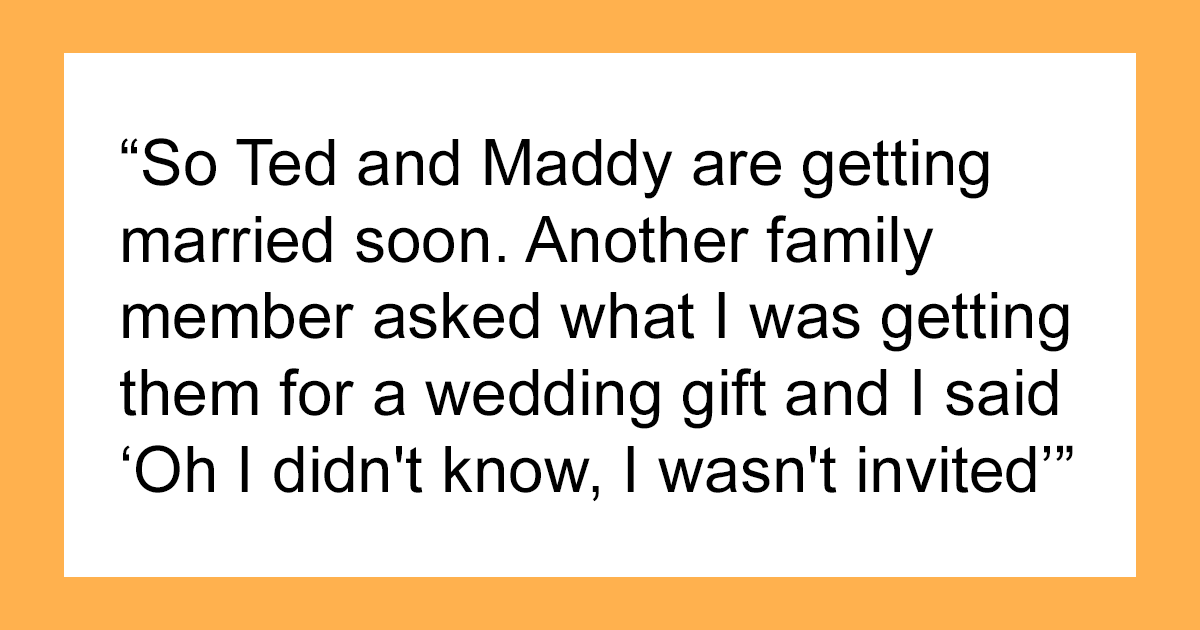
Few modern social questions can turn a peaceful family group chat into a courtroom drama faster than wedding gift etiquette. One minute, everyone is posting heart emojis under engagement photos. The next, someone is whispering, “So… are we supposed to send a gift even though we were not invited?” Suddenly, a toaster has become a moral philosophy problem.
The question behind “Would I Be The [Jerk] For Not Sending A Gift For A Wedding I Wasn’t Invited To?” is simple on the surface. If you were not invited to a wedding, are you still expected to send a wedding gift? The short, realistic answer is: usually, no. A wedding gift is a generous gesture, not an invoice. If there is no invitation, there is generally no obligation.
But because weddings involve family history, hurt feelings, old expectations, and the occasional aunt who treats etiquette like a competitive sport, the full answer deserves a closer look. Let’s unpack the social rules, the emotional baggage, and the cleanest way to handle the situation without becoming the villain in someone’s next holiday dinner story.
Why This Wedding Gift Question Feels So Awkward
Weddings are not just parties. They are emotional public statements about who belongs in the couple’s inner circle. That is why not being invited can sting, even if you were not especially close. A missing invitation can feel like a quiet demotion: “Congratulations, you have been moved from ‘important person’ to ‘Facebook acquaintance with seasonal access.’”
Then comes the gift question. If someone expects a present from a person they did not invite, it can feel transactional. It is like hosting a dinner party, not saving someone a chair, and then asking them to Venmo you for dessert. Most people instinctively understand that social generosity works best when it is mutual, not demanded from a distance.
At the same time, some families still follow older customs where wedding announcements, especially from relatives, might inspire a small gift or card. That does not mean everyone must obey those customs. It simply explains why people disagree. For one person, sending a gift says, “I’m happy for you.” For another, sending a gift says, “Apparently I am good enough for the registry but not the reception.” Both reactions make sense.
The Basic Rule: No Invitation, No Required Gift
In modern wedding gift etiquette, the most reasonable rule is this: if you were not invited to the wedding, you are not required to send a gift. A present should come from affection, not pressure. If you genuinely want to celebrate the couple, you may send something small. If you feel hurt, confused, excluded, or simply not close enough, it is perfectly acceptable to send nothing.
This is especially true if the couple had a full wedding with many guests and you were singled out as one of the few people not included. In that case, expecting a gift from you would be poor form. A wedding invitation is not a bill, but it is a sign of social inclusion. Without that inclusion, the gift expectation becomes very thin.
Think of it this way: a wedding gift is traditionally connected to celebrating the couple’s marriage. If you are invited to witness or participate in that celebration, a gift is a thoughtful response. If you are not included, your responsibility drops dramatically. You can still be gracious, but you do not need to perform generosity to prove you are not bitter.
Are You Being Petty If You Refuse to Send One?
Not necessarily. The word “petty” gets thrown around whenever someone sets a boundary that another person finds inconvenient. But declining to spend money on a wedding you were not invited to is not automatically petty. It may simply be practical.
Petty would be announcing, “I hope their cake collapses,” while dramatically blocking the couple on every platform including LinkedIn. Not sending a gift is much quieter. It is a private decision about your money and emotional energy. You do not need to punish the couple, but you also do not need to reward a situation that made you feel dismissed.
The healthiest approach is to separate revenge from boundaries. If your internal message is, “They hurt me, so I want to hurt them back,” pause. If your message is, “I was not included, so I am not obligated to participate financially,” that is a fair boundary. There is a big difference between bitterness and self-respect.
When Sending a Small Gift Might Still Make Sense
There are exceptions where sending a small gift or card may be kind, even when you were not invited. For example, if the couple had a courthouse wedding with only parents present, your lack of invitation may not be personal. If they eloped, had a private ceremony, or faced a strict budget or venue limit, a small congratulatory gesture can be generous without feeling like surrender.
You might also send something if the couple is extremely close to you, such as a sibling, best friend, or beloved cousin, and the guest list issue has a clear explanation. A thoughtful card, a modest registry item, or a contribution within your budget can say, “I love you, even though the logistics were weird.”
The key phrase is “within your budget.” A gift should never cause financial stress. Wedding culture can sometimes act like everyone has a secret envelope of money labeled “other people’s centerpieces.” Most people do not. If rent, groceries, student loans, or life in general are already doing cartwheels through your bank account, a card is enough.
When You Should Absolutely Not Feel Obligated
You should not feel obligated to send a wedding gift if the couple made it clear you were not included but still circulated registry information. That is not etiquette; that is a shopping link wearing a veil.
You also do not owe a gift if you were invited to a shower, engagement party, or other gift-friendly event but not the wedding itself. Many etiquette experts consider it poor manners to invite someone to a pre-wedding event that traditionally involves gifts while excluding them from the actual wedding. It can make guests feel like they were invited to fund the celebration, not share in it.
And if the relationship is distant, strained, or mostly maintained through family obligation, skipping the gift is even more reasonable. You can wish the couple well without sending a blender. Contrary to what some relatives may imply, household appliances are not proof of moral character.
What If Everyone Else in the Family Is Sending a Gift?
Family pressure is often the real issue. Maybe your parents say, “Just send something so nobody talks.” Maybe a sibling says, “It’s not worth the drama.” Maybe a cousin has already started a group gift and added your name before you even had coffee.
Here is the truth: you are allowed to opt out. A group gift should be voluntary. If someone wants to send a gift for the sake of peace, they can. You do not have to contribute money to a gesture you do not support.
A calm response works best: “I’m happy for them, but since I wasn’t invited, I’m not planning to send a wedding gift. I may send a card.” This keeps the tone polite while making your boundary clear. Do not over-explain. The more you defend your decision, the more people treat it like a debate tournament.
Should You Send a Card Instead?
A card is often the perfect middle ground. It costs little, keeps you gracious, and avoids the appearance of resentment. A simple note can say, “Congratulations on your marriage. Wishing you both a lifetime of happiness.” That is elegant, kind, and safely free of toaster politics.
A card is especially useful if you want to preserve family harmony but do not want to send a gift. It acknowledges the milestone without turning your wallet into an apology for not being invited. If anyone complains that a card is not enough, that tells you more about their expectations than your manners.
Simple Wording for a Wedding Card
Try something warm and brief:
“Congratulations on your wedding. Wishing you both joy, patience, laughter, and many beautiful years together.”
That message does not mention the missing invitation. It does not accuse, hint, or throw a tiny emotional grenade into the mailbox. It simply offers good wishes and lets everyone move on.
How to Decide What to Do
If you are unsure, ask yourself four questions. First, how close am I to the couple? Second, do I believe the lack of invitation was personal or logistical? Third, can I afford a gift comfortably? Fourth, will sending a gift make me feel generous or resentful?
If the answers point toward warmth, send a modest gift. If the answers point toward hurt, pressure, or financial strain, skip it. Etiquette should help people treat one another with care; it should not be used as a guilt machine.
Also remember that “not sending a gift” does not have to become a public announcement. Do not post about it. Do not ask mutual friends whether they sent something. Do not investigate the seating chart like a detective with emotional damages. Make your decision quietly and move forward.
The Bigger Lesson: Gifts Are Not Admission Fees
The healthiest wedding culture understands that gifts are expressions of love, not tickets, taxes, or relationship repair payments. Couples are allowed to have small weddings. Guests and non-guests are allowed to have budgets. Families are allowed to feel disappointed. But nobody should turn a marriage celebration into a transaction where excluded people are still expected to pay tribute.
If a couple cannot invite everyone, that is okay. Venue sizes, budgets, family complexity, and personal preferences are real. But the graceful side of not inviting someone is not expecting them to behave as though they were included. You cannot have the savings of a smaller guest list and the gifts of a larger one without creating some understandable side-eye.
So, would you be the jerk for not sending a gift for a wedding you were not invited to? In most cases, no. You would be a person making a reasonable decision. If you want to be extra gracious, send a card. If you want to send nothing, keep it quiet and polite. Either way, your character is not measured in cookware.
Real-Life Experiences and Practical Examples
One common experience involves the “almost invited” relative. Imagine a cousin you grew up with but rarely see now. You hear through family that the wedding is happening, and everyone assumes you will contribute to a group gift. But no invitation arrives. You check your email, your mailbox, and perhaps your spam folder, because modern weddings love hiding important information next to furniture ads. Still nothing. In that case, it is reasonable to say, “I wish them well, but I’m not contributing to the wedding gift.” If your parents want to add your name to their card, that is their choice, but your money remains your choice.
Another scenario is the coworker wedding. A colleague talks about wedding planning every day at lunch, shows you floral samples, and complains about the seating chart as if you personally designed the venue. You are friendly at work, but you are not invited. Should you send a gift? Not unless you truly want to. A congratulatory card from the team, a small office celebration, or a casual “I hope you have a beautiful day” is more than enough. Workplace friendliness does not automatically equal registry responsibility.
Then there is the private ceremony situation. A close friend gets married at city hall with only two witnesses. You were not invited because almost nobody was invited. Later, they host a small dinner or send a marriage announcement. This is different. If the relationship is warm, a small gift can be a lovely gesture. It does not have to be expensive. A picture frame, a cookbook, a nice bottle of sparkling cider, or a heartfelt card can communicate happiness without overdoing it.
The most uncomfortable experience is the “gift request without invitation.” Maybe someone sends a wedding website link to a broad contact list, and the registry is front and center even though many recipients were not invited. This is where people feel used. The best response is not outrage; it is restraint. You can ignore the registry, send a brief congratulations message if appropriate, and keep your dignity. No lecture required. Silence, in this case, is not rude. It is a very elegant unsubscribe button.
There is also the shower problem. Suppose you are invited to a bridal shower, asked to bring a gift, and later discover you are not invited to the wedding. Many people would feel awkward, and understandably so. A shower is traditionally tied to supporting the couple before the marriage celebration. If the wedding invitation never follows, the shower can feel like a gift collection event. If this happens before you buy anything, it is fair to decline the shower or bring only a modest card. If you already gave a shower gift, you definitely do not need to send an additional wedding gift.
Finally, consider the emotional aftermath. Not being invited can hurt, but it can also provide clarity. Sometimes relationships have changed, and the guest list simply reveals it. That does not mean you need to start a feud. It means you can adjust your expectations. Wish them well from a distance, invest your energy in people who include you, and remember that a missing invitation does not reduce your value. It only tells you where that particular relationship stands right now.
Conclusion
Not sending a gift for a wedding you were not invited to is usually not rude. It is a reasonable response to a simple social equation: no invitation, no obligation. You can still choose kindness. You can send a card, offer congratulations, or give a small present if the relationship is close and the lack of invitation was clearly about logistics. But you are not required to buy your way into a celebration from which you were excluded.
The best etiquette is not about blindly following old rules. It is about balancing generosity, boundaries, and common sense. A wedding gift should feel like a happy gesture, not a guilt payment. If sending one would make you feel resentful, skip it. If sending a small note would help you feel gracious, do that. Either way, keep the drama low, the message polite, and the imaginary courtroom dismissed.