A snowman wreath is one of those winter decorations that instantly makes a front door look friendlier. It says, “Come in, we have cocoa,” even if the house currently contains only laundry, receipts, and one lonely candy cane from last year. Unlike many Christmas decorations that feel tied to December 25, a snowman wreath works beautifully all winter long. It is festive enough for the holidays, cheerful enough for January, and cozy enough to keep hanging until the first brave tulip appears.
The best part? You do not need to be a professional florist, a craft influencer, or the mysterious person who can tie perfect bows on the first try. A snowman wreath can be made with simple supplies such as wreath forms, deco mesh, faux greenery, ribbon, felt, ornaments, bells, pom-poms, and a trusty hot glue gun. Whether your style is farmhouse, whimsical, rustic, modern, kid-friendly, or “I bought everything at the craft store because it was 50% off,” this winter wreath idea is flexible, affordable, and deeply charming.
In this guide, you will learn how to plan, design, build, decorate, hang, store, and personalize a snowman wreath that looks polished without losing its handmade heart. We will also cover practical tips for outdoor durability, color combinations, safety, and real-life decorating experiences that make this project easier, funnier, and much less likely to end with glitter in your coffee.
Why a Snowman Wreath Is the Perfect Winter Decoration
A snowman wreath has a rare seasonal superpower: it does not expire the minute Christmas dinner is over. Santa decorations often feel ready to retire by December 26, but snowmen belong to the whole winter season. They fit naturally with snowflakes, frosted greenery, pinecones, plaid ribbon, silver bells, white mesh, icy blue accents, and cozy textures such as burlap or yarn.
Another reason snowman wreaths are so popular is that they combine nostalgia with personality. Snowmen remind people of childhood snow days, bundled-up mittens, carrot noses, and the kind of winter fun that makes everyone forget how cold their ears are. On a wreath, that same playful feeling becomes a warm welcome for guests, neighbors, delivery drivers, and possibly the squirrel who keeps judging your porch decor.
From an interior design perspective, a snowman wreath also softens winter decorating. Many holiday displays rely on red, green, gold, and sparkle. A snowman wreath introduces white, cream, silver, gray, navy, icy blue, black, and natural wood tones. That makes it easy to blend with modern farmhouse decor, traditional Christmas decorations, Scandinavian-inspired minimalism, or cheerful family-style decorating.
Popular Snowman Wreath Styles
1. Deco Mesh Snowman Wreath
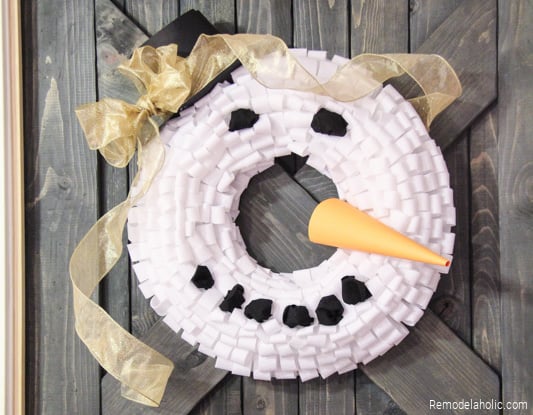
A deco mesh snowman wreath is full, fluffy, and wonderfully dramatic. White mesh creates the body, while ribbon, felt, ornaments, and foam pieces form the face and accessories. This is the style to choose when you want a wreath that can be seen from the sidewalk and possibly from space. Deco mesh also gives the wreath a snowball-like texture, making it ideal for a cute, round snowman design.
2. Evergreen Snowman Wreath
An evergreen snowman wreath starts with a faux or fresh greenery base and adds a snowman face, hat, scarf, snowflakes, berries, and winter picks. This version feels classic and elegant, especially when you use frosted pine, eucalyptus, pinecones, and a black-and-white plaid bow. It is perfect for homeowners who want something playful but not too cartoonish.
3. Grapevine Snowman Wreath
A grapevine wreath gives the snowman a rustic, handmade look. You can paint parts of the wreath white, add cotton stems, attach a wooden snowman face, or layer three grapevine forms vertically for a full-body snowman. This style pairs beautifully with burlap ribbon, buffalo check fabric, small bells, and natural elements such as twigs and pinecones.
4. Three-Ring Snowman Wreath
The three-ring design uses three wreath forms in different sizes, stacked vertically to resemble a traditional snowman. The top ring becomes the head, the middle ring becomes the chest, and the bottom ring becomes the snowman’s round belly. This design is excellent for large front doors, covered porches, garage walls, or indoor displays over a mantel.
5. Minimalist Snowman Wreath
If you prefer a clean look, choose a simple white wreath with a few carefully placed details: two black button eyes, a small orange felt nose, a narrow scarf ribbon, and one snowy greenery pick. Minimalist snowman wreaths are especially nice for apartments, office doors, and modern homes where too much ribbon can feel like the wreath is wearing a prom dress.
Materials You Need for a DIY Snowman Wreath
The exact supplies depend on the style you choose, but most DIY snowman wreath projects use a similar foundation. Start with a wreath form. Wire frames are best for deco mesh, grapevine forms are great for rustic designs, and foam wreath forms work well for yarn-wrapped or fabric-covered snowmen. If you want a three-part snowman, look for wreath forms in small, medium, and large sizes.
For the snow effect, use white deco mesh, white yarn, faux snow fabric, tulle, cotton batting, frosted greenery, white garland, or a pre-made white wreath. For the face, use black buttons, felt circles, craft foam, wood beads, or small ornaments. An orange felt triangle or foam cone makes a classic carrot nose. For the hat, you can use a mini top hat, felt hat, plaid winter cap, or a handmade cardboard hat covered in black fabric.
Helpful tools include floral wire, zip ties, pipe cleaners, wire cutters, scissors, hot glue, glue sticks, ribbon, command hooks or wreath hangers, and outdoor-rated lights if you want illumination. If the wreath will hang outside, choose weather-resistant materials and avoid delicate paper pieces unless the door is fully protected from rain and snow.
How to Make a Snowman Wreath Step by Step
Step 1: Choose the Size and Location
Before buying supplies, decide where the wreath will live. A standard front door usually works well with a wreath between 18 and 24 inches wide. A large porch wall or garage display can handle a bigger three-ring snowman. For interior spaces, smaller wreaths are easier to hang on cabinet doors, bedroom doors, windows, or above a fireplace.
Step 2: Build the Base
For a deco mesh wreath, attach white mesh to a wire wreath form using pipe cleaners or zip ties. Bunch, loop, and secure the mesh around the frame until the wreath looks full. For an evergreen wreath, fluff the branches first, then layer snowy picks or white accents around the base. For a grapevine wreath, add white ribbon, faux snow, or painted highlights to create a wintry effect.
Step 3: Add the Snowman Face
The face is where your snowman gets its personality. Place the eyes first, then position the nose and mouth. A happy snowman usually has eyes set slightly wide apart, a carrot nose angled a little upward, and a curved smile made from small black buttons or felt dots. Avoid placing the face too low, or your snowman may look suspiciously tired, like he just finished shoveling the driveway.
Step 4: Attach the Hat
A hat instantly makes the wreath recognizable as a snowman. Mini top hats are popular, but you can also use a knit-look ornament hat, a felt hat, or a plaid bow shaped like a winter cap. Secure it firmly with floral wire or hot glue. If the wreath hangs outdoors, use both glue and wire so winter wind does not send the hat on a solo adventure down the street.
Step 5: Tie on a Scarf or Bow
A scarf adds color, movement, and charm. Buffalo check ribbon gives a farmhouse look, red plaid feels classic, navy velvet feels elegant, and bright colors make the design more kid-friendly. You can tie the scarf at the bottom of the snowman’s face or between two wreath forms if you are making a stacked snowman. Let the ends hang naturally for a cozy look.
Step 6: Add Winter Embellishments
Now comes the fun part: decorating. Add snowflakes, jingle bells, frosted berries, pinecones, tiny mittens, mini skis, faux greenery, wooden signs, or small ornaments. Keep the design balanced by placing larger accents first and filling gaps with smaller pieces. If your wreath already has a strong snowman face, do not overload it. A snowman wreath should look festive, not like it lost a fight with the craft aisle.
Step 7: Secure and Hang
Once all pieces are attached, gently shake the wreath over a table to test for loose parts. Reinforce anything that wiggles. Use a sturdy wreath hanger, ribbon loop, outdoor adhesive hook, or over-the-door hanger. For glass, metal, or painted surfaces, choose hooks designed for that surface and check the weight limit. If the wreath is exposed to wind, add a small loop of clear fishing line or floral wire at the bottom to keep it from swinging.
Color Ideas for a Snowman Wreath
The classic snowman wreath palette is white, black, orange, red, and green. It feels cheerful, familiar, and Christmas-friendly. For a farmhouse style, use white, black, burlap, natural brown, and buffalo check. For a winter wonderland look, choose white, silver, icy blue, pearl, and frosted greenery. For a playful kids’ design, try bright red, turquoise, lime green, and candy-cane stripes.
If you want the wreath to last past Christmas, reduce the red and green and lean into winter neutrals. White mesh, gray ribbon, silver snowflakes, pinecones, and blue accents will feel appropriate through January and February. This is especially helpful if you enjoy seasonal decorating but do not want your front door to scream “holiday leftovers” after New Year’s Day.
Indoor vs. Outdoor Snowman Wreaths
An indoor snowman wreath can be more delicate. You can use paper snowflakes, lightweight ornaments, yarn, felt, ribbon, and cotton batting without worrying too much about weather. Hang it over a mantel, on a pantry door, above a console table, or in a child’s room for a cozy winter touch.
An outdoor snowman wreath needs stronger construction. Use wired ribbon, plastic ornaments, faux greenery, weather-resistant mesh, durable felt, and secure fasteners. Avoid untreated cardboard, paper, or anything that absorbs moisture easily. If your front door gets direct rain, snow, or harsh sun, choose a wreath that can survive the season without drooping into a sad pancake by week two.
Safety Tips for Winter Wreath Decorating
Holiday decorations should be beautiful, but they should also be safe. If you add lights to your snowman wreath, use lights rated for the location. Outdoor wreaths need outdoor-rated lights and extension cords. Inspect cords before use, and do not use strands with frayed wires, broken sockets, or loose connections. Battery-operated fairy lights are often the easiest option for wreaths because they reduce cord clutter and make hanging simpler.
Keep wreaths and other decorations away from open flames, space heaters, fireplaces, and candles. A wreath made from mesh, ribbon, dried greenery, or fabric should never sit near anything that burns. If you love the warm glow of candles near your winter decorations, choose flameless LED candles instead. They provide ambiance without turning your snowman into a cautionary tale.
Pet owners should also think carefully about placement. Dangling ribbons, shiny bells, and small ornaments can look like toys to cats and dogs. Hang the wreath high enough to avoid curious paws, and secure small pieces firmly. A snowman wreath is adorable on the door; it is less adorable when the dog proudly relocates the carrot nose to the living room rug.
Budget-Friendly Snowman Wreath Ideas
You can make a beautiful snowman wreath without spending a snowdrift of money. Start by checking what you already own: old ornaments, leftover ribbon, unused faux greenery, spare buttons, fabric scraps, gift bows, and holiday picks from previous years. Many wreath accents are small, so even leftover materials can make a big impact.
Craft stores, dollar stores, thrift stores, and post-holiday clearance shelves are excellent sources for wreath supplies. Look for plain wreath forms, white mesh, small hats, scarves, bells, snowflakes, and winter signs. If you find a simple wreath on sale, treat it as a base and customize it with snowman features. This is one of the easiest ways to create a custom look without building everything from scratch.
Another budget trick is to use removable accents. Instead of gluing every detail permanently, wire on the scarf, hat, and embellishments. Next year, you can change the ribbon color, update the face, or swap Christmas accents for neutral winter decorations. Your wreath gets a second life, and your storage bin gets one less abandoned decoration with emotional baggage.
Common Mistakes to Avoid
The first mistake is making the wreath too flat. Wreaths look best when they have depth, texture, and layers. Fluff greenery, separate mesh loops, bend ribbon tails, and place accents at slightly different angles. A little dimension makes the snowman look lively instead of pressed against the door like a holiday sticker.
The second mistake is using too many competing colors. A snowman wreath can be playful, but it still needs a clear palette. Choose two or three main colors, then add small accents. For example, white, black, and red can be supported with touches of green. White, silver, and blue can be supported with pearl or gray.
The third mistake is ignoring scale. Tiny buttons disappear on a large wreath, while oversized ornaments can overwhelm a small one. Lay out the face and accessories before attaching anything. Step back several feet and check whether the design reads clearly. If you cannot tell it is a snowman from across the room, increase the contrast or simplify the arrangement.
How to Store a Snowman Wreath
Good storage protects your hard work. Before storing the wreath, remove batteries from lights, dust off loose glitter or faux snow, and check for anything that needs repair. Place the wreath in a wreath storage bag, plastic wreath box, or large clear bin. If the design has a tall hat or bulky bow, avoid smashing it under heavier decorations.
For delicate pieces, wrap the wreath loosely in tissue paper or a soft cloth. Store it in a cool, dry place away from direct sunlight, moisture, and extreme heat. Label the container clearly so next winter you do not have to open six mystery bins just to find one cheerful snowman face staring back at you.
Real-Life Experiences With Snowman Wreath Decorating
The first time many people make a snowman wreath, they underestimate how much personality a few small details can add. Two black buttons and an orange felt nose seem simple, but shift them half an inch and suddenly the snowman goes from “jolly winter friend” to “concerned neighborhood watch captain.” That is part of the fun. Handmade winter decorations are not supposed to look factory-perfect. They are supposed to feel personal, warm, and slightly magical.
One practical experience is that wreath-making usually takes longer than expected, not because it is difficult, but because choices multiply. Should the scarf be plaid or velvet? Should the snowflakes be silver or white? Does the hat need berries? Should the smile have five buttons or seven? At some point, the craft table starts looking like a tiny snowman fashion studio. The best approach is to choose a theme before you start. For example, “cozy farmhouse snowman” or “sparkly winter wonderland snowman” gives you a simple filter for every design decision.
Another lesson: always test your hanging method before declaring the project finished. A wreath may look lightweight on the table but feel surprisingly heavy once it is loaded with mesh, ribbon, ornaments, and a hat with opinions. Use a sturdy hanger and check that the door can still close properly. If you are hanging it outside, open and close the door a few times. Nothing ruins a proud decorating moment faster than discovering the wreath knocks politely against the storm door every time someone enters.
Families with children often find that a snowman wreath becomes more than decor. Kids love choosing the nose, arranging buttons, and naming the snowman. That name may be classic, such as Frosty, or wildly specific, such as Captain Marshmallow Pickleboots. Either way, involving children makes the wreath feel like a memory rather than just a project. Use kid-safe supplies for younger helpers, and let them handle soft items like pom-poms, felt, ribbon, and lightweight ornaments.
For adults, the experience can be surprisingly relaxing. There is something satisfying about turning loose materials into a finished piece that welcomes people home. It is a small creative win during a season that can feel busy, cold, and expensive. A snowman wreath does not require perfection. In fact, a slightly crooked scarf or extra-big smile often makes it better.
The most helpful experience-based tip is to photograph the wreath before storing it. Next year, the photo helps you remember how the bow was shaped, where the hat sat, and which pieces may need repair. It also gives you a record of your style over time. Maybe this year’s snowman is rustic and simple; next year’s may arrive with lights, glitter, and the confidence of a Broadway understudy.
In the end, making a snowman wreath is less about crafting rules and more about creating a cheerful winter welcome. It is a decoration that can be elegant, silly, nostalgic, budget-friendly, and completely unique. Whether it hangs on a front door, above a mantel, on a window, or in a classroom, it brings a little handmade happiness to the coldest months of the year.
Conclusion
A snowman wreath is one of the most lovable winter decorations because it blends seasonal charm with creative flexibility. It can be made from deco mesh, evergreen, grapevine, yarn, felt, ornaments, or a mix of materials you already have at home. It can look rustic, elegant, whimsical, modern, or delightfully goofy. Most importantly, it welcomes winter with a smile.
To create the best snowman wreath, start with a strong base, choose a clear color palette, secure all pieces carefully, and match the materials to the location. Use weather-resistant supplies outdoors, safer lighting options when needed, and sturdy storage after the season ends. With a few smart choices and a little imagination, your snowman wreath can become a favorite decoration you look forward to displaying year after year.
Note: This article was written from synthesized, real-world winter decorating, wreath-making, craft, and holiday safety guidance, with no source links inserted in the publishable content as requested.