Some projects ask for a soldering iron. Some ask for patience. And some ask the internet, very politely, whether anyone happens to remember how to wake a supercomputer design from the disco era. “Help [Chris] Boot His Cray-1 Supercomputer” is one of those glorious stories where modern maker culture collides headfirst with old-school high-performance computing. The result is equal parts engineering, archaeology, and nerd comedy.
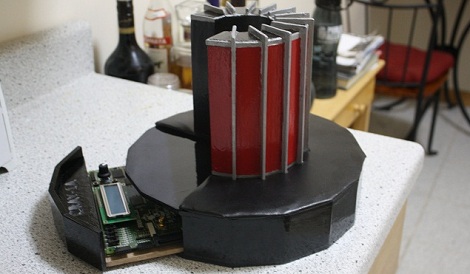
At the center of the story is Chris Fenton, who did not merely admire the legendary Cray-1 from afar. He built a 1/10-scale, nearly cycle-accurate reproduction of it in an FPGA, then went hunting for software that could make the machine do more than sit there looking historically fabulous. That search led to an old disk image, tantalizing clues, and one giant problem: getting the system to boot. And that is where this tale gets good.
Why This Story Still Hooks Computer Lovers
There are countless retrocomputing projects online, but this one lands differently. Chris was not restoring a beige desktop or reviving an arcade board from a pizza parlor. He was recreating one of the most iconic supercomputers ever built. The original Cray-1 was not just fast for its time. It was a machine that helped define what supercomputing looked like, both physically and conceptually. It introduced the kind of visual drama that makes even non-engineers stop and stare: a circular chassis, upholstered bench, dense modules, and a design language that whispered, “I calculate at serious speed, but I also know interior decor.”
That mix of performance and personality is part of the reason the Cray-1 still casts such a long shadow. In the 1970s, it represented a leap forward in vector processing and scientific computing. In the 2010s, Chris’s miniature version represented something else: the joy of rebuilding a masterpiece with tools that Seymour Cray could never have imagined. A Xilinx Spartan FPGA board is a very different beast from a five-ton production supercomputer, but the spirit is oddly similar. Both projects are obsessed with timing, logic, physical constraints, and getting every last drop of performance from the hardware.
Who Is Chris, and What Did He Actually Build?
Chris Fenton’s project became famous in hacker circles because it was delightfully overachieving. He spent about a year and a half constructing a 1/10-scale Cray-1 reproduction, modeling the machine in an FPGA and packaging it in a tiny form factor that echoed the original’s unmistakable look. It was not a loose tribute or a “Cray-ish” art piece. It was a serious attempt at recreating the architecture closely enough to feel authentic.
That matters because there is a world of difference between emulating a system in software and rebuilding its logic so it behaves like the real thing. Emulators are wonderful. FPGA recreations are wonderful in a more sleep-depriving way. They force a designer to care about timing, registers, control logic, and the kinds of implementation details that make history feel tangible instead of abstract. In Chris’s case, the machine reportedly ran at 33 MHz and used a substantial portion of the FPGA board’s available resources. That is not exactly a casual weekend project you squeeze in between snack breaks.
Then came the software hunt. Chris found or obtained a disk with Cray software on it, and a former Cray employee even helped by loaning an 80-megabyte CDC disk pack. That was the breakthrough and the curse. Suddenly, the problem was no longer “I have no software.” The problem became “I have software, but now I need to figure out how this old ecosystem is supposed to start.” Welcome to retrocomputing, where success often unlocks a more difficult puzzle.
Why Booting a Cray-1 Is Not Like Booting a Laptop
Modern users are spoiled. Press a button, stare at a logo, complain when the system takes longer than ten seconds, and call it a rough morning. A Cray-era boot process was not built for convenience. It was built for institutions, operators, and workflows in which the computer was less a personal device and more a high-performance facility with manners.
When people talk about “booting” an old supercomputer, they are often talking about more than loading an operating system. They are talking about the relationship between the CPU, the I/O subsystem, storage media, configuration state, and startup procedures that were documented for trained operators, not casual hobbyists decades later. If one crucial detail is missing, the whole chain can stall. That is why Chris’s problem became such a fun public mystery. The disk image reportedly contained clues such as references to Cray memory, registers, and an I/O kernel, but clues are not the same thing as a clean startup guide.
And let’s be honest: old computing lore has a habit of disappearing. Manuals get lost. Operators retire. Institutional memory vanishes. Media degrades. File systems become strange little civilizations no one has visited in years. Booting a machine like this is part digital preservation, part detective work, and part séance for documentation.
The Hidden Villain: Context
The hardest part of restoring old systems is often not the hardware or even the data. It is context. You can have a disk image and still be missing the one procedural note that says, in effect, “By the way, before loading anything, flip the invisible software equivalent of three switches and chant at the I/O subsystem.” That is why reverse engineering becomes so important. Without the surrounding conventions, even a real artifact can feel mute.
Chris’s challenge captured that perfectly. The machine itself was an impressive feat. The software was a thrilling find. But the last mile between “artifact recovered” and “system alive” depended on specialized knowledge that had become rare.
Why the Original Cray-1 Was Such a Big Deal
To understand why people cared so much about Chris’s tiny Cray, you have to appreciate the original machine’s stature. Introduced in 1976 by Seymour Cray’s company, the Cray-1 helped set a new benchmark in supercomputing. It became associated with vector processing, scientific modeling, and the kind of performance that made government labs and research institutions open their checkbooks very, very carefully.
The machine was famous for speed, but also for design decisions that were unapologetically physical. Its circular shape helped minimize wire lengths, which mattered because signal travel time becomes a tyrant when you are chasing high performance. The padded bench around the outside was not a quirky lounge feature added by a visionary interior designer with a chrome fetish. It concealed power supplies and supported the machine’s overall packaging strategy. This was engineering that looked theatrical because the technical choices were inseparable from the object’s appearance.
The Cray-1 was also expensive, power-hungry, and impressive in every way that serious hardware tends to be. Versions of the machine sold for millions of dollars, drew enormous power, and were deployed in places where computational speed meant scientific and national importance. Los Alamos received the first Cray-1 system in 1976. NCAR became Cray Research’s first official customer and brought a Cray-1A into production in 1977. NERSC and Livermore also became part of the broader Cray story as supercomputing matured into a national scientific infrastructure.
Vector Processing: The Magic Trick Behind the Legend
The Cray-1’s special sauce was vector processing. Instead of handling one tiny number-crunching step at a time in the most ordinary way imaginable, vector systems could apply operations across streams of data more efficiently. For workloads in scientific computing, that was a huge deal. Weather models, simulations, fluid dynamics, weapons research, and other computational monsters all benefited from architectures built to chew through large numeric problems with elegance and speed.
That is one reason the Cray-1 became iconic so quickly. It was not just a trophy machine. It was practical for the hardest scientific work of its day. The original system’s peak performance figures vary by configuration and measurement context in historical sources, but everyone agrees on the important part: it was blisteringly fast for the era and far ahead of many competitors. In computing terms, it was the kind of machine that made other systems feel like they were jogging in sandals.
What Chris’s Mini Cray Says About Modern Engineering
There is something beautifully stubborn about reproducing a classic supercomputer in modern programmable logic. It is not the easiest way to learn computing history. You could read a book, watch a documentary, or visit a museum. Chris instead chose the method preferred by people who hear “fascinating old system” and immediately think, “Yes, but what if I rebuilt it?”
That impulse deserves respect. Building a miniature Cray-1 forces history out of the display case and back into motion. It turns the machine from a museum object into a living technical problem. Suddenly you are not just admiring Seymour Cray’s ideas. You are dealing with them. You are wrestling with the architecture, the assumptions, the constraints, and the weird edge cases. That is a deeper kind of understanding than passive appreciation can usually provide.
It also reminds us that preservation is not only about storing artifacts. It is about preserving the ability to reason about them. Recreating historic systems in hardware, software, or documentation keeps old knowledge usable. That matters more than ever because the history of computing is full of innovations that still echo through current design: vector operations, memory bottlenecks, packaging tradeoffs, cooling challenges, and the never-ending war between elegant theory and rude physical reality.
The Internet as a Distributed Repair Bench
One of the best parts of the Chris Fenton story is how naturally it turned into a community event. Instead of pretending to have all the answers, he put the challenge in public view. That is exactly how many great restoration stories work. Someone finds a machine, a schematic, a ROM, a disk pack, or a bundle of mysterious bits. Then the wider technical community gathers like a volunteer pit crew made entirely of people who own logic analyzers and strong opinions.
That is not chaos. It is a modern version of institutional memory. In the original age of machines like the Cray-1, knowledge lived in companies, labs, service organizations, and operator communities. Today, that memory often survives in forums, scans, archives, museums, blogs, and the heads of former engineers who occasionally appear like benevolent wizards. A project like Chris’s succeeds not only because of technical skill, but because the internet can still function as a giant, messy, brilliant archive of expertise.
There is also a lovely irony here. The Cray-1 helped define elite centralized computing. Chris’s quest to boot a miniature version depended on decentralized online collaboration. The original machine represented concentrated power. The restoration effort represented distributed curiosity. Same species, different habitat.
Why This Story Resonates Beyond Retrocomputing
You do not need to be a supercomputing historian to enjoy this story. At heart, it is about the gap between building something and fully reviving it. That theme shows up everywhere: restoring cars, bringing old cameras back to life, recovering vintage game consoles, maintaining old musical instruments, or debugging software written in the reign of forgotten frameworks. The hardest part is often not construction. It is the missing last inch between “it exists” and “it works.”
Chris’s mini Cray captures that gap perfectly. It is not enough to reproduce the form. You have to restore function. And not just any function, but historical function. That means respecting the original machine’s logic instead of flattening it into a convenient modern abstraction. The project becomes a bridge between eras, with one foot in 1976 and the other in the FPGA age.
That is why the title “Help [Chris] Boot His Cray-1 Supercomputer” remains memorable. It sounds playful, but it points to a serious truth: computing history is fragile unless people actively rebuild, document, interpret, and share it.
Booting the Past Is a Team Sport
In the end, the Chris Fenton story is not only about a miniature Cray-1. It is about how ambitious technical culture works when it is healthy. One person makes something audacious. Another person contributes old media. Others bring operating-system lore, file-system knowledge, museum context, or architecture expertise. Piece by piece, the impossible starts looking merely difficult, which is engineer-speak for “promising.”
The original Cray-1 earned its reputation by pushing the frontier of what computers could do. Chris’s project honors that legacy in the most fitting way possible: by making the machine difficult again. Not impossible, not untouchable, but worthy of effort. That feels appropriate for a system born in an age when performance came from ruthless design discipline and when a computer could be both a scientific instrument and the coolest seat in the room.
So yes, help Chris boot his Cray-1 supercomputer. Help him because the project is clever. Help him because the history matters. Help him because every bootable machine is a rescued conversation with the past. And help him because somewhere, deep in the soul of every serious hardware nerd, lives the hope that one day an old system will wake up, clear its throat, and say, “About time.”
Experiences From the Edge of a Vintage Boot Prompt
Anyone who has ever tried to revive old computing hardware knows the emotional rhythm of a project like this. First comes the excitement, which is loud and cinematic. You find the machine, the board, the disk, the image, the fragment of documentation, and suddenly your brain starts playing triumphant music. You are sure that by dinner you will be standing in the glow of restored greatness. Then reality arrives wearing work boots. The signal is wrong. The image format is weird. The boot path is unclear. The machine does not fail dramatically; it fails in a way that suggests it might be waiting for one tiny detail you have not discovered yet. That is the moment vintage computing stops being a hobby and starts becoming a relationship.
The experience is strangely addictive because progress rarely happens in a straight line. You spend hours proving one thing is not the problem. You celebrate when a dead end becomes a useful clue. You learn to appreciate absurdly small victories, like a recognizable header in a binary file or a startup response that is slightly less hopeless than the previous one. On the outside, nothing seems to be happening. On the inside, your brain is doing somersaults because the machine just whispered one syllable in a language no longer widely spoken.
Projects related to the Cray-1 add another layer of drama because the original system was never meant to be personal. It belonged to labs, operators, and institutions with budgets large enough to make ordinary computers feel like office supplies. Recreating or reviving that world in miniature is thrilling precisely because it feels slightly ridiculous. You are standing in the present with tools from maker culture, trying to convince a design philosophy from the golden age of supercomputing to speak again. It is equal parts reverence and rebellion.
There is also a very human experience hiding under the technical one: the joy of not knowing alone. In restoration communities, someone always seems to know one weird fact that changes everything. A former engineer remembers a startup convention. A collector recognizes a storage format. A museum curator identifies a subsystem. A stranger on a forum decodes a field in a header and accidentally becomes the hero of the week. That collaborative feeling is one of the best parts of the hobby. It turns solitary frustration into shared momentum.
And when a breakthrough finally comes, it is never just about booting. It is about contact. A machine that once seemed locked behind time suddenly becomes legible again. The past stops being decorative and starts behaving like a system. That is the magic of stories like Chris’s. They remind us that old computers are not only relics to be admired. They are puzzles that still reward effort, communities that still preserve memory, and experiences that still produce genuine wonder. When an old system inches toward life, even in miniature, it feels less like starting a computer and more like reopening a chapter history forgot to bookmark.