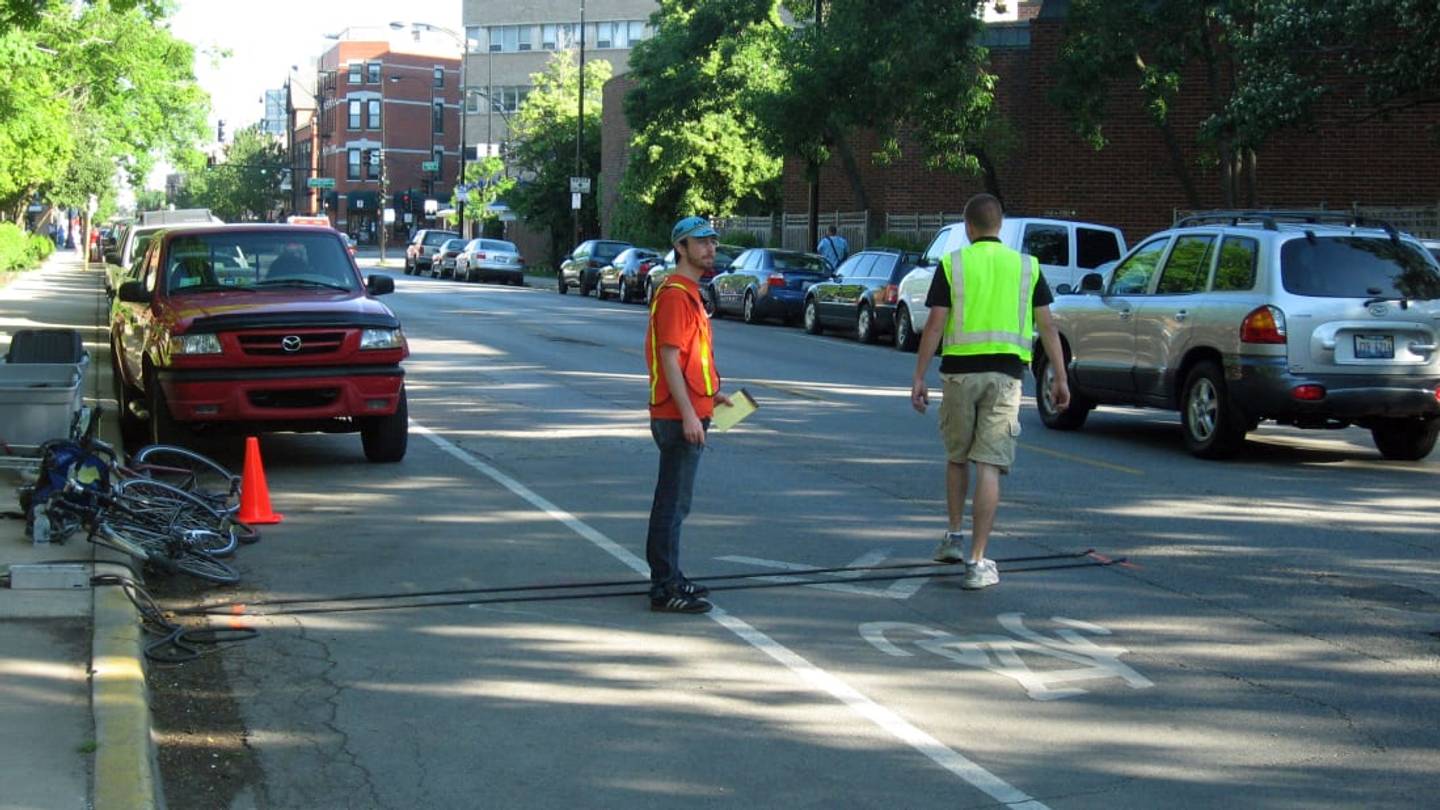
You are driving along, minding your business, when suddenly your tires make a tiny thump-thump over two mysterious black tubes stretched across the road. For one dramatic second, your brain may whisper, “Is this a trap? A speed sensor? A government spaghetti experiment?” Relax. Those black rubber tubes are not there to launch your car into a spy movie. They are usually pneumatic road tubes, a simple but surprisingly clever tool used to collect traffic data.
In plain English, those tubes help transportation agencies understand how many vehicles use a road, what kinds of vehicles are passing through, how fast they are traveling, and sometimes which direction they are going. That information can shape everything from speed studies and traffic signal timing to road repairs, lane designs, school-zone safety reviews, and long-term transportation planning.
So, yes, that tiny rubber hose you barely notice is quietly doing math for the road department. It is basically a traffic nerd in tube form.
What Are the Black Tubes Across the Road?
The black tubes stretched across roads are most commonly known as pneumatic road tubes, traffic counter tubes, or simply road tubes. They are made of tough rubber and are placed across one or more lanes of traffic. One end is usually connected to a small traffic counting device, often secured to a pole, guardrail, signpost, or placed in a locked roadside box.
The word “pneumatic” means the system works with air pressure. When a tire rolls over the tube, it squeezes the rubber hose and sends a burst of air through it. That air pulse travels to the traffic counter, which records the event. Every pulse becomes a tiny clue about what just passed over the road.
At the most basic level, the equipment counts vehicles. With a more advanced setup, especially when two tubes are placed across the road at a known distance apart, the system can estimate speed, direction of travel, axle spacing, and vehicle class. In other words, it can help tell the difference between a compact car, a pickup truck, a delivery van, and a large multi-axle truck.
How Do Pneumatic Road Tubes Work?
The system is simple enough to explain at a dinner table, yet useful enough for engineers, planners, and traffic safety professionals. A vehicle tire crosses the tube. The tube compresses. Air rushes through the hose. The counter records a pulse. That pulse gets stamped with a time. Repeat this thousands of times, and suddenly the agency has a picture of how the road is actually being used.
One Tube: Counting Traffic Volume
A single tube can help count the number of axle hits. Since most passenger vehicles have two axles, traffic software can convert axle hits into an estimated vehicle count. This is useful for measuring traffic volume, such as how many vehicles use a street during a 24-hour period.
However, one tube has limits. If a road has many trucks, buses, trailers, or vehicles with more than two axles, the system must account for that. This is why agencies often use adjustment methods or vehicle classification data to improve accuracy. A road full of sedans is easier to count than a road full of dump trucks, delivery vans, trailers, and Uncle Bob’s suspiciously overloaded pickup.
Two Tubes: Measuring Speed and Direction
When you see two black tubes placed a short distance apart, the setup can do more than count. Because the counter knows the distance between the tubes and records the time when each axle hits each tube, it can calculate speed. If the axle hits Tube A before Tube B, the vehicle is going one direction. If it hits Tube B before Tube A, it is going the other direction.
This two-tube setup can also help identify vehicle class. The spacing between axles gives clues about whether the vehicle is a passenger car, motorcycle, bus, or truck. A small car has a different axle pattern than a tractor-trailer. The road tube system listens to those patterns like a drummer recognizing a beatexcept the drumsticks are tires and the song is called “Commuter Rush Hour in E Minor.”
More Than Two Tubes: More Detailed Studies
Sometimes you may see three or four tubes across the road. Multiple tubes can improve data quality, help separate lanes, provide redundancy if one tube is damaged, or support more detailed speed and classification studies. On complex roads, extra tubes can help agencies better understand turning movements, direction, or lane-by-lane traffic behavior.
Why Do Transportation Agencies Use Road Tubes?
Road tubes are popular because they are relatively affordable, portable, quick to install, and effective for short-term traffic studies. They do not require digging into the pavement like permanent loop detectors, and they can be removed after the study period ends. For local streets, county roads, and state routes, that flexibility is a big deal.
Here are the main reasons you sometimes see those black tubes stretched across the road.
1. To Count How Many Vehicles Use a Road
The most common reason is traffic counting. Agencies need to know whether a road carries 500 vehicles a day or 25,000 vehicles a day. That number affects maintenance schedules, road design, funding decisions, and safety improvements.
A road that carries heavy daily traffic may need stronger pavement, better markings, wider shoulders, improved intersections, or more frequent maintenance. A quiet residential street may need a different approach. Without traffic counts, planning becomes guesswork, and guesswork is not a great foundation for a bridge, a budget, or a left-turn lane.
2. To Estimate Annual Average Daily Traffic
Transportation agencies often use short-term counts to estimate Annual Average Daily Traffic, commonly called AADT. AADT is the average number of vehicles that travel a road each day over a year. Since counting every vehicle on every road every day would be expensive and unrealistic, agencies collect short-duration counts and adjust them using seasonal, weekly, and location-based factors.
For example, a road near a beach may be much busier in July than in January. A road near a school may behave differently in summer than during the academic year. A rural road may see farm-related traffic during certain seasons. Short-term tube counts, when combined with adjustment factors, help agencies build a reliable traffic picture without camping beside every road with a clipboard and a heroic supply of coffee.
3. To Study Speed Patterns
When residents complain that “everyone speeds on this street,” traffic engineers need data before deciding what to do. Two-tube traffic counters can collect speed information over a full day or several days. This helps agencies see not only the average speed but also the range of speeds and the pace at which most drivers are actually traveling.
Speed data may be used in traffic calming studies, school-zone reviews, speed limit evaluations, or safety projects. If the data shows that a large share of vehicles are traveling too fast for the area, the agency may consider signs, pavement markings, speed feedback displays, curb extensions, narrower lanes, raised crosswalks, or other traffic calming tools.
4. To Classify Vehicle Types
Not all traffic is equal. A hundred bicycles, a hundred sedans, and a hundred loaded tractor-trailers create very different impacts on a road. Pneumatic tube counters can help classify vehicles based on axle patterns. This matters because heavy trucks contribute more to pavement wear than passenger cars.
Vehicle classification data can help determine whether a road is being used as a freight route, whether pavement needs to be designed for heavier loads, or whether truck traffic is increasing in a neighborhood. It can also help planners understand how commercial traffic moves through a region.
5. To Help Time Traffic Signals
Traffic signal timing works best when it reflects real traffic conditions. A signal that made sense ten years ago may be out of sync today if a new shopping center, apartment complex, school, or warehouse has changed travel patterns. Traffic tubes can help gather the volume and timing data needed to adjust signals.
If a road has heavy morning traffic in one direction and heavy evening traffic in the other, signal timing may need to account for those peak periods. If side-street traffic is lower than expected, the signal plan may be adjusted to reduce unnecessary waiting. In short, good data helps traffic lights become less annoying. They may never become charming, but less annoying is a noble goal.
6. To Plan Road Repairs and Improvements
Before a city widens a road, resurfaces pavement, adds bike lanes, installs sidewalks, or redesigns an intersection, it needs to understand current travel patterns. Road tubes provide practical field data that helps officials justify and prioritize projects.
For example, a county might place tubes on a two-lane road before deciding whether to add a turn lane near a busy driveway. A town might count traffic on a residential street after residents complain about cut-through drivers. A state transportation department might use tube data to support pavement design, bridge planning, or safety analysis.
Are the Black Road Tubes Taking Pictures of You?
No. Standard pneumatic road tubes do not take photos, record video, scan license plates, or identify drivers. They are not cameras. They are not microphones. They are not secret noodles of judgment. They detect tire pressure events.
The small box connected to the tube stores traffic data such as time stamps, axle hits, speed estimates, lane direction, and vehicle classification information. The data is about traffic patterns, not individual people. Of course, agencies may use other technologies in other locations, such as cameras, radar, Bluetooth travel-time sensors, or permanent loop detectors, but the black rubber tubes themselves are a pressure-based counting tool.
How Long Do Road Tubes Stay in Place?
Road tubes are usually temporary. Depending on the study, they may stay in place for 24 hours, 48 hours, several days, or a full week. Some agencies collect short counts on a rotating schedule, returning to the same locations every few years to update traffic data.
Short-term counts are especially useful because they allow agencies to cover many locations without installing expensive permanent equipment. Permanent counting stations do exist, especially on major highways, but not every street needs a permanent sensor. For many roads, a temporary tube count provides enough information to support planning and maintenance decisions.
Why Are the Tubes Usually Black?
The tubes are usually black because they are made from durable rubber designed to survive repeated tire impacts, sunlight, rain, grime, and the general disrespect that roads receive every day. Black rubber is common, practical, and tough. It also blends into pavement well enough that drivers are not startled by it, while still being visible if you are looking for it.
The color is not the important part. The tube’s durability, flexibility, air seal, and correct placement matter much more. A road tube has one job: get squeezed thousands of times and keep reporting back. It is basically the intern of traffic engineering, except it never asks when lunch is.
Do Road Tubes Damage Cars, Tires, or Motorcycles?
In normal conditions, properly installed road tubes should not damage cars or tires. Drivers usually feel only a light bump. The tubes are low-profile rubber hoses, not metal bars or speed bumps. They are designed to be driven over repeatedly by regular traffic.
Motorcyclists and bicyclists may notice them more than drivers do, especially if the tubes are wet, loose, or placed at an angle. Agencies generally try to install them securely and appropriately for the site. As with any road feature, the safest approach is to keep a steady line, avoid sudden braking, and ride over them calmly.
Why Are They Placed on Some Roads and Not Others?
You are more likely to see road tubes where someone needs fresh traffic information. That might be near a planned construction project, a school, a busy intersection, a neighborhood cut-through route, a proposed development, a bridge, or a road being evaluated for safety improvements.
Sometimes a tube count is part of a routine statewide or local traffic monitoring program. Other times, it is triggered by a specific question: Has truck traffic increased? Are drivers speeding? Does this intersection need a signal? Is a turn lane justified? Is the pavement wearing out faster than expected? Are weekend traffic patterns different from weekday patterns?
Road tubes appear where questions need answers. They are the transportation world’s version of asking, “Okay, but what does the data say?”
What Happens to the Data Collected by Road Tubes?
After the count period ends, technicians retrieve the counter and download the data. The information is checked for errors, adjusted when necessary, and analyzed. Agencies may use it in traffic reports, safety studies, engineering evaluations, planning models, or public project documents.
The data can influence decisions that drivers eventually notice. A road may get resurfaced sooner. A signal may receive new timing. A school zone may get extra safety features. A left-turn lane may be added. A freight corridor may receive pavement designed for heavier trucks. A neighborhood may qualify for traffic calming. In many cases, the humble black tube is the first step in a longer decision-making process.
Road Tubes vs. Other Traffic Counting Methods
Pneumatic tubes are not the only way to collect traffic data. Agencies may also use inductive loops embedded in pavement, radar sensors, video detection, infrared sensors, manual counts, connected vehicle data, or mobile location-based traffic analytics. Each method has advantages and limitations.
Road tubes are inexpensive and portable, which makes them excellent for short-term studies. But they can be affected by installation quality, heavy congestion, unusual vehicle spacing, damaged tubes, extreme weather, or complex lane conditions. Video can capture turning movements and pedestrians, but it may require more processing and raises different privacy considerations. Permanent loops can collect continuous data, but they are more expensive and require pavement installation.
That is why traffic professionals often choose the tool based on the question. Counting cars on a two-lane road? Tubes may be perfect. Studying a complicated intersection with pedestrians, bikes, and turning vehicles? Video or manual observation may be better. Monitoring a freeway year-round? Permanent sensors may make more sense.
Common Misunderstandings About Black Road Tubes
“They are speed traps.”
Usually, no. Road tubes may collect speed data, but they are not the same as police radar or automated enforcement cameras. Their purpose is generally planning, engineering, and traffic analysis, not issuing tickets.
“They count only cars.”
Not exactly. Depending on the setup, tubes can detect axle hits from cars, trucks, buses, motorcycles, and sometimes bicycles. The quality of classification depends on the equipment, placement, traffic conditions, and analysis method.
“They are permanent.”
Most are temporary. If you see tubes on Monday, they may be gone by Friday. Their short lifespan on the road is part of their charm. They arrive, collect data, and disappear like very responsible rubber ninjas.
“Nobody uses the data.”
Actually, traffic data is widely used. It supports budgeting, safety planning, roadway design, pavement management, freight analysis, signal timing, and public infrastructure decisions. The data may not be glamorous, but it is useful.
Real-World Examples of Why a Road Tube Might Appear
Imagine residents on Maple Street complain that commuters are using their neighborhood as a shortcut. The city places tubes across the street for several days. The data shows that traffic spikes between 7:00 and 8:30 a.m., with many vehicles traveling faster than expected. That information may support a traffic calming study.
Now picture a county road near a growing warehouse district. Officials need to know whether truck traffic has increased enough to justify stronger pavement or intersection changes. A tube count can reveal vehicle volume and classification, including the share of multi-axle trucks.
Or consider a school where parents worry about speeding during pickup and drop-off. A two-tube setup can collect speed data by time of day. If the numbers confirm the concern, the school zone may receive better signs, markings, or enforcement coordination.
In each case, the tube is not the final answer. It is the fact-finding step that makes a smarter answer possible.
Experiences Related to Seeing Black Tubes Across the Road
The first time many people notice black road tubes, they react with mild confusion. The tubes look too simple to be important, yet too intentional to be random. They are stretched neatly across the lane, fastened at the edges, and connected to a small device that looks like it knows something you do not. It is natural to wonder whether you should slow down, change lanes, or wave politely at the mysterious box.
For everyday drivers, the experience is usually quick: a soft bump, maybe two, then nothing. But once you know what the tubes do, you start seeing them differently. That little thump becomes a reminder that roads are not managed by guesswork alone. Someone is measuring what happens there. Someone wants to know whether traffic is heavier on weekends, whether trucks are using the corridor, whether drivers are speeding after dark, or whether a proposed improvement is truly needed.
People who live near a tube-count location often become unofficial traffic detectives. They may notice the tubes outside their house and start guessing why they were installed. Maybe the city is studying a speeding complaint. Maybe a new subdivision is coming. Maybe the county is updating traffic volume maps. Sometimes residents assume the tubes are there because of a recent crash or a petition for safety improvements. Sometimes they are right. Other times it is just part of a routine counting program.
From a driver’s perspective, the best reaction is simple: keep driving normally. Do not slam on the brakes. Do not swerve around the tubes. Do not treat them like tiny road snakes with legal authority. They are designed to be crossed. In fact, crossing them is the entire point. Your vehicle becomes one anonymous data point in a much larger pattern.
There is also something oddly satisfying about realizing how low-tech the system is. In an age of satellites, artificial intelligence, smart cars, and apps that can tell you the exact location of a taco truck three neighborhoods away, a rubber hose filled with air still does valuable work. It is simple, rugged, and effective. A tire presses down, air moves, a counter clicks, and a transportation planner gets another piece of the puzzle.
For communities, these tubes can be a sign that a concern is being taken seriously. If residents have asked for safer crossings, better speed control, or a review of traffic growth, a road tube may be the first visible sign of action. It does not guarantee a new stoplight, speed hump, or bike lane, but it provides evidence. And evidence is what turns “it feels dangerous” into “here is what the traffic data shows.”
So the next time you roll over those black tubes, think of them as tiny road reporters. They are not flashy. They are not glamorous. They will not get invited to ribbon-cutting ceremonies. But they help answer important questions about how people move, where roads are stressed, and what improvements might make travel safer and smoother. Not bad for a rubber tube that spends its workday getting run over.
Conclusion: Those Black Tubes Are Small Tools With a Big Job
The black tubes stretched across the road are usually pneumatic traffic counters. They use air pressure to detect tire movements and help agencies collect traffic volume, speed, direction, and vehicle classification data. While they may look mysterious, they are practical tools used in transportation planning, safety analysis, road maintenance, signal timing, and project design.
They are not there to spy on you, judge your playlist, or issue a speeding ticket from a roadside box. They are there to answer a simple but powerful question: how is this road really being used? Once transportation agencies know that, they can make better decisions about repairs, safety improvements, traffic flow, and future investments.
Note: This article is based on real transportation engineering practices and information commonly used by U.S. transportation agencies, including federal and state traffic monitoring guidance, road tube counting methods, and short-duration traffic data collection standards.