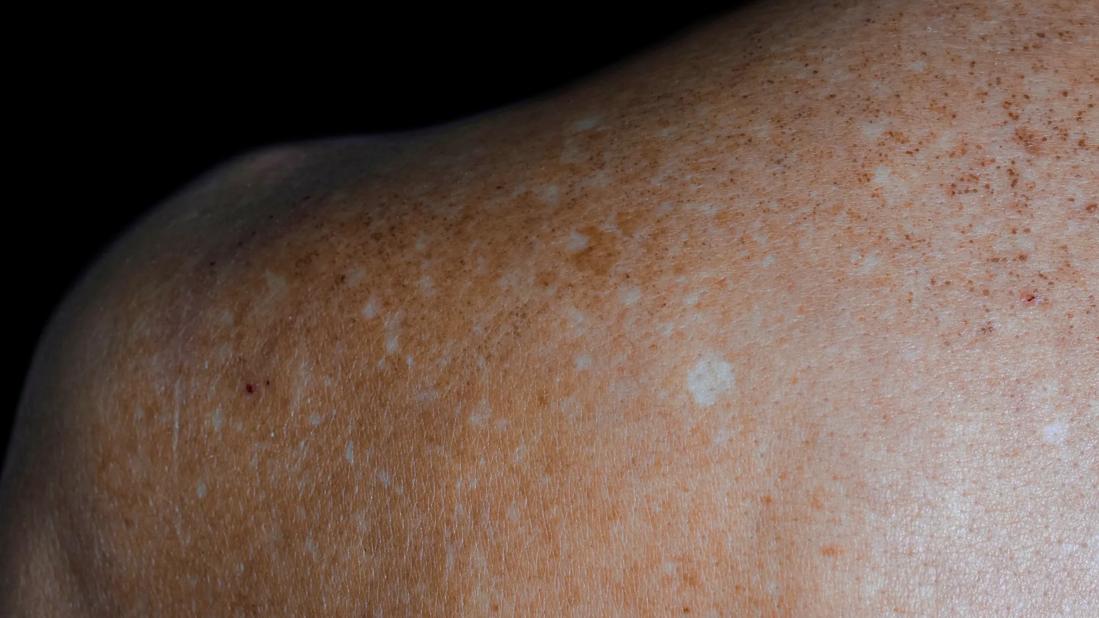
You catch a glimpse of your arm, cheek, chest, or legs and suddenly notice pale little spots that definitely were not invited. Naturally, your brain opens 27 browser tabs at once and decides the possibilities are either “nothing” or “everything.” The truth is much less dramatic and much more useful: white spots on skin can happen for several different reasons, and the details matter.
Some spots happen because your skin is losing pigment. Others show up because yeast is crashing the party. Some appear after irritation, eczema, or minor injury. A few are simply harmless signs of sun exposure and time doing what time does best: showing up unannounced. So before you assume your skin is freelancing, let’s sort out what white spots can mean, how to tell the common causes apart, and when it makes sense to see a dermatologist.
This guide is informational only and not a diagnosis. Still, it can help you walk into an appointment sounding much calmer and much less like you were personally betrayed by your shoulders.
First, not all white spots are actually the same thing
“White spots” is a catch-all phrase, but dermatologists usually think about a few categories. One is depigmentation, which means pigment is gone entirely. Another is hypopigmentation, which means the area is lighter than the surrounding skin, but not completely colorless. Then there are white bumps, which are not pigment changes at all.
That difference matters because smooth, chalky patches point in one direction, while dry, scaly spots point in another. Tiny dotted marks on sun-exposed legs suggest one diagnosis. Small pearly bumps around the eyes suggest something else entirely. In other words, your skin is giving clues. It is not being subtle, but it is being specific.
Common causes of white spots on skin
1. Vitiligo
Vitiligo is one of the best-known causes of white patches on the skin. It happens when melanocytes, the cells that make pigment, are destroyed. The result is smooth areas of lighter skin or completely white skin. These patches are often sharply defined and may appear on the hands, face, around the eyes or mouth, elbows, knees, feet, armpits, genitals, or other areas. Hair in the area can also turn white or gray.
Vitiligo is not contagious. You cannot catch it from a towel, a handshake, a gym bench, or a shared hoodie. It is considered an autoimmune condition, and it can be especially noticeable in people with darker skin because the contrast is stronger. In some people, vitiligo stays limited to a few spots. In others, it spreads slowly over time. There is no reliable way to predict exactly how much color loss will happen.
Treatment may include prescription creams, light therapy, camouflage products, or other dermatologist-guided options. Some people seek treatment for cosmetic reasons, while others want to slow spread or restore color. Either way, sun protection is a big deal because depigmented areas burn more easily.
2. Tinea versicolor
If your white spots are on the chest, back, neck, or upper arms and have a fine scale, tinea versicolor moves way up the suspect list. This is a common superficial fungal infection caused by an overgrowth of yeast that normally lives on the skin. In warm, humid weather, after heavy sweating, or on oily skin, that yeast can overdo its job and interfere with normal pigmentation.
Tinea versicolor often causes patches that are lighter than the surrounding skin, though they can also look pink, tan, salmon, or brown. The spots may be mildly itchy, and they often become more obvious after sun exposure because the surrounding skin tans while the affected spots do not. That “I swear I missed sunscreen in a polka-dot pattern” look is classic.
The good news: it is treatable. Antifungal shampoos, washes, creams, or prescription medication can help. The mildly annoying news: even after the yeast is under control, the color may take weeks or even months to even out. Also, recurrence is common, especially in hot, humid conditions.
3. Pityriasis alba
Pityriasis alba is a very common cause of light patches in children and teens. It tends to show up on the face, neck, arms, chest, or upper back, and the patches are usually pale, slightly dry, and sometimes lightly scaly. The borders are often less sharp than vitiligo, which makes the spots look more like faded areas than crisp white paint.
This condition is often linked to eczema or atopic skin. It may be more noticeable after sun exposure because the surrounding skin darkens while the affected patches stay lighter. Parents often spot it on the cheeks and immediately assume a vitamin deficiency, a food allergy, or a skincare catastrophe. Usually, it is none of those.
Pityriasis alba is harmless and often improves on its own over time. Moisturizer, gentle skin care, sunscreen, and sometimes mild prescription creams can help. The main challenge is patience, which, to be fair, is not a cream and does not come in a tube.
4. Post-inflammatory hypopigmentation
Sometimes a white spot is not a new skin disease at all. It is your skin recovering from an old one. Post-inflammatory hypopigmentation happens when skin becomes lighter after inflammation or injury. That means eczema, psoriasis, acne, a rash, a scrape, a burn, a blister, an infection, or even a cosmetic procedure can leave behind paler patches.
These areas often appear exactly where the earlier irritation happened. The texture may be normal, or there may still be some dryness depending on the original problem. Unlike vitiligo, the pigment is usually reduced rather than completely gone, and the shape often follows the pattern of the previous rash or injury.
Treatment focuses on the original cause. Once inflammation calms down, pigment often returns gradually over weeks or months. During that time, sunscreen matters because tanning around the area can make the contrast more obvious.
5. Idiopathic guttate hypomelanosis
If you have tiny, scattered, light-colored spots on sun-exposed areas like the forearms or shins, idiopathic guttate hypomelanosis may be the explanation. The name sounds like it was invented by someone paid by the syllable, but the condition itself is common and benign.
These spots are usually small, smooth, and asymptomatic. They are not typically itchy or painful. They often show up with age and cumulative sun exposure, and many people notice them on the legs or arms first. Think of them as little confetti-sized reminders that your skin remembers every beach day, even the ones you mentally filed under “just one quick walk.”
Because idiopathic guttate hypomelanosis is harmless, treatment is often unnecessary. Some people still ask about cosmetic options, especially if the spots are more visible or numerous. A dermatologist can explain what is realistic.
6. Milia and other look-alikes
Not every white spot is a pigment problem. Milia are tiny white cysts just under the skin, often on the face. They look like little white bumps rather than flat patches. They are harmless and common in babies, but adults can get them too. So if your “white spots” are raised, firm, and pearl-like, you may not be dealing with hypopigmentation at all.
There are other less common look-alikes as well. For example, white, shiny, itchy, or painful spots on the genital area can point to lichen sclerosus, which needs medical attention. That is one reason location matters. A white patch on the cheek and a white patch on the vulva are not automatically playing the same sport.
How to tell which one it might be
Here is the quick pattern-recognition version:
- Smooth, sharply defined white patches: think vitiligo.
- Fine scale on the chest, back, neck, or shoulders: think tinea versicolor.
- Dry, blurry pale patches on a child’s face: think pityriasis alba.
- Lighter areas where a rash or injury used to be: think post-inflammatory hypopigmentation.
- Tiny pale dots on sun-exposed arms or shins: think idiopathic guttate hypomelanosis.
- Small white bumps rather than flat spots: think milia.
Still, self-diagnosis has limits. Bathroom lighting is not a board-certified dermatologist, and internet image searches are notorious for making every rash look like three different conditions at once.
How doctors diagnose white spots
A clinician usually starts with the basics: where the spots are, how long they have been there, whether they itch or scale, whether they spread, and whether you had a rash or injury first. Then comes the visual exam, which is often surprisingly informative.
Depending on the case, a dermatologist may use a Wood’s lamp, which is a type of ultraviolet light that helps highlight pigment differences and certain infections. If a fungal cause is suspected, they may do a KOH test, which involves gently scraping a bit of skin to look for yeast or fungus under a microscope. In less clear cases, a skin biopsy may be used. If vitiligo is suspected, some clinicians may also consider blood work to look for associated autoimmune issues.
Treatment depends on the cause, not the color
This is the part where many people hope for one magical “fix white spots” cream. Sadly, dermatology rarely works like a vending machine. The right treatment depends entirely on what is causing the spots.
Vitiligo treatment
Vitiligo treatment may include prescription anti-inflammatory creams, topical nonsteroidal medications, phototherapy, camouflage cosmetics, and careful sun protection. Results vary by body area and by person, so progress may be gradual.
Tinea versicolor treatment
Tinea versicolor is usually treated with antifungal shampoos, soaps, creams, lotions, or prescription medication. Even after treatment works, pigment may recover slowly, so the skin can look uneven for a while.
Pityriasis alba and post-inflammatory hypopigmentation treatment
These often improve with time. Moisturizers, sunscreen, gentle cleansers, and treatment of eczema or other inflammation can help the skin recover more evenly. Mild prescription creams are sometimes used when inflammation is still active.
Idiopathic guttate hypomelanosis treatment
Often, no treatment is needed. If the appearance bothers you, a dermatologist can discuss cosmetic approaches, but expectations should stay realistic.
Milia treatment
Milia often go away on their own. Persistent milia may be removed by a professional. Picking at them yourself is a fantastic way to turn a tiny cosmetic issue into irritation, infection, or a scar you like even less.
When white spots deserve a medical appointment
Book an appointment if:
- the spots are spreading quickly;
- you are not sure what they are;
- they itch, scale, crack, burn, or hurt;
- they involve the genitals, mouth, or eyes;
- they follow a rash that is not improving;
- you notice white patches plus hair turning white in the same area;
- the spots cover a large area of your body;
- or any skin lesion is changing in size, shape, or color.
If the issue is mild and obvious, like a few faint scaly spots on the trunk after a sweaty summer, primary care may be a fine start. But if the diagnosis is uncertain, a dermatologist is the best shortcut to clarity.
What not to do
Do not scrub the spots as if you can bully pigment back into place. Do not rotate through random steroid creams, bleaching products, and antifungal treatments for months without knowing the cause. Do not assume every pale patch is a vitamin deficiency. And definitely do not let social media convince you that lemon juice belongs in a serious skin-care plan.
Gentle skin care, sunscreen, and an accurate diagnosis usually get you farther than home remedies with “secret” ingredients that sound like salad dressing.
Real-life experiences: what white spots on skin often feel like day to day
For a lot of people, the experience starts with confusion rather than symptoms. White spots often do not hurt. They may not itch. They just quietly appear and then demand attention every time you look in a mirror, step into sunlight, or try on a black shirt under harsh bathroom lighting. Many people first notice them after summer, when tanning makes contrast stronger. Others spot them after a rash clears and wonder why the “rash is gone” but the evidence remains.
People with tinea versicolor often describe a cycle of frustration. The spots become more obvious in hot weather, they finally treat them, and then the color does not bounce back immediately. That gap between successful treatment and visible improvement can make people think nothing worked. In reality, the yeast may be gone while the pigment takes its sweet time returning. Skin, unfortunately, does not always believe in instant customer service.
Parents of kids with pityriasis alba often go through a different experience. They notice pale patches on the cheeks and begin mentally reviewing every soap, snack, and sunscreen used in the last six months. Sometimes the child is not bothered at all, while the parent is conducting a full investigative documentary in their head. In other cases, the child becomes self-conscious, especially if classmates ask questions. Even harmless skin changes can affect confidence, which is why reassurance and simple treatment can matter more than people realize.
For people with vitiligo, the emotional experience can be bigger than outsiders assume. The spots may be medically painless but socially loud. Some people are only mildly bothered. Others feel watched, questioned, or pressured to explain their appearance. A common experience is strangers asking whether the patches are burns, a rash, or contagious. They are not. Many people with vitiligo eventually build a practical routine around sunscreen, camouflage makeup, or treatment appointments, but that adjustment can take time.
Post-inflammatory hypopigmentation brings its own kind of annoyance because it often shows up after you thought the original skin issue was over. The eczema improved. The scrape healed. The acne calmed down. And yet the lighter area hangs around like a guest who missed every social cue. People often assume they have caused permanent damage, when in many cases the skin is simply recovering slowly.
One of the most useful real-life lessons is this: seeing a professional often reduces stress faster than guessing does. A clear diagnosis changes everything. Suddenly the white spots are no longer a mystery with 14 possible internet explanations. They are a known condition with a plan, a timeline, and a better chance of improvement. That kind of relief is hard to overstate.
The bottom line
White spots on your skin can come from several causes, and the most common ones are not all equally serious. Vitiligo, tinea versicolor, pityriasis alba, post-inflammatory hypopigmentation, idiopathic guttate hypomelanosis, and milia can all create pale or white areas, but they look different, behave differently, and respond to different treatments.
The smartest move is not guessing harder. It is paying attention to the pattern: smooth or scaly, flat or raised, tiny or patchy, itchy or not, new or following inflammation. If the spots are persistent, spreading, uncomfortable, or simply puzzling, let a clinician sort them out. Your skin is sending a message. You do not have to decode it alone.