Note: This article discusses public reaction to a published political portrait and uses careful language around unverified cosmetic-procedure claims. It does not state as fact that Karoline Leavitt had lip filler; it describes online speculation and the broader media conversation.
When a Portrait Becomes the Whole Political Story
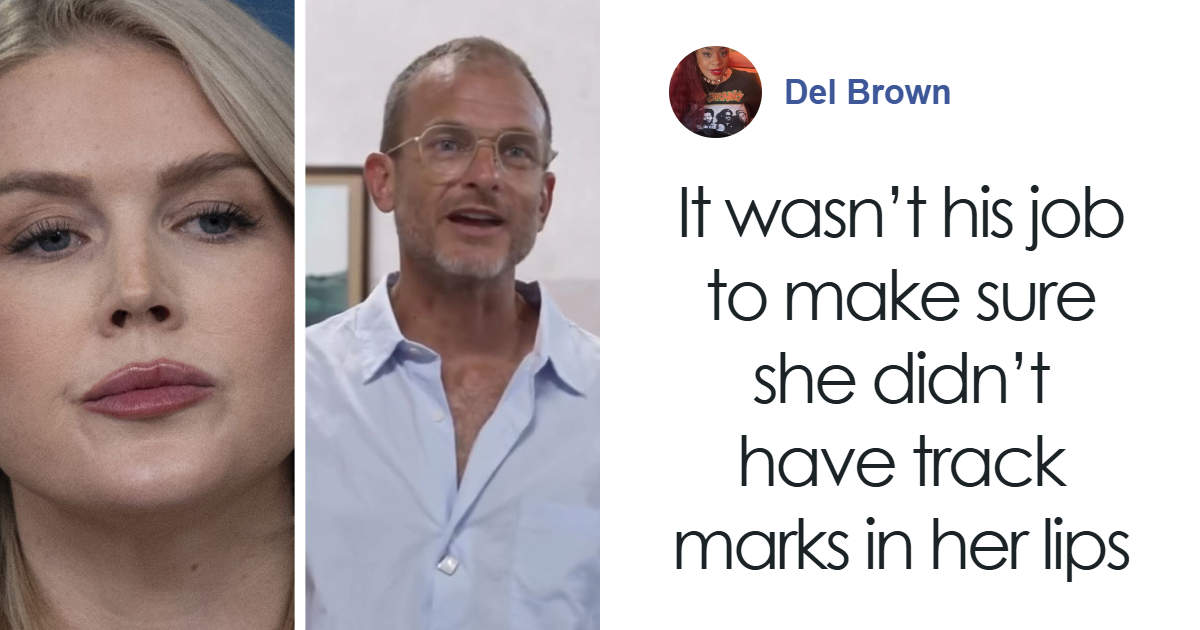
A Vanity Fair portrait of Karoline Leavitt, the White House press secretary in President Donald Trump’s second administration, became one of those internet moments that moved at the speed of a caffeinated group chat. The photo, shot by photographer Christopher Anderson as part of Vanity Fair’s broader feature on White House Chief of Staff Susie Wiles and Trump’s inner circle, showed Leavitt in an extreme close-up. Almost immediately, social media users began speculating about visible marks around her lips, with many claiming they looked like lip filler injection marks.
That speculation quickly turned into mockery, criticism, and a familiar online ritual: zooming in, screenshotting, captioning, arguing, and assigning sinister motives before the coffee had cooled. Some viewers accused Vanity Fair of publishing an intentionally unflattering image. Others praised the portrait as a rare example of political photography refusing to polish power into a campaign brochure. Somewhere between those two camps sat the more useful question: what should a serious editorial portrait do?
Christopher Anderson defended the photo and his approach, saying the close-up style was not designed to make Leavitt or other Trump officials look bad. His argument was rooted in photojournalism rather than glamour photography. He has long used intimate, unvarnished portraiture to photograph political figures, and his Vanity Fair images of Leavitt, Susie Wiles, JD Vance, Marco Rubio, Stephen Miller, Dan Scavino, and James Blair followed that same visual language.
The result was not just a controversy about one picture. It became a miniature national debate about politics, beauty standards, media trust, retouching, gendered criticism, and whether public figures are entitled to flattering images when participating in a journalistic profile. In other words, a close-up of lips somehow opened the entire junk drawer of American media culture. Naturally, the internet brought snacks.
What Happened With the Vanity Fair Photo?
Vanity Fair’s feature focused on Susie Wiles and the inner workings of Trump’s second-term White House. The written package included reporting by Chris Whipple, while Anderson provided a series of portraits that departed from the soft-focus, diplomatic polish typically associated with magazine spreads of political power players.
The image of Karoline Leavitt drew the loudest response because it was especially tight. Rather than offering the usual three-quarter portrait, carefully lit and safely distant, Anderson’s photograph pushed the viewer close to the subject’s face. The crop emphasized skin texture, makeup, expression, and details that a standard publicity image might smooth away. That is where the alleged lip filler marks entered the conversation.
Some viewers said they saw signs of recent cosmetic injections. Medical and beauty commentators in the media discussed how bruising, swelling, redness, and small marks can occur after dermal filler procedures. However, Leavitt has not publicly confirmed the speculation, and a photograph alone is not a medical record. The responsible phrasing is simple: the photo appeared to some viewers to show marks they associated with lip filler. Anything beyond that is speculation dressed in a trench coat and pretending to be evidence.
People’s coverage noted that the portrait became a flashpoint after online commenters claimed the image showed possible injection sites. Newsweek reported that the Vanity Fair portraits sparked sharply divided reactions, with critics on the right calling the images unfair and others arguing the portraits successfully punctured the polished look of political messaging. Vanity Fair later published Anderson’s own explanation of the shoot, allowing the photographer to describe the intent behind the extreme close-ups.
Christopher Anderson’s Defense: Journalism, Not Glamour
Anderson’s defense centered on consistency and intent. He said close-up political portraiture has been a fixture of his work for years and that he has photographed people across the political spectrum in similarly intimate ways. His stated goal was to move past the “theater of politics” and capture something more revealing than a controlled image operation.
That phrase matters. Modern political life is staged with astonishing precision. The lapel pin is straight. The lighting is flattering. The backdrop is patriotic but not too busy. The smile says “competent” without drifting into “estate agent on a bus bench.” Every visual cue is managed. A photographer who steps inside that machinery and refuses to airbrush the result is not merely taking a picture; he is interrupting a brand strategy.
In Vanity Fair’s follow-up interview, Anderson said he did not believe in shaming anyone for physical appearance, but he also chose not to remove or minimize what appeared in the frame. That distinction is the heart of the controversy. Critics saw cruelty. Supporters saw honesty. Anderson framed the decision as journalistic: if the subject’s public presentation is part of the story, then altering the image to make that presentation smoother could mislead readers.
Photojournalism has long treated excessive manipulation as ethically risky. Basic cropping, tonal correction, and reproduction adjustments are standard. Removing marks, changing facial features, or digitally beautifying a subject can cross into a different category, especially when the image is presented as editorial journalism. In that sense, Anderson’s refusal to soften the portrait fits within a tradition that values accuracy over comfort.
Why the Photo Hit Such a Nerve
The Karoline Leavitt Vanity Fair photo went viral because it touched several cultural pressure points at once. First, it involved politics. Second, it involved a young woman in a high-profile role. Third, it involved appearance. Fourth, it involved a magazine known for glamour publishing something distinctly ungilded. That is not a spark; that is a fireworks warehouse with a loose extension cord.
Leavitt’s role also intensified the reaction. As White House press secretary, she is not a private citizen accidentally photographed at the grocery store in fluorescent lighting, which should be illegal under the Geneva Conventions. She is a public communicator whose job is to shape and defend the administration’s message. A portrait of a press secretary is therefore not just a beauty image; it is an image of political performance.
Still, the mockery around the alleged lip filler marks raised a separate ethical concern. Public figures can be scrutinized for power, policies, messaging, and contradictions. But appearance-based pile-onsespecially against women in politicsoften become lazy, personal, and mean. They can quickly shift the conversation away from the person’s public role and toward whether strangers approve of her face. That is not analysis. That is a comments section wearing a monocle.
Responsible coverage should hold two ideas at once. Anderson’s photo may be defensible as an editorial portrait that refused to retouch reality. At the same time, the internet’s response may be criticized when it turns a public image into body-focused mockery. The photograph can be journalistically valid while the reaction to it can still be gross. Adults are allowed to use two thoughts in the same paragraph. It is legal in most states.
The Bigger Issue: Retouching, Trust, and the Age of Filters
The backlash also reflects a deeper problem: audiences no longer agree on what a photograph is supposed to be. In one world, people expect portraits to look polished, softened, and socially presentable. In another world, journalism asks images to show what the camera saw, not what a publicist hoped it saw. Social media has made the conflict worse because filters, face-tuning apps, AI tools, and casual retouching have trained viewers to expect a smoother version of human beings.
That expectation changes how people react to ordinary photographic detail. Skin texture becomes “bad lighting.” A facial line becomes “sabotage.” A makeup crease becomes “proof” of conspiracy. In a culture soaked in retouched images, an unretouched close-up can feel more shocking than a fake one. The camera did not necessarily become cruel; the audience became unused to pores.
Major news organizations maintain strict standards around image manipulation because visual trust matters. The Associated Press, for example, has explained in other high-profile image controversies that digitally altered photos can violate editorial standards. The point is not that every portrait must be harsh or unflattering. The point is that journalism loses credibility when it quietly transforms reality while pretending not to.
Vanity Fair sits at an interesting crossroads because it is both a style magazine and a serious political outlet. Readers may expect visual sophistication, but a political feature is not the same thing as a fragrance ad. Anderson’s portraits leaned toward documentary honesty. That made them uncomfortable, memorable, and wildly shareablethe modern media trifecta, though not always in that order.
Was the Close-Up Fair?
The fairest answer is: it depends on the standard being used. If the standard is publicity, the close-up was harsh. If the standard is celebrity glamour, it was almost rude. If the standard is political photojournalism, it was defensible. A public official sitting for a major magazine profile should expect to be photographed as part of the story, not merely decorated for it.
Critics argued that the image looked deliberately unflattering. Some accused Vanity Fair of editing the photos to embarrass the administration. Anderson rejected that interpretation, saying the tight framing was part of his established approach and was used across the subjects in the package. That consistency matters. If only Leavitt had been photographed this way, the criticism would carry more weight. Because several officials received the same raw treatment, the image reads more like a visual thesis than a personal attack.
That visual thesis appears to be this: political power wants to look controlled, but journalism should examine control rather than reproduce it. The frame gets close because politics often works at a distance. The portrait denies the usual buffer. It asks viewers to look at the people who shape public narratives without the comfort of a campaign-approved glow.
However, fairness also depends on editorial judgment. A strong image can reveal character, atmosphere, or contradiction. A cheap image simply humiliates. The best political portraits do not need to flatter, but they should have a reason to exist beyond “people will dunk on this.” Anderson’s body of work and his comments suggest a broader documentary purpose. Whether every viewer accepts that purpose is another matter entirely, and the internet has never been famous for waiting until all evidence is in.
Karoline Leavitt, Image Politics, and the Cost of Visibility
Karoline Leavitt became the youngest person to serve as White House press secretary, and her role places her at the center of daily political conflict. Her job requires composure, speed, loyalty, and a willingness to absorb criticism from reporters, opponents, and viewers. In that environment, appearance becomes part of the public package, whether fairly or unfairly.
Women in politics have long faced a double bind. If they appear polished, critics may call them artificial. If they appear less polished, critics may call them unprofessional. If they ignore style, that becomes a story. If they embrace style, that becomes a story too. The rules are less like a rulebook and more like a treadmill with a panel of judges.
The Vanity Fair close-up turned this double bind into a single image. It raised questions about how much effort public women are expected to put into presentation and how quickly that effort can be weaponized against them. Even when criticism is aimed at a powerful political figure, appearance-based ridicule can reinforce the same shallow standards that later harm less powerful women.
That does not mean journalists must protect powerful people from uncomfortable images. It means audiences should separate legitimate visual critique from personal mockery. There is a difference between saying, “This portrait challenges political image-making,” and saying, “Let’s all inspect a woman’s face like we are quality-control managers at a lip gloss factory.”
Why This Story Matters Beyond One Viral Photo
The VF photographer controversy matters because it reveals how political communication now works. A magazine publishes a feature. A portrait goes viral. Social platforms turn one image into a referendum on media bias, cosmetic procedures, feminism, MAGA aesthetics, photo ethics, and whether a photographer is a genius or a villain. The original article becomes one ingredient in a much larger content soup.
This is how modern political media often behaves. The image travels farther than the reporting. The reaction travels farther than the image. The joke travels farther than the reaction. By the time most people encounter the story, they are not seeing the original context; they are seeing someone else’s interpretation of someone else’s screenshot of someone else’s outrage. It is media telephone, except everyone is yelling.
For publishers, the lesson is that images now carry enormous interpretive weight. A portrait is not just illustration. It can become the headline, the argument, and the controversy. For political figures, the lesson is that participating in editorial media means surrendering some control. For audiences, the lesson is to slow down before turning a photo into a diagnosis, a conspiracy theory, or a personality test.
Experience-Based Takeaways: What Public Figures and Photographers Can Learn
Anyone who has worked around public-facing photography knows the awkward truth: a photo shoot is never just a photo shoot. It is a negotiation between the subject’s desired image, the photographer’s eye, the editor’s purpose, and the audience’s appetite for meaning. Add politics, and suddenly every shadow has a party affiliation.
For public figures, the first practical lesson is to understand the outlet and the photographer before stepping in front of the camera. A Vanity Fair political portrait by Christopher Anderson is not the same as a campaign headshot, a friendly television still, or a lifestyle magazine cover. Subjects and communications teams should review a photographer’s previous work, not to demand control, but to understand the visual grammar. If a photographer is known for extreme close-ups, texture, and documentary realism, showing up expecting soft-focus glamour is like going to a steakhouse and being shocked by the cow theme.
The second lesson is timing. If a public figure chooses cosmetic treatments, intense facials, new makeup, or any appearance-related change before a major shoot, the calendar matters. General medical guidance on dermal fillers notes that bruising, swelling, redness, and tenderness can occur after injections and may take days or even longer to settle. That does not prove anything about Leavitt’s case. It simply illustrates why high-visibility figures usually plan beauty appointments carefully before cameras arrive. The camera is not a friend who says, “You look fine.” The camera is a tiny courtroom with a lens.
For photographers, the experience-based lesson is equally clear: intent is not always how an image is received. A photographer may aim for truth, but viewers may see humiliation. That does not mean the photographer should abandon honesty. It does mean the image should be strong enough to justify its severity. The closer the crop, the greater the responsibility. Extreme intimacy can reveal power, performance, anxiety, and artifice. It can also feel invasive if the editorial purpose is weak.
Editors also have a responsibility. They choose which frame becomes public. In political photography, that selection should serve the story. A harsh image may be ethical if it reveals something meaningful about power or presentation. It becomes questionable if it is chosen mainly because it will generate mockery. The difference can be subtle, but audiences sense it, even when they disagree about where the line sits.
For readers, the best habit is media patience. Before joining a pile-on, ask three questions: What was the original context? What has actually been confirmed? What am I being invited to feel? In the Karoline Leavitt Vanity Fair controversy, the confirmed story is about an unretouched political portrait, a photographer defending his close-up style, and a public debate over image-making. The unconfirmed layer is the online speculation about cosmetic work. The emotional invitation is outrage, ridicule, or applause, depending on which feed delivered the photo.
The final lesson is simple but unfashionable: people in public life are still people. That does not exempt them from accountability. It does mean accountability should aim higher than pores, lips, and lighting. Politics gives us plenty to argue about without pretending every close-up is a medical chart.
Conclusion
The Vanity Fair close-up of Karoline Leavitt became viral because it compressed several modern anxieties into one frame: distrust of media, obsession with appearance, partisan defensiveness, gendered scrutiny, and the uncertain status of photography in an age of filters and AI. Christopher Anderson defended the portrait as part of a long-standing journalistic style meant to cut through political theater. Critics saw an unflattering image. Supporters saw an honest one. The internet, as usual, saw an opportunity to behave like a raccoon with Wi-Fi.
The most balanced reading is that Anderson’s photo can be understood as a serious editorial choice while the online mockery around alleged lip filler marks can still be criticized as excessive and appearance-focused. A political portrait does not have to flatter. A public debate does not have to become body commentary. The strongest takeaway is not about whether a close-up was too close. It is about how power wants to be seen, how journalism chooses to look, and how quickly audiences turn looking into judging.