Note: This article is written from verified public entertainment information about It’s Always Sunny in Philadelphia Season 17, Episode 7, “The Gang Gets Ready for Prime Time,” and is crafted for web publication in original SEO-friendly language.
Every long-running sitcom eventually faces the same terrifying question: can it still surprise people after nearly two decades of schemes, screaming, rat-stomping, musical theater, fake funerals, and whatever Frank Reynolds considers “business”? In the case of It’s Always Sunny in Philadelphia, the answer remains a gloriously unhinged yes. Tonight’s episode, “The Gang Gets Ready for Prime Time,” gives Glenn Howerton one of those showcase moments that fans immediately want to clip, quote, dissect, and submit to every awards body that has somehow ignored Dennis Reynolds for years.
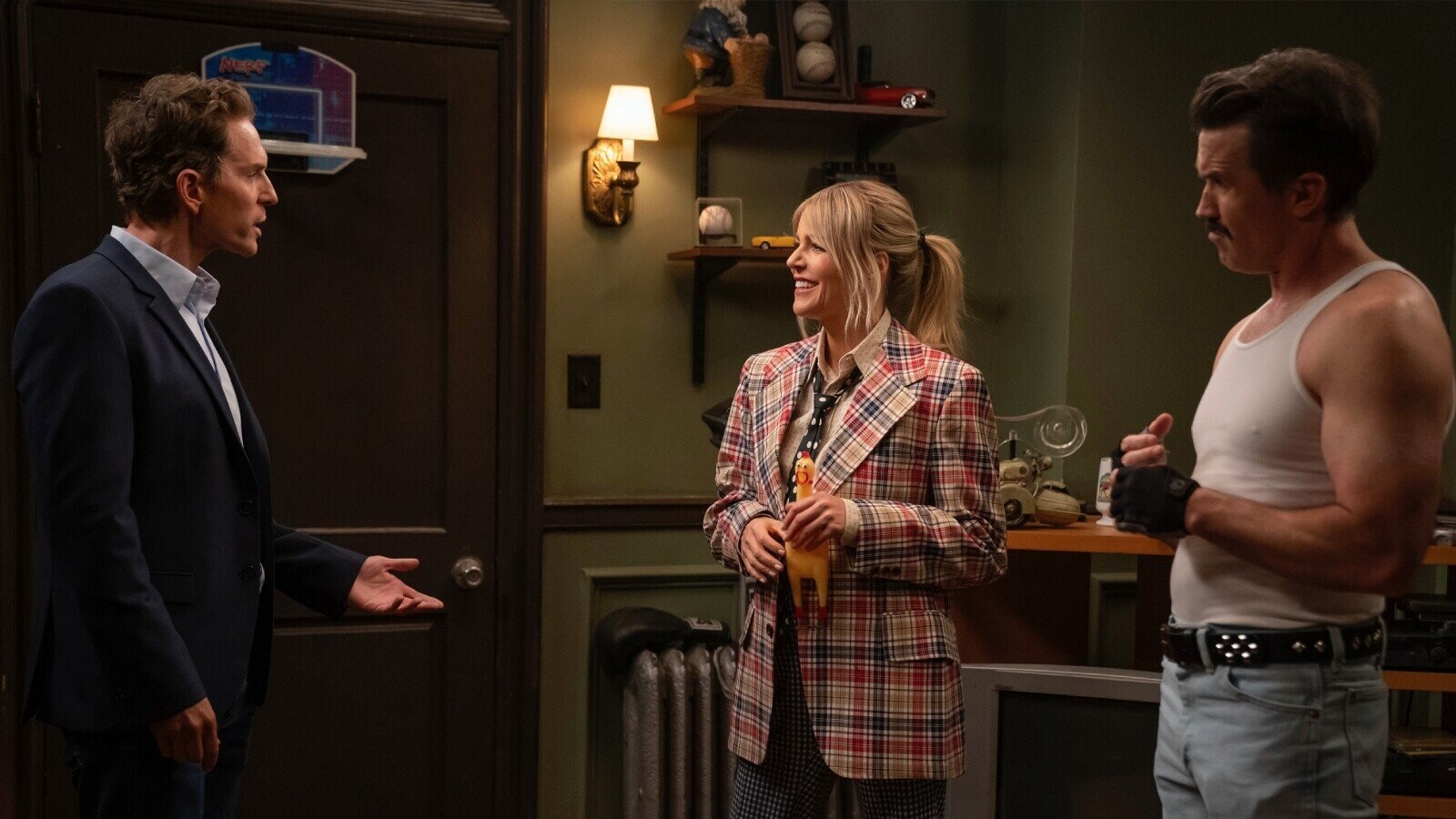
The headline image is simple but unforgettable: Glenn Howerton as Dennis, looking less like a polished sitcom narcissist and more like a cursed Romanian aristocrat who found a roll of face tape and a ring light. The result is “vampire Glenn Howerton,” a phrase that sounds like internet nonsense until you see the episode and realize it is also the most accurate possible description. Dennis does not merely spiral. He glides into the darkness wearing vanity as a cape.
“The Gang Gets Ready for Prime Time” is the seventh episode of Season 17, and it continues the season’s fixation on television, image management, crossovers, and the desperate hunger to be accepted by mainstream America. The Gang learns that Frank’s run on The Golden Bachelor may bring a hometown-style visit to Paddy’s Pub. Naturally, instead of acting like normal people for one meal, they decide to workshop themselves into the most likable versions of human beings possible. It goes about as well as a health inspection at Paddy’s.
Why “The Gang Gets Ready for Prime Time” Works So Well
The setup is classic Sunny: a ridiculous opportunity arrives, the characters mistake attention for validation, and the entire group tries to cheat the social contract without understanding it. What makes the episode especially sharp is that the target is not just reality television. It is the larger culture of testing, branding, smoothing, editing, and sanding off personality until nobody is offended because nobody feels anything.
That is a perfect nightmare for It’s Always Sunny in Philadelphia. The Gang’s entire comic engine depends on them being too much. Mac is too needy. Dee is too desperate. Charlie is too feral. Frank is too Frank, which should probably be its own category in several legal databases. Dennis, however, is the most dangerous version of “too much” because he believes he can control the room through sheer presentation. When the room refuses to obey, the mask cracks. In this episode, it practically peels off.
Glenn Howerton Turns Vanity Into Horror Comedy
Glenn Howerton has always played Dennis Reynolds as a man one compliment away from ecstasy and one insult away from becoming a Dateline reenactment. His performance thrives on contradiction. Dennis wants to appear sophisticated, young, desirable, and above everyone else, but his need to be seen that way exposes the insecurity underneath. That is why the face-tape gag lands so hard. It is not just a visual joke. It is a character thesis with adhesive backing.
As Dennis tries to make himself camera-ready, he becomes visually stranger and emotionally more exposed. The more he tries to look perfect for mass appeal, the more monstrous he becomes. The “vampire” comparison is funny because of the pale, stretched, undead quality of the look, but it also works thematically. Dennis is a character who feeds on admiration. He does not want applause; he requires it. He does not want attention; he treats it like oxygen. Or, in this case, fresh blood.
That is where Howerton’s performance becomes awards-worthy. Comedy acting is often undervalued because it looks effortless when done well. But this episode asks Howerton to balance farce, vanity, panic, menace, and wounded humiliation in one escalating performance. He has to be hilarious without turning Dennis into a cartoon, frightening without leaving the sitcom, and weirdly vulnerable without asking the audience to forgive him. That is a high-wire act, except the wire is above a pit full of focus-group scorecards.
The Emmy Joke Has Real History Behind It
The Emmy conversation around It’s Always Sunny in Philadelphia is not new. The series has become one of television’s great awards-season punchlines: wildly influential, fiercely beloved, and still rarely treated like the prestige comedy institution it is. The show has received technical recognition in the past, but its writing, acting, and overall comedy achievements have long been overlooked in major categories.
This is part of what makes the episode’s title-adjacent conversation so funny. Sunny has joked before about wanting awards, most famously in “The Gang Tries Desperately to Win an Award,” a meta classic that mocked the polished formulas of Emmy-friendly sitcoms. “The Gang Gets Ready for Prime Time” feels like a spiritual cousin to that episode. Once again, the characters are trying to become palatable enough for approval. Once again, their attempt to become acceptable only proves why they are great.
For Dennis, the stakes are personal. His meltdown connects to his fear of being misrepresented, dismissed, or seen as old, weird, and undesirable. The Golden God cannot survive a bad camera angle. He can survive scams, crimes, betrayals, and moral collapse, but not a focus group suggesting his face has entered a new tax bracket.
A Season 17 Episode Built on Meta Comedy
Season 17 of It’s Always Sunny in Philadelphia arrived with the confidence of a show that knows its own mythology. The season plays with crossovers, television formats, legacy expectations, and the strange reality of being both a cult comedy and a long-running institution. By the time “The Gang Gets Ready for Prime Time” arrives, the show is not simply telling a story about Frank’s reality-TV fame. It is making a joke about what happens when a proudly abrasive comedy asks whether it could ever pass as broad family entertainment.
The answer, of course, is no. But the attempt is where the comedy lives. The Gang rehearses, adjusts, panders, and mutates. Their idea of likability is not kindness or sincerity. It is performance optimization. They treat human warmth like a software patch. This is why the episode feels so modern. It satirizes not just TV focus groups, but influencer culture, brand safety, algorithmic taste, and the way people increasingly curate themselves for imaginary audiences.
Dennis Reynolds and the Fear of Aging on Camera
Dennis has always been vain, but later-season Dennis has become increasingly haunted by time. The joke is not simply that he wants to be attractive. Plenty of sitcom characters are vain. Dennis is funnier and darker because his vanity is existential. If he cannot be perceived as young, powerful, and desirable, then who is he? A bartender? A twin brother? A man with a suspiciously detailed understanding of implication? Horrifying possibilities, all of them.
The face-tape transformation in this episode externalizes that fear. It turns insecurity into creature design. The tighter Dennis pulls his face, the looser his grip on reality becomes. That is excellent visual comedy, but it is also efficient storytelling. The audience immediately understands what Dennis is doing and why it is doomed. He wants control over how America sees him, but the harder he controls the image, the more grotesque the image becomes.
The Gang’s Chemistry Still Carries the Madness
While Howerton gets the big horror-comedy showcase, the episode works because the ensemble understands how to orbit Dennis’s collapse. Rob Mac, Charlie Day, Kaitlin Olson, and the wider supporting players help build the pressure chamber. Each character has a different relationship to being liked. Mac wants approval so badly he can bend his identity into a pretzel. Dee wants recognition and usually receives humiliation with extra humiliation on the side. Charlie, in his strange way, often stumbles closest to emotional truth. Frank’s absence from the central rehearsal only makes his reality-TV shadow funnier.
Great Sunny episodes often function like group experiments in failure. One character proposes a plan, another misunderstands it, someone escalates, someone lies, and Dennis eventually says something that makes everyone in the room wonder whether they should leave through the window. “The Gang Gets Ready for Prime Time” follows that rhythm beautifully. It starts with a social performance problem and ends in psychological excavation wearing Dracula cheekbones.
Why Glenn Howerton’s Dennis Still Feels Fresh
After so many seasons, a lesser show might have flattened Dennis into a greatest-hits machine: rage face, vanity line, sinister pause, repeat. But Howerton keeps finding new angles. Dennis is not just angry; he is disappointed that the universe has failed to recognize his obvious superiority. He is not just creepy; he is wounded by the fact that other people notice the creepiness. He is not just vain; he is terrified that vanity may be all he has.
That complexity is why fans keep arguing that Howerton deserves more awards recognition. His performance is technically precise. The line readings are calibrated. The pauses are lethal. The physical choices, from posture to eye contact to smile duration, create a character who can be ridiculous and disturbing in the same breath. In “The Gang Gets Ready for Prime Time,” he pushes that skill set into a near-theatrical monologue that feels funny, pathetic, and chilling all at once.
The Episode’s Best Joke Is Also Its Smartest Idea
The smartest joke in the episode is that It’s Always Sunny should never be focus-grouped into normalcy. The show has lasted because it refuses to become safe in the bland sense. That does not mean it never evolves. It has evolved constantly, often by becoming more self-aware and structurally inventive. But it has not turned the Gang into better people merely to make viewers comfortable. The discomfort is the recipe. Remove it, and you have a very sad bowl of unseasoned comedy oatmeal.
By showing the Gang trying to appeal to everyone, the episode reminds us why appealing to everyone is usually a terrible artistic goal. The characters become worse at being human the more they try to perform humanity correctly. Dennis becomes less attractive the harder he tries to appear ageless. The family dinner becomes less convincing the more it is rehearsed. The focus group becomes less useful the more seriously the Gang takes it.
How the Golden Bachelor Premise Sharpens the Satire
The use of The Golden Bachelor framework is especially clever because that franchise is built around televised sincerity, emotional backstories, and carefully packaged romance. Paddy’s Pub is the opposite of that environment. It is where sincerity goes to develop a rash. Putting the Gang near a wholesome reality-TV format creates immediate comic tension. They cannot simply be themselves, but they are also incapable of convincingly being anyone else.
Frank’s involvement makes it even funnier. Frank Reynolds on a golden-years dating show is already a joke with enough fuel to power a small illegal casino. But the episode’s smartest move is focusing on how the rest of the Gang reacts to Frank’s new visibility. They are not happy for him. They are not supportive. They see the camera as a resource, and they want to mine it before someone else gets there first.
What This Episode Says About Fame, Aging, and Approval
Under the jokes, “The Gang Gets Ready for Prime Time” is about the humiliating desire to be chosen. Chosen by television. Chosen by viewers. Chosen by awards voters. Chosen by people who do not know you but still hold the power to validate you. Dennis is the perfect character for that theme because he has spent the entire series manufacturing an identity he expects others to worship. When the worship does not arrive, he does not adapt. He tightens the tape.
That is why the vampire image sticks. Vampires are elegant, vain, old, seductive, dangerous, and deeply afraid of mirrors. Dennis Reynolds may not sleep in a coffin, but emotionally speaking, the man has definitely browsed coffin options. Howerton uses that gothic energy to make the episode feel larger than its simple dinner-rehearsal setup. Suddenly, the story is not just about getting ready for a reality-TV visit. It is about a man trying to outrun mortality with cheek tension.
Additional Experience: Watching “Vampire Glenn Howerton” as a Fan and Critic
Watching this episode feels like attending a small comedy seminar that slowly turns into a haunted-house tour. At first, the premise seems delightfully simple: the Gang wants to look normal on television. Any longtime viewer knows that “normal” is the one costume these people can never wear correctly. But as the episode progresses, the experience becomes more layered. You start by laughing at the face tape. Then you laugh harder because Dennis thinks the face tape is helping. Then, somewhere around the monologue, you realize Howerton is doing something much more interesting than a one-off visual gag.
For viewers who have followed It’s Always Sunny in Philadelphia for years, the episode rewards memory. Dennis’s fear of looking bad on television connects to older humiliations and to his long-running obsession with presentation. He has always wanted to be perceived as the smartest, most attractive, most controlled person in the room. The joke, of course, is that everyone can see the panic leaking out of him like steam from a cursed pressure cooker. This episode takes that familiar flaw and gives it a fresh costume: undead glamour with a side of midlife dread.
The experience is especially satisfying because it shows how physical comedy and character history can work together. A new viewer can enjoy the vampire look instantly. It is funny on sight. But a longtime fan sees the deeper punchline: Dennis has spent years insisting that he is a Golden God, and here he looks like a Golden God who has been stored improperly in an attic. The comedy is visual, emotional, and historical all at once.
There is also a real pleasure in seeing a sitcom episode trust an actor with a big, strange, slow-building moment. Modern comedy often cuts quickly, afraid the audience will drift away if a joke breathes for more than three seconds. Sunny has always been willing to let discomfort expand. Howerton’s final stretch in the episode benefits from that patience. The scene lets Dennis explain himself just enough to become more ridiculous, not less. He reveals pain, but because he is Dennis, the pain arrives wrapped in ego, delusion, and the faint scent of expensive moisturizer purchased for morally questionable reasons.
From a viewer’s perspective, the episode also feels like a sly argument for why comedy acting deserves more awards attention. Dramatic actors often get credit for transformation when they cry, whisper, lose weight, or stare through a rainy window. Comedy actors transform too; they just do it while maintaining rhythm, timing, and absurdity. Howerton’s Dennis is a technical creation. His face, voice, posture, and emotional temperature all shift depending on how much control Dennis thinks he has. In “The Gang Gets Ready for Prime Time,” that control evaporates, and Howerton makes the evaporation funny frame by frame.
The funniest part is that an Emmy campaign for Dennis Reynolds would probably disgust Dennis Reynolds if he could not personally manage it. He would demand better lighting, reject the seating chart, accuse the voters of bias, and somehow turn a humble acceptance speech into a threat. That is exactly why the character remains so watchable. He wants dignity, but indignity is his natural habitat. The episode understands that perfectly.
For fans, “vampire Glenn Howerton” is likely to become shorthand for a very specific kind of Sunny greatness: grotesque, smart, self-aware, and weirdly revealing. It is not just a funny look. It is an entire character collapsing into one image. Dennis wants to be timeless. Instead, he becomes undead. Honestly, for Paddy’s Pub, that is close enough to personal growth.
Conclusion
“The Gang Gets Ready for Prime Time” proves that It’s Always Sunny in Philadelphia still knows how to turn a small premise into a full comic autopsy. The episode begins with a reality-TV opportunity and ends with Glenn Howerton delivering one of Dennis Reynolds’s most memorable breakdowns. The “vampire” look may be the hook, but the performance is the real story. Howerton turns vanity into horror, insecurity into comedy, and face tape into a surprisingly effective awards-season argument.
Whether or not the Emmys ever fully embrace Sunny, episodes like this explain why the show remains culturally durable. It is not trying to become nicer, smoother, or more broadly acceptable. It is examining the absurdity of that pressure while letting its characters fail spectacularly. Dennis Reynolds may want America to see the perfect version of himself, but the imperfect version is the one worth watching. Pale, stretched, desperate, and dangerously theatrical, vampire Glenn Howerton does not just go for the Emmy. He bares his fangs at it.