Editor’s note: This article treats the “revenge” claim as an unverified allegation from a gossip outlet and separates it from confirmed public reporting about the White House response, Paramount, late-night TV controversies, and the show’s future.
In the strange, noisy, very American food fight where politics meets pop culture, few things travel faster than a rumor involving Donald Trump, South Park, and the possibility of revenge. Add a gossip site to the mix, sprinkle in a multibillion-dollar media deal, and suddenly the internet has a fresh bowl of controversy soup. According to a claim circulated by RadarOnline and amplified by entertainment sites, Trump is allegedly furious over the way South Park mocked him and may be looking for ways to pressure the show’s corporate parent. That is the claim. The important question is: how much of it is real, how much is rumor, and why does everyone keep refreshing the page like Cartman waiting for snack time?
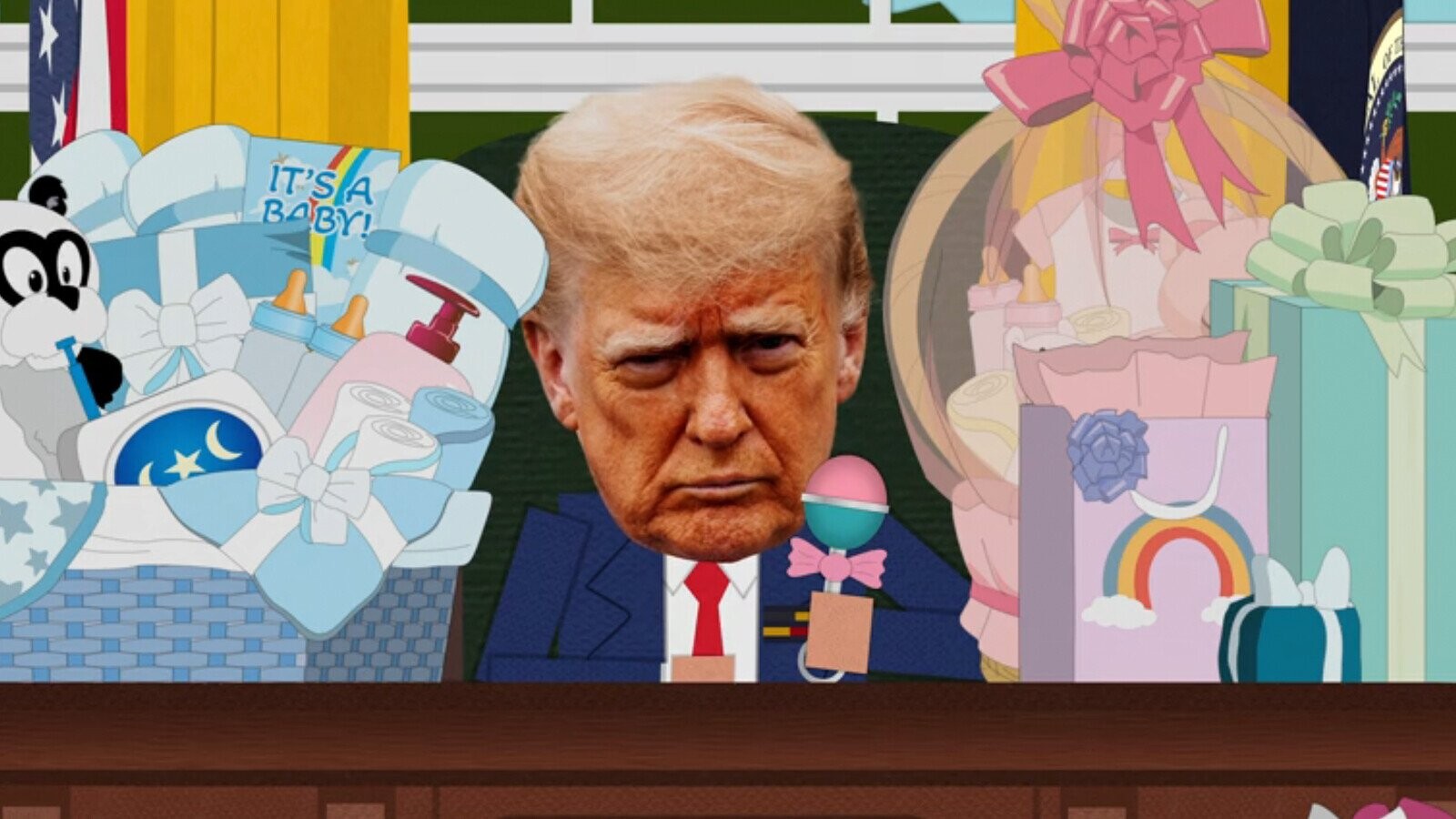
The short answer is that the revenge storyline is not confirmed by official evidence. What is confirmed is that South Park returned in 2025 with a sharp Trump-focused season premiere, the White House responded angrily, the show’s creators joked about the backlash, and Paramount’s corporate dramas created the perfect background for speculation. In other words, the rumor may be gossip, but the atmosphere around it is very real.
What the Gossip Site Claimed
RadarOnline published a report claiming that Trump was privately “fuming” over South Park and that unnamed insiders believed he wanted the show taken off the air. The report alleged that Trump viewed the satire as personally humiliating and that people around the production feared back-channel pressure on Paramount. The claim leaned heavily on anonymous sources, which makes it spicy but not rock-solid. Anonymous sourcing can be legitimate in serious journalism, but in celebrity-gossip territory, it is also where rumors put on sunglasses and pretend to be facts.
The report gained extra attention because it arrived after a period of public tension between the Trump administration and entertainment programs that mocked him. South Park had already become a headline magnet for its Season 27 premiere, while late-night shows were dealing with their own pressure campaigns, suspensions, and corporate anxiety. That context made the RadarOnline claim feel plausible to some readers, even if it remained unproven.
What Actually Happened Between Trump’s White House and South Park
The controversy began with the 2025 Season 27 premiere of South Park, which targeted Trump, Paramount, CBS, and the broader culture of media compromise. The episode used the show’s usual brand of crude political satire, taking aim at Trump’s lawsuits, corporate settlements, and the uneasy relationship between entertainment companies and political power.
The White House did not stay quiet. A spokesperson dismissed South Park as irrelevant and accused the series of using shock for attention. That response, naturally, did the one thing every public-relations professional fears: it made more people curious. Calling South Park irrelevant is a bit like telling a fourth grader not to press the big red button. Congratulations, now everyone is staring at the button.
Creators Trey Parker and Matt Stone responded at San Diego Comic-Con with the kind of deadpan humor that has helped keep the series alive since 1997. Parker’s mock apology became part of the story, and the controversy only increased interest in the show. Reports later indicated that the premiere drew huge cross-platform attention, while follow-up episodes continued to generate ratings, online clips, and political commentary.
Why the Paramount Connection Matters
The reason this rumor did not vanish after one news cycle is Paramount. South Park is tied to Comedy Central and Paramount+, and in 2025 Parker and Stone finalized a massive streaming arrangement with Paramount. Around the same period, Paramount was also navigating high-stakes business issues, including the Skydance merger and fallout from a legal settlement involving Trump and CBS parent company Paramount.
This is where the story becomes more than just “president mad at cartoon.” Media companies do not operate in a vacuum. They depend on regulators, mergers, broadcast licenses, investors, and executives who prefer calm quarterly calls over culture-war fireworks. When a political figure criticizes a show and the company behind that show has business before regulators, people begin connecting dots. Sometimes the dots make a picture. Sometimes they make a conspiracy corkboard with red string and a sandwich wrapper pinned to it.
That does not prove Trump plotted revenge against South Park. It does explain why the claim had legs. The public had already seen entertainment companies make decisions under political pressure, or at least decisions that looked politically convenient. When corporate caution meets political anger, speculation becomes the house band.
The Jimmy Kimmel Factor
The RadarOnline claim also referenced fears inside the entertainment industry after ABC temporarily suspended Jimmy Kimmel Live! in 2025. Kimmel, a frequent Trump critic, became a flashpoint in debates over free speech, political pressure, broadcast ownership, and the responsibilities of networks. His suspension was later lifted, but the episode left a bruise across late-night television.
For writers, producers, comedians, and viewers, the Kimmel situation raised an uncomfortable question: if a powerful political figure dislikes a joke, can that displeasure travel through regulators, station owners, and executives until the joke disappears? In theory, the First Amendment protects political satire. In practice, entertainment companies are not constitutional law textbooks. They are businesses with lawyers, advertisers, shareholders, and a deep desire not to become tomorrow morning’s crisis memo.
That is why the alleged fear around South Park sounded familiar. Even without proof of a Trump revenge plan, the broader climate had made comedians more alert to pressure. Satire works best when it can swing freely. It gets weird when every punchline has to pass through a legal department wearing a helmet.
Why South Park Is Hard to Intimidate
If any show is built to survive controversy, it is South Park. Since its debut, the series has mocked presidents, celebrities, religious institutions, media companies, moral panics, tech trends, and itself. Parker and Stone have made a career out of aiming directly at whatever topic seems most likely to make a room full of executives cough into their coffee.
The show’s production style gives it an unusual advantage. South Park is famous for making episodes quickly, often close to air date. That allows the series to respond to the news while the rest of television is still scheduling a meeting to discuss the possibility of forming a committee. It also means controversy can become fuel. If someone powerful complains on Thursday, there is a decent chance the complaint becomes a joke by the next episode.
That does not mean the show is invincible. Networks can delay episodes, companies can renegotiate deals, and distribution platforms can change priorities. But South Park is not a fragile newcomer hoping no one notices it. It is one of Comedy Central’s defining properties, a franchise with decades of brand equity, streaming value, and international recognition. Canceling it would not be like quietly moving a low-rated show to 2 a.m. It would be like trying to hide a marching band inside a toaster.
Is Trump Really Plotting Revenge?
There is no public proof that Trump has launched a formal effort to cancel South Park. The revenge claim rests on unnamed sources and a gossip outlet’s reporting. Responsible readers should treat it as allegation, not established fact. That matters because political stories can mutate quickly online. One headline says “gossip site claims.” Two reposts later, someone is insisting a secret government cartoon task force is meeting in a bunker under Mar-a-Lago. Please do not feed that raccoon.
What can be said with confidence is that Trump and his allies have publicly criticized entertainment figures and media outlets that mock or oppose him. Trump has also used lawsuits, public attacks, and regulatory pressure as part of his broader media strategy. That pattern makes the South Park rumor feel believable to many critics, especially after controversies involving CBS, ABC, Kimmel, and Paramount.
Still, feeling believable is not the same as being verified. The more accurate reading is this: South Park angered the White House, the show became more popular because of the backlash, and gossip reports claimed Trump wanted revenge. The confirmed facts are dramatic enough. No need to add a fog machine unless the evidence shows up carrying one.
How the Backlash Helped South Park
One of the funniest parts of the whole saga is that the backlash may have helped the show. When the White House called South Park washed-up, viewers responded by watching. Reports around Season 27 showed strong ratings and a surge in online discussion. That is the ancient law of forbidden television: tell people something is outrageous, and they will arrive with popcorn, snacks, and a group chat.
This is not new. Controversy has always been part of South Park’s business model, even when the creators pretend to be surprised by it. The show thrives on being the thing people argue about at work, at school, on podcasts, and in comment sections where grammar goes to take a long nap. Political anger does not necessarily damage satire. Sometimes it gives satire a neon sign.
For Trump, that creates a tricky problem. Publicly attacking a show that mocks him may satisfy supporters, but it can also make the joke bigger. The Streisand effect, named for attempts to suppress information that only draw more attention to it, applies beautifully here. If a politician wants fewer people to see an insulting cartoon, issuing an angry statement is usually not the stealthiest strategy.
Free Speech, Satire, and the Corporate Middleman
The bigger issue is not whether Trump was annoyed by a cartoon. Politicians have been annoyed by cartoons since cartoonists discovered that noses are funny. The bigger issue is whether political pressure can make corporations limit speech that is legally protected but commercially inconvenient.
American satire has a long tradition of punching upward. From newspaper cartoons to late-night monologues, from Saturday Night Live to South Park, comedy has often been a way for the public to process power. It can be rude, unfair, juvenile, brilliant, lazy, sharp, or all of those things before the first commercial break. But its value comes from the freedom to be disrespectful toward leaders. A democracy where politicians cannot be mocked is not a democracy; it is a customer-service desk with flags.
At the same time, most major satire reaches audiences through corporations. That creates tension. A comedian may want to challenge power, while the company distributing the joke may need approval for a merger, a license, or a deal. The result is a modern free-speech puzzle: the government may not directly censor a show, but pressure can still move through private companies in subtle ways.
That is why the South Park rumor matters even if it remains unverified. It points to a real anxiety in American media: not that every joke will be banned, but that executives may quietly decide some jokes are not worth the trouble. The danger is not always a dramatic cancellation. Sometimes it is a softer voice, a delayed episode, a rewritten line, or a producer saying, “Do we really need this?” while staring at the ceiling like it owes money.
Why the Story Still Has Legs in 2026
As of 2026, South Park is not dead. In fact, Comedy Central and Paramount+ have announced future episodes, and the show remains a major asset. That weakens the most dramatic version of the revenge theory. If Trump’s alleged plan was to remove the series quickly, it has not happened in any obvious public way.
However, the controversy still matters because it captures a broader cultural moment. Americans are debating whether entertainment companies are too willing to bend under political pressure. Viewers are watching how networks respond to angry presidents, activist audiences, regulators, and social media storms. Creators are testing how far satire can go before the people who own the microphones start sweating through their blazers.
South Park is unusually useful in this debate because it is not polite satire. It does not gently nudge power with a feather. It throws a cartoon snowball with a battery inside. That makes it easier to see who really supports free expression and who only supports jokes aimed at the other team.
Experiences and Lessons From the Trump-South Park Firestorm
Anyone who has followed political comedy for more than five minutes knows the experience: a joke airs, a public figure complains, fans argue, critics write essays, and suddenly everyone is an expert in constitutional law, television ratings, and the emotional development of animated fourth graders. The Trump-South Park clash fits that pattern perfectly, but it also feels sharper because the media environment is more fragile than it used to be.
One experience many viewers share is the strange thrill of watching satire hit a nerve. When a joke becomes the subject of an official response, it feels as if the cartoon escaped the screen and ran through the halls of power wearing tiny boots. That can be funny, but it can also be revealing. Leaders often tell us what bothers them by what they choose to answer. A president ignoring a joke makes the joke smaller. A president’s team attacking it can make it national news.
Another lesson is that audiences are more media-literate than executives sometimes think. Viewers understand when corporate decisions look suspicious. If a show is delayed after mocking a powerful politician, people will notice. If a network suspends a host after government criticism, people will connect the dots. Sometimes those dots form an accurate picture; sometimes they become internet spaghetti. But the instinct comes from a real place: people know that money, regulation, and politics shape what they get to watch.
The South Park controversy also shows why humor remains powerful. A policy speech may be forgotten by dinner. A crude cartoon image can follow a politician for months. That is not always noble, and it is not always fair, but it is how political culture works. Comedy simplifies. It brands. It gives people a mental shortcut. For public figures who care deeply about image, satire can feel more threatening than a 40-page report, mostly because nobody turns a 40-page report into a meme before breakfast.
For writers, the experience is a reminder to label speculation clearly. “Gossip site claims” should not become “confirmed plot” just because the headline is funnier that way. Good entertainment writing can be lively without being sloppy. The responsible approach is to say: here is what was alleged, here is what is confirmed, here is the context, and here is why the claim caught fire. That structure respects readers and keeps the article from turning into a rumor piñata.
For readers, the lesson is equally practical: enjoy the chaos, but keep one hand on the facts. The internet rewards certainty, even when certainty has just wandered in wearing a fake mustache. When a story involves anonymous insiders, political enemies, and a show famous for provocation, skepticism is not boring. It is seatbelt behavior.
In the end, the Trump-South Park saga is less about whether one gossip report got every detail right and more about the modern collision between satire, ego, corporate power, and audience curiosity. If South Park wanted to prove it could still make Washington twitch, mission accomplished. If Trump wanted fewer people talking about the joke, that mission appears to have gone about as smoothly as a Cartman apology.
Conclusion
The claim that Trump is plotting revenge on South Park remains unverified, but it landed because the surrounding facts already sounded like a satire script. A controversial episode mocked Trump and Paramount. The White House fired back. The show’s creators turned the outrage into another punchline. Paramount’s business interests made people suspicious. Kimmel’s suspension made entertainers nervous. And through it all, South Park kept proving that the easiest way to make an “irrelevant” show relevant is to complain about it loudly.
For now, the best conclusion is cautious but clear: there is no confirmed public evidence that Trump has successfully moved to cancel South Park, and the show remains alive. But the controversy reveals how political pressure, corporate calculation, and satire now collide in real time. The rumor may or may not be true. The anxiety behind it definitely is.