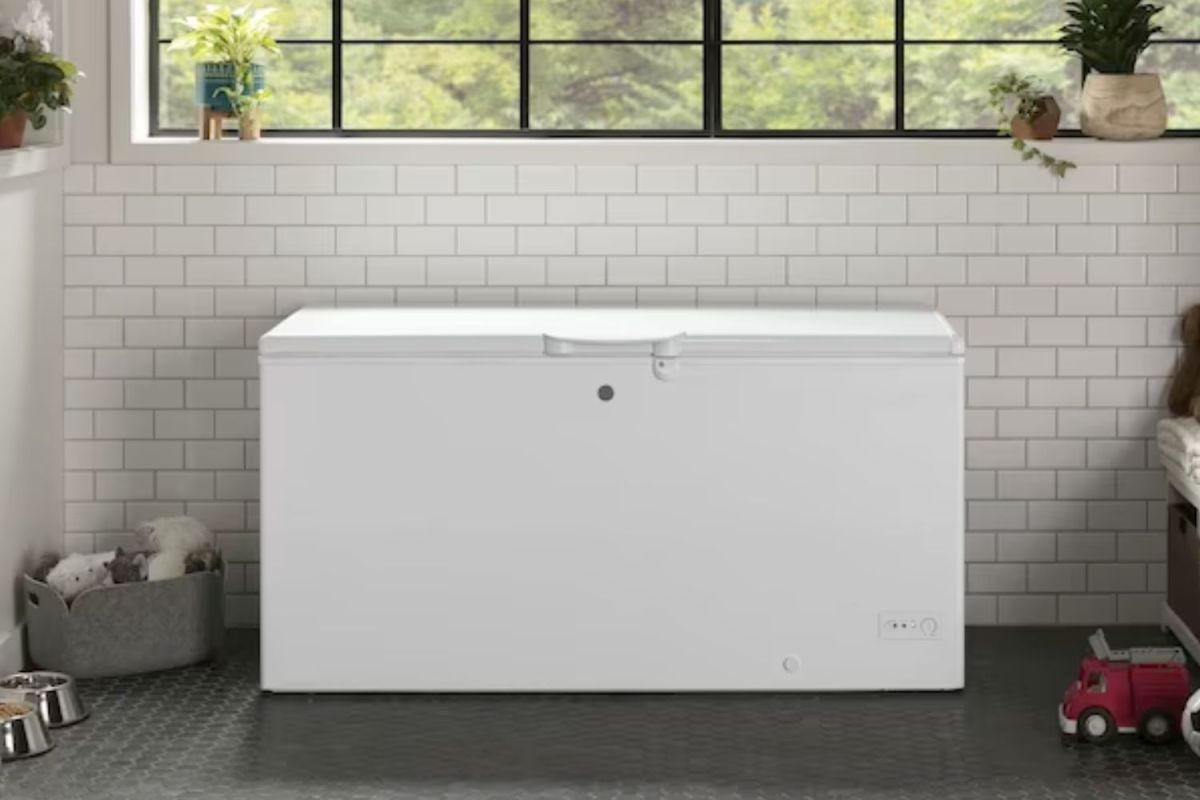
There is a particular kind of kitchen crisis that begins with a warehouse-club membership and ends with three bags of frozen berries balanced on top of an ice maker. When the freezer attached to your refrigerator starts resembling an overpacked suitcase, a chest freezer can restore orderand prevent frozen peas from launching themselves across the room every time you open the door.
Chest freezers offer generous storage, efficient cold retention, and enough open interior space for bulky items such as whole turkeys, meal-prep containers, large cuts of meat, and the ambitious quantity of pizza you bought “for emergencies.” They are especially useful for large families, gardeners, hunters, bulk shoppers, and anyone who prefers cooking once and eating several times.
For this guide, we vetted current chest freezer models by comparing manufacturer specifications, capacity, temperature range, garage-readiness, energy consumption, organization, controls, maintenance requirements, warranties, retailer availability, and findings from established appliance publications. The result is a practical selection covering compact apartments, busy family garages, serious bulk storage, and everything in between.
The Best Chest Freezers at a Glance
| Chest Freezer | Capacity | Best For | Standout Feature |
|---|---|---|---|
| GE FCM11SRWW | 10.7 cubic feet | Best overall | Reliable garage-ready performance |
| Insignia NS-CZ70WH26L | 7 cubic feet | Best budget | Convertible freezer or refrigerator |
| Midea MRC05M5CWW | 5.1 cubic feet | Best compact | Small footprint with interior lighting |
| Danby DCF100A5WDB | 10 cubic feet | Best energy-conscious pick | ENERGY STAR certification |
| Whirlpool WZC5216LW | 16 cubic feet | Best organization | Three-level storage system |
| GE FCM16SLWW | 15.7 cubic feet | Best for bulk meat storage | Lock, lighting, and sliding baskets |
| Frigidaire FFCL2062AW | 20 cubic feet | Best large convertible model | Freeze Boost and temperature alarm |
| Frigidaire FFCL2562AW | 25 cubic feet | Best extra-large | Massive convertible storage capacity |
1. GE FCM11SRWW 10.7-Cubic-Foot Chest Freezer
Best Overall Chest Freezer
The GE FCM11SRWW occupies the sweet spot between a compact supplemental freezer and an enormous commercial-style cold-storage bunker. Its 10.7-cubic-foot capacity is large enough for bulk groceries, family meal prep, seasonal produce, and sizable cuts of meat without claiming half the garage.
It is designed for garage use across a broad range of ambient temperatures, making it a sensible choice for homes with limited conditioned indoor space. The interior lighting is genuinely useful because frozen food has an impressive ability to hide in dark corners. Sliding baskets keep smaller packages near the top while leaving the lower compartment open for bulky items.
GE also emphasizes cold retention during power interruptions, an important benefit for households in storm-prone regions. Remember that outage performance depends on how full the freezer is and how often the lid is opened. Staring worriedly into the freezer every ten minutes is emotionally understandable but thermally unhelpful.
Pros: Practical family-size capacity, garage-ready construction, interior light, useful baskets, strong cold retention.
Cons: Manual defrosting is required, and the deep compartment benefits from additional bins.
2. Insignia NS-CZ70WH26L 7-Cubic-Foot Chest Freezer
Best Budget Chest Freezer
The Insignia 7-cubic-foot chest freezer proves that affordable cold storage does not have to be painfully basic. It provides enough room for a small family, apartment dweller, meal-prep enthusiast, or bargain shopper who occasionally returns from the grocery store with enough chicken to start a restaurant.
Its convertible design allows it to operate as either a freezer or refrigerator. That flexibility can be valuable during holidays, parties, garden harvests, or any week when beverages suddenly require their own appliance. It is garage-ready while operating in freezer mode and includes a removable basket, adjustable legs, and straightforward mechanical temperature controls.
The interior is less elaborate than premium models, and it lacks sophisticated alarms or digital monitoring. However, those omissions also keep operation simple. For shoppers who mainly need reliable frozen-food storage at an accessible price, it delivers strong everyday value.
Pros: Affordable, convertible, garage-ready in freezer mode, compact but useful capacity.
Cons: Limited built-in organization and no advanced temperature alarm.
3. Midea MRC05M5CWW 5.1-Cubic-Foot Convertible Chest Freezer
Best Compact Chest Freezer
Measuring roughly 24 inches wide, the Midea MRC05M5CWW is a smart choice for small kitchens, laundry rooms, utility areas, apartments, and garages where every square foot has already been assigned three jobs.
Despite its compact footprint, it includes several features often missing from small chest freezers. The exterior control panel lets users adjust settings without opening the lid, while the counterbalanced hinge helps hold the lid securely during loading. Interior LED lighting makes it easier to find small packages, and a removable basket separates frequently used food from items stored below.
The unit can switch between freezer and refrigerator modes, with a freezer range extending well below 0 degrees Fahrenheit. It is also designed for non-climate-controlled spaces. Annual electricity consumption is listed at approximately 218 kilowatt-hours under standard testing conditions, although real-world use varies with room temperature, thermostat settings, loading habits, and lid openings.
Pros: Space-saving size, convertible operation, exterior controls, interior light, garage-ready design.
Cons: Too small for large households or serious bulk-meat storage.
4. Danby DCF100A5WDB 10-Cubic-Foot Chest Freezer
Best Energy-Conscious Chest Freezer
The Danby DCF100A5WDB combines substantial storage with ENERGY STAR certification. Its estimated annual energy use is about 211 kilowatt-hours, which is notably restrained for a 10-cubic-foot appliance. Actual operating costs depend on local electricity rates and how the freezer is used, but its efficiency credentials are reassuring for an appliance expected to run every hour of every day.
Danby rates this model for garage conditions ranging from 0 to 110 degrees Fahrenheit. Inside, a removable sliding basket holds smaller food packages, while the open lower cavity accommodates larger items. The rust-resistant aluminum liner is easier to wipe clean than many textured interiors, and a front drain simplifies manual defrosting.
Another advantage is Danby’s unusually generous warranty coverage compared with the common one-year coverage offered by many competitors. Warranty terms should always be confirmed for the retailer and location where the appliance is purchased.
Pros: ENERGY STAR certified, efficient for its size, garage-ready, durable liner, strong warranty coverage.
Cons: Basic organization and mechanical rather than digital controls.
5. Whirlpool WZC5216LW 16-Cubic-Foot Convertible Chest Freezer
Best Chest Freezer for Organization
Traditional chest freezers are excellent at preserving food and remarkably talented at hiding it. The Whirlpool WZC5216LW addresses that problem with a three-level organization system designed to keep packages visible and accessible.
Its baskets and storage zones make it easier to separate meats, vegetables, frozen meals, desserts, and smaller packages. Instead of excavating through six months of groceries to locate one bag of corn, users can assign categories to different levels. LED lighting further improves visibility.
The 16-cubic-foot compartment is large enough for demanding households, and the convertible design allows the appliance to operate as a refrigerator when circumstances change. That can be handy for entertaining, storing fresh produce during harvest season, or creating temporary drink storage. It is garage-ready in freezer mode, but users should follow the manufacturer’s placement requirements when using refrigerator mode.
Pros: Excellent basket system, roomy interior, convertible operation, LED lighting, garage-ready freezer mode.
Cons: Requires considerable floor and lid-clearance space.
6. GE FCM16SLWW 15.7-Cubic-Foot Chest Freezer
Best for Bulk Meat Storage
The GE FCM16SLWW is built for shoppers who purchase meat by the case, hunters storing processed game, and households that consider one turkey an insufficient level of preparedness.
Its 15.7-cubic-foot capacity provides a broad, deep compartment for large and irregularly shaped packages. Two sliding baskets help organize smaller items, while LED lighting illuminates the interior. A lock with a self-ejecting key offers additional control in shared garages, workspaces, or homes with curious children.
The freezer is designed to operate in garage temperatures from approximately 0 to 110 degrees Fahrenheit and is tested for extended cold retention during a power outage. The manual-defrost system supports efficient operation and avoids the warming cycles used by automatic-defrost models, although it does mean owners must periodically remove accumulated ice.
Pros: Large open interior, garage-ready, lockable, illuminated, dependable for heavy bulk storage.
Cons: Large footprint and limited organization without added containers.
7. Frigidaire FFCL2062AW 20-Cubic-Foot Chest Freezer
Best Large Convertible Chest Freezer
The Frigidaire FFCL2062AW offers enough space for a large household without reaching the aircraft-carrier dimensions of the biggest chest freezers. Its 20-cubic-foot capacity can handle extensive meal prep, warehouse-store purchases, homegrown produce, holiday food, and large meat packages.
Frigidaire’s DualChill system allows the unit to switch from freezer to refrigerator operation. Freeze Boost helps lower the temperature quickly after a large grocery load, while an external control panel reduces the need to open the lid for adjustments. A high-temperature alarm provides an extra layer of protection if conditions inside begin moving in the wrong direction.
When operating as a freezer, the model is designed for garages with ambient temperatures between 0 and 110 degrees Fahrenheit. Two removable baskets provide some organization, but a freezer of this size benefits from labeled bins or reusable shopping bags to create separate storage zones.
Pros: Huge capacity, freezer-to-refrigerator conversion, Freeze Boost, external controls, temperature alarm.
Cons: Heavy, wide, and more freezer than many smaller households realistically need.
8. Frigidaire FFCL2562AW 25-Cubic-Foot Chest Freezer
Best Extra-Large Chest Freezer
The Frigidaire FFCL2562AW is for people whose frozen-food plans have progressed beyond “extra storage” and entered “private food reserve” territory. With approximately 25 cubic feet of capacity, it can accommodate major bulk purchases, large harvests, catering supplies, multiple processed animals, or months of carefully prepared meals.
It shares many of the useful features found in Frigidaire’s smaller convertible models, including freezer-to-refrigerator flexibility, garage-ready operation, rapid-freezing capability, exterior temperature controls, removable baskets, and a high-temperature warning system.
The trade-off is obvious: this freezer requires substantial floor space, generous lid clearance, a suitable electrical outlet, and a carefully planned delivery path. Measure doors, hallways, corners, and the final installation area before purchasing. Discovering that your new freezer is two inches wider than the basement doorway is a memorable experience, but not in a good way.
Pros: Enormous capacity, convertible, garage-ready, exterior controls, alarm and rapid-freeze functions.
Cons: Expensive, extremely large, and difficult to move once loaded.
How We Vetted the Best Chest Freezers
We compared models using criteria that affect everyday ownership rather than simply choosing the eight largest appliances with the coldest-looking product photos.
Capacity and Usable Space
Advertised cubic footage matters, but layout also affects usefulness. Compressor humps reduce floor space, while baskets can improve access but slightly limit room for oversized packages.
Temperature Performance
The FDA recommends maintaining a freezer temperature of 0 degrees Fahrenheit or below. We favored models with wide adjustment ranges, accessible controls, garage-ready ratings, and features such as temperature alarms or rapid-freezing modes.
Energy Consumption
Chest freezers tend to retain cold efficiently because dense cold air remains inside when the top lid opens. ENERGY STAR states that certified chest freezers are more efficient than minimum federal standards, but shoppers should compare the yellow EnergyGuide labels of similarly sized models.
Organization
Baskets, dividers, lights, and tiered storage reduce the chance of food disappearing into what experts technically call “the frozen abyss.” Models with limited accessories can still work well when paired with stackable bins.
Maintenance and Reliability
Most chest freezers require manual defrosting. We looked for accessible drains, uncomplicated controls, durable liners, established support channels, and warranties that provide meaningful protection.
What to Consider Before Buying a Chest Freezer
Choose the Right Capacity
A 3.5- to 5-cubic-foot freezer works well for individuals, couples, and small overflow needs. Seven- to 11-cubic-foot models suit many families, while capacities above 15 cubic feet make more sense for serious bulk buying, hunting, farming, or extensive meal preparation.
A larger freezer is not automatically better. Empty space still consumes floor area, and an enormous unorganized freezer can become a retirement community for forgotten leftovers.
Measure More Than the Floor
Measure the width, depth, and height of the installation area, then account for ventilation and the space needed to raise the lid fully. Also measure the entire delivery route, including exterior doors, stairways, hallway turns, and basement entrances.
Confirm Garage-Ready Operation
A garage-ready rating means the appliance is designed to operate across a broader ambient-temperature range than a standard indoor appliance. It does not mean the freezer can be left outdoors in rain, direct sunlight, or standing water. Follow the manufacturer’s environmental and clearance requirements.
Understand Manual Defrosting
Manual-defrost chest freezers require occasional shutdown, unloading, thawing, draining, and cleaning. Defrost when ice buildup becomes significant rather than waiting until the interior resembles a glacier documentary.
Look for an Alarm and Thermometer
A high-temperature alarm can warn of a partially open lid, power problem, or cooling failure. Even when an alarm is built in, an independent appliance thermometer is inexpensive insurance. Smart wireless temperature sensors are also useful for freezers stored away from the main living area.
Conclusion: Which Chest Freezer Is Best?
The GE FCM11SRWW is the best all-around choice for many households because it combines useful capacity, garage-ready operation, interior lighting, organization, and dependable cold retention. Budget shoppers should consider the Insignia 7-cubic-foot convertible model, while the Midea MRC05M5CWW is better suited to tight spaces.
For lower energy consumption and generous warranty coverage, the Danby DCF100A5WDB stands out. The Whirlpool WZC5216LW is the strongest option for organized storage, and shoppers with major capacity needs should compare the GE FCM16SLWW with Frigidaire’s 20- and 25-cubic-foot convertible models.
The best chest freezer is ultimately the one that fits your home, storage habits, climate, and willingness to label things. Capacity is useful, but knowing where the bacon is may be even more important.
Real-World Chest Freezer Experiences and Lessons
Living with a chest freezer changes shopping habits surprisingly quickly. At first, the extra capacity feels endless. A few warehouse-store visits later, the baskets are full, the lower compartment contains six mysterious rectangular packages, and nobody remembers when the lasagna entered the building. The biggest lesson is that storage capacity and usable capacity are not the same thing. A well-organized 7-cubic-foot freezer can be more useful than a chaotic 15-cubic-foot model.
Clear bins are excellent for small packages, but flexible reusable bags often work better in deep interiors because they conform to the available space. One bag can hold poultry, another vegetables, and another prepared meals. Labels should be readable from above. Labeling only the side of a container is an excellent system for people who enjoy lifting every container before finding the correct one.
An inventory list attached to the lid is another practical improvement. A dry-erase board, clipboard, or shared phone note can track food as it enters and leaves. The system does not need to be perfect. Even a rough list prevents repeat purchases and reminds the household that four pounds of frozen salmon already exist beneath the ice cream.
Owners also learn not to place frequently used food at the bottom. Bread, breakfast items, vegetables, and weeknight meals belong in upper baskets. Large roasts, seasonal produce, and long-term storage items can occupy the lower section. Rotating older packages upward helps reduce freezer burn and food waste.
Temperature monitoring deserves more attention than it usually receives. A freezer can sound normal while gradually warming because of a damaged seal, overloaded circuit, obstructed vent, or lid that never closed completely. A separate thermometer provides confirmation, while a remote sensor can alert users before an unnoticed failure destroys hundreds of dollars in food.
Power outages reveal another advantage of chest freezers: they retain cold well when kept closed. USDA guidance says a full freezer can generally maintain a safe temperature for about 48 hours, while a half-full one may last approximately 24 hours. Filling unused space with frozen water containers can add thermal mass, provide emergency ice, and reduce temperature swings.
Defrosting is less dramatic when handled early. Waiting until thick ice covers the walls turns a basic maintenance task into an archaeological expedition. Move food to insulated coolers, unplug the freezer, open the drain, and use towels or shallow trays to control water. Sharp tools should never be used to chip ice because puncturing an interior wall can transform a functioning appliance into a very large, very clean storage box.
Finally, location matters. A chest freezer should sit level, dry, ventilated, and close to an appropriate grounded outlet. Extension cords are generally discouraged by manufacturers. Leave enough room to open the lid without striking a shelf, vehicle, cabinet, or low ceiling. These details are not glamorous, but neither is trying to hold a freezer lid open with your head while searching for hamburger patties.
A good chest freezer quietly saves shopping trips, supports meal planning, preserves seasonal food, and makes bulk buying practical. Add labels, a thermometer, and a simple inventory system, and it becomes one of the hardest-working appliances in the home rather than a cold vault where leftovers go to be forgotten.