Some weekly roundups are just a polite pile of links. This one is more like a compact SaaS MBA with less tuition and more opinions. The mix of lessons around Calendly, Box, sales leadership, pricing, and the now-famous $1 million SDR story reveals something important: great SaaS companies do not win because they discovered one magical growth hack hidden behind a velvet curtain. They win because they get a few fundamentals so right that those fundamentals keep compounding.
That is what makes this particular SaaStr lineup worth revisiting. On the surface, the topics look scattered: unicorn buzz, scalable products, outbound sales, pricing models, and the danger of mediocre leadership. In reality, they all point to the same truth. Modern software growth is not about choosing between product-led growth, enterprise sales, pricing innovation, or operational rigor. The best companies blend them. They remove friction where they can, add human help where it matters, and stay disciplined enough not to confuse motion with progress.
If you are a founder, VP of Sales, revenue leader, operator, or that brave soul who somehow got promoted into “owning growth” because you once made a dashboard that looked competent, this week’s themes still hit hard. Let’s unpack why.
Why This SaaStr Week Still Matters
The original roundup spotlighted five blog posts and five videos, but the bigger story was the pattern running through them. On one side, you had hard metrics: the SaaS magic number, pricing shifts away from per-seat models, and blunt warnings about weak executives burning cash. On the other side, you had founder and operator stories from leaders at Calendly and Box, plus a memorable SDR performance story that turned grit into pipeline.
Put all that together, and you get a clear snapshot of what high-performing SaaS teams actually obsess over. Not vanity. Not theater. Not “synergy,” which is corporate for “we made a slide.” They obsess over efficient growth, the right packaging of value, durable product experiences, and people who can execute without requiring a rescue helicopter every Thursday.
That is also why this roundup feels bigger than a “best of the week” list. It is really a field guide to building a software company that can attract users, convert them, expand them, and keep the whole machine from wobbling like an office chair assembled at 11:47 p.m.
Calendly CEO: The Real Lesson Is Frictionless Growth
Calendly is often treated like the poster child for “simple idea, giant outcome,” and that is fair. Scheduling sounds almost comically ordinary until you remember how much business pain hides inside the phrase “What time works for you?” Calendly built a product around removing that friction, and that simplicity became its unfair advantage.
The deeper lesson from the Calendly CEO conversation is not just that the company became a unicorn. It is how it did it. Calendly grew because the product naturally spread through usage. Every invite became a miniature demo. Every recipient became a potential future user. That is product-led growth at its cleanest: the product is not merely delivered to the customer; it actively participates in distribution.
And yet the Calendly story is not some fairy tale about self-serve software floating upward on good vibes alone. The smartest part of the model is that it bridges individual adoption and enterprise value. A product that feels easy for one person can become powerful for teams, recruiting organizations, sales operations, customer success groups, and large companies that need governance, reporting, and admin controls. That is why Calendly remains such a useful growth case study. It proves that the line between PLG and enterprise scale is not a wall. It is a staircase.
What founders should steal from Calendly
First, solve a universal pain point that users instantly understand. Second, make adoption so easy that the product can travel without a salesperson escorting it like a celebrity bodyguard. Third, build the path from individual use to team expansion early. The best PLG motions do not stop at “sign up for free.” They create natural reasons for collaboration, administration, and standardization.
That is why the Calendly segment matters so much in a SaaStr roundup. It is not celebrating hype. It is highlighting a company that turned utility into distribution, then turned distribution into durable business value.
Box CEO: Scalable Products Are Built With Patience, Not Drama
If Calendly represents elegant bottom-up adoption, Box represents another kind of SaaS truth: enterprise durability. Box has spent years proving that scalable products are not only about flashy features or attention-grabbing launches. They are about trust, repeatable value, and the ability to evolve as customer needs change.
The Box CEO discussion hits because it reflects a more mature phase of SaaS building. Once a company is large enough, the game changes. You are no longer just fighting for adoption. You are fighting for relevance, efficiency, extensibility, and credibility. Customers want the product to work at scale, across teams, under compliance requirements, through market shifts, and during that fun executive pastime called “budget review season.”
Box’s story reminds founders that real scale is not built by sprinting from one shiny object to the next. It is built by staying close to what enterprise buyers actually need: security, workflow reliability, integration, administration, and a product strategy that can grow up without becoming unbearable. That may sound less glamorous than “we disrupted the category,” but it is how software companies graduate from clever to essential.
What the Box lesson really means
The big takeaway is that product scale is organizational scale. You need product discipline, customer empathy, and executive focus. You also need the courage to invest in areas that do not make for sexy launch tweets but absolutely decide retention and expansion. In SaaS, boring often wins. Then boring compounds. Then boring shows up with a billion-dollar revenue line and politely asks whether the hot new startup has figured out governance yet.
That is why the Box CEO feature works so well in this roundup. It balances the faster, product-led energy of Calendly with a reminder that mature SaaS businesses are judged by their ability to endure. Growth matters. Scale matters more. Durable scale matters most.
The $1M SDR Story: Why Modern Selling Is About Grit and Precision
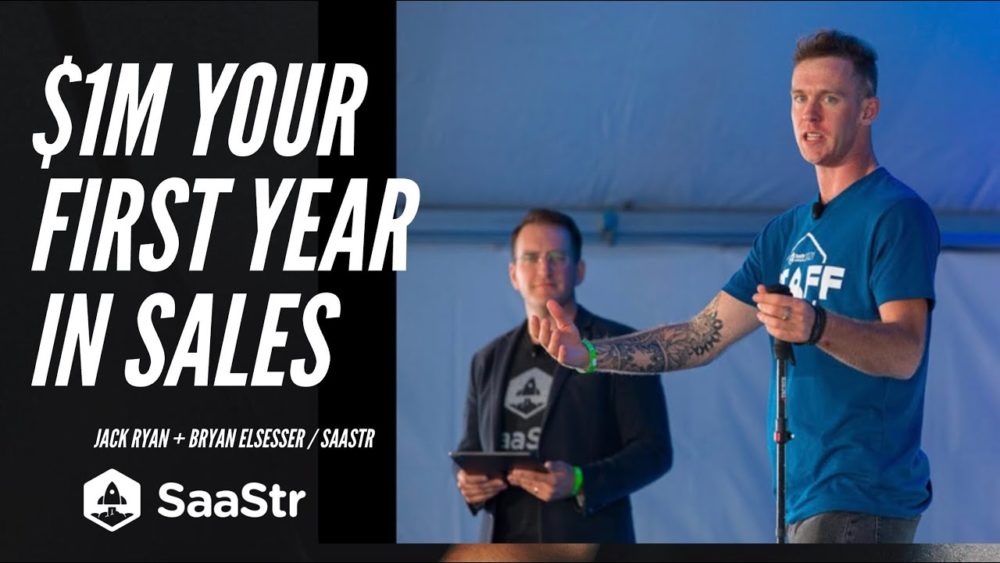
The $1 million SDR story is the kind of headline that makes people sit up, lean in, and pretend they always believed in pipeline discipline. But the real power of that session is not the dollar figure. It is the reminder that great sales development is still deeply human, even in a world flooded with automation.
SaaStr’s broader sales content around the same period made a sharp point: classic high-volume outbound is getting less effective. That does not mean outbound is dead. It means lazy outbound is dead. Mass cadences, recycled personalization, and “just following up on this” emails now land with all the warmth of a parking ticket. Buyers have seen the template. Buyers know the template. Buyers would like you to please stop pretending that line three about their recent LinkedIn post was written by a real admirer.
So what separates elite SDR performance from the rest? Discipline, relevance, resilience, and manager involvement. Great SDRs do not just send activity into the void and hope revenue appears. They understand the account, the problem, the timing, and the handoff. They treat prospecting like a craft, not a slot machine. They also tend to thrive in systems where leadership takes outbound seriously instead of delegating it into a dark corner and checking back once a quarter.
Why this matters more now
Modern sales teams are under real pressure. Sellers face tougher quotas, more informed buyers, and too many non-selling tasks. That means the lesson from the $1 million SDR story is not “make everyone grind harder.” It is “build a smarter motion.” Use AI to reduce busywork, sharpen account research, and improve response quality, but do not confuse tooling with excellence. Tools can make a strong rep faster. They can also help a weak rep send nonsense at scale. The inbox notices.
The best interpretation of the SDR story is this: revenue still rewards effort, but only when that effort is targeted, coached, and connected to an actual go-to-market system.
The Blog Posts Behind the Videos: Metrics, Pricing, and Leadership
The SaaS magic number is useful, but not sacred
One of the headline blog posts in the roundup focused on the average SaaS magic number landing at 1.2. That matters because it anchors the conversation around efficient growth. A healthy software company cannot just grow at any cost forever. Eventually, the economics have to make sense. The magic number is one way to gauge whether your sales and marketing spend is translating into recurring revenue efficiently enough to support the growth story.
But founders should not worship the metric like it was carved onto a stone tablet by the gods of ARR. It is directional, not divine. It helps you understand whether the engine is productive, but it does not replace judgment. A strong magic number with poor retention is still a problem. A weaker number during a strategic investment period might be survivable. The metric matters. Context matters more.
Seat-based pricing is no longer the whole movie
Another strong signal from the roundup was the note that only 41% of SaaS companies priced by seat in the KeyBanc survey. That is a big clue about where the market was already heading and where it has continued to move. Per-seat pricing is still useful when seats map cleanly to value. But more software companies now blend subscriptions with usage, transactions, consumption, or platform fees because value is no longer always tied to how many humans clicked a button.
That shift matters even more in the AI era. When software can perform work, trigger workflows, and generate output beyond traditional user behavior, pure seat pricing starts looking a little too neat for the messiness of real value creation. In other words, charging five seats for a product that is doing the work of fifty people may eventually lead to one of those awkward meetings where finance asks, “So what exactly are we paying for?”
The takeaway is simple: pricing should mirror how customers experience value. Not how your spreadsheet wishes they did.
Bad pricing tactics are expensive distractions
The roundup also highlighted a great SaaStr discussion on pricing and billing practices that were not worth it. This is the sort of content founders need because pricing mistakes are often dressed up as clever experiments. In reality, many of them are just confusion wearing a suit.
Unpaid pilots are a classic example. They feel low-friction, customer-friendly, and easy to approve. They also often create low commitment, blurry ownership, and a wonderful opportunity for everyone to forget the pilot exists. Paid pilots, by contrast, force seriousness. Even a modest commercial commitment changes the dynamic from curiosity to intent. That one distinction can separate pipeline theater from actual revenue.
The same principle applies more broadly. Complex discounting, awkward packaging, and “temporary” exceptions that become permanent all create drag. If customers need a decoder ring to understand your pricing page, your GTM team is going to spend half its life translating your own business model back into English.
Mediocre VPs are not a neutral decision
One of the sharpest ideas in the roundup is the warning that mediocre VPs spend all the money. That observation lands because it cuts through a common founder mistake: treating a “pretty good” executive hire as a safe compromise. It is often the opposite.
A mediocre leader rarely fails in an obvious, cinematic way. They fail expensively. They hire slowly or badly, normalize weak standards, create extra layers, misread priorities, and burn budget while looking busy. They are not a tiny downgrade from great. They are often a multiplier of hidden damage. That is especially true in sales, where one mediocre executive can build an entire organization around softness, excuse-making, and forecasts that require faith usually reserved for religion.
The smart founders in this SaaStr week understood that quality of leadership is not an HR topic. It is a cash topic. It is a growth topic. It is a survival topic.
What This Week Says About SaaS in Plain English
If you boil the whole roundup down to the essentials, here is the message: software growth today comes from matching the right motion to the right stage. Calendly shows the power of frictionless adoption. Box shows the power of durable enterprise scale. The SDR story shows that execution still matters enormously. The metrics and pricing posts show that growth has to be measured and monetized intelligently. The leadership post reminds everyone that weak operators can quietly set fire to a company while still attending all the meetings.
That means founders and operators should stop asking questions like “Are we product-led or sales-led?” as if those are rival sports teams. Better questions are: Where does our product create natural pull? Where does the sales team accelerate expansion? Does our pricing align with value? Are our leaders builders or just expensive narrators?
The companies that win these next chapters of SaaS will usually be the ones that combine clean product adoption with disciplined human support. Not one or the other. Both, on purpose.
500 More Words From the Trenches: What These Lessons Feel Like in Real Life
In real SaaS life, these lessons do not show up as neat framework slides. They show up as moments. A founder notices that new users love the product but no one upgrades, which means the team built a pleasant experience without a monetization path. A VP of Sales notices that outbound activity is high but meeting quality is awful, which means the team is measuring motion instead of signal. A pricing lead realizes the company has seven “special” contract structures, fifteen discount patterns, and a billing process that makes finance look like it is solving a murder mystery.
That is why the Calendly and Box stories are so helpful together. One reminds you that growth often starts with simplicity. The other reminds you that simplicity alone is not enough forever. Early on, users want speed, ease, and instant value. Later, larger customers want control, reliability, workflow depth, and trust. Teams that fail usually over-rotate in one direction. They either stay so “simple” that they never become strategic, or they become so “enterprise” that the product starts feeling like a form you fill out to request another form.
The same is true in sales. A lot of companies still talk about SDR performance as if it were mainly a volume problem. More calls. More emails. More sequences. More dashboards. But the better teams know that quality has become a force multiplier. When buyers are overwhelmed, relevance beats noise. A rep who understands the account, references a real pain point, and writes like a person can outperform a giant activity machine that sounds like it was assembled by three templates and a mild panic attack.
Leadership experience also matters here. Great executives create focus. Weak executives create interpretation layers. You can usually spot the difference quickly. Strong leaders make the business clearer. Weak ones make it busier. Strong leaders hire people better than themselves in specific areas. Weak ones hire around their insecurities. Strong leaders narrow the number of priorities. Weak ones add “strategic initiatives” until the roadmap looks like a buffet plate after bad decision-making.
And then there is pricing, the topic almost everyone postpones until it becomes urgent. Founders often treat pricing like wallpaper: important, visible, but somehow not urgent enough to touch. Then they wake up and realize their best customers are confused, their smallest customers are underpriced, and the sales team is customizing deals like it is an artisanal craft fair. The best operators revisit pricing earlier and more often. They watch how value is consumed, where expansion happens, and what buyers actually understand without needing a narrated tour.
That is what makes this SaaStr week so useful. It is not just content for content’s sake. It captures the lived experience of building and scaling software companies: simplify the product, sharpen the motion, price to value, hire adults, and remember that real growth usually looks less like magic and more like repeated good decisions made before your competitors get around to making them.
Conclusion
The best SaaStr roundups do more than recommend posts and videos. They reveal where the market is actually moving. This one showed a SaaS world demanding more efficiency, more precision, better pricing, stronger leadership, and growth engines that can scale without collapsing under their own enthusiasm. Calendly showed the power of frictionless adoption. Box showed the value of durable product strategy. The $1 million SDR story showed that elite execution still matters. And the surrounding posts made one thing obvious: in software, the winners are usually the teams that align product, pricing, people, and process before everyone else does.