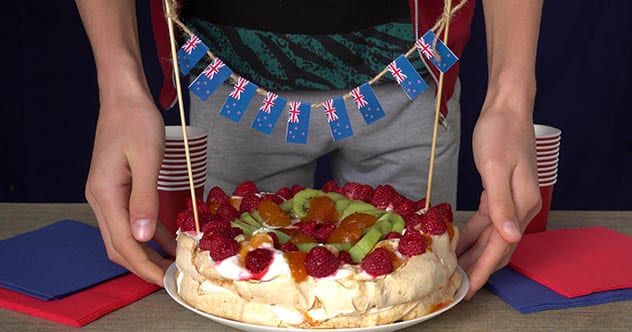
Note: The word “wacky” is used here with affection. These foods may surprise visitors, but many carry genuine regional, cultural, or nostalgic significance in Aotearoa New Zealand.
New Zealand is famous for dramatic mountains, glowworm caves, rugby players who appear capable of moving refrigerators without assistance, and scenery so beautiful that filmmakers keep filling it with hobbits. Its food, however, deserves a little more attention.
Kiwi cuisine combines Māori food traditions, British influences, local seafood, dairy products, convenience-store nostalgia, and an impressive willingness to put unexpected ingredients between slices of bread. The result is a collection of unusual New Zealand foods that can puzzle a first-time visitor and comfort a local at exactly the same time.
Some dishes on this list are seasonal delicacies. Others are inexpensive childhood treats. A few appear to have been invented after somebody opened a pantry, looked at five unrelated ingredients, and confidently announced, “That will do nicely.” Yet each one reveals something about life in New Zealand: the importance of the coast, the strength of regional identity, the influence of Māori culture, and the national talent for keeping food casual.
Prepare your taste buds. Here are 10 wacky things New Zealanders love to eatand why these quirky Kiwi foods make more sense after the first bite.
1. Whitebait Fritters: An Omelet Full of Tiny Fish
A New Zealand whitebait fritter is unlikely to win a beauty contest. It usually looks like a thin omelet in which dozens of tiny fish have become trapped while swimming to an important appointment.
Whitebait is the collective name used for the juvenile stages of several native freshwater fish species. The fish are small enough to be cooked and eaten whole, including their heads, bones, and visible little eyes. They are commonly mixed with beaten egg, lightly seasoned, and fried in butter. Traditional versions may contain little or no flour, making “fritter” a slightly generous description.
Why New Zealanders Love Them
The appeal is partly seasonal. Whitebait is available during a limited fishing period, and the catch can be scarce and expensive. That rarity turns an otherwise simple egg-and-fish combination into a prized delicacy, particularly on the South Island’s West Coast.
Good cooks avoid burying the delicate flavor under heavy spices or thick batter. A squeeze of lemon, a little salt, and perhaps a slice of buttered white bread are often enough. The texture is soft, the flavor is gently marine, and the experience is far less alarming than making eye contact with breakfast might suggest.
2. The Kiwi Burger: Beetroot and Egg Enter the Bun
Americans understand hamburgers. Beef, cheese, lettuce, tomato, pickles, and sauce all behave responsibly inside a bun. New Zealanders looked at that arrangement and decided it needed a fried egg and a slice of beetroot.
The classic Kiwi burger typically includes a beef patty, cheese, lettuce, tomato, onion, sauces, beetroot, and an egg fried on a griddle. It is tall, colorful, messy, and structurally ambitious. Eating one neatly requires the jaw flexibility of a python and the strategic planning of a civil engineer.
What Beetroot Adds
Canned or cooked beetroot provides sweetness, acidity, and an earthy flavor that cuts through the richness of the beef and egg. The egg contributes a soft yolk and turns an ordinary burger into something closer to breakfast wearing a dinner costume.
The combination became strongly associated with New Zealand hamburger shops long before international fast-food chains made it a promotional item. Today, versions appear in independent burger restaurants, pubs, cafés, and home kitchens. Visitors may question the beetroot until its juice begins running down both wrists. At that point, surrender is the only dignified option.
3. Marmite and Chippie Sandwiches: Crunchy, Salty Chaos
Marmite is a dark yeast-extract spread with a concentrated savory flavor. The New Zealand version differs from British Marmite and should not be confused with Australian Vegemite, especially within hearing distance of somebody who has strong opinions about fermented spreads.
Kiwis commonly spread Marmite thinly on buttered toast. The important word is thinly. Treating Marmite like peanut butter is not bravery; it is an avoidable sodium-based incident.
The Marmite and chippie sandwich takes the experience further. Butter and Marmite are spread on soft white bread, then a layer of potato chipscalled chips in New Zealandis added before the sandwich is pressed together.
Why the Combination Works
The bread is soft, the butter is creamy, the Marmite is salty and intensely savory, and the potato chips provide a loud crunch. Crushing the sandwich slightly before eating distributes the chips and produces the satisfying crackle that Kiwi children have enjoyed for generations.
It is not elegant food. It is pantry food, lunchbox food, and “I have six minutes before the rugby starts” food. That simplicity is precisely the point.
4. Southland Cheese Rolls: “Southern Sushi” Without the Sushi
Travel to Southland or Otago and you may encounter the cheese roll, a regional snack lovingly nicknamed “Southland sushi.” No raw fish, rice, seaweed, or Japanese technique is involved. Apparently, rolling something into a cylinder was enough to earn the name.
A cheese roll begins with soft sandwich bread covered in a rich cheese mixture. Depending on the family recipe, the filling may include grated cheese, evaporated milk, onion, mustard, Worcestershire sauce, or powdered onion soup. The bread is rolled into a tube, buttered, and toasted until crisp at the edges.
A Regional Comfort Food
Cheese rolls are particularly associated with the lower South Island, where they are served in cafés, community halls, school fundraisers, and family kitchens. They pair naturally with hot soup during cold southern winters.
The best examples balance a crunchy, buttery exterior with a molten center that is savory, tangy, and dangerously hot. Sensible diners wait before biting. Everyone else immediately burns the roof of the mouth and spends the next five minutes pretending nothing happened.
5. Pāua Fritters: New Zealand Abalone in Casual Clothing
Pāua is the Māori name for species of abalone found around New Zealand’s rocky coastline. Its shimmering shell is used in jewelry and decorative art, while the dark meat is valued as a distinctive local seafood.
Because pāua can be firm and chewy, it is often tenderized or finely minced. For pāua fritters, the chopped meat is combined with a light batter or egg mixture, seasoned, and cooked on a hot surface. The result is less visually dramatic than the shell but considerably easier to chew.
From Coastline to Fish-and-Chip Shop
Pāua can appear in refined restaurant dishes, pies, ravioli, and creamy preparations. The fritter remains one of its most approachable forms. It may be served with lemon, bread, fries, or a simple salad.
Its flavor is rich, salty, and unmistakably marine, while the texture can range from tender to pleasantly springy. For seafood fans, a well-made pāua fritter is deeply satisfying. For seafood skeptics, it is a compact test of character.
Harvesting pāua is regulated, and legal size and collection limits matter. Responsible diners should obtain it only through lawful, sustainable sources rather than treating the coastline like an unlimited seafood buffet.
6. Kina: Sea Urchin Served Straight From Its Spiky Container
Kina is the Māori name commonly used in New Zealand for a native sea urchin. From the outside, it resembles a small medieval weapon. Inside are edible golden-orange sections often called roe, although they are actually the animal’s reproductive organs.
Fresh kina may be eaten raw directly from the shell. It also appears on bread, in sauces, or as an ingredient in contemporary restaurant dishes. Its texture is creamy, and its flavor is intensely oceanicsweet, salty, mineral-rich, and slightly bitter.
A Flavor That Refuses to Whisper
Kina is not an introductory seafood. A mild white fish politely knocks on the door; kina enters the room playing bagpipes. People who love it describe a concentrated taste of the sea. People who dislike it often make a facial expression that requires no translation.
For many Māori families and coastal communities, gathering and sharing seafood is connected to place, knowledge, hospitality, and customary practice. Kina should therefore be understood as more than a novelty food. Its appearance may be wacky to an outsider, but its cultural place is serious.
7. Tītī or Muttonbird: A Seabird With a Remarkably Bold Flavor
Tītī, also called muttonbird, is the sooty shearwater, a migratory seabird traditionally harvested by Rakiura Māori from islands near the southern end of New Zealand.
The annual harvest carries deep cultural importance and is governed by inherited rights and traditional knowledge. This is not a bird that tourists casually collect after finding one near a parking lot.
What Does Muttonbird Taste Like?
Tītī is famously rich and oily. Because the bird feeds at sea, its meat can combine poultry-like texture with a strong marine character. Descriptions frequently compare it with salty duck, oily fish, game meat, or all three arriving at the same party.
Traditional and household preparation methods vary. The bird may be preserved in salt, boiled to reduce some of its intensity, roasted, grilled, or served with vegetables and potatoes. Its aroma can be powerful, and it is rarely described as shy.
For those raised with it, tītī can represent family, heritage, seasonal tradition, and connection to ancestral islands. For a first-time eater, it is an unforgettable reminder that flavor has no legal obligation to be subtle.
8. Lolly Cake: A Cake That Never Meets an Oven
New Zealand lolly cake is called cake despite being neither baked nor especially cake-like. It is closer to a refrigerated cookie log packed with colorful candy. Accuracy was apparently considered less important than deliciousness.
The basic mixture combines crushed malt biscuits, melted butter, sweetened condensed milk, and pieces of soft fruit-flavored candy. It is shaped into a log, rolled in desiccated coconut, chilled, and sliced into rounds.
Childhood Nostalgia in Technicolor
Each slice reveals bright candy pieces surrounded by a dense, beige biscuit mixture. The texture is chewy, crumbly, and soft at once. Its flavor is unapologetically sweet, with malt, coconut, condensed milk, and fruit candy competing enthusiastically for attention.
Lolly cake is common in bakeries, cafés, supermarkets, children’s parties, and home kitchens. It is easy to prepare, requires few ingredients, and creates minimal risk of oven-related disaster.
One slice is delightful. Two slices are ambitious. Three slices may allow you to hear colors.
9. Chocolate Fish: The Traditional Reward for Doing Something Useful
A New Zealand chocolate fish is exactly what the name promises: a fish-shaped piece of pink, raspberry-flavored marshmallow covered with a thin layer of chocolate.
It does not taste like fish. This clarification is necessary because New Zealand has already placed tiny fish in omelets and eaten seabirds that taste slightly aquatic. Suspicion is understandable.
More Than a Piece of Candy
Chocolate fish have long been associated with small rewards. A teacher, parent, coworker, or friend might jokingly offer someone a chocolate fish for completing a task or answering a difficult question. The expression can function almost like “You deserve a gold star,” except the star is edible and shaped like marine life.
The candy’s charm lies in its cheerful simplicity. The marshmallow is soft, the coating provides a light snap, and the fish shape makes the whole thing slightly ridiculous. It is inexpensive Kiwiana rather than luxury chocolate, which is why an artisanal version covered in gold leaf would miss the point entirely.
10. Hokey Pokey Ice Cream: Honeycomb Happiness by the Scoop
Hokey pokey ice cream may have the silliest name on this list, but it is also the easiest food for international visitors to love. It consists of vanilla ice cream mixed with small pieces of crunchy honeycomb toffee.
The candy is made by heating sugar or syrup and adding baking soda, which creates bubbles throughout the mixture. Once cooled, it becomes crisp, airy, and caramelized. Fold those pieces into creamy vanilla ice cream and sensible portion control becomes a distant memory.
Why It Became a Kiwi Favorite
Hokey pokey provides a useful contrast between smooth ice cream and brittle candy. The honeycomb pieces soften slightly as they sit in the ice cream but retain enough crunch to keep every spoonful interesting.
The flavor is sold widely in New Zealand dairies, supermarkets, scoop shops, and restaurants. It carries the same nostalgic power that chocolate chip or cookies-and-cream may have for Americans.
Unlike kina or tītī, hokey pokey requires almost no culinary courage. The main danger is ordering a second scoop and pretending it happened accidentally.
What These Unusual New Zealand Foods Reveal About Kiwi Cuisine
Viewed together, these foods tell a broader story. New Zealand cuisine is shaped by the sea, agriculture, Māori traditions, British settlement, regional climates, and childhood nostalgia. It can move from culturally significant wild foods to convenience-store candy without becoming embarrassed about either.
The savory dishes often rely on relatively simple preparation. Whitebait needs egg and lemon rather than a complicated sauce. Fresh kina may be eaten directly from its shell. Pāua is commonly minced and fried. Cheese rolls transform inexpensive pantry ingredients into regional comfort food.
The sweet treats are equally straightforward. Hokey pokey improves vanilla ice cream with caramelized crunch. Lolly cake turns biscuits and candy into a no-bake celebration. Chocolate fish makes marshmallow more entertaining by giving it fins.
That lack of pretension is central to the appeal. Many traditional New Zealand foods are meant to be eaten at a beach, café, family table, dairy, fundraiser, or roadside stopnot beneath a chandelier while a waiter explains the emotional journey of the parsley.
A Food Traveler’s Experience: Tasting the Wacky Side of New Zealand
A day exploring quirky Kiwi food might begin at a small café on the South Island. Outside, the air is cold enough to make a visitor reconsider every packing decision made at home. Inside, somebody places a cheese roll beside a bowl of tomato soup. It does not look revolutionaryjust a toasted cylinder of white breadbut the first bite delivers crisp buttered edges and a molten, deeply savory center. Suddenly, “Southern sushi” seems less like a joke and more like effective regional marketing.
Later, at a coastal town, a whitebait fritter arrives on a plate with lemon and buttered bread. The tiny fish are clearly visible. This is the moment when the brain says, “They have eyes,” while the stomach replies, “Yes, but they are fried.” The fritter tastes delicate rather than aggressively fishy. Its texture is soft, and the lemon brightens the egg. After a few bites, the appearance stops being strange. The empty plate creates a new problem: the realization that seasonal whitebait is not a budget snack.
Lunch offers a Kiwi burger. Beetroot immediately stains the bun purple, while the fried egg begins sliding toward freedom. The meal cannot be eaten gracefully. Napkins multiply. Sauce reaches a sleeve that was previously believed to be outside the danger zone. Yet the combination works. Sweet beetroot balances the meat, and the egg makes the burger satisfyingly rich.
The afternoon becomes more adventurous near the coast. Fresh kina has a creamy texture and a powerful marine flavor. The first taste feels like standing beside the ocean during a storm, except the storm is happening inside the mouth. It may inspire instant devotion or immediate retreat. Either reaction is valid. What matters is recognizing that the food belongs to a living tradition of coastal gathering and sharing, not merely to a tourist’s checklist of strange things consumed abroad.
A small taste of pāua follows. In fritter form, it feels more familiar: savory, slightly springy, and rich without being overwhelming. Tītī, when available through the proper cultural and legal channels, is another level entirely. Its oily, salty intensity lingers long after the bite. It is the kind of food that produces strong opinions and stronger memories.
Dessert restores diplomatic relations between the traveler and the taste buds. A slice of lolly cake looks like a mosaic created by an overexcited child. It is chewy, buttery, malty, coconut-coated, and extremely sweet. A chocolate fish adds soft marshmallow and a playful piece of Kiwi culture. Finally, a scoop of hokey pokey ice cream delivers cool vanilla and crisp caramelized candy.
By the end of the day, the most surprising discovery is not that New Zealanders eat unusual food. Every country does. The discovery is how naturally these foods connect with specific places and memories. Cheese rolls belong to the south. Whitebait reflects rivers and seasons. Kina, pāua, and tītī carry histories much older than modern tourism. Lolly cake and chocolate fish recall childhood treats, while hokey pokey turns an ordinary ice cream stop into a national ritual.
The traveler may not love every bite. Kina can be challenging. Marmite can punish excessive confidence. A Kiwi burger can destroy a clean shirt in under four minutes. Nevertheless, trying these foods creates a more vivid understanding of New Zealand than eating only familiar international dishes. Landscapes show what a country looks like. Local food reveals how its people remember, celebrate, improvise, and occasionally place potato chips inside sandwiches.
Tips for Trying Weird New Zealand Foods
Start With the Friendly Options
Begin with hokey pokey ice cream, cheese rolls, lolly cake, or a Kiwi burger. These foods use recognizable ingredients and rarely cause immediate existential reflection.
Use Marmite Carefully
Spread it thinly over plenty of butter. A thick spoonful is not the authentic experience; it is a salty cry for help.
Respect Seasonal and Customary Foods
Whitebait, pāua, kina, and tītī are connected to regulations, sustainability, customary rights, and local knowledge. Purchase them from responsible suppliers and approach Māori food traditions respectfully.
Ask Locals Where to Eat
Regional specialties are often best at modest cafés, fish-and-chip shops, bakeries, markets, and community events. A shiny international restaurant is not always the place where the most memorable Kiwi food is hiding.
Conclusion
The top wacky foods New Zealanders love are more than a collection of culinary punch lines. They represent resourcefulness, nostalgia, regional pride, Māori food knowledge, and the flavors of an island nation surrounded by productive waters.
Some combinations are immediately appealing. Honeycomb toffee in vanilla ice cream is an idea that deserves international citizenship. Other foods demand an open mind. Tiny whole fish suspended in egg and intensely flavored seabirds may require a more courageous fork.
Whether you fall in love with Southland cheese rolls, become a hokey pokey enthusiast, or discover that kina is a personal boundary you need not cross twice, tasting these unusual New Zealand foods makes any visit more interesting. At the very least, you will return home with stories, stronger opinions about beetroot, and a new understanding of what can reasonably be placed inside a sandwich.