Editorial note: This article is based on current public reporting, federal preservation rules, court history, and verified background on RMS Titanic salvage operations available at publication time.
The Titanic has been sitting in the darkness of the North Atlantic for more than a century, and somehow, it still knows how to make headlines. This time, the story is not about a new 3D scan, a lost necklace, or another dramatic theory about the ship’s final moments. It is about lawyers, preservation rules, federal authority, and the extremely complicated question of whether anyone should be allowed to remove more objects from the world’s most famous shipwreck.
Recent Titanic salvage missions have effectively been placed on indefinite hold after years of legal friction between RMS Titanic Inc., the company recognized as the wreck’s salvor-in-possession, and the U.S. government. The immediate reason sounds simple: RMS Titanic Inc. currently has no active plan to return to the wreck in 2025 to recover artifacts. But beneath that simple statement is a much deeper conflict involving maritime law, cultural heritage, scientific preservation, public memory, and the emotional reality that the Titanic is not just a shipwreck. It is also a grave site.
That makes every proposed dive more than an expedition. It becomes a legal test, an ethical debate, and a public relations tightrope walk at nearly 12,000 feet below the surface. Not exactly the kind of place where anyone wants to hear the phrase “court motion,” but here we are.
Why Are Titanic Salvage Missions on Hold?
The short version is that RMS Titanic Inc. has no immediate plan to recover more artifacts from the wreck, and that decision has paused a long-running legal dispute with the U.S. government. The company has not ruled out future expeditions forever, but any serious attempt to retrieve objects from the wreck site would likely reopen legal scrutiny.
The U.S. government has argued that certain proposed activities could violate federal law and international agreements designed to protect the Titanic as a memorial. The government’s position is that the wreck should be treated with special care because more than 1,500 people died when the ship sank in April 1912. That is not a small footnote. It is the emotional anchor of the entire debate.
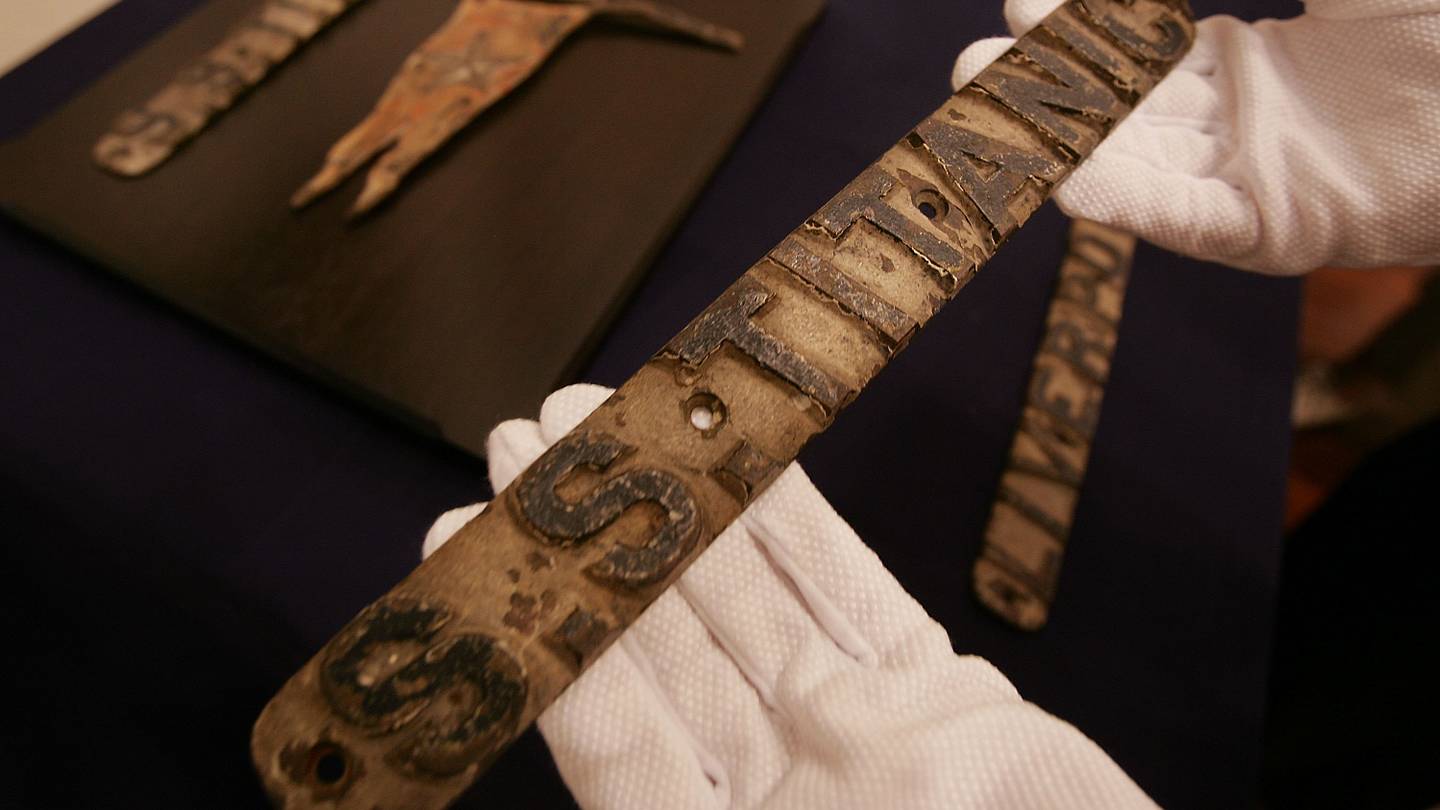
RMS Titanic Inc., on the other hand, has long argued that carefully recovered artifacts help preserve the ship’s story for the public. The company has recovered more than 5,500 artifacts from the wreck site over decades, including personal belongings, ship fittings, dishes, tools, and large structural pieces. These objects have appeared in exhibitions viewed by millions of people around the world.
So the dispute is not as simple as “treasure hunters versus historians.” It is more like “preservation through recovery” versus “preservation through restraint.” Both sides claim to be protecting history. They simply disagree about whether history should stay on the ocean floor or be brought into museums before saltwater, bacteria, corrosion, and time finish the job.
The Legal Iceberg Beneath the Surface
The legal fight around Titanic salvage is complicated because the wreck lies in international waters, far from any ordinary national boundary. However, U.S. courts have played a major role because RMS Titanic Inc. has been recognized by a U.S. federal court as the ship’s salvor-in-possession since 1994. That status gives the company unique rights related to recovery and stewardship, but it does not give it unlimited freedom to do whatever it wants at the wreck site.
Federal preservation laws and international agreements have increasingly shaped what can and cannot happen around the Titanic. The United States and the United Kingdom have supported protections that treat the wreck as an international maritime memorial. The goal is to prevent careless disturbance, commercial exploitation, and unnecessary intrusion into a site that has enormous historical and human significance.
That is where the legal tension begins. RMS Titanic Inc. has court-recognized salvage rights. The U.S. government has preservation responsibilities. When the company wants to recover artifacts, especially from inside the wreck, those two frameworks can collide like, well, an iceberg and a luxury liner. Too soon?
In recent years, the most sensitive proposals involved entering or disturbing parts of the ship, including areas connected to the Marconi wireless system. That wireless equipment is historically important because Titanic’s distress messages helped bring the rescue ship Carpathia to survivors. Supporters of recovery argue that such equipment could be lost forever as the wreck decays. Opponents argue that cutting into or disturbing the ship risks crossing a line that should remain firmly in place.
The Marconi Wireless Debate Changed Everything
One of the most important chapters in the modern Titanic salvage debate centers on the Marconi wireless telegraph. In 2020, a federal judge approved a plan that could allow RMS Titanic Inc. to recover the wireless equipment from the wreck. The decision was based partly on the argument that the equipment was historically significant and at risk of being lost as the wreck deteriorated.
The Marconi system was not just a piece of machinery. It was the communication lifeline that sent distress calls into the night after Titanic struck the iceberg. Without those messages, the disaster could have been even worse. Recovering that equipment would have been a major historical moment, the kind of museum centerpiece that could make even people who usually speed-walk through exhibits stop and whisper, “Okay, that is incredible.”
But the plan also raised difficult questions. Would recovering it require cutting into the wreck? Would that disturb a memorial site? Would it set a precedent for future removals from inside the ship? Could one “careful” recovery open the door to more invasive operations later?
The U.S. government opposed the effort, arguing that such work could violate preservation protections. Then the COVID-19 pandemic disrupted plans, and the mission did not proceed as originally expected. Later, the devastating 2023 Titan submersible implosion added a new layer of caution and grief to the conversation, especially because Paul-Henri Nargeolet, a renowned Titanic expert associated with RMS Titanic Inc., was among those who died.
How the Titan Tragedy Affected the Salvage Conversation
The Titan submersible disaster was not a Titanic salvage mission, but it changed the atmosphere around deep-sea Titanic expeditions. The implosion killed five people and reminded the world that visiting the Titanic is not a glamorous underwater field trip. It is an extreme technical operation in a hostile environment where pressure is crushing, rescue is nearly impossible, and mistakes can become fatal almost instantly.
After the tragedy, RMS Titanic Inc. revised its expedition plans. Proposed artifact recovery was delayed or canceled, and later plans became more focused on imaging and documentation rather than removal. That shift helped reduce the immediate legal conflict, but it did not erase the broader issue. Any future attempt to recover artifacts could still face legal opposition, especially if the mission involves entering, cutting, or disturbing the wreck.
The Titan tragedy also shifted public emotion. Many people who were already uncomfortable with commercial or private dives to Titanic became even more skeptical. For them, the wreck is not a tourist attraction or a collectible source. It is a fragile memorial in one of the most unforgiving places on Earth.
At the same time, preservationists who support responsible recovery argue that the wreck is physically disappearing. The ship is being consumed by corrosion, marine organisms, and structural collapse. Waiting too long may mean losing historically valuable objects forever. That creates a painful question: Is it more respectful to leave Titanic untouched, or to save what can still be saved before the sea takes it all?
Why the Titanic Wreck Is Deteriorating
The Titanic wreck is not frozen in time. It is changing every year. The ship rests in deep, cold water, but that does not mean it is safe from decay. Rusticles, corrosion, microbial activity, currents, and structural weakness are slowly transforming the wreck. Sections have collapsed. Railings have disappeared. Openings have widened. The ship’s famous silhouette is gradually becoming less recognizable.
This deterioration is one of the strongest arguments used by those who support continued documentation and selective recovery. Once an object is crushed, buried, corroded beyond recognition, or consumed by the environment, it cannot be studied in the same way. A shoe, a plate, a lamp, a tool, or a radio component may seem small, but each can reveal details about shipboard life, class divisions, technology, design, and the human experience of the voyage.
However, deterioration is also used as an argument against intervention. Critics say the natural decay of the wreck is part of its final chapter. They argue that the site should be documented with non-invasive tools such as photography, sonar, mapping, and remotely operated vehicles, rather than disturbed for artifact recovery. In their view, the wreck should remain a memorial, not a supply closet for exhibition objects.
That is the heart of the Titanic salvage debate: the wreck is both an archaeological site and a cemetery-like memorial, both a scientific record and a cultural symbol, both a disappearing structure and a place many people believe should be left alone.
RMS Titanic Inc.’s Role in Preserving Titanic Artifacts
RMS Titanic Inc. occupies a unique position in Titanic history. The company has recovered thousands of artifacts and conserved them for public exhibition. Its supporters argue that without recovery and conservation, many of these items would have been lost to the ocean. Visitors to Titanic exhibitions have seen real objects that once belonged to passengers and crew or formed part of the ship itself. Those objects can make history feel immediate in a way no textbook can.
A recovered plate is not just a plate. It is a reminder that people ate dinner, made plans, laughed, worried, worked, and slept aboard a ship they believed would safely cross the Atlantic. A piece of hull is not just metal. It is physical evidence of engineering ambition, industrial power, and human overconfidence. Titanic artifacts can turn a famous disaster from a movie-shaped memory into something more personal and grounded.
But stewardship also comes with responsibility. Artifact recovery is expensive, conservation is technically demanding, and public trust is fragile. Every decision about display, ownership, sale, storage, or future expeditions is watched closely by historians, governments, descendants, maritime archaeologists, and Titanic enthusiasts who can detect a bad rivet fact from across the internet.
The company’s current pause suggests that the next chapter will require careful legal and financial planning. Future missions may need clearer permissions, stronger public communication, and a narrower scientific purpose. “We want to go get cool stuff” will not cut it. Frankly, it should not.
Why the U.S. Government Is Involved
The U.S. government’s involvement comes from preservation law, court history, and international agreements. Even though Titanic rests in international waters, U.S. authorities have an interest in regulating U.S.-linked expeditions and enforcing protections tied to the wreck’s status as a maritime memorial.
The government has repeatedly emphasized that Titanic should be treated with respect because of the lives lost there. This does not mean all research is forbidden. It means that research, exploration, and recovery must meet a higher standard. Disturbing the wreck is not like picking up driftwood at the beach. It is an action with legal, historical, and moral consequences.
The central government concern is precedent. If one company can recover objects from inside Titanic, what limits apply next time? Who decides what is historically valuable enough to remove? How much disturbance is acceptable? Who monitors the work? What happens if an expedition damages the site?
These are not dramatic questions invented for courtroom theater. They are the same kinds of questions asked around shipwrecks, ancient ruins, sacred sites, and archaeological digs around the world. The difference is that Titanic has a global spotlight permanently attached to it.
What “Indefinite Hold” Really Means
An indefinite hold does not mean Titanic salvage is legally impossible forever. It means there is no clear timeline for future artifact recovery, and any new plan would likely face serious review. RMS Titanic Inc. may still conduct research, evaluate future options, process data from previous expeditions, or propose new activities. But a return to physical recovery would not be simple.
For readers, the phrase “indefinite hold” may sound like a bureaucratic way of saying, “Nobody knows what happens next.” That is basically accurate, but with nicer stationery. The company must weigh costs, safety, law, public opinion, conservation goals, and the condition of the wreck. The government must decide how aggressively to enforce preservation restrictions if new plans emerge. Courts may again be asked to balance salvage rights against federal protection.
In other words, the Titanic is still underwater, but the legal debate is very much above sea level.
What This Means for Titanic History Fans
For Titanic enthusiasts, the pause is bittersweet. On one hand, it may protect the wreck from disturbance. On the other hand, it may reduce the chance that fragile artifacts are recovered before they disappear. Fans who love the ship’s history often find themselves pulled in both directions.
Many people first encounter Titanic through films, documentaries, museum exhibitions, books, or school lessons. Over time, they discover that the real story is far richer than the simplified version: iceberg, panic, lifeboats, tragedy. The Titanic story includes immigration, class inequality, wireless technology, maritime regulation, engineering culture, media sensationalism, and the birth of modern disaster memory.
Artifacts matter because they make those themes tangible. But the wreck itself matters because it is the original context. Remove too much, and the site loses meaning. Remove nothing, and the ocean may erase objects that could teach future generations. That is why the debate refuses to settle neatly into one side being obviously right.
Experience Section: What the Titanic Salvage Debate Feels Like in Real Life
For anyone who has visited a Titanic artifact exhibition, the legal debate around salvage does not feel abstract. It follows you through the gallery. You walk past a recovered dish, a perfume vial, a shoe, a tool, or a section of ship plating, and suddenly the word “artifact” feels too small. These are not props. They are leftovers from real lives interrupted in the cold Atlantic. A museum label can give you the date, the material, and the recovery expedition, but the emotional weight arrives quietly and does not ask permission.
That is why the indefinite hold on salvage missions can feel both responsible and frustrating. Standing in front of recovered objects, you understand the argument for preservation through recovery. These items survived disaster, darkness, pressure, and time. Conservators stabilized them. Curators interpreted them. Visitors learned from them. Without salvage, many would still be hidden in the debris field, slowly breaking down beyond recognition. Seeing them in person can make the past feel close enough to touch, although thankfully museum glass prevents everyone from acting on that impulse.
But the opposite feeling is just as powerful. The more personal the object, the more uncomfortable recovery can seem. A passenger’s belonging is not merely historical evidence. It may be the last physical trace of someone’s journey. When an exhibition handles that story with care, it can be moving. When the public worries about commercial motives, it can feel wrong. Titanic has always lived at the intersection of education, entertainment, tragedy, and business. That is a crowded intersection, and the traffic lights are often broken.
The legal issues also reveal how modern society has changed its attitude toward shipwrecks. In earlier eras, salvage often meant value extraction: recover what can be sold, reused, or displayed. Today, underwater cultural heritage is treated more like archaeology. Context matters. Disturbance matters. Documentation matters. A teacup on the seafloor is not only a teacup; it is part of a larger pattern that can tell researchers where objects moved, how the ship broke apart, and how human spaces were transformed by the sinking.
That is why future Titanic missions, if they happen, will need to feel less like recovery adventures and more like carefully supervised scientific operations. The public will expect transparency. Governments will expect compliance. Historians will expect restraint. Families and descendants will expect respect. And the ocean, which has never once cared about human paperwork, will continue doing what it does: corroding steel, scattering debris, and reminding everyone that time is the most powerful salvor of all.
In that sense, the indefinite hold is not the end of the Titanic story. It is a pause in a much longer argument about how we remember disaster. Do we preserve by touching, lifting, conserving, and displaying? Or do we preserve by leaving the site intact and accepting that some things belong to the deep? The answer may depend on the object, the method, the law, and the purpose. It may also depend on whether the people making the decision can resist turning every historical mystery into a souvenir hunt.
Conclusion: Titanic’s Future Is Still Being Negotiated
The Titanic salvage pause shows that the ship’s story is no longer only about 1912. It is also about modern law, cultural memory, scientific ethics, and public responsibility. RMS Titanic Inc. remains central to the artifact story, but federal preservation rules and international memorial principles now shape what future expeditions can attempt.
The wreck is deteriorating, and that fact gives urgency to preservation efforts. Yet the wreck is also a memorial, and that fact demands restraint. Between those two truths lies the difficult future of Titanic exploration.
For now, Titanic salvage missions are on indefinite hold. The ship remains where it has rested since April 1912, deep in the North Atlantic, still powerful enough to pull historians, lawyers, scientists, families, and curious readers into its orbit. More than a century later, the Titanic is still teaching the same lesson in a new language: human ambition is complicated, memory is fragile, and the past is never as settled as we think.