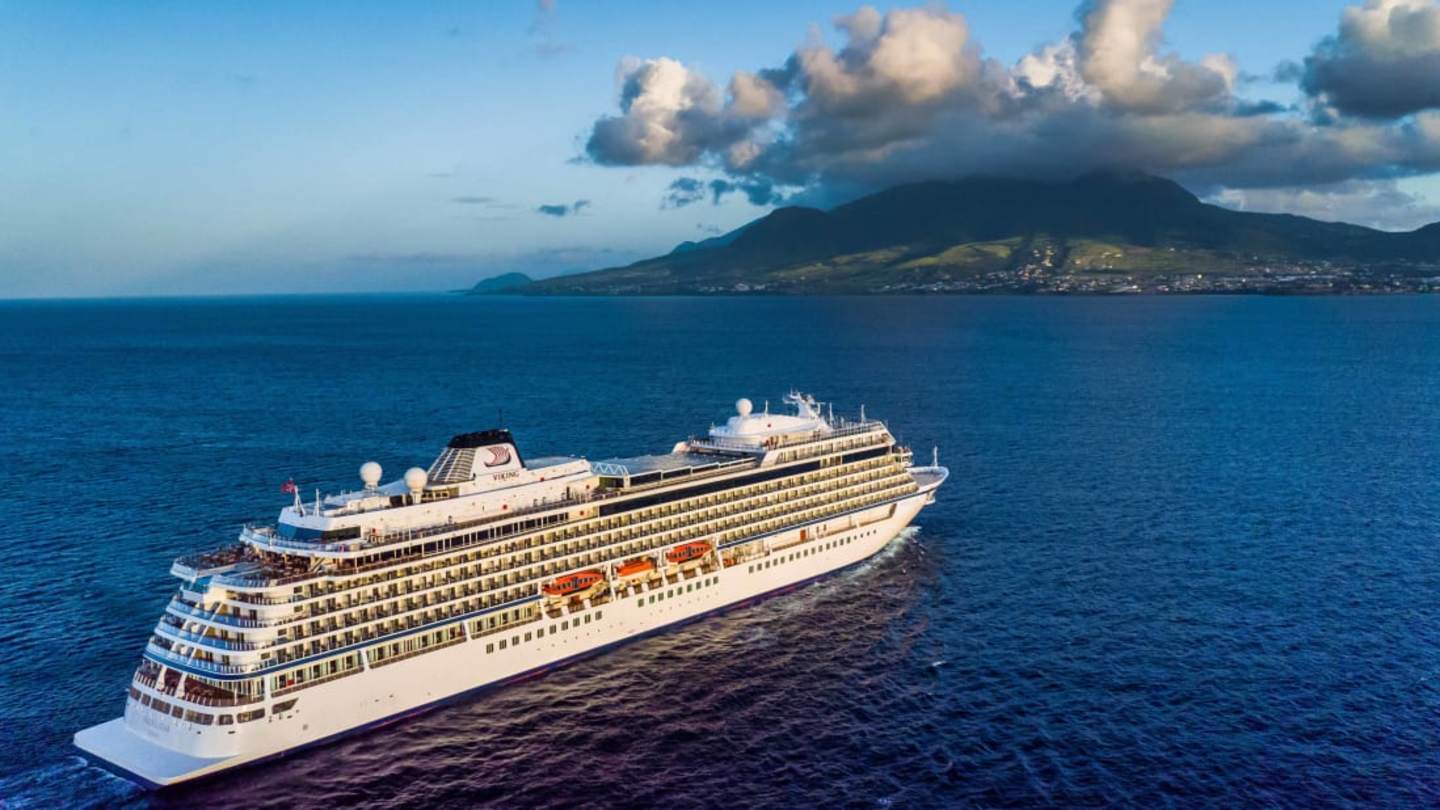
Some vacations end before your sunscreen has fully committed to the relationship. Others are so long that your houseplants forget your name, your mail starts forming geological layers, and your passport begins to look like it has joined an extreme sport. Viking’s famous Ultimate World Cruise belongs firmly in the second category: a sweeping 245-day voyage designed to carry travelers across six continents, 59 countries, and 113 ports.
When it was announced, this around-the-world cruise was promoted as the longest continuous world cruise itinerary of its kinda floating marathon for people who look at a two-week trip and think, “Cute warm-up.” The journey was planned aboard Viking Sun, a 930-passenger ocean ship built for travelers who prefer cultural immersion, smaller ports, and a more relaxed onboard rhythm over mega-ship chaos.
Although newer world cruises have since stretched even longer, the 245-day Viking Ultimate World Cruise remains one of the most ambitious and memorable long cruise itineraries ever offered. It captured imaginations because it was not just a cruise; it was practically a temporary lifestyle with room service.
What Made This 245-Day Cruise So Extraordinary?
The headline numbers are enough to make even seasoned travelers blink twice: 245 days, 59 countries, 113 ports, six continents, and 22 overnight port stays. The voyage departed from London and circumnavigated the globe, visiting destinations across Europe, North America, South America, the South Pacific, Australia, Asia, Africa, and the Mediterranean before returning to its starting point.
Unlike a standard cruise where passengers may spend more time comparing buffet desserts than exploring destinations, this itinerary emphasized deeper travel. Overnight stops gave guests more time to experience cities after sunset, enjoy local restaurants, attend evening performances, or simply wander without watching the clock like a nervous raccoon.
The cruise was also structured for flexibility. Travelers who could not disappear for eight months had the option to book shorter segments, including a London-to-Los Angeles portion and a Los Angeles-to-London leg. That made the experience accessible to people who wanted the thrill of a world cruise without fully relocating their sock drawer to the sea.
The Ship: Viking Sun as a Floating Home
Viking Sun was not designed as a floating amusement park. There were no roller coasters, neon jungles, or water slides that looked like plumbing escaped from a science-fiction movie. Instead, the ship offered a quieter, Scandinavian-inspired atmosphere focused on comfort, culture, dining, wellness, and destination enrichment.
With capacity for about 930 guests, Viking Sun was large enough to offer multiple dining venues, lounges, spa facilities, entertainment, lectures, and open deck space, yet small enough to feel more personal than a mega-ship carrying several thousand passengers. Every stateroom included a private veranda, which matters when your “vacation” lasts longer than a college semester.
On a cruise this long, the ship becomes more than transportation. It becomes a neighborhood. Passengers develop routines: morning coffee with ocean views, lectures before lunch, shore excursions by day, dinner with new friends, and perhaps a quiet walk on deck while the world slowly turns beneath the hull.
Where Did the World Cruise Go?
The itinerary was built like a greatest-hits album of global travel. It began in London, then crossed the North Atlantic with calls in places such as Iceland, Greenland, Canada, and the eastern coast of North America. From there, it continued through Bermuda and the Caribbean before heading down the coast of South America.
South America added drama, color, and serious scenery. Guests could experience major cities, coastal towns, and southern destinations near Patagonia and the tip of Argentina. Ports such as Rio de Janeiro, Ushuaia, and locations in Peru and Chile helped turn the journey into more than a sightseeing checklist; it became a geographic education with better desserts.
The cruise then moved across the Pacific, visiting islands and coastal destinations in Oceania, Australia, and New Zealand. From there, the route continued into Asia, with stops connected to vibrant cities, temples, markets, historic districts, and food scenes that could make even the most disciplined traveler whisper, “I’ll just try one more thing.”
Later sections included destinations in India, the Middle East, North Africa, and the Mediterranean, eventually closing the loop back toward Europe. In practical terms, guests could wake up over many months to wildly different landscapes: fjords, tropical beaches, modern skylines, ancient ruins, desert edges, colonial harbors, and fishing villages where the pace of life seemed politely uninterested in emails.
Why Long World Cruises Appeal to Modern Travelers
World cruises attract a specific kind of dreamer. These are travelers who do not just want to visit a place; they want to feel the slow unfolding of distance. Flying can make the world feel small, but sailing makes it feel wonderfully large again.
A 245-day cruise changes the psychology of travel. Instead of packing frantically, rushing through airports, and trying to see a city in 36 hours, passengers experience travel in a rhythm closer to old ocean voyages. The sea days become part of the story, not empty spaces between ports.
For retirees, remote professionals with flexibility, travel writers, lifelong learners, and bucket-list adventurers, a long cruise offers convenience. The hotel moves with you. You unpack once. Meals, transportation, entertainment, and many logistics are handled by the cruise line. That is especially appealing on an itinerary involving dozens of countries, visas, ports, currencies, climates, and languages.
The Practical Side: Cost, Planning, and Commitment
A cruise of this length is not a spontaneous weekend escape. Fares for the full Viking Ultimate World Cruise started in the high five figures per person, with premium suites costing far more. However, the price included many items that travelers often pay for separately, such as international air arrangements, transfers, gratuities, some visa services, luggage shipping, beverages, and guided shore excursions in many ports.
That all-inclusive structure matters because a world cruise can become financially complicated very quickly. Without bundled services, travelers would need to budget for flights, hotels, meals, visas, luggage handling, local transportation, laundry, drinks, excursions, travel insurance, and emergency costs. In other words, the spreadsheet alone might need its own passport.
Guests also needed to plan for health, medications, insurance, communication, banking, home maintenance, and family logistics. Eight months away from home is a major commitment. Bills still exist. Pets still expect betrayal. And refrigerators, as history has shown, should not be trusted unsupervised for 245 days.
Life Onboard for Nearly Eight Months
One of the most fascinating parts of any long cruise is not just where it goes, but how people live onboard. A weeklong sailing can feel like a party. A 245-day cruise becomes a community.
Passengers often form friendships through shared dining, lectures, excursions, bridge games, fitness classes, book clubs, and casual conversations on deck. Crew members become familiar faces. Favorite tables appear. Coffee preferences are remembered. The ship begins to feel less like a hotel and more like a small town that happens to be crossing oceans.
Sea days are especially important. Rather than being “blank” days, they give passengers time to rest, read, attend enrichment talks, exercise, enjoy spa treatments, organize photos, or simply stare at the horizon and contemplate how many socks one person truly needs. For many world cruisers, these slower days prevent travel fatigue and help balance the intensity of frequent port visits.
Challenges of an Around-the-World Cruise
Even dream trips come with challenges. The longer the itinerary, the more chances there are for weather changes, port adjustments, health concerns, political issues, or personal fatigue. Seas may be rough. Schedules may shift. A highly anticipated port can be canceled. A suitcase zipper can choose rebellion at the worst possible time.
Travelers also need emotional stamina. Constant movement sounds glamorous, but after months of new languages, currencies, menus, time zones, and landscapes, even adventurous guests may crave stillness. The most successful long-cruise passengers tend to pace themselves. They do not treat every port like a competitive sightseeing event. Some days, the wisest excursion is a quiet café and a slow walk.
Another key challenge is packing. The itinerary crosses multiple climates, from cool northern regions to tropical islands and warm Mediterranean ports. Smart travelers pack layers, versatile clothing, comfortable shoes, sun protection, rain gear, and enough formal or smart-casual options for onboard evenings. The goal is not to bring everything; it is to bring the right things and leave space for souvenirs that seemed smaller in the market.
How This Cruise Changed the Meaning of “Bucket List”
The Viking Ultimate World Cruise became famous because it transformed the bucket list from a collection of separate trips into one continuous global journey. Instead of planning Iceland one year, South America another, Southeast Asia later, and the Mediterranean someday, travelers could connect these dreams in a single voyage.
That is the emotional power of a world cruise. It compresses years of travel ambitions into one grand chapter. Guests can see sunrise over one ocean, cross the equator, visit ancient sites, explore modern capitals, and sail into legendary harbors without repeatedly packing, flying, and recovering from jet lag.
For some travelers, the appeal is efficiency. For others, it is romance. There is still something deeply old-fashioned and cinematic about circling the globe by ship. It feels connected to an era when travel unfolded slowly, when distance had weight, and when arriving somewhere meant you had truly journeyed there.
Is a 245-Day Cruise Worth It?
For the right traveler, yes. For the wrong traveler, absolutely notand that is perfectly fine. A world cruise is not just a vacation choice; it is a personality test with appetizers.
People who love routine, cultural learning, slow travel, ocean views, lectures, organized excursions, and social shipboard life may thrive. People who need constant independence, dislike sea days, or feel trapped after three hours in a hotel lobby might find eight months onboard a bit much.
The value depends on what travelers want from the experience. Compared with arranging independent travel to 59 countries, a world cruise offers simplicity, safety, comfort, and continuity. However, independent travel offers more freedom, deeper stays in fewer places, and usually lower costs. Neither is better for everyone. The best choice depends on travel style, budget, health, time, and tolerance for hearing the phrase “welcome aboard” for most of a calendar year.
Tips for Planning a Long World Cruise
Choose the Itinerary Before the Ship
A beautiful ship matters, but the route matters more. Look carefully at ports, overnight stays, sea days, climate zones, and how long you will actually spend in each destination. A world cruise should match your dream map, not just your preferred brand.
Budget Beyond the Fare
Even inclusive cruises come with extra expenses. Specialty excursions, shopping, medical needs, laundry upgrades, private tours, Wi-Fi packages, insurance, and pre- or post-cruise stays can add up. Build a realistic cushion so your adventure does not turn into a floating math emergency.
Think About Health and Insurance Early
For a journey lasting many months, travelers should consult healthcare providers, organize prescriptions, review vaccination guidance, and purchase strong travel insurance. Medical planning is not the glamorous part of world travel, but neither is trying to explain your prescription refill situation halfway across the planet.
Pack for Flexibility
Bring clothing that layers well, dries quickly, and works across casual, active, and dressier situations. Comfortable walking shoes are non-negotiable. Your feet will be your most loyal travel companions; treat them like board members.
Protect Your Energy
Do not overschedule every port. A long cruise rewards curiosity, but it also requires pacing. Skip an excursion when you need rest. Eat lightly after heavy travel days. Keep a journal. Take breaks from photography. Sometimes the best memory is the one you actually experienced instead of chasing the perfect shot of it.
Additional Experiences: What It Might Feel Like to Sail for 245 Days
Imagine boarding in London with fresh luggage, polished shoes, and the confidence of someone who believes they packed sensibly. On day one, everything feels exciting: the cabin, the dining room, the first sail-away, the realization that your bed will travel farther than some people’s cars. By week two, you have learned the ship’s layout, discovered your favorite quiet corner, and developed strong opinions about breakfast timing.
By the first month, the journey begins to feel less like a vacation and more like a new rhythm of life. You wake up in new waters, check the daily program, decide between a lecture on local history or a walk on deck, and compare excursion notes with fellow passengers. Conversations become delightfully specific: “Are you doing the temple tour tomorrow?” “Did you try the market in that last port?” “How many photos of sunsets is too many?” The answer, legally and emotionally, is never enough.
One of the richest experiences on a world cruise is the gradual layering of cultures. You do not just jump from postcard to postcard. You begin to notice contrasts: how harbors smell different, how morning light changes by region, how markets sound in different languages, and how hospitality appears in countless forms. A bowl of soup in Asia, a seafood lunch near a South American port, a strong coffee in Europe, or fresh fruit on a tropical island can become tiny anchors in a very large journey.
Sea days create their own kind of magic. At first, they may seem like pauses. Later, they become necessary chapters. These are the days when passengers process what they have seen, rest their legs, organize photos, write emails, read novels, or simply sit by the window watching waves fold into one another. The ocean is not empty; it is the quiet punctuation between continents.
Friendships also deepen in unusual ways. On land, people often meet through work, school, or neighborhoods. On a world cruise, they meet because they all made the wonderfully unreasonable decision to sail around the planet for months. That shared choice becomes instant conversation fuel. Birthdays are celebrated at sea. Anniversaries happen between ports. Inside jokes form around delayed tenders, favorite desserts, trivia nights, and the passenger who somehow always knows which side of the ship will have the best view.
There are practical lessons too. You learn that laundry strategy is a life skill. You learn that comfortable shoes beat stylish shoes in a landslide. You learn that a balcony can become an office, meditation room, breakfast nook, and theater box. You learn that travel fatigue is real, but so is travel wonder. Some days you want ancient ruins; other days you want soup, slippers, and silence.
The emotional arc of a 245-day cruise is probably its most surprising feature. At the beginning, the trip feels impossibly long. In the middle, it feels normal. Near the end, it may feel suddenly too short. The ship that once seemed unfamiliar becomes home. The crew feels like part of the story. The world map no longer looks abstract because so many names now carry memories: a street corner, a guide’s joke, a rainy afternoon, a perfect beach, a museum hallway, a harbor at dawn.
When travelers finally return, they do not simply bring back souvenirs. They bring back a changed sense of scale. The world feels bigger, but also more connected. Countries are no longer just shapes on a map. They are meals, faces, landscapes, weather, music, architecture, and small acts of kindness. That is the real luxury of a long world cruisenot only seeing many places, but having enough time for the journey to reshape how you understand distance, culture, and home.
Conclusion
The 245-day Viking Ultimate World Cruise remains a landmark in modern cruising because it dared to turn “around the world” into a single continuous experience. With 59 countries, 113 ports, six continents, and nearly eight months at sea, it offered travelers something far bigger than a vacation. It offered a floating version of a life chapter.
For some, the idea of spending 245 days on a cruise ship sounds impossible. For others, it sounds like the most elegant answer ever given to the question, “Where should we go next?” Either way, this legendary world cruise continues to fascinate because it represents the grandest promise of travel: that the world is vast, beautiful, complicated, delicious, occasionally inconvenient, and absolutely worth crossing slowly.