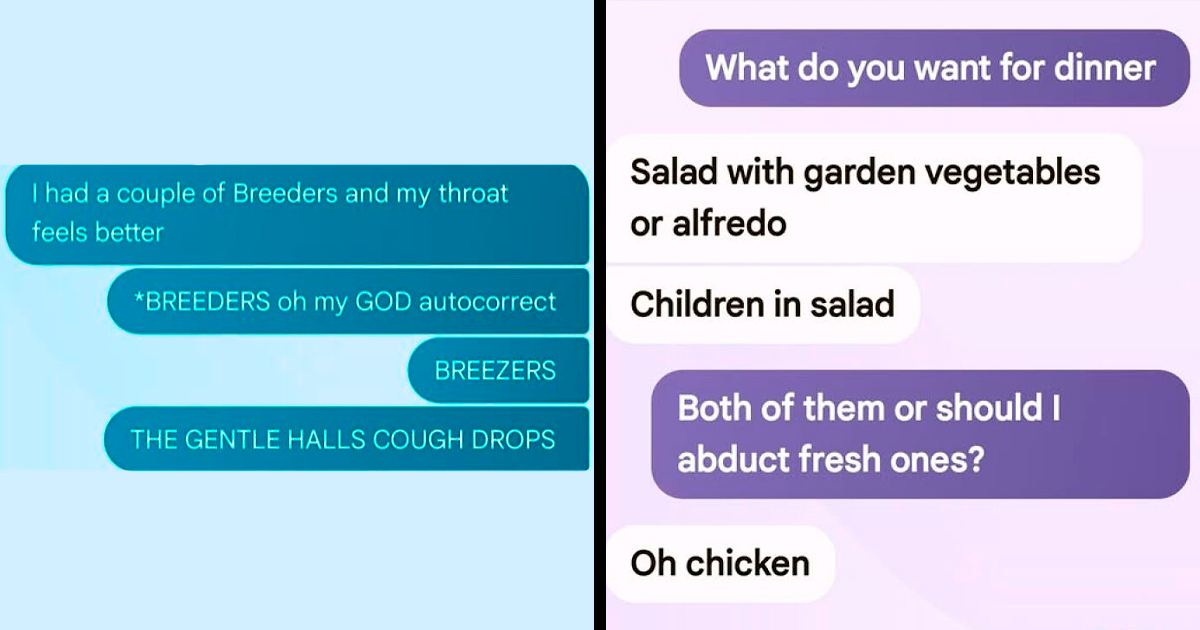
Autocorrect was supposed to be the tiny digital editor living inside our phones, quietly sweeping up typos before anyone noticed. Instead, it sometimes behaves like a raccoon with a thesaurus: energetic, unpredictable, and absolutely not invited to Thanksgiving dinner. One moment you are typing “extra virgin olive oil,” and the next your phone confidently serves “extra coffin olive oil,” which sounds less like a pantry staple and more like something sold by a haunted delicatessen.
The funniest autocorrect fails work because they are almost right. A single changed word can turn an ordinary text into a miniature sitcom. A grocery list becomes a medical emergency. A dinner invitation becomes a threat. A polite office message suddenly reads like it was written by a pirate, a poet, or someone who has been awake since 2009.
Still, autocorrect is not magic, and it is not exactly “thinking.” It relies on spelling patterns, keyboard layout, language models, dictionaries, learned habits, and prediction. That is why it can save you from “definitley” but also betray you with the confidence of a villain monologuing in a cape. In this article, we will explore why autocorrect fails happen, why they are so funny, how phones learn our typing habits, and 50 publication-friendly autocorrect examples that prove our keyboards may be helpfulbut they are definitely not innocent.
Why Autocorrect Fails Are So Funny
Autocorrect humor sits in the sweet spot between technology and human embarrassment. Texting is fast, casual, and usually private. We send messages while walking, cooking, commuting, watching TV, or pretending to pay attention in a meeting. That speed creates the perfect environment for small errors to escape into the wild.
What makes an autocorrect fail especially funny is the mismatch between intention and result. The sender meant one simple thing. The phone created a second, weirder meaning. The comedy arrives instantly because the reader can see both versions at once: the normal sentence hiding underneath and the absurd sentence proudly standing on top of it wearing a fake mustache.
There is also a social ingredient. A typo in a private note is mildly annoying. A typo sent to your boss, mother-in-law, doctor, teacher, or crush becomes a full-body experience. Your brain does not merely read the mistake; it begins calculating damage. Can this be explained? Should you send a correction? Is it better to move to another city and start over as a beekeeper?
How Autocorrect Actually Works
Autocorrect is a spelling and prediction feature that attempts to repair words as you type. Modern mobile keyboards do more than compare your letters to a dictionary. They consider nearby keys, common phrases, your selected language, personal typing patterns, and sometimes context from the sentence around the word.
For example, if you type “teh,” the keyboard can safely guess that you meant “the.” If you type “coffin” after “extra,” however, the phone may not understand that you meant “virgin,” especially if your fingers wandered across the keyboard or your personal dictionary has learned unusual words from past messages. Once a keyboard learns your style, it can become more helpfulor more creatively wrong.
Predictive text adds another layer. Instead of waiting for a complete typo, it suggests the next word or phrase. That is useful when the prediction is “see you soon.” It is less useful when the prediction becomes “see you soup,” which sounds friendly but confusingly brothy.
Why Phones Change Correct Words Into Wrong Ones
One of the most frustrating autocorrect problems is when a phone changes a word that was already correct. This often happens because the keyboard thinks another word is more likely based on frequency, context, or your typing history. If you often type a person’s name, slang, pet names, inside jokes, brand names, or multilingual phrases, your keyboard may begin making bold assumptions.
Small touchscreens also make the problem worse. On a phone, the letters are close together, thumbs move quickly, and one accidental tap can shift a word in a new direction. The keyboard tries to rescue you, but sometimes it rescues you from the sidewalk by throwing you into a fountain.
Names are especially vulnerable. Autocorrect loves turning unusual names into ordinary words. It may change “Mina” to “Mine,” “Jalen” to “Taken,” or “Santos” to “Sandals.” This is why many people add names, business terms, and favorite phrases to their personal dictionary or text replacement settings. A keyboard cannot respect a word it does not recognize.
50 Times Autocorrect Had A Mind Of Its Own
The following examples are original, clean, publication-friendly autocorrect-style fails inspired by common typing patterns. They capture the kind of digital chaos people share online without copying private messages or real screenshots.
Food Fails That Belong In A Cursed Cookbook
- “Please pick up extra virgin olive oil” became “Please pick up extra coffin olive oil.” Dinner suddenly needed a priest.
- “I’m making chicken pesto” became “I’m making chicken pistol.” That recipe has too much kick.
- “Bring garlic bread” became “Bring gargle bread.” Crunchy, buttery, and medically confusing.
- “I need almond milk” became “I need almost milk.” So… water with ambition?
- “Can you grab tortillas?” became “Can you grab gorillas?” Taco night escalated quickly.
- “The soup is simmering” became “The soup is suffering.” Honestly, same.
- “Add fresh basil” became “Add fresh betrayal.” A bold flavor profile.
- “Don’t forget the casserole” became “Don’t forget the castle.” Fine, but it better have leftovers.
- “I bought organic spinach” became “I bought dramatic spinach.” It wilts with emotion.
- “We’re having pot roast” became “We’re having plot roast.” Finally, dinner with character development.
Work Messages That Needed Immediate Clarification
- “I’ll send the report shortly” became “I’ll send the reptile shortly.” HR has questions.
- “Can we align on the budget?” became “Can we alien on the budget?” The finance team has left Earth.
- “I’m in a client meeting” became “I’m in a violent meeting.” Suddenly, everyone respects your calendar.
- “Please review the deck” became “Please review the duck.” Five stars. Very waterproof.
- “Let’s circle back Monday” became “Let’s circus back Monday.” Bring spreadsheets and tiny hats.
- “Thanks for your patience” became “Thanks for your patients.” Congratulations, you are a hospital now.
- “I’ll be available after lunch” became “I’ll be unbearable after lunch.” At least it was honest.
- “Great insight” became “Great insect.” Not the compliment anyone expected.
- “Can you share the file?” became “Can you scare the file?” Only if it has macros.
- “The launch is tomorrow” became “The lunch is tomorrow.” Oddly, morale improved.
Family Texts That Caused Confusion At Home
- “I love you, Mom” became “I love your mop.” Clean floors, warm feelings.
- “Dad is grilling outside” became “Dad is growling outside.” Both are possible.
- “The baby is napping” became “The baby is mapping.” Advanced child.
- “Pick up Grandma at 5” became “Pick up grammar at 5.” She has been correcting us for years.
- “I fed the dog” became “I fled the dog.” Understandable if it was bath time.
- “Your laundry is done” became “Your lizard is done.” Please do not fold the lizard.
- “We need more paper towels” became “We need more proper towels.” The towels have standards.
- “Dinner is in the oven” became “Dinner is in the ocean.” That is called losing the deposit.
- “Call your sister” became “Call your disaster.” Depending on the sibling, still accurate.
- “Movie night?” became “Motive night?” A family gathering or a detective show?
Romantic Texts That Took A Strange Turn
- “I miss your smile” became “I miss your smell.” Sweet, but now slightly suspicious.
- “Can’t wait to see you” became “Can’t wait to sue you.” Date night postponed.
- “You’re adorable” became “You’re affordable.” Romance on a budget.
- “I’m thinking of you” became “I’m thinning of you.” Not exactly poetry.
- “You looked amazing” became “You looked alarming.” Compliment denied.
- “Dinner at eight?” became “Danger at eight?” Depends on the restaurant.
- “You make me happy” became “You make me hoppy.” Love is a frog now.
- “Goodnight, beautiful” became “Goodnight, buffet.” Still affectionate, just hungrier.
- “I’m excited” became “I’m excavated.” Emotionally, geologically, deeply.
- “I adore you” became “I order you.” Suddenly the relationship has shipping fees.
Everyday Messages That Became Tiny Disasters
- “I’m stuck in traffic” became “I’m stuck in tragic.” Accurate, unfortunately.
- “Be there soon” became “Be there spoon.” Cutlery with commitment.
- “Running late” became “Ruining latte.” A crime against coffee.
- “I found my keys” became “I found my knees.” Good news, anatomically.
- “Take the umbrella” became “Take the mozzarella.” Weather forecast: cheesy.
- “I need a nap” became “I need a map.” Both help when you are lost in life.
- “The appointment moved” became “The disappointment moved.” Personal growth.
- “I’m at the pharmacy” became “I’m at the fantasy.” Please pick up cough syrup from the dragon.
- “The package arrived” became “The pancake arrived.” Finally, breakfast logistics.
- “See you in a minute” became “See you in a muffin.” Cozy, confusing, possibly delicious.
The Anatomy Of A Perfect Autocorrect Fail
A great autocorrect fail usually has three ingredients: a normal setup, an unexpected replacement, and a recipient who understands the intended meaning. “Extra coffin olive oil” is funny because the original phrase is obvious. We know the sender wanted olive oil, not funeral-home seasoning. The wrong word is close enough to be believable and strange enough to be memorable.
The best fails also create a vivid image. “Dramatic spinach” is funnier than a random misspelling because you can picture a leafy vegetable collapsing on a fainting couch. “Chicken pistol” sounds like a menu item from a cowboy restaurant with questionable safety standards. Autocorrect humor thrives when one wrong word creates an entire scene.
Another reason these mistakes spread online is that they are universal. You do not need to be a programmer to understand the joke. You only need to have a phone, a thumb, and a history of trusting technology one second too long. That makes autocorrect fails one of the rare internet jokes that can entertain teenagers, parents, office workers, teachers, and anyone who has ever typed “omw” while carrying groceries.
Why We Keep Using Autocorrect Anyway
For all its chaos, autocorrect remains useful. It fixes countless small mistakes before we see them. It helps people type faster on tiny screens. It supports multilingual typing, assists with common spelling slips, and turns frantic thumb movement into readable sentences most of the time.
The problem is not that autocorrect exists. The problem is overconfidence. Users trust it because it is often right. Then, when it is wrong, it is wrong with excellent posture. It does not whisper, “Maybe you meant basil.” It boldly inserts “betrayal” and moves on with its life.
That is why smart texting requires a tiny pause before sending. The pause does not have to be dramatic. You do not need to light a candle and proofread like a Victorian editor. Just glance at names, dates, food items, emotional words, and professional messages. Autocorrect tends to cause the most damage when the stakes are high and the sender is moving fast.
How To Avoid Your Own “Extra Coffin Olive Oil” Moment
1. Add Personal Words To Your Dictionary
If your phone constantly changes a name, brand, nickname, recipe term, or workplace acronym, add it to your keyboard dictionary or text replacement list. This teaches the phone that the word is intentional, not a typo wearing a disguise.
2. Use Text Replacement For Phrases You Type Often
Text replacement is ideal for emails, addresses, business phrases, and anything your keyboard repeatedly damages. For example, a shortcut like “addr” can expand into your full address, while “brb” can become “Be right back.” It gives you speed without surrendering control.
3. Watch Out For Names
Names are autocorrect’s favorite victims. Before sending a message about a person, pet, business, teacher, doctor, or client, check the name. Nothing says “professional polish” like calling your accountant “Alan” when her name is “Alana,” except perhaps sending “Dear Sandwich” instead of “Dear Sandra.”
4. Be Careful With Voice Typing
Voice typing can be wonderful, but it can also misunderstand accents, background noise, brand names, and punctuation. If you dictate a message while walking near traffic, your phone may write something that sounds like a weather report from another planet. Always review dictated text before sending.
5. Reset The Keyboard Dictionary When It Gets Weird
If your phone has learned too many bad habits, a keyboard dictionary reset can give it a fresh start. This removes learned words and typing patterns, so predictions may feel less personal for a while. But if your keyboard keeps turning “meeting” into “meatball,” a reset may be worth it.
Autocorrect, AI, And The Future Of Typing
Autocorrect has evolved from simple spell repair into a more complex writing assistant. Today’s keyboards can suggest phrases, emojis, tone adjustments, grammar fixes, and even rewritten sentences. That makes typing easier, but it also raises the stakes. The more a system tries to predict intention, the more it can accidentally replace intention.
Future keyboards will likely become better at context. They may understand that “olive oil” usually follows “extra virgin,” that “client meeting” is more likely than “violent meeting,” and that no one has ever urgently requested “gargle bread” outside of a very unusual medical bakery. Even so, language is playful, personal, and messy. Humans invent slang, nicknames, abbreviations, jokes, and hybrid languages faster than software can neatly categorize them.
That means autocorrect fails will probably never disappear. They may become rarer, but they will remain part of digital life because writing is not just spelling. It is context, tone, relationship, timing, and shared meaning. A keyboard can predict the next word. It cannot always predict the exact flavor of your family group chat at 11:43 p.m.
Personal Experiences And Lessons From The Autocorrect Battlefield
Anyone who writes often eventually develops a cautious relationship with autocorrect. At first, you treat it like a helpful assistant. Then one day it changes a harmless sentence into something so strange that you begin checking your phone the way a zookeeper checks a suspiciously quiet monkey enclosure.
One of the most common experiences is the grocery-list ambush. Food words are dangerous because many are borrowed from other languages, branded, abbreviated, or just close to unrelated English words. “Prosciutto” becomes “prosecute.” “Ricotta” becomes “ricochet.” “Chipotle” becomes “chip hotel,” which sounds like a luxury resort for tortilla fragments. A person may walk into the store intending to buy ingredients and leave wondering why their spouse requested “one bag of emotional onions.”
Another familiar situation is the professional message that suddenly needs an apology tour. You type quickly because the message is simple: “I’ll send the final draft shortly.” Autocorrect decides you meant “fatal draft,” and now your editor is wondering whether the assignment requires a safety inspection. The funniest part is how formal the mistake looks. Autocorrect rarely seems chaotic in a messy way. It produces clean, polished nonsense, which makes the message feel intentionally bizarre.
Family chats are even more vulnerable because people write casually and send quickly. A parent texting “I’m proud of you” might accidentally send “I’m powdered you.” A sibling asking for a ride might request a “riddle.” A grandparent using voice typing may produce a paragraph with no punctuation, three mysterious food references, and the emotional intensity of a weather warning. Everyone laughs, someone screenshots it, and the mistake becomes family folklore.
Romantic texts create the highest risk-to-reward ratio. A sweet message can turn odd with one replacement. “Thinking about you” becomes “thinning about you.” “You’re my favorite person” becomes “You’re my favorite prison.” These are the moments when people discover how fast they can type “SORRY, AUTOCORRECT” in capital letters. The correction often becomes funnier than the mistake because panic has its own punctuation.
The best lesson from autocorrect fails is not to fear them. They are reminders that digital communication is still human. We are typing with thumbs on glass, trusting software to guess our intentions while we multitask through modern life. Mistakes are inevitable. Most are harmless. Many are funny. Some even make conversations warmer because they interrupt routine with surprise.
In a strange way, autocorrect fails can make communication feel more personal. Perfect messages are efficient, but imperfect messages have fingerprints. A silly typo shows the sender was moving, cooking, rushing, laughing, or living a normal messy day. When handled with humor, an autocorrect mistake can become a shared joke instead of a social disaster.
So yes, check important messages before sending. Add custom words. Reset your keyboard when it starts acting haunted. But when “extra virgin olive oil” becomes “extra coffin olive oil,” do not panic. Take a screenshot, send the correction, and appreciate the tiny comedy show your phone performed without permission.
Conclusion
Autocorrect is one of the most useful and ridiculous inventions in everyday digital life. It saves our spelling, speeds up our texts, and occasionally turns grocery shopping into gothic literature. The reason autocorrect fails remain so popular is simple: they reveal the gap between what we meant and what technology guessed. In that gap, comedy thrives.
Whether your phone changes “report” to “reptile,” “basil” to “betrayal,” or “olive oil” to “coffin olive oil,” the lesson is the same. Technology can help us communicate, but it still needs a human final check. And when that check comes too late, at least we get a story worth sharing.