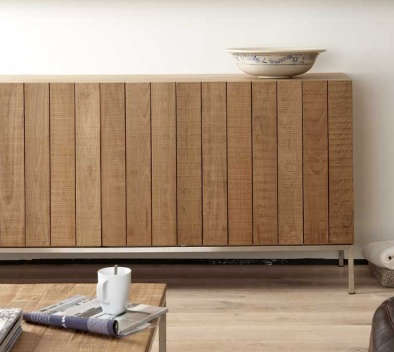
A good sideboard is the quiet overachiever of the home. It stores the “where-do-I-put-this?” items, anchors a room, and somehow makes dinner plates, board games, extra candles, and mystery chargers look like part of a life plan. The Teak Rough Sideboard 3 Doors belongs in that category: practical storage with enough texture and character to keep a room from looking like it was assembled by a nervous spreadsheet.
Originally associated with Ethnicraft’s Teak Rough collection and curated by design-focused retailers, this piece is known for a simple but memorable idea: combine the rough, organic texture of natural teak with the clean, cool presence of stainless steel. That contrast is the whole charm. It is warm but not rustic-cabin-only. It is modern but not sterile. It has the calm confidence of furniture that does not need twelve decorative pillows to prove itself.
In this guide, we will break down what makes a three-door teak sideboard useful, why teak is such a respected furniture material, where this type of sideboard works best, what to check before buying, and how to care for it so it ages with grace instead of drama.
What Is the Teak Rough Sideboard 3 Doors?
The Teak Rough Sideboard 3 Doors is a storage cabinet designed for living rooms, dining rooms, entryways, open-plan spaces, and even refined home offices. The “3 doors” part is not just a product detail; it matters. Three-door sideboards usually offer a generous storage span without becoming as visually heavy as a full wall unit. They can hold dinnerware, table linens, glassware, books, media equipment, paperwork, or the household objects everyone swears they will organize “this weekend.”
The signature design idea is the meeting of two materials: teak and stainless steel. Teak brings grain, depth, and natural variation. Stainless steel adds a crisp architectural line. Together, they create a sideboard that feels balanced: one foot in nature, one foot in contemporary design.
The Beauty of Rough Teak Texture
Rough teak does not mean unfinished in the careless sense. It means the surface celebrates texture rather than sanding every bit of personality into polite silence. The grain may appear more tactile, the color may vary slightly, and the surface can catch light in a more interesting way than a flat, factory-smooth panel.
This is especially useful in modern interiors. A room full of flat walls, smooth floors, square sofas, and glossy devices can feel a little too “waiting room with better Wi-Fi.” A rough teak sideboard adds visual warmth. It gives your eye somewhere to land. It makes the room feel lived-in, not staged for a catalog photo that no human is allowed to touch.
Why Three Doors Make Sense
A three-door sideboard hits a sweet spot between compact and spacious. Two doors can feel limited if you own serving pieces, larger bowls, or bulky electronics. Four doors can be magnificent but may dominate smaller rooms. Three doors often provide enough interior storage while still fitting comfortably along a dining room wall, behind a sofa, or under a large mirror.
Inside, a three-door layout typically allows for divided storage zones. One section can handle formal tableware, another can hold daily-use items, and a third can be reserved for less glamorous but very real essentials: batteries, coasters, napkins, remotes, warranties, and the instruction manual for something you no longer own.
Why Teak Is a Premium Furniture Wood
Teak has a long-standing reputation in furniture making, boat building, flooring, and outdoor design. The reason is not just its golden-brown color, although that certainly helps. Teak heartwood is naturally dense, oily, and resistant to moisture-related movement compared with many other woods. That natural oil content helps protect the wood and gives it a smooth, almost waxy character when freshly worked.
For indoor furniture like a teak sideboard, these properties matter because homes are not climate laboratories. Air conditioning, heating, humidity, sunlight, cooking steam, and seasonal changes can all affect wood. Teak’s dimensional stability makes it a smart choice for furniture that needs to keep its shape and function over time.
Teak Ages Beautifully
One of teak’s best qualities is that it does not need to look brand-new forever to look good. Indoors, teak often deepens slightly in tone, developing a richer character. The grain becomes part of the story. Small changes do not necessarily ruin the piece; they can make it more interesting.
This is important for a sideboard because sideboards are workhorses. They receive keys, trays, lamps, flower vases, serving dishes, books, and the occasional elbow from someone looking for snacks. A material that can age naturally and still look handsome is a gift to anyone who wants beauty without babysitting furniture like it is a glass sculpture.
Solid Wood vs. Veneer and Composite Materials
When shopping for a teak sideboard with 3 doors, pay attention to construction. Some furniture uses solid teak. Some uses teak veneer over engineered wood. Some uses a combination of solid wood, veneer, and metal. None of these are automatically bad, but they should be clearly stated.
Solid wood generally offers repairability and long-term durability. Veneer can be attractive and stable when made well, but it may not tolerate deep scratches or aggressive sanding. Composite materials such as MDF or particleboard are common in furniture, but buyers should look for compliance with current formaldehyde emissions standards when composite wood is involved. In plain English: know what you are buying, especially if the price seems magically low. Furniture bargains are lovely; mystery wood wearing a teak costume is less lovely.
Design Style: Where This Sideboard Fits Best
The Teak Rough Sideboard 3 Doors works because it is not locked into one narrow style. It can support several interior looks, from warm minimalism to modern rustic to organic contemporary. The rough teak texture softens clean-lined rooms, while the stainless steel detail keeps the piece from leaning too farmhouse or traditional.
Modern Organic Interiors
Modern organic design favors natural materials, clean shapes, earth tones, and a relaxed sense of balance. A rough teak sideboard fits beautifully here. Pair it with a cream wool rug, linen curtains, a large ceramic lamp, and a simple piece of abstract art. Keep accessories restrained: one bowl, one vase, one stack of books. The goal is calm, not “I bought the entire home aisle in one emotional afternoon.”
Dining Room Storage
In a dining room, the sideboard can store plates, serving platters, glassware, placemats, and napkins. The top surface becomes a natural buffet zone during gatherings. Add a tray for bottles, a lamp for softer evening light, or a seasonal centerpiece that does not involve glitter unless you enjoy finding it in July.
The three-door format is especially practical for separating categories. Everyday plates can go behind one door, special-occasion dishes behind another, and linens in the third. If shelves are adjustable, even better. Adjustable shelves are the unsung heroes of furniture, right after drawer glides that do not squeak like haunted mice.
Living Room Media Cabinet
A teak rough sideboard can also work as a media console if the height and depth fit your TV and equipment. The closed doors keep visual clutter hidden, which is important because nothing ruins a calm living room faster than a nest of cables doing interpretive dance behind the television.
Before using it as a media cabinet, check for cord access and ventilation. Electronics need airflow. If the piece does not have cable cutouts, a professional can sometimes add them, but do not attack expensive furniture with a drill unless you know what you are doing. Confidence is wonderful; accidental woodworking is not.
Entryway Anchor Piece
In an entryway, the sideboard can become a command center. Use the top for a catchall tray, a small lamp, and perhaps a mirror above it. Inside, store scarves, reusable bags, pet leashes, shoes, umbrellas, or mail supplies. The rough teak texture helps the entry feel warm and welcoming, while the doors hide the everyday chaos of leaving the house like a functioning adult.
What to Check Before Buying a Teak Rough Sideboard
Because teak furniture is often an investment, buyers should slow down and inspect the details. A sideboard is not a throw pillow. You cannot casually toss it in a closet if it disappoints you. Here are the most important things to review before bringing one home.
1. Dimensions and Room Clearance
Measure the wall, then measure again. A three-door sideboard can be wide, and it needs breathing room. Leave space around the piece so it looks intentional rather than wedged into place after a furniture-related optimism incident.
Also check door swing clearance. If the sideboard sits near a dining table, sofa, or walkway, make sure doors can open comfortably. Storage is less magical when you need to move a chair every time you want a placemat.
2. Interior Layout
Look for shelf placement, adjustability, cabinet depth, and weight capacity. If you plan to store heavy dishes or stacks of books, sturdy shelves matter. If you plan to hide media equipment, cord management matters. If you plan to store random household things and pretend it is a lifestyle choice, compartments matter.
3. Door Alignment and Hardware
Good sideboards should open and close smoothly. Doors should align evenly, hinges should feel firm, and handles or pulls should be comfortable. With textured teak, slight surface variation is part of the appeal, but functional parts should still be precise.
4. Wood Sourcing
Teak is valuable, and responsible sourcing matters. Look for transparent information about where the wood comes from, whether it is plantation-grown, reclaimed, or certified by a credible forest-management program. If a seller makes sustainability claims, those claims should be specific. “Eco-friendly vibes” is not a sourcing policy; it is a candle scent waiting to happen.
5. Finish and Maintenance Expectations
Some teak furniture is oiled. Some is sealed. Some has a varnish or protective coating. Each finish behaves differently. Ask how the sideboard should be cleaned, whether it needs periodic oiling, and what products should be avoided. A rough-textured surface may require gentler dusting than a slick lacquered cabinet.
How to Style the Teak Rough Sideboard 3 Doors
Styling a sideboard is about balance. The piece itself already has texture, so the accessories should support it rather than compete like tiny decorative contestants.
Keep the Top Surface Edited
Try the rule of three: one tall object, one medium object, and one low object. For example, use a table lamp, a ceramic bowl, and a stack of design books. This creates height variation without turning the sideboard into a souvenir shelf.
If you prefer symmetry, place matching lamps on each side and a large artwork or mirror above. If you prefer a relaxed look, use asymmetry: one lamp on the left, a vase and tray on the right. The rough teak surface can handle either mood.
Pair It With the Right Colors
Teak looks excellent with warm neutrals, matte black, ivory, olive green, charcoal, clay, stone, and muted blue. Stainless steel details also allow the piece to pair with cooler accents, such as brushed metal lighting or contemporary hardware.
Avoid surrounding it with too many competing wood tones unless you intentionally layer them. If your floors are also wood, use a rug to create separation. The sideboard should feel connected to the room, not camouflaged like a very expensive wooden chameleon.
Add Art Above It
A three-door sideboard usually has enough visual weight to support a large artwork, framed textile, or mirror above it. The art should be roughly proportional to the furniture below. Too small, and it looks like the wall forgot its homework. Too large, and the sideboard may feel crushed.
Care and Maintenance for Teak Furniture
Teak is durable, but durable does not mean invincible. Care is simple if you are consistent.
Daily and Weekly Care
Dust with a soft cloth or microfiber duster. For textured surfaces, move gently with the grain instead of scrubbing across it. If needed, use a slightly damp cloth, then dry the surface. Avoid soaking the wood. Water may be less terrifying to teak than to some woods, but a puddle is still not a spa treatment.
Protect From Heat and Moisture
Use coasters under drinks and pads under hot dishes. If the sideboard is in a dining room, this is not optional unless you enjoy pale rings and dramatic regret. Wipe spills quickly, especially wine, coffee, oil, and anything with strong pigment.
Manage Sunlight
Direct sunlight can change wood color over time. Some fading or darkening is natural, but uneven exposure may leave visible outlines where objects sit. Move decorative pieces occasionally so the surface ages evenly. Think of it as rotating the sideboard’s accessories, not giving your vase custody rights over one permanent spot.
Avoid Harsh Cleaners
Do not use abrasive cleaners, bleach, ammonia, or aggressive solvents unless the manufacturer specifically recommends them. For many teak pieces, mild soap and water used carefully is enough. If the furniture has a special finish, follow the brand’s care instructions.
Is the Teak Rough Sideboard 3 Doors Worth It?
The answer depends on what you value. If you want lightweight, temporary furniture that fills a blank wall for a year or two, this may be more sideboard than you need. But if you want a storage piece with natural character, long-term appeal, and enough design presence to elevate a room, a Teak Rough Sideboard 3 Doors makes a strong case for itself.
It is especially appealing for homeowners and renters who want one hardworking statement piece instead of several smaller storage units. It can reduce clutter, define a room, and bring warmth into modern interiors. In a dining room, it supports hosting. In a living room, it hides mess. In an entryway, it creates order. That is a pretty good résumé for a cabinet with doors.
Real-Life Experience: Living With a Teak Rough Sideboard 3 Doors
After spending time with furniture in this category, the biggest surprise is not how beautiful it looks on day one. That part is easy. The real test is how it behaves after daily life starts leaning on it. A Teak Rough Sideboard 3 Doors does not feel like fragile display furniture. It feels like it was built to be part of the room’s rhythm.
In a dining area, the sideboard quickly becomes the unofficial headquarters for hosting. Plates move into one cabinet. Wine glasses settle into another. Napkins, candles, serving utensils, and table runners finally stop migrating around the house like confused tourists. The three-door layout helps because it creates mental zones. You do not need a label maker, although nobody here is judging the label-maker community. We salute their commitment.
The rough teak texture also changes how people interact with the room. Guests notice it, but not in a loud way. It has a tactile quality that invites a second look. Smooth furniture can be beautiful, but rough teak has a little more soul. It feels handcrafted, even when the overall silhouette is clean and modern. That mix makes the piece easy to live with. It does not demand that everything else in the room be perfect.
One practical experience worth mentioning: the top surface needs thoughtful styling. Because teak already has grain and texture, too many small accessories can look busy. A lamp, a bowl, and one framed piece above it often work better than ten tiny objects. The sideboard is already doing visual work; let it breathe. Furniture, like people, appreciates personal space.
Another real-world lesson is that lighting matters. In daylight, teak shows its natural color variation. At night, warm light brings out depth and makes the wood feel richer. A soft lamp on one side can turn the sideboard from “storage cabinet” into “design moment.” That is the kind of upgrade that does not require remodeling, permits, or explaining to your family why the kitchen wall is suddenly missing.
Maintenance is easier than expected, but consistency helps. Dust collects in textured surfaces more visibly than on ultra-smooth lacquer, so a soft weekly wipe is a good habit. Spills should be handled quickly. Coasters are your friends. Hot serving dishes should never sit directly on the top unless you are testing how much disappointment can fit into one afternoon.
In smaller homes, the sideboard can work as a multi-purpose storage solution. It can hold office supplies, electronics, tableware, and seasonal décor. In larger homes, it can act as a visual anchor, especially under a large painting or mirror. Either way, it earns its footprint. The best furniture does not just look good; it solves problems without announcing the problems to everyone who walks in.
The only caution is to measure carefully and confirm delivery details. A three-door sideboard can be heavy, and teak is not known for being featherlike. Check stairways, elevators, hall turns, and doorway widths before delivery day. Nothing kills design excitement faster than realizing your beautiful sideboard has chosen to live permanently in the hallway.
Overall, the experience of using a teak rough sideboard is satisfying because it blends beauty with usefulness. It makes a room feel calmer, warmer, and more finished. It hides clutter with quiet dignity. It supports daily routines and special occasions. And unlike trendier pieces that age about as well as avocado appliances, teak has the kind of material honesty that stays relevant.
Conclusion
The Teak Rough Sideboard 3 Doors is more than a storage cabinet. It is a strong design piece built around contrast: rough natural teak against sleek metal, organic warmth against modern structure, visual character against everyday practicality. For dining rooms, living rooms, entryways, and open-plan homes, it offers the kind of storage that improves both function and atmosphere.
Its biggest strengths are material quality, timeless styling, and versatility. Teak brings durability and natural beauty. The three-door format offers useful storage. The rough texture adds personality without overwhelming the room. With proper care and responsible sourcing, a teak sideboard can become one of those rare furniture pieces that does not simply fill space; it makes the space feel complete.
Note: This article was written for web publication using real product context, furniture design principles, teak wood characteristics, responsible sourcing guidance, and practical care knowledge. It contains no copied source text, no unnecessary citation placeholders, and no web-publishing artifacts.