The American Civil War already has more than enough drama: cannon smoke, muddy marches, generals with magnificent facial hair, and medical tents that made modern emergency rooms look like luxury spas. But one story from the Battle of Shiloh sounds less like a history textbook and more like a campfire tale told by someone who added “and then the wounds started glowing” just to make sure everyone stayed awake.
Yet that is exactly the legend. After one of the bloodiest early battles of the Civil War, some wounded soldiers reportedly noticed a strange blue-green light coming from their injuries as they lay on the cold, wet battlefield. Even stranger, the men with the glowing wounds were said to have survived at better rates than those whose wounds stayed disappointingly normal. The phenomenon became known as “Angel’s Glow,” a name that sounds poetic until you remember it involved mud, blood, bacteria, and probably nobody having a good evening.
So, did the Civil War really have a glow-in-the-dark battle? The best answer is: Shiloh gave us a powerful historical mystery with a surprisingly plausible scientific explanation. The glow was not magic, not ghostly intervention, and not an early prototype of battlefield special effects. It may have been caused by a bioluminescent bacterium called Photorhabdus luminescens, which lives in tiny parasitic worms called nematodes. In other words, the “angels” may have been microscopic hitchhikers with a talent for mood lighting.
What Happened at the Battle of Shiloh?
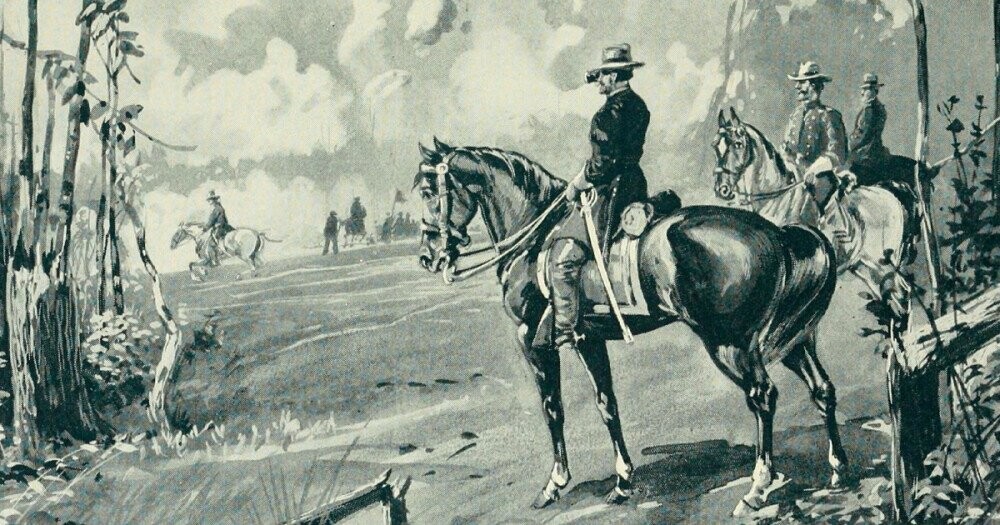
The Battle of Shiloh, also called the Battle of Pittsburg Landing, was fought on April 6 and 7, 1862, in southwestern Tennessee near the Tennessee River. Union forces under Ulysses S. Grant were positioned near Shiloh Church and Pittsburg Landing, preparing for a push deeper into Confederate territory. Confederate General Albert Sidney Johnston hoped to strike before Grant could be reinforced by Don Carlos Buell’s Army of the Ohio.
At dawn on April 6, Confederate troops surged out of the woods and surprised Union camps. The fighting quickly became brutal. Soldiers battled through places whose names still carry the weight of the violence: Shiloh Church, the Peach Orchard, Water Oaks Pond, and the Hornets’ Nest. Johnston was mortally wounded during the first day, leaving P. G. T. Beauregard in command of the Confederate army.
By nightfall, Grant’s battered forces had been pushed back toward Pittsburg Landing, but they had not broken. Overnight, Buell’s reinforcements arrived. On April 7, Union forces counterattacked, and the exhausted Confederates eventually withdrew toward Corinth, Mississippi. The Union had won, but “won” is a strange word for a field covered with thousands of dead, wounded, and missing men.
Shiloh shocked the nation because of its scale. More than 23,000 soldiers were killed, wounded, captured, or missing over two days. At that point in the war, Americans had not yet fully understood how enormous and merciless the conflict would become. Shiloh was a bloody announcement: this war would not be short, tidy, or merciful.
Where the Glow-in-the-Dark Story Begins
After the battle, many wounded soldiers remained on the muddy field for hours or even days before they could receive proper medical care. The weather was cold and wet. The ground was soaked. The battlefield was chaotic. Medical teams were overwhelmed, and the wounded lay exposed to the elements, insects, dirt, and whatever else nature decided to contribute to the disaster.
According to the famous “Angel’s Glow” story, some soldiers noticed that their wounds emitted a faint blue-green light at night. The glow was eerie enough, but what made it memorable was the reported pattern that followed: men with glowing wounds seemed less likely to develop serious infections and more likely to recover.
To people in the 1860s, that kind of glow would have been nearly impossible to explain. Germ theory was not yet widely accepted in battlefield medicine, antibiotics did not exist, and doctors had limited tools for understanding infection. If a wound glowed and the patient survived, “angelic protection” was not the least logical explanation available to a frightened soldier staring at his own illuminated injury in the dark.
The Science Behind Angel’s Glow
The modern explanation centers on Photorhabdus luminescens, a bacterium with a name that sounds like it was designed to make biology students suffer during spelling tests. This bacterium is bioluminescent, meaning it produces light through a chemical reaction. It lives in a symbiotic relationship with nematodes, which are microscopic worms found in soil.
Here is the less glamorous but very useful version: nematodes enter insect larvae, release P. luminescens, and the bacteria help kill the insect host. The bacteria also produce antimicrobial compounds that suppress competing microbes. This creates a protected food source for the nematodes and bacteria. Nature, as usual, is both brilliant and a little rude.
In the Shiloh theory, soil-dwelling nematodes may have entered soldiers’ open wounds as the men lay in the mud. The nematodes could have released P. luminescens, causing the wounds to glow. The bacteria’s antimicrobial activity may have inhibited more dangerous infection-causing organisms, reducing the risk of gangrene or other deadly complications.
The tricky part is temperature. P. luminescens generally does not thrive at normal human body temperature. That sounds like a deal-breaker until you remember the battlefield conditions. Many wounded soldiers were exposed to cold rain and damp ground for long periods. Hypothermia could have lowered the temperature in and around their wounds enough for the bacteria to survive temporarily. In a grim twist, the miserable weather may have helped create the conditions for the glow.
How Two Teenagers Helped Explain a Civil War Mystery
The Angel’s Glow story became famous in modern times because of a 2001 student science project by Bill Martin and Jonathan Curtis, two high school students from Maryland. Bill Martin had heard the tale while visiting the Shiloh battlefield. His mother, Phyllis Martin, was a microbiologist with the U.S. Department of Agriculture’s Agricultural Research Service and had studied Photorhabdus luminescens.
Instead of filing the story under “weird Civil War trivia to mention at parties,” the students investigated it. They studied the battlefield conditions, the bacterium, and its relationship with nematodes. Their conclusion was not that they had time-traveled to 1862 and tested every glowing wound personally. Historians and scientists tend to frown on that sort of overconfidence. Instead, they argued that P. luminescens could plausibly explain both the glow and the improved survival associated with it.
Their work gained attention because it connected folklore, battlefield history, microbiology, and environmental conditions into one surprisingly elegant explanation. It also proved that a good science fair project can do more than produce a baking-soda volcano that terrifies the family dog.
Why Infection Was So Dangerous During the Civil War
To understand why Angel’s Glow matters, you have to understand Civil War medicine. Contrary to a stubborn Hollywood myth, Civil War surgeons commonly used anesthesia. Chloroform and ether were widely available, and most major operations were not performed on fully conscious soldiers biting bullets like background actors in a melodrama.
The bigger problem was infection. Minie balls, the common rifle bullets of the war, were large, slow-moving projectiles that caused devastating damage. They shattered bones, tore muscle, and dragged bits of clothing, dirt, and debris into the body. A wounded limb could become infected quickly, and once gangrene set in, amputation was often the fastest way to save a life.
Civil War surgeons performed tens of thousands of amputations, not because they were cartoon villains with saws, but because they were working in desperate conditions with limited time, limited sanitation, and no antibiotics. Antiseptic surgery had not yet transformed military medicine. A wound that avoided serious infection had a dramatically better chance of healing.
That is why the Angel’s Glow story is so compelling. If P. luminescens really did suppress harmful bacteria in some wounds, then the glow was not merely spooky; it was potentially protective. A faint blue-green shimmer could have been a sign that a microscopic battle was happening inside the wound, and for once, the soldier might have had bacteria fighting on his side.
Was Angel’s Glow Definitely Real?
This is where the story needs careful handling. Angel’s Glow is often told as if every detail were documented with modern clinical precision. That is not the case. The explanation is plausible, and the science behind Photorhabdus luminescens is real, but the historical evidence is not as complete as a modern medical study.
The safest way to describe it is this: after the Battle of Shiloh, reports and later retellings described glowing wounds among some soldiers. In 2001, a student research project offered a credible biological explanation involving bioluminescent bacteria, nematodes, cold weather, and antimicrobial effects. The story survives because it sits at the crossroads of history and science, where a battlefield legend becomes surprisingly reasonable.
That does not make it less interesting. If anything, it makes it better. The real world is often more fascinating when we do not flatten it into either “total myth” or “perfectly proven fact.” Angel’s Glow belongs in the richer middle: a strange battlefield account supported by a scientific mechanism that could have happened under Shiloh’s conditions.
Why This Story Still Captures Our Imagination
The Civil War is usually remembered in shades of blue and gray, but Angel’s Glow adds an unexpected color: a soft, eerie blue-green. That image sticks in the mind because it is so contradictory. A battlefield is supposed to be dark in every sense of the word. The idea of wounds glowing like tiny lanterns feels almost impossible.
There is also something emotionally powerful about the story. Shiloh was a place of suffering, confusion, and loss. Yet in the mud and horror, a natural process may have helped some men survive. That does not make the battle beautiful, and it certainly does not make war romantic. But it does remind us that history is rarely simple. Even in terrible places, unexpected forces can shape who lives, who dies, and what stories get passed down.
It also gives us a useful lesson about science. The explanation did not come from a famous laboratory with marble floors and dramatic music. It came from curiosity, observation, and two teenagers willing to ask, “What if this old story has a biological explanation?” That is the fun part of science: sometimes it begins with a weird question that sounds ridiculous until it starts making sense.
Examples of the Angel’s Glow Effect in Context
Cold, Wet Conditions
The weather after Shiloh was crucial to the theory. If soldiers had been immediately removed to warm hospitals, P. luminescens may not have survived. But wounded men lying in damp fields could have developed lower body temperatures, creating a temporary environment where the bacteria could persist.
Open Wounds and Soil Exposure
Soldiers were not wounded in sterile operating rooms. They fell in mud, grass, leaves, and battlefield debris. Open wounds exposed to soil could have encountered nematodes carrying the glowing bacteria.
Antimicrobial Competition
The bacterium’s natural role involves suppressing competing microbes inside insect hosts. In a human wound, that same antimicrobial activity may have slowed the growth of more dangerous bacteria. It was not modern medicine, but it may have acted like an accidental biological defense.
Experiences Related to the Glow-in-the-Dark Battle
Visiting or studying Shiloh today can be a surprisingly emotional experience. The battlefield is quiet now, which almost makes it harder to imagine what happened there. You can walk through open fields, wooded ridges, and marked positions where armies collided in 1862. Birds call. Leaves move. The Tennessee landscape looks peaceful, and then a marker reminds you that thousands of men once fought, fell, waited, and suffered in that same space.
The Angel’s Glow story changes how people experience the battlefield because it encourages them to look down as much as around. Instead of seeing soil as just scenery, you begin to imagine the hidden life inside it: bacteria, worms, roots, insects, moisture, and the microscopic systems that continue whether humans are making history or making a mess. Shiloh becomes not just a military site, but an ecological one.
For history lovers, the story is a reminder that battlefields are not frozen in time. They are living places. The same mud that slowed marching columns and trapped wounded men also held the organisms that may have produced Angel’s Glow. The land was not a passive stage. It was part of the story.
For science students, Angel’s Glow is a perfect example of interdisciplinary thinking. You cannot solve the mystery with history alone, and you cannot solve it with microbiology alone. You need military records, weather conditions, battlefield geography, wound care, bacterial behavior, and a willingness to let different fields talk to each other. It is the academic version of inviting everyone to the same dinner table and hoping history does not argue with biology over dessert.
For writers, the story is irresistible because it has everything: tragedy, mystery, survival, irony, and a title that practically writes itself. “The Civil War Had A Glow-In-The-Dark Battle” sounds like clickbait until you realize the underlying science is genuinely fascinating. The trick is not to exaggerate it into fantasy. The real story is strong enough without adding glowing skeleton armies or ghostly banjo music.
For modern readers, the experience is also humbling. Today, we live in a world shaped by antibiotics, antiseptic procedures, vaccines, imaging technology, and emergency medicine. It is easy to forget how deadly infection once was. A wound that might now be cleaned, treated, and monitored could become fatal in 1862. Angel’s Glow reminds us that survival in the Civil War often depended on timing, weather, luck, and forces no one could see.
The most meaningful way to experience the story is to hold both truths at once. Shiloh was a catastrophe, not a curiosity cabinet. Thousands of families were changed forever. But within that catastrophe, there may have been a strange natural phenomenon that helped some wounded soldiers live. The glow was not a miracle in the supernatural sense, but it may have felt like one to the men who saw it.
That is why Angel’s Glow still matters. It takes one of the darkest chapters in American history and reveals a tiny, luminous thread running through it. Not enough light to erase the horror. Not enough to redeem the battle. But enough to make us pause, ask better questions, and remember that history sometimes glows in the places we least expect.
Conclusion: The Strange Light of Shiloh
The Battle of Shiloh was not literally a glow-in-the-dark battle in the way a movie poster might suggest. Cannonballs were not neon. Soldiers were not carrying laser swords. But the legend of Angel’s Glow gives Shiloh one of the strangest and most memorable stories of the Civil War.
The best explanation points to Photorhabdus luminescens, a bioluminescent bacterium carried by nematodes in the soil. Under cold, wet conditions, it may have entered open wounds, produced a faint blue-green glow, and helped suppress more dangerous infections. The result was a battlefield mystery that linked suffering, survival, folklore, and microbiology in a way few historical stories can match.
Angel’s Glow endures because it feels almost impossible: light coming from wounds in the aftermath of war. But that is exactly why it is worth remembering. Sometimes the past does not just echo. Sometimes, under the right conditions, it glows.