A bed is not just a mattress parking lot. It is the place where you recover from long days, read “just one more chapter,” fold laundry with wildly optimistic intentions, and occasionally negotiate with a pillow that has betrayed you. So why settle for a boring bed frame when you can build one that fits your room, your budget, and your personality?
This guide takes inspiration from the practical, hands-on spirit of classic DIY home improvement and expands it into a fresh, original roundup of inventive beds you can make yourself. Whether you live in a tiny apartment, a suburban house, a guest room that doubles as a storage cave, or a kids’ room where floor space disappears faster than socks in the dryer, there is a DIY bed idea here for you.
The best homemade beds combine three things: solid support, smart use of space, and good looks. A DIY platform bed can eliminate the need for a box spring. A storage bed can swallow blankets, shoes, and seasonal clothing. A loft bed can turn a small bedroom into a two-story kingdom. And a floating bed? That one just looks like it has secrets.
Before You Build: The Bed Frame Basics That Actually Matter
Before the sawdust starts flying, think about how your mattress needs to be supported. Most modern mattresses, especially foam, latex, and hybrid styles, perform best on a firm, even base. If you use slats, keep them close together, usually around 3 inches apart or within your mattress manufacturer’s recommendation. Wide gaps can allow the mattress to sag, and nobody wants a bed that slowly turns into a taco.
Measure your room before committing to a design. Leave walking space around the bed, check drawer clearance, and make sure the finished frame can actually get through your doorway. Many first-time builders create something beautiful in the garage and then discover it has the mobility of a grand piano. Build in sections when possible.
For materials, common choices include plywood, 2×4 lumber, 2×6 boards, hardwood panels, reclaimed wood, metal brackets, screws, wood glue, and pocket-hole joinery. Sand every surface that might touch skin, bedding, or pajamas. Round sharp corners if kids, pets, or sleepy adults are involved. A bed should support sweet dreams, not create shin bruises with architectural ambition.
15 Inventive DIY Beds You Can Make Yourself
1. The Simple Platform Bed
The platform bed is the quiet hero of DIY bedroom furniture. It is clean, sturdy, modern, and usually easier to build than a traditional bed with rails, box spring supports, and decorative complications. A basic platform bed uses a strong rectangular frame topped with plywood or closely spaced slats. Add short legs, paint or stain the wood, and you have a bed that looks intentional instead of “I forgot to buy furniture.”
This design works especially well in small bedrooms because it sits low and keeps the visual profile simple. For a warmer look, use pine or oak boards and finish them with a natural stain. For a modern look, paint the base matte black, white, or deep green. The key is strength: use center supports for full, queen, king, and California king sizes so the mattress does not dip in the middle.
2. The Storage Platform Bed
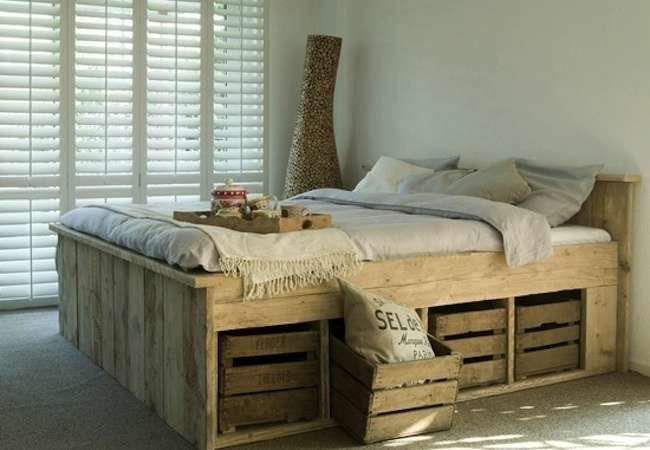
If your closet is already full and your dresser drawers require a wrestling move to close, build a storage platform bed. This design lifts the mattress on a base with drawers, cubbies, or open shelves. It is one of the best DIY bed ideas for apartments, kids’ rooms, and guest rooms because it turns unused space into practical storage.
You can build deep drawers on caster wheels, side cubbies for baskets, or a lift-up platform with hidden storage underneath. Drawers are easier to access every day, while lift-up storage is great for seasonal items like extra blankets, holiday bedding, or that sweater you bought during a “new me” moment and have never worn.
3. The Floating Bed Frame
A floating bed looks like it is hovering above the floor, which gives the room a sleek, contemporary feel. The trick is not magic; it is a recessed support base. The main platform extends beyond the hidden legs or center pedestal, creating a shadow line that makes the bed appear suspended.
This bed style is ideal for modern bedrooms and minimalist spaces. You can add LED strip lighting underneath for a soft glow, but keep it tasteful unless you want your bedroom to look like a spaceship lounge. Structurally, the hidden base must be strong and stable. Use quality lumber, secure fasteners, and a center support system. A floating bed should look airy, not wobble like a nervous card table.
4. The Reclaimed Wood Bed
Reclaimed wood gives a DIY bed instant character. Old barn boards, salvaged planks, or weathered lumber can become a rustic headboard, platform surround, or full bed frame. The result feels warm, lived-in, and unique. No two boards look exactly alike, which is wonderful if you love texture and terrible if you demand perfection from trees.
Always inspect reclaimed wood carefully. Remove old nails, staples, and hardware. Check for rot, pests, and chemical treatments. Sand rough edges, seal the surface, and use clean structural lumber for the parts that carry weight. Reclaimed wood is best as a decorative finish over a dependable frame, not as a mystery beam holding up your mattress and your lower back.
5. The Pallet Bed
The pallet bed is popular because it is affordable, casual, and easy to customize. Stack clean pallets into a platform, secure them together, sand them smooth, and finish with paint or stain. Add a mattress, bedding, and maybe a wall-mounted headboard, and you have a relaxed bed with boho or industrial personality.
However, pallet beds require caution. Use only clean, safe pallets with markings that indicate heat treatment rather than chemical fumigation. Avoid pallets with oil stains, odors, mold, or unknown history. Pallet wood can be rough, so sanding is not optional unless you enjoy splinters as a lifestyle choice.
6. The Bookcase Bed
A bookcase bed combines sleeping space with storage and display. Build shelves into the headboard, the footboard, or both sides of the frame. This is perfect for readers, students, and anyone whose nightstand currently resembles a small landslide of books, chargers, lip balm, and half-empty water glasses.
For a simple version, create a platform bed and add a built-in bookcase headboard. Include shelves deep enough for books, a small lamp, and a charging station. If you want a polished look, drill cord holes in the back panel and install trim around the shelves. Keep heavy items low and secure tall headboards to the wall for stability.
7. The Daybed That Works Overtime
A daybed is the multitasker of the DIY bed world. By day, it acts like a sofa. By night, it becomes a sleeping space. This makes it perfect for guest rooms, home offices, sunrooms, and studio apartments. Build a twin-size platform with a back rail and side arms, then style it with bolsters and large pillows.
For extra function, add drawers beneath the daybed or build a trundle that rolls out for a second mattress. Choose durable fabric for cushions and washable covers if the bed will be used by kids, pets, or snack-friendly guests. A daybed should feel relaxed, not like a waiting room bench with decorative pillows trying their best.
8. The Loft Bed
A loft bed raises the sleeping area so the space underneath can become a desk zone, reading nook, play area, or closet extension. It is a brilliant solution for small rooms, especially for older children, teens, college students, and compact apartments.
Safety matters more here than style. A loft bed must be properly braced, securely joined, and equipped with guardrails and a safe ladder. Do not guess on structural dimensions. Use a reliable plan, follow guardrail guidance, and make sure the mattress height does not reduce the protective rail height. A loft bed should feel like a clever space-saving solution, not like a trust fall with blankets.
9. The Murphy-Style Wall Bed
A wall bed, often called a Murphy bed, folds up when not in use. It is one of the best DIY beds for multipurpose rooms because it lets a bedroom become an office, gym, craft room, or guest space. Many DIYers use hardware kits that include the lift mechanism, legs, and plans.
This is not the project for casual improvisation. A wall bed must be anchored correctly to wall studs or structural framing. Measure ceiling height, floor clearance, mattress thickness, and surrounding furniture before you begin. When built well, a Murphy-style bed feels almost magical. When built poorly, it becomes a large wooden opinion attached to your wall.
10. The Upholstered Bed Frame
If you want a soft, boutique-hotel look, build an upholstered bed frame. Start with a plywood or lumber frame, add foam padding, wrap it in batting, and finish with fabric. Upholstery can make a basic DIY bed look expensive, especially when paired with a tall headboard.
Choose fabric based on real life, not fantasy life. Linen looks beautiful but may wrinkle. Velvet feels luxurious but can show marks. Performance fabric is a smart choice for homes with children or pets. Use a staple gun, pull fabric evenly, and fold corners neatly. The goal is “custom furniture,” not “wrapped a bed in a blanket during a power outage.”
11. The Farmhouse Panel Bed
A farmhouse bed is sturdy, classic, and welcoming. It usually includes a tall headboard, footboard, paneled details, and a warm wood finish or painted surface. This style pairs beautifully with white bedding, vintage lamps, woven baskets, and rooms that want to say, “I make pancakes on weekends,” even if breakfast is usually cereal over the sink.
The farmhouse panel bed is a more involved build, but it is rewarding. Use dimensional lumber for posts and rails, plywood or boards for panels, and trim for detail. Paint it creamy white for cottage style, stain it walnut for a richer look, or go bold with navy or charcoal. Because the headboard and footboard can be heavy, build them square and secure the rails tightly.
12. The Rolling Trundle Bed
A trundle bed hides a second mattress beneath the main bed. It is perfect for sleepovers, siblings, and guest rooms where space is limited. The simplest DIY version is a low platform on casters that rolls under a raised bed frame.
Measure the height carefully. You need enough clearance for the trundle frame, mattress, bedding, and wheels. Locking casters can help keep the bed steady during use. Add a simple front panel so the trundle looks like a drawer when tucked away. This project is practical, budget-friendly, and much easier than explaining to guests why the “guest bed” is an air mattress with trust issues.
13. The Kids’ House Bed
A house bed uses a simple frame shaped like a little house, often around a twin mattress. It gives a child’s room a playful focal point without needing cartoon decals or furniture that screams “temporary phase.” The roofline can be decorative, or you can add fabric panels, string lights, or garlands.
Keep the design low for younger children and avoid hanging anything that could become a hazard. Smooth all corners, secure the frame, and use non-toxic finishes. A house bed is charming because it turns bedtime into a tiny adventure. Whether it actually makes kids go to sleep faster is between you, the child, and the stuffed animals conducting negotiations.
14. The Outdoor Porch Daybed
An outdoor daybed can transform a porch, screened room, or covered patio into the best nap zone in the house. Build a sturdy platform from weather-resistant wood, add a twin mattress or custom cushion, and dress it with outdoor fabric pillows. If the structure allows, you can even hang it as a swing bed.
Outdoor beds need materials that can handle moisture, temperature changes, and sunlight. Use exterior-grade screws, outdoor sealant, and cushions designed for patio use. If you build a hanging version, the ceiling structure must be able to support the full weight of the bed and people using it. “It looked strong enough” is not an engineering plan.
15. The Canopy Bed
A canopy bed adds height, drama, and a sense of retreat. You can build a simple four-post frame with top rails, then leave it bare for modern style or add fabric panels for softness. This design works best in rooms with enough ceiling height and breathing space around the bed.
For a DIY-friendly version, use straight posts, clean lines, and minimal trim. Paint the frame black for a modern look, white for airy cottage style, or natural wood for warmth. Avoid heavy fabric in small rooms because it can make the space feel cramped. A canopy bed should feel dreamy, not like your mattress joined a theater production.
How to Choose the Right DIY Bed for Your Space
Start with your room size. If the bedroom is small, look at storage beds, platform beds, trundles, and loft beds. If the room is large, consider a canopy, farmhouse bed, or upholstered frame. For a multipurpose room, a Murphy-style bed or daybed may be the smartest choice.
Next, think about your skill level. Beginners should start with a basic platform bed, pallet bed, or simple daybed. Intermediate DIYers can tackle storage drawers, upholstery, floating beds, and farmhouse frames. Advanced builders can explore loft beds, wall beds, and hanging outdoor beds, where structure and safety are more demanding.
Finally, match the bed to your lifestyle. If you move often, build a frame that disassembles easily. If you hate clutter, prioritize drawers and hidden storage. If you have pets, avoid delicate upholstery near claw level. If you like reading in bed, build a supportive headboard. The best DIY bed is not the fanciest one; it is the one that solves your actual problems.
Tools and Materials Worth Having
Most DIY bed projects require a tape measure, square, drill, driver bits, circular saw or miter saw, clamps, sander, screws, wood glue, and safety gear. A pocket-hole jig can make joinery cleaner, while a brad nailer can speed up trim work. For upholstery, add foam, batting, fabric, spray adhesive, and a staple gun.
Buy straight lumber whenever possible. Warped boards are frustrating, and they can make a bed frame difficult to square. Pre-sand visible pieces before assembly. It is much easier to sand a board on sawhorses than to crawl around a finished bed frame like a dusty raccoon.
Common DIY Bed Mistakes to Avoid
The first mistake is underbuilding the frame. Beds carry dynamic weight, meaning people sit, turn, flop, bounce, and occasionally leap onto them after a long day. Use strong joinery, center support legs, and enough slats or a solid deck.
The second mistake is ignoring mattress requirements. Some mattresses need specific slat spacing or foundation types to maintain comfort and warranty coverage. Check before you build. A beautiful frame that ruins a mattress is just an expensive platform for regret.
The third mistake is forgetting daily use. Drawers need room to open. Tall beds need easy access. Low beds may look stylish but can be uncomfortable for some adults. Headboards should be secured. Corners should be softened. Good DIY design is not just how it looks in a photo; it is how it behaves at midnight when you are trying to find your slippers.
Personal Experience: What Building Your Own Bed Really Teaches You
Building a bed is one of those DIY projects that seems simple until you realize the bed has to be square, strong, quiet, attractive, and comfortable all at once. A bookshelf can lean a little and still hold books. A bed frame that leans, squeaks, or shifts will announce its flaws every night like a tiny wooden ghost.
The first lesson is that measuring matters more than enthusiasm. It is easy to get excited about a beautiful platform bed idea, buy lumber, and start cutting. But mattress sizes are precise, base dimensions need clearance, and bedding adds bulk. Measure the mattress, the room, the doorway, the hallway, and the distance from nearby furniture. A homemade bed should fit the space like it belongs there, not like it challenged the room to a duel.
The second lesson is that sanding is not punishment; it is kindness to your future self. Every edge that feels “probably fine” in the workshop becomes noticeably sharp when you are making the bed, changing sheets, or walking past in bare feet. Sand the corners. Break the edges. Run your hand over the frame before finishing. If it catches fabric, it will catch skin. The bed may be handmade, but it should not feel homemade in the “splinter delivery system” sense.
The third lesson is that storage is addictive. Once you build drawers or cubbies under a bed, you start wondering why every piece of furniture does not secretly hold blankets, books, or off-season clothes. A storage bed can make a small room feel calmer because visual clutter disappears. But organization still matters. Use bins, labels, or drawer dividers. Otherwise, under-bed storage becomes a horizontal attic where things go to retire.
The fourth lesson is that squeaks are easier to prevent than fix. Tight joints, proper screws, wood glue where appropriate, felt pads between rubbing surfaces, and solid center supports all help. If the frame uses slats, secure them so they do not slide. If the headboard touches the wall, add bumpers. A quiet bed is one of the great luxuries of adulthood, right up there with fresh sheets and realizing you already paid the electric bill.
The fifth lesson is that finishing changes everything. Raw lumber can look like a construction project. Stain, paint, trim, upholstery, or even a simple clear coat can turn the same frame into furniture. Do not rush the finish. Fill holes, sand between coats, and let paint or stain cure properly before adding bedding. Your patience will show every time you walk into the room.
Most of all, building a bed teaches you that DIY is not just about saving money. It is about making something that fits your life. Maybe you need drawers because your closet is tiny. Maybe you want a low platform because your room feels crowded. Maybe you want a canopy because your bedroom deserves a little drama that does not involve assembling furniture at midnight. A DIY bed gives you control over size, style, storage, height, finish, and personality. And when you finally sleep on something you built yourself, the room feels different. The bed is no longer just furniture. It is proof that comfort can be custom-made.
Conclusion
Inventive DIY beds prove that great bedroom design does not have to come from a showroom. With thoughtful planning, strong construction, and a little creativity, you can build a bed that looks beautiful, supports your mattress properly, and solves real space problems. From simple platform beds to storage beds, floating frames, loft designs, daybeds, trundles, and dramatic canopies, there is a homemade bed idea for nearly every room and skill level.
The smartest approach is to choose a design that matches your needs before choosing one that looks good online. Think about storage, safety, mattress support, room size, and how you actually live. Then build carefully, finish beautifully, and enjoy the rare satisfaction of sleeping on a project that did not defeat you.
Note: This original article synthesizes practical DIY bed-building guidance from reputable U.S. home-improvement, furniture, sleep, and safety resources, including Bob Vila-style home improvement content, major hardware retailers, mattress support guidance, woodworking plan libraries, and consumer safety recommendations. No source text has been copied.