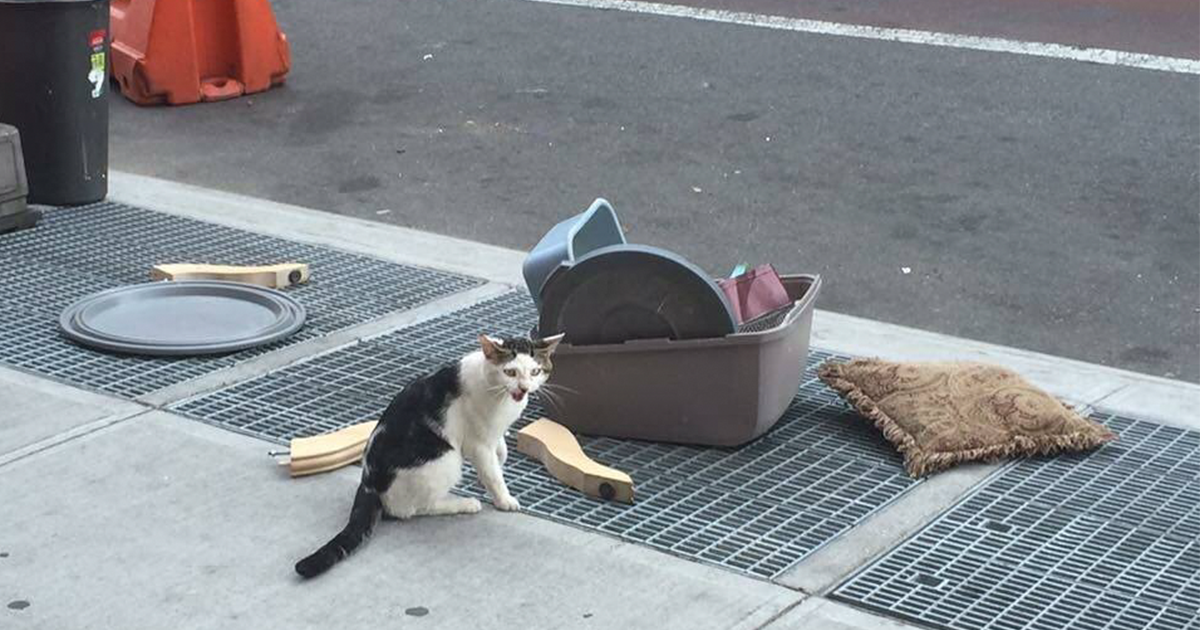
There are sad sights, and then there is the kind that makes your heart stop for a second: a cat sitting on the street beside his own litter box, looking around as if the world has suddenly forgotten his address. No dramatic movie music. No villain in a cape. Just a confused animal, a plastic box, and a very loud question hanging in the air: how could someone do this?
When someone dumps a cat on the street with his litter box, it tells a painful story before anyone says a word. The litter box is a clue that the cat was not born outdoors. He knew a home. He knew routines. He probably knew the sound of kibble hitting a bowl, the warm spot on the couch, and the mysterious human habit of saying “who’s a handsome boy?” seventeen times a day. Then, suddenly, the front door of life slammed shut.
This article looks at what this situation means, what a compassionate person should do, and why abandoning a pet is never the answer. It also explores safe rescue steps, responsible rehoming, shelter realities, and the emotional experience of helping a dumped cat regain trust. Bring tissues if needed, but also bring practical hope. Cats may have nine lives, but they should not have to spend one of them next to a litter box on the curb.
Why a Cat Left With a Litter Box Is Usually Not “Just a Stray”
Many outdoor cats are community cats, lost pets, or indoor-outdoor cats doing their daily neighborhood inspection like tiny furry landlords. But a cat left beside a litter box, carrier, food bowl, blanket, or bag of supplies is different. Those objects often suggest intentional abandonment. A litter box, especially, is a flashing neon sign that says: this cat lived indoors.
Indoor cats are not automatically prepared for street life. They may not know how to find safe shelter, avoid traffic, escape aggressive animals, locate food, or handle extreme weather. A confident couch panther at home can become frightened and frozen outside. The cat may hide, refuse food, cry, or cling to the only familiar object nearby: the litter box. That box is not just plastic and scoopable clay. To him, it smells like home.
Dumping a cat is also risky for the community. Unaltered cats can contribute to unwanted litters. Sick or injured cats may spread illness or suffer without care. Shelters and rescues, already stretched thin in many areas, are left to handle the consequences. In short, abandonment is not a solution. It is a problem wearing a cardboard sign that says, “Someone else, please fix this.”
The First Rule: Do Not Chase the Cat
Your first instinct may be to sprint heroically toward the cat like you are auditioning for an animal-rescue action movie. Please resist. A scared cat may bolt into traffic, squeeze under a building, or disappear into a storm drain with the commitment of a magician leaving the stage.
Instead, slow down. Speak softly. Keep your body low and sideways rather than standing directly over the cat. If the cat is approachable, offer strong-smelling food such as wet cat food or tuna in water. Place it a few feet away and let the cat choose whether to come closer. If you have a carrier, set it nearby with the door open and food inside. A towel can help if the cat allows gentle handling, but never grab a frightened cat bare-handed unless you know what you are doing. Teeth and claws are not decorative accessories.
Check the immediate danger zone
Before anything else, look around. Is the cat near moving cars? Is it raining, freezing, or extremely hot? Are dogs nearby? Is the cat injured? If the situation is urgent, contact local animal control, a humane society, or a nearby rescue group. If the cat is in immediate danger and you can safely contain him, move him to a quiet, secure place such as a bathroom, garage, laundry room, or spare room away from other pets.
Use a humane trap when needed
If the cat is too frightened to approach, a humane trap may be the safest option. Local rescues, TNR groups, shelters, and some veterinary clinics may loan traps or explain how to use them. The goal is not to scare the cat; it is to prevent him from wandering into greater danger. Once trapped, cover the trap with a light sheet or towel to reduce stress and transport the cat carefully.
Step-by-Step: What to Do If You Find a Dumped Cat
1. Take photos and note the location
Take clear photos of the cat, the litter box, and any supplies left nearby. Record the date, time, exact location, and condition of the animal. This matters if the case needs to be reported as abandonment or cruelty. It also helps shelters and lost-pet networks identify the cat if someone is searching for him.
2. Offer food, water, and a safe temporary space
A frightened cat may be dehydrated or hungry, but avoid overwhelming him. Provide fresh water and a small amount of food. If you bring him indoors, choose a quiet room with a door. Add a litter box, soft bedding, and hiding space, such as a cardboard box with a towel. Keep children, dogs, and other cats away until the newcomer has been checked for parasites, illness, and vaccination status.
3. Scan for a microchip
A microchip scan is one of the most important steps. Many veterinary clinics, shelters, and animal organizations can scan a found pet. Even if the scene looks like abandonment, the cat could have been lost, stolen, or moved by someone else. A microchip can help identify the registered owner or rescue organization. Make sure the scanner checks the whole body, because microchips can migrate slightly under the skin.
4. File a found-pet report
Contact the local shelter or animal control office and file a found-pet report. This does not always mean you must surrender the cat immediately. In many places, it simply creates an official record so an owner or rescue can be connected with the finder. Also post in neighborhood groups, local lost-and-found pet pages, veterinary offices, and community boards. Use a clear photo, but keep one or two identifying details private so you can verify ownership.
5. Report suspected abandonment
If the cat was clearly left behind with a litter box, note that when you contact local authorities. Animal abandonment laws vary by state and city, but neglect and abandonment are commonly treated as animal cruelty or a related offense. You do not need to become a detective with a trench coat and theme music. Just document what you saw and report it to the proper local agency.
6. Arrange veterinary care
A dumped cat may look fine and still need medical attention. A veterinarian can check for a microchip, dehydration, injuries, parasites, dental problems, infections, pregnancy, and whether the cat is spayed or neutered. If money is an issue, ask local rescues about low-cost clinics, vouchers, community veterinary programs, or foster networks. Many communities have helpers who know exactly where to find affordable care.
Why People Dump Catsand Why It Is Still Not Okay
People abandon cats for many reasons: housing restrictions, allergies, moving, financial stress, behavior issues, new babies, illness, divorce, or plain irresponsibility. Some people tell themselves that cats can “figure it out” outdoors. That idea belongs in the same trash can as expired tuna and the belief that cats enjoy wearing tiny hats.
Yes, some cats live outdoors successfully as community cats. But an indoor cat suddenly left outside is not the same as a street-smart community cat. He may be terrified, dependent on people, and unable to compete for resources. Even if the person leaving him behind is overwhelmed, abandonment removes the cat’s best chance at safety.
The humane alternatives are real. A person who can no longer care for a cat can contact shelters, rescues, breed-specific groups, local humane societies, veterinary offices, friends, family, foster networks, and responsible rehoming platforms. They can ask about pet food pantries, temporary foster care, low-cost medical help, behavior advice, or landlord negotiation resources. Rehoming can take effort, but effort is part of the promise made when a pet becomes family.
The Litter Box Detail: Small Object, Big Meaning
The litter box is what makes this kind of story hit so hard. A cat does not pack his own bathroom and stroll outside to begin a bold new chapter. Someone placed that box there. Maybe they thought it was helpful. Maybe they wanted to feel less guilty. Maybe they believed the cat would stay put until someone else came along.
But a litter box cannot protect a cat from cars, cold nights, heat waves, parasites, cruelty, or hunger. It cannot explain why the door is gone. It cannot call a vet. It cannot tell the cat, “You are still loved.”
Still, that same litter box can help rescuers. Familiar scent may keep the cat nearby long enough for someone to intervene. It can also support the cat in temporary care because he already recognizes it. If you rescue a cat found with his litter box, do not throw the box away immediately unless it is unsafe or filthy beyond use. In the early hours, familiar smells may reduce panic.
How to Comfort a Cat After Abandonment
Once the cat is safe, the emotional work begins. Abandoned cats may be clingy, withdrawn, vocal, defensive, or confused. Some will hide under furniture and communicate only through suspicious eyeballs. Others will climb into your lap like they have been waiting for you since the invention of blankets.
Create a quiet recovery room
A small room is better than full-house freedom at first. Set up food, water, litter, bedding, and a hiding place. Keep the environment calm. Avoid loud music, sudden visitors, and enthusiastic dogs named Rocket. Let the cat decide when to explore.
Use routine as medicine
Cats love routine because it makes the world predictable. Feed at regular times. Scoop the litter box daily. Visit quietly. Speak in a gentle voice. Sit on the floor and read, scroll, or do homework while the cat observes you. You are not ignoring him; you are showing him that humans can exist nearby without grabbing, chasing, or leaving.
Watch body language
A relaxed cat may blink slowly, stretch, groom, or approach with a curved tail. A stressed cat may flatten his ears, crouch, hiss, swish his tail, refuse food, or hide constantly. Give space. Trust is not a microwave burrito; it cannot be rushed, and if you try, the middle stays frozen.
Responsible Rehoming: The Right Way to Say Goodbye
Sometimes a person truly cannot keep a cat. That is painful, but it does not have to become abandonment. Responsible rehoming means planning ahead, being honest, and choosing safety over speed.
Start with the cat’s veterinarian. Behavior problems, litter box issues, aggression, anxiety, and sudden personality changes can be medical. A cat urinating outside the box may have stress, pain, urinary disease, or another health issue. Solving the problem may keep the cat in the home.
If rehoming is necessary, create a clear profile: age, personality, medical history, spay/neuter status, vaccination records, microchip information, diet, litter preferences, behavior with children or other animals, and any challenges. Do not hide problems. A surprise behavior issue is how cats bounce from home to home, and nobody wants a feline game of emotional ping-pong.
Screen potential adopters. Ask about their home, pet experience, landlord rules, veterinary plans, and expectations. Charge a reasonable rehoming fee when appropriate, not to make money, but to discourage careless or unsafe placements. Use adoption agreements when possible. Contact rescues for courtesy listings or advice. If surrendering to a shelter, call first. Many shelters require appointments because space and staffing are limited.
What Communities Can Do Better
A single dumped cat is heartbreaking. Many dumped cats become a community crisis. The answer is not shame alone, although a little accountability never hurt anyone. The real solution includes affordable spay and neuter programs, pet food banks, low-cost veterinary care, rental housing that allows pets, foster networks, public education, and easy access to rehoming resources.
Communities that support pet owners before they hit a breaking point can prevent abandonment. A bag of cat food, a temporary foster home, or a low-cost clinic appointment may be the difference between a cat staying safe and a cat being left on the sidewalk beside his litter box.
Rescue groups also need support. Fostering, donating, transporting, sharing adoption posts, and volunteering all help. Not everyone can adopt another cat. Some of us already live under the soft dictatorship of one or more whiskered rulers. But many people can do one useful thing.
Experiences and Lessons From Helping a Cat Dumped With His Litter Box
People who have helped abandoned cats often describe the same strange mixture of anger, sadness, and determination. The anger comes first. It is hard not to feel furious when you see a cat sitting beside a litter box like a tiny tenant evicted without notice. The sadness follows when the cat looks up and expects the person who left him to return. Then, if compassion wins, determination takes over.
One common experience is realizing that rescue is rarely as simple as “pick up cat, become hero, roll credits.” A dumped cat may not understand that you are trying to help. He may run from the carrier, ignore the expensive food, and choose to hide under the one parked car that seems designed by engineers who hate rescuers. This is normal. Fear does not mean the cat is feral or hopeless. It means his world cracked open and he is trying to survive the noise.
Another lesson is that small details matter. The litter box, blanket, toy, or bowl left with the cat can be useful. Familiar scent can help calm him in a temporary room. If the cat is too frightened to enter a carrier, placing familiar items nearby may keep him close. Rescuers often learn to think like a cat: safety first, food second, trust later.
There is also the emotional experience of waiting. You may post found-pet notices and wonder whether an owner is searching. You may hope the cat was lost rather than abandoned, because that version of the story hurts less. Sometimes a microchip leads to a reunion. Sometimes the registration is outdated. Sometimes no one comes. That uncertainty is heavy, but it is part of doing things responsibly.
Temporary care brings its own tiny victories. The first meal eaten. The first time the cat uses the litter box. The first slow blink from across the room. The first nap where he stops popping awake at every sound. These moments may look small to outsiders, but anyone who has helped a scared cat knows they are fireworks in miniature.
People also learn that compassion needs boundaries. You may want to keep every abandoned animal you find, but your home, budget, landlord, family, and existing pets matter. Helping does not always mean adopting. It can mean documenting, reporting, transporting, fostering for a weekend, paying for a microchip scan, sharing a post, donating food, or connecting the cat with a rescue. Responsible help is still help.
The biggest lesson is that a dumped cat is not “broken.” He may be scared, confused, underweight, dirty, or defensive, but none of that defines his future. With patience and proper care, many abandoned cats become loving companions again. Some turn into lap cats. Some become window philosophers. Some become the household supervisor who judges your laundry-folding technique. All of them deserve the chance to be more than the worst thing someone did to them.
Seeing a cat abandoned with his litter box can make the world feel cruel. Helping that cat proves the world is not finished being kind. One person left him behind. Another person can stop, notice, and say, “Not today, little guy. You are not invisible.” Sometimes that is where a rescue story begins: not with a grand gesture, but with someone refusing to walk past a cat who still smells like home.
Conclusion: A Cat Beside a Litter Box Is a Call to Action
Someone dumping a cat on the street with his litter box is more than a sad image. It is a reminder that pets depend on human choices. Bad choices can put them in danger, but good choices can pull them back to safety.
If you find a cat in this situation, stay calm, avoid chasing, document the scene, provide food and water, scan for a microchip, file a found-pet report, contact local animal services, and seek veterinary care. If you can no longer keep a cat, do not abandon him. Ask for help, use responsible rehoming, contact shelters and rescues, and look for support programs. A cat’s life should never depend on luck, weather, or whether the right stranger happens to walk by.
The cat beside the litter box is not trash, not a problem to discard, and not a burden to leave on the curb. He is a living creature who remembers comfort and deserves safety. And when someone chooses compassion, his story can change from abandonment to rescue, from confusion to trust, and from a sidewalk tragedy to a second chance with a warm bed, a full bowl, and maybe a human who understands that cats are not disposablethough they may still dispose of your favorite pen under the sofa.