Note: This guide is written for entertainment, practice, and beginner-friendly close-up magic. Use an ordinary coin, keep your movements relaxed, and never make your rent money disappear unless you have a very understanding landlord.
Introduction: The Smallest Trick That Feels Like Real Magic
A coin vanish is one of the most satisfying magic tricks you can learn because it uses something everyone recognizes. No velvet box. No assistant named “The Magnificent Brenda.” No smoke machine unless you are extremely committed to being dramatic in your kitchen. Just a coin, two hands, and a tiny moment where the audience thinks, “Wait… where did it go?”
The beauty of learning how to make a coin disappear is that the secret is not one single move. It is a combination of timing, natural body language, misdirection, and confidence. The coin does not simply vanish; the audience’s attention moves somewhere else at the perfect time. That is the real engine behind coin magic.
In this guide, you will learn three practical ways to make a coin disappear: the French Drop, the Classic Palm Vanish, and the Napkin or Pocket Ditch. Each method teaches a different skill. The French Drop builds false-transfer technique. The Classic Palm helps you secretly hold a coin while looking relaxed. The Napkin or Pocket Ditch teaches structure, timing, and the art of making the “dirty work” happen when nobody cares to look.
By the end, you will not only know three coin vanish tricks; you will understand why they work, how to practice them, and how to perform them without looking like you are trying to smuggle a quarter through airport security.
Before You Begin: What Makes a Coin Vanish Convincing?
Many beginners think a coin trick succeeds because the hand moves fast. That is usually the first mistake. Speed can make a trick look suspicious. Good coin magic looks ordinary. The audience should feel as if you simply placed a coin into your hand, closed your fingers, snapped, and opened your palm to reveal nothing.
Choose the Right Coin
Start with a U.S. quarter or half-dollar. A quarter is familiar and easy to borrow, but a half-dollar is easier for many beginners because it gives your fingers more surface area to grip. Avoid tiny coins at first. They are harder to control and more likely to slip, fall, and make the loudest “clink” in recorded human history.
Practice Natural Hands
After you secretly hold a coin, your hand must not look like a frozen claw. Relax your fingers. Let your hand hang naturally. If your hand looks like it is protecting state secrets, the audience will know something is hiding there.
Use Misdirection, Not Distraction
Misdirection does not mean yelling, “Look, a raccoon!” while you hide the coin. It means guiding attention. Your eyes, your words, and your body language tell people where the important action is. When you look at the hand that supposedly holds the coin, the audience usually looks there too.
Way 1: The French Drop Coin Vanish
The French Drop is one of the classic beginner coin magic tricks. It is simple, elegant, and surprisingly strong when performed with patience. The idea is that one hand appears to take the coin from the other hand. In reality, the coin stays behind. The audience believes the receiving hand holds the coin, so when that hand opens empty, the coin appears to have vanished.
What You Need
You need one coin and a little acting ability. Do not worry; you are not auditioning for Broadway. You only need to act as if a coin has moved from one hand to the other.
Step-by-Step Instructions
Hold the coin by its edge between the thumb and fingers of your left hand. Your palm should face inward or slightly upward so the audience can clearly see the coin.
Bring your right hand toward the coin as if you are going to take it. The right thumb should go behind the coin while the right fingers come in front. This creates the picture of a normal grab.
As your right hand closes, secretly let the coin fall into the fingers of your left hand. Do not make a big movement. The coin simply drops into a relaxed finger palm position.
Move your closed right hand away as if it now contains the coin. This is the most important moment. Your eyes should follow the right hand. Your left hand should relax and drop slightly to your side or rest naturally near your body.
Pause. Let the audience believe the coin is in the right hand. Then snap your fingers, blow on the fist, or say something playful like, “This is where the coin begins its unpaid vacation.” Open the right hand slowly. The coin is gone.
Why It Works
The French Drop works because people see what they expect to see. If one hand reaches for a coin and closes around it, the brain fills in the rest of the story: the coin was taken. Your job is to make that story feel true. The receiving hand must move as if it has weight. The original hand must stop acting important.
Common Mistakes
The biggest mistake is staring at the hand that secretly holds the coin. Wherever you look, the audience will look. Another mistake is rushing the vanish. Let the imaginary coin exist in the closed hand for a second before you reveal the empty palm. Magic needs a beat. Without that beat, the trick feels like a puzzle instead of a miracle.
Way 2: The Classic Palm Rub-Away Vanish
The Classic Palm is a foundation of coin magic. It allows you to secretly hold a coin in your palm while your fingers look open and relaxed. Once you can classic palm a coin, you can make it vanish, reappear, travel from hand to hand, or emerge from behind someone’s ear like a tiny metallic goblin.
What You Need
You need one coin, preferably a half-dollar if you are just starting. A larger coin is usually easier to palm because it sits more securely against the muscles of the hand.
Step-by-Step Instructions
Place the coin near the center of your palm, slightly toward the base of your thumb. Gently contract the muscles at the base of the thumb and the opposite side of the palm. The coin should stay in place without help from your fingers.
Do not squeeze too hard. If your knuckles turn white, you are not doing magic; you are wrestling currency. The coin should be held with light pressure.
Now place the coin openly on your left palm. Bring your right hand over it and pretend to rub the coin into the skin. During the rubbing action, secretly slide or press the coin into Classic Palm in the right hand.
Continue the rubbing motion for a moment after the coin is hidden. This continuation makes the vanish look smooth. Then lift your right hand slightly and show the left palm empty.
To finish cleanly, keep the right hand natural. You can casually reach for a pen, pick up a cup, gesture toward the audience, or place your hand in your pocket to ditch the coin. The trick does not truly end until the hidden coin is safely managed.
Why It Works
This vanish works because the rubbing motion gives the audience a reason for your hand to cover the coin. The action looks purposeful. The audience sees the coin, sees the hand rub, and then sees empty skin. Their brain connects the dots and concludes the coin dissolved. In reality, the coin is simply parked in your palm, probably feeling very proud of itself.
Practice Drill
Carry a coin around the house and practice holding it in Classic Palm while doing normal things. Open a door. Pick up a glass. Point at something. Type one awkward sentence. The goal is to make the hand look ordinary while secretly holding the coin. Practice in front of a mirror, but do not rely only on the mirror. A phone camera is better because it shows what an audience actually sees.
Common Mistakes
Beginners often curl their fingers too much. This makes the hand look tense. Another common problem is showing the empty hand too aggressively. Do not wave your fingers like you are trying to prove something in court. A relaxed display is more convincing than an overdone one.
Way 3: The Napkin or Pocket Ditch Vanish
The third method is less about finger skill and more about timing. In magic, a “ditch” means secretly getting rid of an object. This can be done by dropping the coin into a pocket, under a napkin, into a serviette, behind a prop, or into your lap if you are seated at a table. The secret is not the hiding place; the secret is making the audience believe the important moment has already passed.
What You Need
You need one coin and a casual object such as a napkin, handkerchief, paper towel, small envelope, or jacket pocket. The object should look natural in the setting. A napkin at dinner makes sense. A velvet wizard cloth at a coffee shop may raise questions.
Step-by-Step Instructions
Show the coin clearly. Place it into your left hand and close your fingers around it. In reality, use a simple false transfer, such as the French Drop, so the coin secretly remains in your right hand.
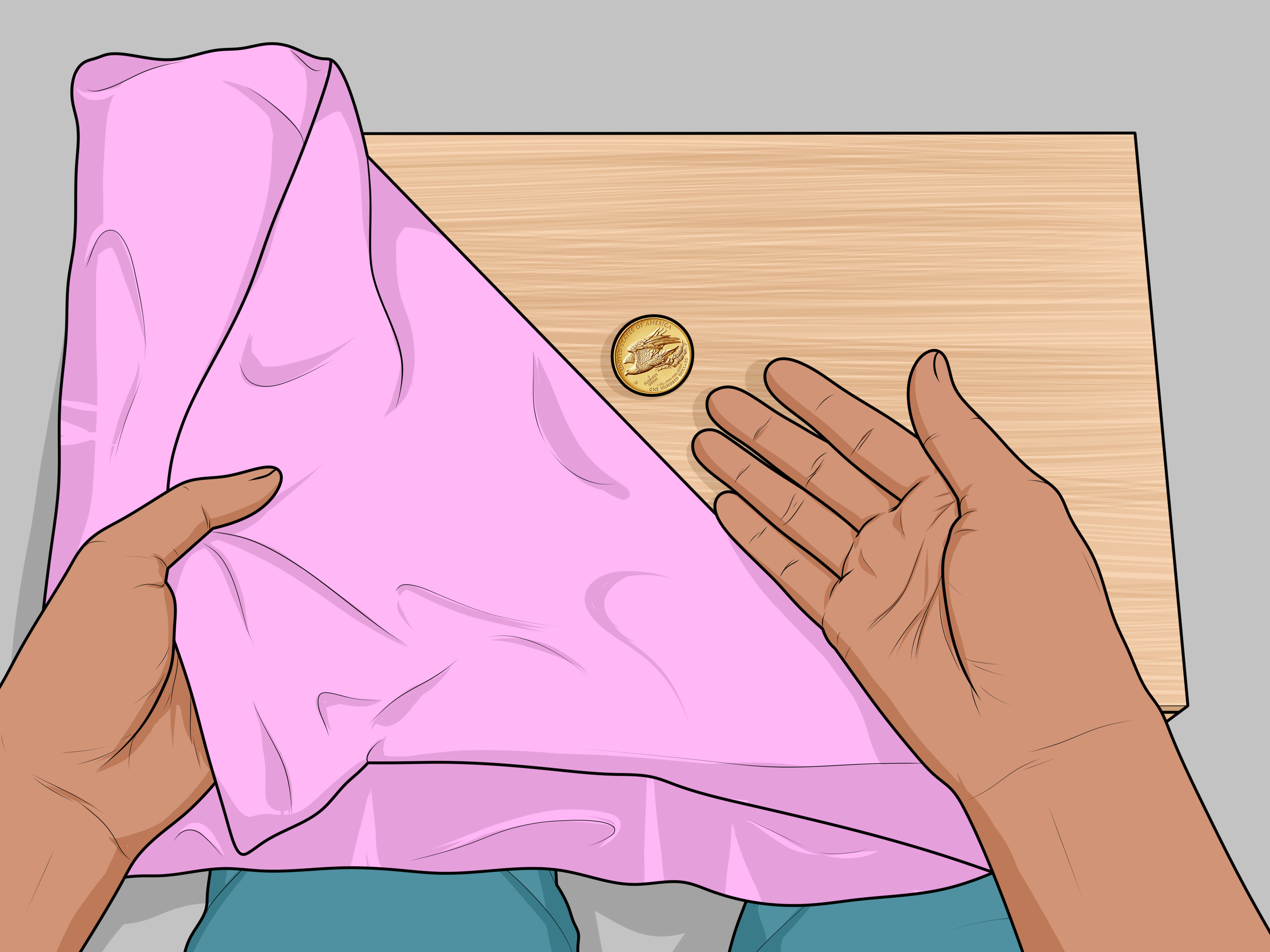
Pick up a napkin with your right hand while everyone’s attention is on the closed left fist. As you pick up or adjust the napkin, let the coin fall quietly into the folds or slide it into your pocket.
Now the coin is truly gone from your hands. This gives you a powerful advantage: you can show both hands empty at the end.
Return focus to the left fist. Say, “The coin is still here, unless it has made other plans.” Tap the fist with the napkin, wave your hand, or invite the spectator to blow on your knuckles. Open the fist slowly. The coin has disappeared.
Why It Works
The ditch works because the audience is mentally invested in the closed fist. They think the coin is there. When your other hand casually touches a napkin or pocket, that action seems unimportant. The audience does not burn attention on an action that appears unrelated to the trick.
Make It Stronger
To make this vanish stronger, give the audience a clear memory of the coin before it disappears. Let them hear it clink on the table. Let them see its date or design. If the coin is borrowed, even better. A borrowed coin feels more impossible because people trust their own objects.
Performance Tips for All Three Coin Vanishes
Do Not Announce the Method
Never say, “Watch carefully as I place the coin in this hand.” That sentence invites suspicion. Instead, make the action casual. Say something like, “Hold out your imagination for a second. It’s lighter than a gym membership.” Humor relaxes people and gives your hands breathing room.
Use a Beginning, Middle, and End
A trick feels stronger when it has structure. Beginning: show the coin. Middle: place it somewhere impossible. End: reveal that it has vanished. If you can make the coin reappear, even better. Pull it from your pocket, behind your elbow, under a napkin, or from behind a spectator’s ear.
Practice the Secret Move and the Public Move Together
Do not only practice the hidden sleight. Practice the visible action too. The audience watches the whole performance, not just the secret moment. Your words, eye contact, pauses, and hand positions must all work together.
Slow Down
Fast hands often look guilty. Smooth hands look magical. Move at the speed of normal life. If you would not pick up your coffee mug with lightning-fast panic, do not vanish a coin that way either.
Troubleshooting: Why Your Coin Vanish Is Not Working Yet
The Audience Keeps Guessing the Coin Is in the Other Hand
This usually means your false transfer lacks conviction. After pretending to take the coin, the hand that supposedly holds it must act as if it truly holds something. Give it weight. Keep it closed naturally. Look at it. Treat it as important.
The Coin Talks
Magicians say an object “talks” when it makes noise at the wrong time. Coins love talking. They clink, scrape, and announce your secrets like tiny gossip machines. Practice over a bed or carpet first. When using a napkin ditch, make sure the coin lands softly.
Your Hand Looks Stiff
If your hand looks stiff, reduce pressure. A palmed coin should not require a death grip. Practice holding the coin while walking around. The more normal your hand feels to you, the more normal it looks to everyone else.
Experience Notes: What Learning Coin Vanishes Teaches You
The first real lesson of making a coin disappear is humility. A coin is small, silent, and simpleuntil you try to hide it in your hand while another human being stares directly at you. Suddenly, that quarter feels the size of a dinner plate. Your fingers forget how fingers work. Your thumb starts freelancing. You become deeply aware that hands are strange little machines attached to your wrists.
That awkward beginning is normal. Almost everyone flashes the coin at first. Almost everyone drops it. Almost everyone performs the French Drop with the subtlety of a forklift. The trick is not to avoid mistakes; the trick is to practice until the mistakes become smaller, quieter, and less dramatic.
One helpful experience is to practice in layers. First, practice only the mechanics. Do the false transfer ten times without speaking. Then practice the same move while looking at the receiving hand. Then add a short line of patter. Then record yourself. Most beginners improve faster when they watch video because the camera does not politely lie. It shows the stiff fingers, the suspicious glance, the rushed reveal, and the moment your left hand screams, “I am hiding a coin!” without saying a word.
Another useful lesson is that spectators remember effects, not methods. They do not usually say, “Your right hand moved at an unusual angle during the transfer.” They say, “The coin vanished.” That means your job is to create a clean memory. Show the coin clearly. Make the transfer look ordinary. Pause before the vanish. Reveal the empty hand with confidence. The audience’s memory will often become even more magical than the exact thing they saw.
Performing for real people also teaches timing. A mirror cannot laugh. A phone camera cannot interrupt you with, “Do it again, but slower.” Friends and family will. This is valuable. You learn when people look at your face, when they look at your hands, and when they stop caring about the napkin or pocket. You also learn that repeating the same vanish immediately is risky. Once people know a trick is coming, they watch differently. Instead of repeating the vanish, make the coin reappear somewhere surprising and move on.
Coin magic is also a great confidence builder because it is portable. You can practice at a desk, in a waiting room, or while watching television. A coin vanish does not need a stage. It lives in small social moments: after dinner, at a family gathering, during a break at work, or when a child asks to see “real magic.” That is the charm of it. A tiny object becomes a tiny theater.
The most satisfying experience comes when the method finally disappears from your own mind. At first, you think, “Drop coin into finger palm, move right hand, look right, relax left.” Later, it becomes one smooth action. That is when the trick begins to feel magical even to you. The coin has not changed. Your hands have not changed. Your attention, timing, and confidence have.
Conclusion: Start Small, Vanish Big
Learning three ways to make a coin disappear gives you more than three tricks. It gives you a foundation in close-up magic. The French Drop teaches belief. The Classic Palm teaches control. The Napkin or Pocket Ditch teaches timing and structure. Together, they show that magic is not about fooling people with frantic movements. It is about creating a moment so clear and surprising that people want to believe it.
Start with one vanish. Practice slowly. Keep your hands relaxed. Add a simple line of patter. Then perform it for one person. When that person smiles, gasps, or immediately checks your sleeves, congratulationsyou have officially entered the wonderful, ridiculous world of coin magic.
And remember: if the trick fails, simply look at the coin, sigh, and say, “It’s new. Still in training.” Sometimes the recovery gets a better laugh than the miracle.